

Free Östersund Travel Guide & Mobile App
Plan your Östersund trip with Evendo. Get free guides to top attractions, restaurants, hotels, and bars. Web access or download the mobile app.


Östersund blends Jämtland history, Storsjön scenery, Sami culture, museums and winter adventure with welcoming cafés, trails and northern Swedish character.
Lake, Mountain and City
Östersund stands on the eastern shore of Storsjön, Sweden’s fifth-largest lake, with the wooded island of Frösön rising across the water and the Jämtland mountains visible beyond. The city is compact enough to explore on foot, yet its setting gives it an expansive, open character. Streets around the centre lead towards the waterfront, while bridges connect the urban landscape with Frösön and its rural viewpoints.Read more about Östersund
History and Living Culture
Four Seasons in Jämtland
When is the best time to visit Östersund?
Best: June–August · 19–21°C| Month | High (°C) |
|---|---|
| January | -3 |
| February | -3 |
| March | 2 |
| April | 7 |
| May | 14 |
| June (best) | 19 |
| July (best) | 21 |
| August (best) | 20 |
| September | 14 |
| October | 9 |
| November | 1 |
| December | -2 |
Getting to and around Östersund
How to get there
Transportation
Best attractions in Östersund
Jamtli is Östersund’s leading cultural attraction, combining regional history exhibitions with historic buildings and an open-air setting that interprets life in Jämtland. Across the water, Frösön provides a change of pace, with the medieval Frösö kyrka, views over Storsjön and the former home of composer Wilhelm Peterson-Berger at Sommarhagen. In the city, Badhusparken offers a gentle lakeside walk, while the waterfront and harbour reveal the scale of the lake and the mountain horizon beyond. The Nationalmuseum Jamtli, a collaboration presenting selected works from Sweden’s national collection, adds an art-focused dimension when operating exhibitions are available. The Östersund ski stadium is significant for visitors interested in Nordic sport and biathlon, while seasonal events and outdoor routes extend sightseeing beyond conventional museums and monuments.
-
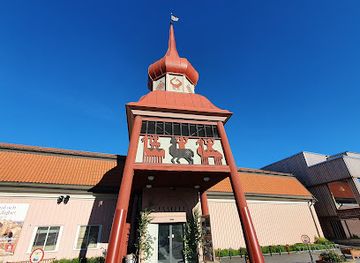
Local history museum
Jamtli
Discover Jämtland's soul at Jamtli: Vikings, art masterpieces, and living history in Östersund's premier cultural haven—three museums, endless stories.
11 min walk · 0.9 km from city centre
-
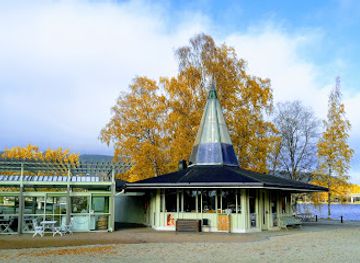
Park
Badhusparken
Östersund's lakeside gem: sunbathe by Storsjön in summer, skate its vast icy rink in winter, amid playgrounds, art, and community vibes.
4 min walk · 0.3 km from city centre
-
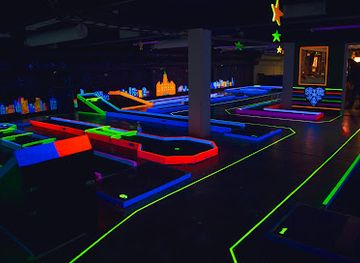
Tourist attraction
Multi Challenge
A single roof of indoor play — from quest rooms and go‑karts to bowling, laser tag and family play areas for all ages.
7 min drive · 2.2 km from city centre
-
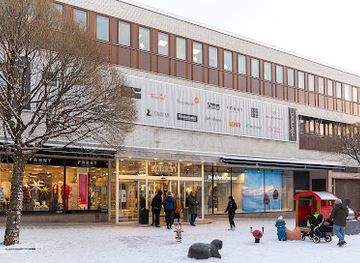
Shopping mall
Kärnan Östersund
A compact, sheltered city‑centre gallery in Östersund — practical shops, cafés and local retail tucked between Kyrkgatan and Prästgatan.
4 min walk · 0.4 km from city centre
Best landmarks in Östersund
Östersund’s most significant landmarks express its role as a planned provincial capital beside Storsjön. The town hall and central civic buildings reflect the administrative ambitions behind the settlement founded in 1786, while the regular streets around Stortorget reveal its planned origins rather than a medieval layout. Östersund’s Stora kyrka is an important city church, and the older Frösö kyrka across the water connects the modern city with Jämtland’s medieval Christian heritage. Frösöbron, the bridge to Frösön, is both a practical crossing and a memorable viewpoint over the lake. Jamtli’s historic buildings are not a single monument but form a carefully interpreted record of regional architecture, farming and domestic life. Together these places show how civic planning, religion, transport and local tradition shaped the city.
-
Tourist attraction
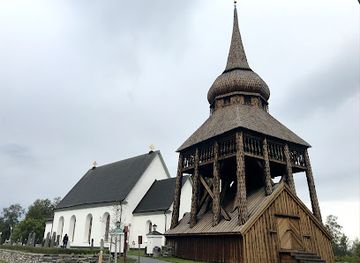
Frösö Kyrka
Eight centuries of stone and spirit: Frösö Kyrka's medieval heart overlooks Storsjön's vastness, whispering tales of pilgrims, saints, and sweeping Nordic skies.
17 min drive · 5.8 km from city centre
-
Observation deck
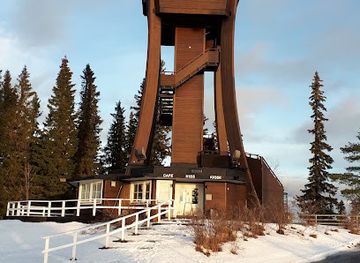
Frösötornet
Ascend Frösöberget for breathtaking panoramas over Storsjön and Jämtland's fjälls, paired with homemade organic fika at this seasonal tower café.
6 min drive · 2.0 km from city centre
-
Tourist attraction
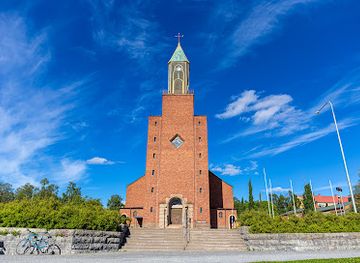
Stora Kyrkan
A 1940 Wahlman basilica in Östersund, famed for its 170 m² al fresco altarpiece and sculpted granite portal reflecting Jämtland’s history.
11 min walk · 0.9 km from city centre
-
Cafeteria
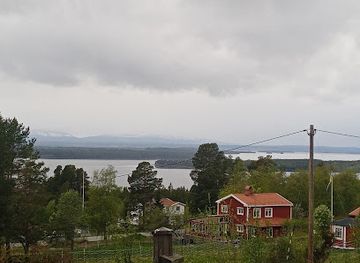
Peterson-Berger Sommarhagen
Dream home of composer Wilhelm Peterson-Berger: national romantic gem with panoramic Storsjön views, historic interiors, and inspiring cafeteria fika on Frösön.
17 min drive · 5.8 km from city centre
Explore Östersund on the map
Plan your Östersund trip on one map. See where the top attractions, landmarks, restaurants, bars and hotels are, find what's near where you're staying, and book hotels and experiences in a few clicks.
Best hotels in Östersund
Best restaurants in Östersund
Östersund’s food culture reflects Jämtland’s farms, forests, lakes and mountain communities. Menus may feature game such as moose or reindeer, lake fish, locally produced dairy, berries, mushrooms and breads including tunnbröd, the thin flatbread associated with northern Sweden. Messmör, a sweet whey-based spread, is another regional flavour worth encountering in shops or on menus. Central Östersund contains cafés, bakeries, contemporary restaurants and casual places that use local ingredients without abandoning broader Swedish and international cooking. Markets and seasonal food events provide opportunities to sample produce from small-scale makers, while the streets around Prästgatan and the central squares offer the greatest concentration of everyday dining. Regional specialities can be especially seasonal, so menus change with supply and time of year.
-
Restaurant
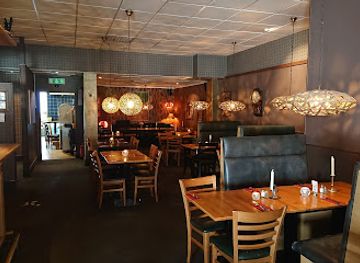
Restaurang Tre Rum
Roomy, reliable dining in central Östersund — long opening hours, broad menu and a welcoming pub‑style atmosphere.
3 min walk · 0.3 km from city centre
-
Asian
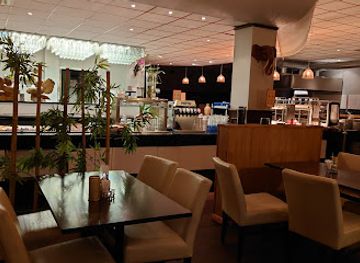
BBQ Garden
Östersund's go-to Asian buffet: sushi, Mongolian grills, and wok wonders from 135 SEK in a lively Prästgatan setting.
1 min walk · 0.1 km from city centre
-
Italian
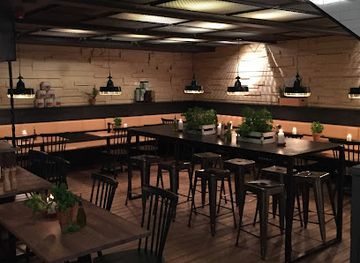
LA FABBRICA DEL GUSTO
Casual, family-friendly Italian in central Östersund—wood-fired pizza, fresh pasta and a lively counter-order format.
2 min walk · 0.1 km from city centre
-
Greek
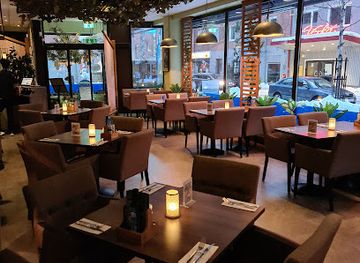
GREKISKA grill & bar
Casual Greek grill in Östersund serving souvlaki, mezedes and seafood with a lively terrace and approachable, shareable plates.
6 min walk · 0.5 km from city centre
Best bars in Östersund
Östersund’s evening scene is concentrated in the centre rather than spread across a large club district. Bars, pubs and restaurants around Prästgatan and the streets near Stortorget provide places for relaxed drinks, conversation and casual late dining, while local venues periodically host live music, cultural performances and DJ-led nights. The city’s student population brings additional activity during academic terms, although the atmosphere remains more intimate than that of Sweden’s larger cities. Cultural evenings at Jamtli, concerts and seasonal events can be as important as conventional nightlife, particularly in winter. Frösön is generally quieter after dark, with its appeal centred on views and accommodation rather than late-night entertainment. Alcohol service follows Swedish licensing rules, and visitors should expect venues and schedules to vary by season.
-
Bar
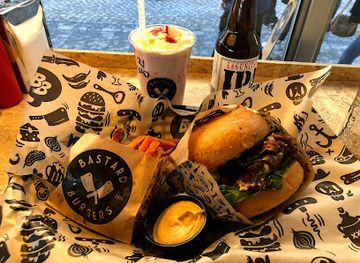
Bastard Burgers
A lively street‑food burger bar on Prästgatan — smash patties, big vegan options and playful sides in a bold, casual space.
1 min walk · 0.1 km from city centre
-
Gastropub
The Bishops Arms - Östersund
Östersund's premier gastropub on Stortorget: 21 taps, craft whiskies, local pub grub, and summer terrace vibes in authentic British style.
1 min walk · 0.1 km from city centre
-
Bar
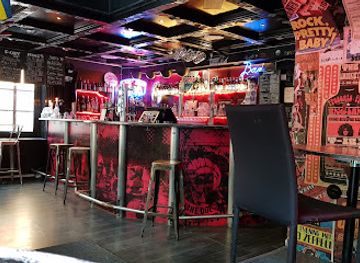
Jane Doe Bar
A compact, rock-leaning nightspot in central Östersund for loud music, late nights and focused drinks.
4 min walk · 0.3 km from city centre
-
Bar
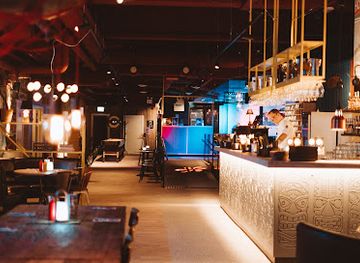
Tiki Grill / Drinks
Tiki‑themed bar and grill paired with a large indoor activity centre—tropical drinks, casual grills and games under one roof.
7 min drive · 2.2 km from city centre

Best shops in Östersund
Shopping in Östersund centres on the compact streets around Prästgatan, Stortorget and the central pedestrian areas, where independent retailers, cafés and everyday Swedish shops sit alongside larger commercial premises. Local and regional products make more distinctive souvenirs than generic merchandise: look for Jämtland foods, berry products, breads, woollens, woodwork and carefully labelled handicrafts. Sámi-inspired goods should be bought from reputable makers and described accurately, since Sámi design and cultural objects have specific meanings and are not interchangeable with general northern souvenirs. Jamtli’s shop is a useful place to encounter regional crafts and food-related products connected with the museum’s collections and events. Seasonal markets and producer gatherings vary, so the city’s visitor information and event listings are the best guide to current market activity.
-
Home improvement store
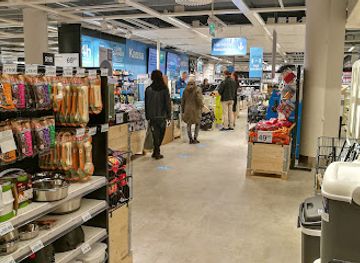
Clas Ohlson Sweden
A practical, well‑organised Clas Ohlson branch in Östersund’s Mittpunkten offering tools, lighting, small electronics and everyday home fixes.
5 min walk · 0.4 km from city centre
-
Candy store
Hemmakväll
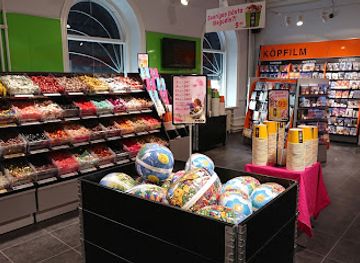
Östersund's go-to candy haven: endless lösgodis, late-night vibes, and pure Swedish sugar bliss on lively Storgatan.
3 min walk · 0.2 km from city centre
-
Clothing store
H&M
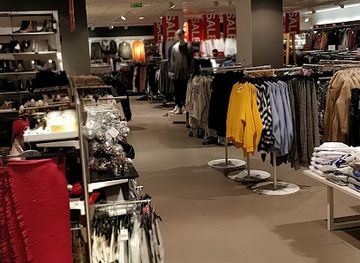
A central, budget-friendly H&M branch in Östersund offering seasonal basics, children’s wear and predictable high-street shopping.
2 min walk · 0.2 km from city centre
-
Department store
Åhléns
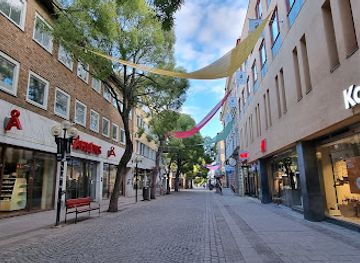
Östersund's premier department store on lively Prästgatan, brimming with fashion, beauty, home essentials, and family finds under one roof.
2 min walk · 0.2 km from city centre
Get your free copy of our complete guide to Östersund, delivered straight to you.
Everything on this page, from attractions and restaurants to essentials and local phrases, in one PDF you can read offline, print or share.
Already have an account? Sign in
Your Östersund guide is ready.
We'll send it to · Not you? Sign out

Getting your guide ready…
We are putting together a fresh copy of the Östersund guide. This can take up to a minute.
This can take a few moments. If your browser asks, choose Allow so the download can start. You'll find the guide in your Downloads folder.
Nothing happened? Download it again
Sorry, the guide is taking longer than usual. Please try again in a minute, or get it by email instead.
Östersund essentials
Currency and Payment
Safety
Emergency Situations
Do's and Don'ts
Local Tips
From Eve
Local phrases worth knowing
You don't need to get them perfect. A few words go a long way, and locals appreciate the effort.
Basics
| English | Local | Say it |
|---|---|---|
| Hello | Hej | [hey] |
| Goodbye | Hej då | [hey doh] |
| Yes | Ja | [yah] |
| No | Nej | [nay] |
| Please/You're welcome | Snälla/Tack | [snell-lah/tahck] |
| Thank you | Tack | [tahck] |
| Excuse me/Sorry | Ursäkta | [ur-shek-tah] |
| How are you? | Hur mår du? | [hoor mohr doo] |
| Fine. And you? | Bra. Och du? | [bra. oh-sh doo] |
| Do you speak English? | Talar du engelska? | [tah-lahr doo eng-els-kah] |
| I don't understand | Jag förstår inte | [yahg fur-stohr eent-eh] |
Eating & Drinking
| English | Local | Say it |
|---|---|---|
| I'd like to see the menu, please | Jag skulle vilja se menyn, tack | [yahg skool-leh vil-yah seh meh-nin, tahck] |
| I don't eat meat | Jag äter inte kött | [yahg eh-tahr eent-eh shuht] |
| Cheers! | Skål! | [skohl] |
| I would like to pay, please | Jag skulle vilja betala, tack | [yahg skool-leh vil-yah beh-tah-lah, tahck] |
Emergencies
| English | Local | Say it |
|---|---|---|
| Help! | Hjälp! | [hyelp] |
| Go away! | Gå bort! | [goh bohrt] |
| Call the Police! | Ring polisen! | [ring poh-lee-sehn] |
| Call a doctor! | Ring en läkare! | [ring ehn leh-kah-reh] |
| I'm lost | Jag är vilse | [yahg air veels-eh] |
| I'm ill | Jag är sjuk | [yahg air shoo-k] |
Shopping
| English | Local | Say it |
|---|---|---|
| I'd like to buy... | Jag skulle vilja köpa... | [yahg skool-leh vil-yah shoop-ah] |
| I'm just looking | Jag tittar bara | [yahg tee-tahr bah-rah] |
| How much is it? | Hur mycket kostar det? | [hoor my-ket koh-star deht] |
| That's too expensive | Det är för dyrt | [deht air fur deert] |
| Can you lower the price? | Kan du sänka priset? | [kahn doo sahn-kah prees-et] |
Time & Numbers
| English | Local | Say it |
|---|---|---|
| What time is it? | Vad är klockan? | [vahd air klohk-ahn] |
| It's one o'clock | Klockan är ett | [klohk-ahn air aht] |
| Half past (10) | Halv tio | [hahlv tee-oh] |
| Morning | Morgon | [mohr-gohn] |
| Afternoon | Eftermiddag | [ef-ter-mee-dahg] |
| Evening | Kväll | [kvehl] |
| Yesterday | Igår | [ee-yohr] |
| Today | Idag | [ee-dahg] |
| Tomorrow | Imorgon | [ee-mohr-gohn] |
| 1 | Ett | [aht] |
| 2 | Två | [tvoh] |
| 3 | Tre | [treh] |
| 4 | Fyra | [fy-rah] |
| 5 | Fem | [fehm] |
| 6 | Sex | [sehx] |
| 7 | Sju | [syu] |
| 8 | Åtta | [awt-tah] |
| 9 | Nio | [nee-oh] |
| 10 | Tio | [tee-oh] |
Transport & Directions
| English | Local | Say it |
|---|---|---|
| Where's a/the...? | Var är en/den...? | [vahr air ehn/dehn] |
| What's the address? | Vad är adressen? | [vahd air ah-dress-ehn] |
| Can you show me (on the map)? | Kan du visa mig (på kartan)? | [kahn doo vee-sah meh (poh kahr-tahn)] |
| When's the next (bus)? | När går nästa (buss)? | [nair gor neh-stah (boos)] |
| A ticket (to ....) | En biljett (till ....) | [ehn beel-yet (teel ....)] |
History of Östersund
Jämtland Before Östersund
Long before Östersund was founded, Jämtland was shaped by farming communities, transhumance, hunting, fishing and movement across the Scandinavian interior. The region also has a longstanding Sámi presence and forms part of the wider cultural landscape of Sápmi. Runic inscriptions and medieval churches, including the church on Frösön, demonstrate the province’s early connections with Christianity, trade and wider Scandinavian politics. Jämtland was historically linked to Norway before becoming part of Sweden in 1645 through the Treaty of Brömsebro. Frösön, rather than the later town site, was the principal local centre for centuries, benefiting from its position on Storsjön and its relationship with surrounding settlements.
The Founding of Östersund
King Gustav III founded Östersund in 1786 as part of a policy intended to strengthen trade and administration in inland Sweden. The town was planned on the eastern shore of Storsjön, opposite Frösön, but its early growth was slow. Jämtland’s economy remained largely agricultural, and established trading patterns did not immediately shift to the new settlement. Even so, Östersund gradually acquired the institutions expected of a provincial centre. Its regular street plan, civic buildings and position beside the lake reflect the ambitions of an Enlightenment-era town designed to organise commerce and government rather than an older medieval settlement.
A Provincial Administrative Centre
During the nineteenth century, Östersund developed as the administrative capital of Jämtland County and a marketplace for the surrounding countryside. The opening of the railway to Östersund in 1879 transformed its prospects by connecting the town with Sundsvall and the national rail network. Rail transport improved the movement of timber, agricultural produce and people, accelerating commercial growth and urban expansion. Hotels, shops and public institutions appeared as the town assumed a more important regional role. The period also helped establish the civic and architectural character around the central streets and squares that visitors encounter today.
Railways, Trade and Urban Growth
The railway era brought Östersund into closer contact with Sweden’s larger towns and with the wider economies of central Scandinavia. As rail and road links improved, the city became a service centre for Jämtland’s farms, mountain communities and growing tourism sector. Timber, dairy production and agricultural trade remained important, while public administration and education expanded. The waterfront and central commercial streets evolved alongside new residential districts. Östersund’s location between the lake and the inland routes also made it a practical base for reaching the mountains, helping outdoor recreation become part of the city’s modern identity.
Jamtli and Regional Memory
The development of Jamtli reflects a twentieth-century effort to preserve and interpret Jämtland’s social history. Founded in 1912 as a county museum and later expanded into an open-air museum, Jamtli brought together historic buildings, collections and demonstrations of regional life. Its work has helped keep farming practices, crafts, domestic traditions and local stories visible alongside the formal history of kings and administrations. The museum is also significant because it presents the province as a culturally distinct region within Sweden. Seasonal programming and changing exhibitions connect historical interpretation with contemporary public life.
A Modern Winter City
In the twentieth and twenty-first centuries, Östersund strengthened its reputation as a centre for winter sport and outdoor recreation. The city has hosted major Nordic skiing competitions and is associated with biathlon through its ski stadium and training facilities. Tourism, education, public administration and food production now sit alongside older commercial functions. Contemporary Östersund remains a modest-sized regional capital rather than a large urban centre, but its cultural institutions, lakeside setting and access to Jämtland’s landscapes give it an identity extending well beyond its historic street plan.
Östersund in Photos
Browse through our photo collection highlighting the charm and character of the destination.
Cities near Östersund
The closest cities to Östersund, if you have time for more than one stop.
-

-

-

-

-


Swipe for more cities
Explore more
Explore more of Sweden
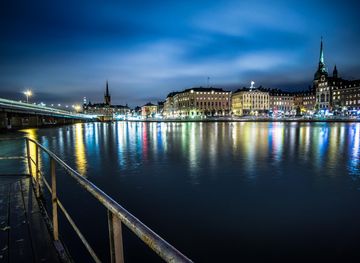
Discover Sweden's breathtaking landscapes, vibrant cities, and rich cultural heritage. From the Northern Lights to historic castles, experience the essence of Scandinavia.
Explore Sweden