

Lugnarohögen Travel Guide
Free Guide: A compact Bronze Age burial mound with an internal stone‑ship chamber and an underground viewing passage that preserves an early Scandinavian funerary ritual.


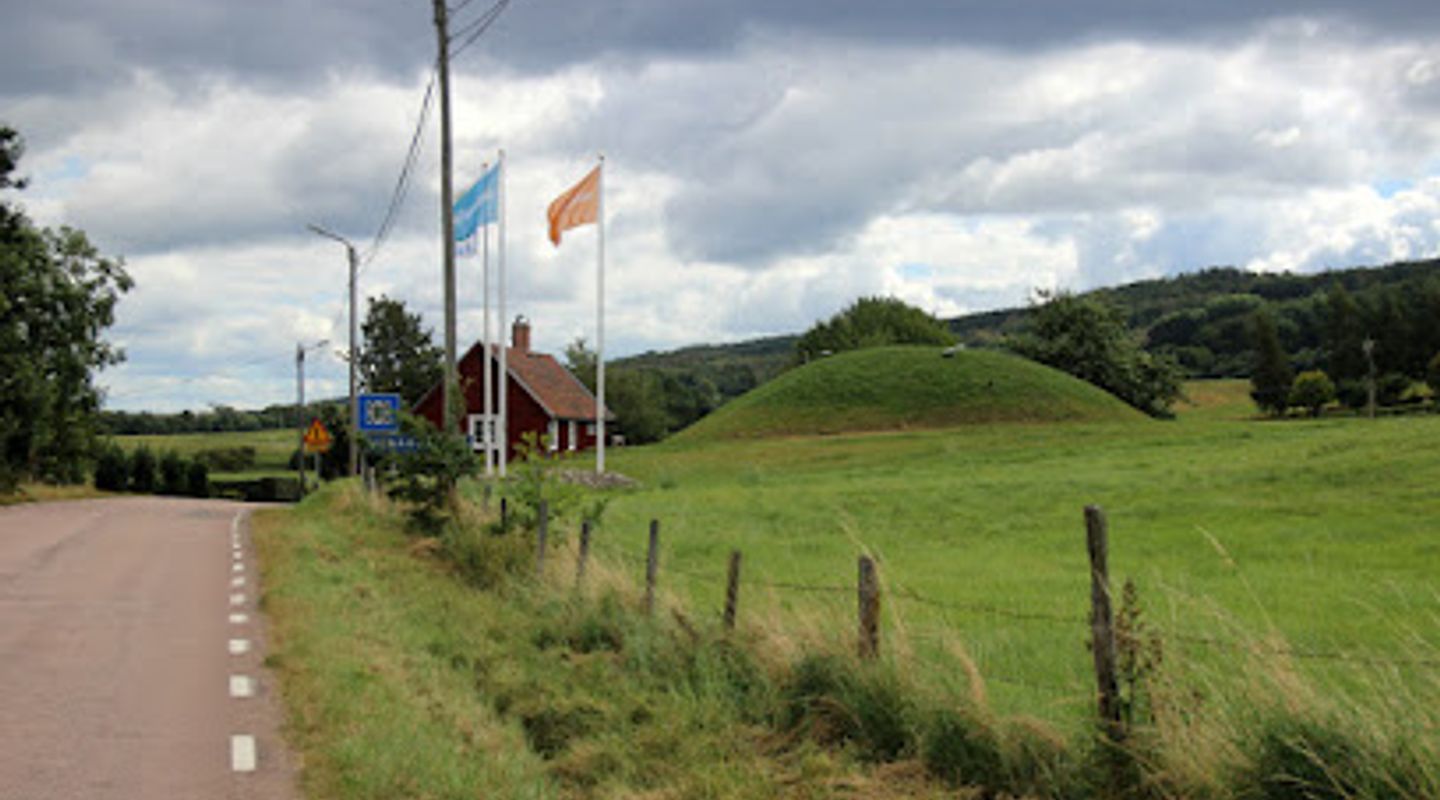
A brief summary of Lugnarohögen
A compact Bronze Age burial mound with an internal stone‑ship chamber and an underground viewing passage that preserves an early Scandinavian funerary ritual.
Lugnarohögen is a uniquely preserved Bronze Age burial mound at Lugnaro in Hasslöv, near Laholm, dating to roughly 800–600 BCE. Excavated in 1926–27, the site revealed an interior stone ship formation and human remains kept visible via an underground viewing passage and protective dome. Managed by the local municipality, the site blends archaeological significance with a compact, atmospheric visitor experience inside a turf-covered mound beside a small heritage cottage.
On-site amenities
 Information boards
 Seating areas
Opening hours
- MonClosed
- TueClosed
- Wed11 am–3 pm
- Thu11 am–3 pm
- Fri11 am–3 pm
- Sat11 am–3 pm
- Sun11 am–3 pm
Opening hours as listed on the venue’s Google Business Profile. Hours can change for services and special events, so check with the venue before you go.
- Address
- Lugnarovägen 2, 312 97 Laholm
- Phone
Getting there
By regional bus
By car
By bicycle
Discover more about Lugnarohögen
An unexpected scientific discovery that changed Swedish archaeology
Lugnarohögen was first revealed to modern eyes in 1926 when a local excavation uncovered a carefully arranged stone chamber inside a turf mound; the find was remarkable because the burial included a stone ship formation—a ritual layout that connected maritime symbolism with funerary practice. The excavation that followed in 1926–27 prompted immediate conservation decisions: rather than remove the structure to a museum, a protective dome was created over the exposed layout and an underground access passage linked the mound to the adjacent cottage, allowing visitors to view the grave interior in situ.
What you see when you step inside the mound
Descending the short subterranean passage places you beside a low, dimly lit chamber where stones form the outline of a ship—an emblematic Bronze Age motif that speaks to seafaring, ritual and cosmology in the region. The burial deposits included pots and human bone fragments, preserved in the stone setting and arranged with symbolic intent. The space is intimate and restrained by design; the focus is on the stony ship plan, the texture of worked stone, and the atmosphere created by limited light and earth around you.
The cottage and the protective structure: two parts of one story
The little cottage beside the mound is integral to Lugnarohögen’s modern presentation; historically associated with the site, it was used during the 1920s interventions and later adapted as an entrance to the underground viewing route. Above ground, the dome that shelters the excavation reads as conservation in plain view—an unusual preservation choice that lets the mound retain its location and landscape context while still making the interior accessible. Together, mound, dome and cottage compose a compact heritage ensemble rather than a dispersed open-air ruin.
Stone ships are widely interpreted as symbolic vessels for the dead: a way to situate a burial within maritime cosmology and the rhythms of coastal life. At Lugnarohögen the ship orientation and the arrangement of burial goods point to carefully choreographed ritual practice. Pottery fragments and skeletal remains found during the dig add human detail to this symbolism—evidence that individuals and their funerary rites were woven into broader community beliefs about journeying and the sea.<h3.Restoration, recent care and the visitor experience today
The mound was repaired and re-presented several times in the 20th and early 21st centuries; a major renovation around 2020 refreshed structural protections, visitor access and interpretation while retaining the original excavation’s character. The interior walk is short and contemplative rather than theatrical: lighting and signage accentuate the archaeological features and the tactile quality of stone, while the exterior setting—turf, low hedgerows and the modest cottage—keeps the experience rooted in a rural Halland landscape.
Lugnarohögen is a small, concentrated heritage site: the main encounter is the descent into the viewing passage and the quiet observation of the stone ship. The immediacy of the burial’s material remains and the proximity of the protective dome mean that the site conveys both scientific discovery and the careful choices of conservation practice. For anyone interested in northern Bronze Age ritual, regional continuity, or the ways small communities present long-past lives, this mound offers a compact, tangible glimpse into an old cosmology preserved beneath a modern turf cover.
Evendo Review Centre
 Google
Guest reviews
Best time to go
Quietest: Jan, Feb & Dec · before 8am or from 8pm
Busy times are Evendo estimates for a typical year, to help you plan. Actual crowds vary with events, school holidays and the weather.
Explore Lugnarohögen on the map
A handpicked selection of must-see spots near Lugnarohögen, mapped for you.
Get your free copy of our complete guide to Lugnarohögen, delivered straight to you.
Everything on this page, from opening hours and how to get there to Eve’s tips and the best time to go, in one PDF you can read offline, print or share.
Already have an account? Sign in
Your Lugnarohögen guide is ready.
We'll send it to · Not you? Sign out

Getting your guide ready…
We are putting together a fresh copy of the Lugnarohögen guide. This can take up to a minute.
This can take a few moments. If your browser asks, choose Allow so the download can start. You'll find the guide in your Downloads folder.
Nothing happened? Download it again
Sorry, the guide is taking longer than usual. Please try again in a minute, or get it by email instead.
Other nearby places you may find interesting
The closest places of the same kind, if this one is not quite what you had in mind.

Swipe for more places
More to explore near Lugnarohögen

 Best experiences near Lugnarohögen
 Best hotels near Lugnarohögen
 Best landmarks near Lugnarohögen
 Best attractions near Lugnarohögen
 Best shops near Lugnarohögen
 Best restaurants near Lugnarohögen
 Best bars near Lugnarohögen
Do you manage this location?
Take control to get all the benefits, like improved information, better appearance, and stronger visibility across AI-powered discovery.
Explore more

Explore more of Skåne
Discover Skåne, Sweden's southern gem, where stunning landscapes, rich history, and vibrant culture come together to create an unforgettable travel experience.
Explore Skåne
Explore more of Sweden
Discover Sweden's breathtaking landscapes, vibrant cities, and rich cultural heritage. From the Northern Lights to historic castles, experience the essence of Scandinavia.
Explore Sweden
