

Halmstads Slott Travel Guide
Free Guide: Riverside Renaissance gem where Danish kings built for pleasure and Swedish monarchs forged alliances—Halmstad Castle whispers 400 years of Halland's storied past.


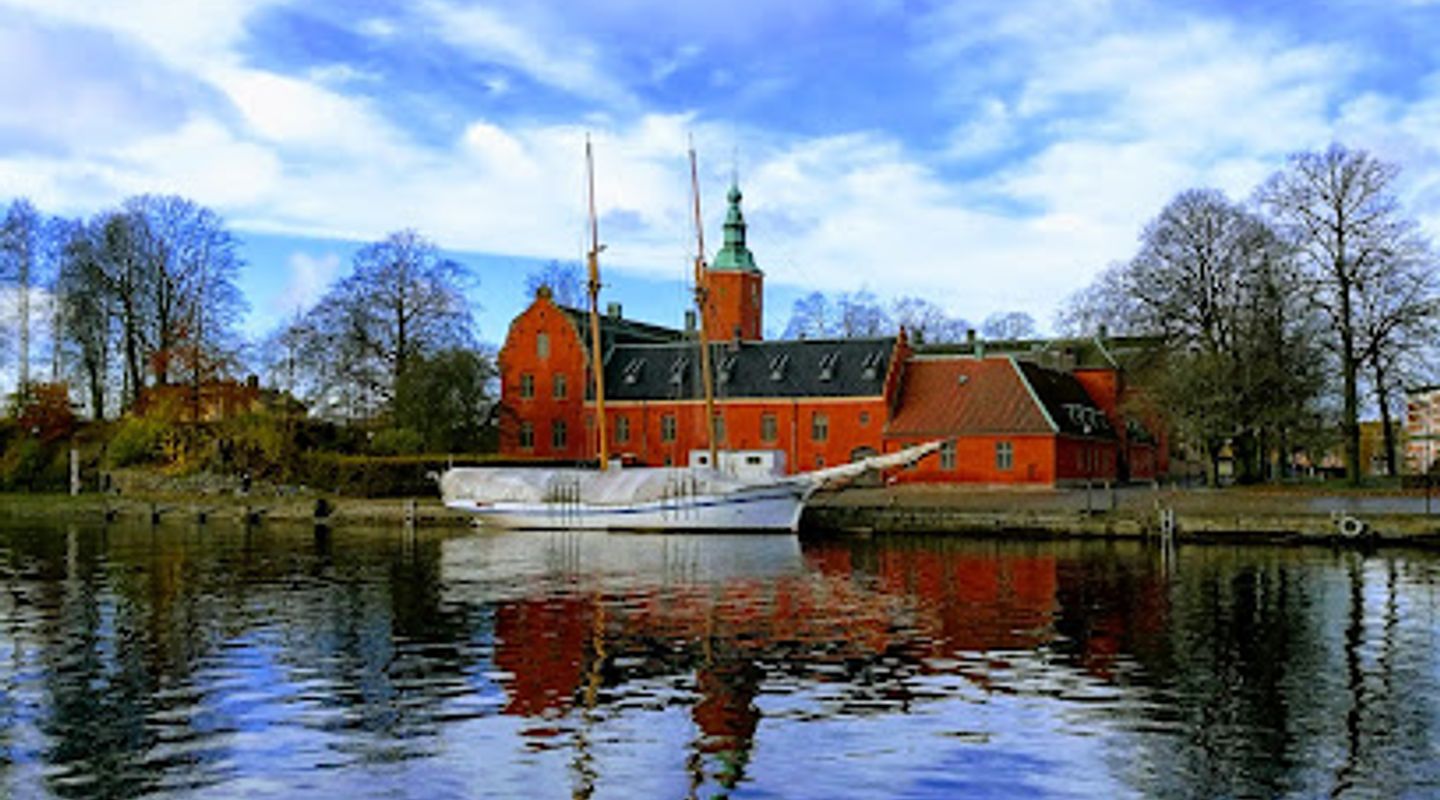
A brief summary of Halmstads Slott
Riverside Renaissance gem where Danish kings built for pleasure and Swedish monarchs forged alliances—Halmstad Castle whispers 400 years of Halland's storied past.
Halmstad Castle is a striking 17th-century Renaissance structure in central Halmstad, built by Danish King Christian IV as a pleasure palace overlooking the Nissan River. Comprising four wings around a spacious courtyard, it transitioned from Danish to Swedish control in 1645, serving as a royal residence and later the Halland governor's seat. Today, it houses county administrative offices and cultural institutions amid its historic charm.
On-site amenities
 Restrooms
 Drink options
 Food options
 Seating areas
 Information boards
- Address
- Aschebergsgatan 1, 302 42 Halmstad
- Phone
- Website
Getting there
Bus
Walking
Taxi
Bicycle
Discover more about Halmstads Slott
Origins in Danish Renaissance Splendor
In the early 1600s, when Halland belonged to Denmark, King Christian IV commissioned Halmstad Castle as a grand upgrade from a modest farmstead. Purchased in 1595, the site expanded with nine adjacent lots by 1609. Dutch architect Hans van Steenwinckel the Elder initiated the build, but after his death in 1601, his apprentice Willum Cornelissen completed it around 1615. Both rest in St. Nikolai Church, their Holländsk influence evident in the castle's design.
Architectural Harmony and Layout
The castle forms a classic quadrangle of four wings encircling a 36x36-meter courtyard, with the southern wing as the royal quarters. Exemplifying Christian IV Renaissance style—named for the king's prolific building—this structure features a slender, towering northern gatehouse topped by a distinctive hood. Unlike massive royal fortresses, it evokes intimate Danish country estates built for leisure and respite during royal tours.
Royal Encounters and Territorial Shift
Freshly completed, the castle hosted pivotal events. In January 1619, Sweden paid the final installment of Älvsborg's ransom here. Weeks later, from February 25 to March 3, Danish King Christian IV met Swedish King Gustav II Adolf for alliance talks. Swedish forces claimed Halland—and the castle—in 1645 via the Treaty of Brömsebro, solidifying control by 1658's Treaty of Roskilde. Bengt Christoffersson Lilliehöök became Halland's first Swedish governor.
Fortifications and Swedish Adaptations
Post-acquisition, Swedes bolstered defenses: smaller windows darkened facades, and an inner fortress rose by 1658. Military relevance waned by the 1700s, leading to decay; the slottskyrka became a grain storage. Late 1800s restorations added a floor to the eastern wing, replaced windows to revive original aesthetics, and installed central heating in 1917. Today, it endures as a managed heritage site.
Modern Role by the Riverside
Nestled along the Nissan River, just two kilometers from the sea, Halmstad Castle blends history with contemporary use. It serves as the traditional residence for Halland's county governor, with offices for local authorities, Musik i Halland since 1999, and Halmstad Tourist Bureau in the east wing since 2000. The setting invites reflection on centuries of power shifts amid scenic waterside calm.
Enduring Legacy of Transition
From Danish pleasure palace to Swedish stronghold, the castle symbolizes Halland's turbulent past. Its preserved form offers a tangible link to Renaissance builders, royal diplomacy, and regional governance, standing resilient against time's erosions and enhancements.
Evendo Review Centre
 Google
Guest reviews
Best time to go
Quietest: Jan, Feb & Dec · before 8am or from 10pm
Busy times are Evendo estimates for a typical year, to help you plan. Actual crowds vary with events, school holidays and the weather.
Explore Halmstads Slott on the map
A handpicked selection of must-see spots near Halmstads Slott, mapped for you.
Get your free copy of our complete guide to Halmstads Slott, delivered straight to you.
Everything on this page, from opening hours and how to get there to Eve’s tips and the best time to go, in one PDF you can read offline, print or share.
Already have an account? Sign in
Your Halmstads Slott guide is ready.
We'll send it to · Not you? Sign out

Getting your guide ready…
We are putting together a fresh copy of the Halmstads Slott guide. This can take up to a minute.
This can take a few moments. If your browser asks, choose Allow so the download can start. You'll find the guide in your Downloads folder.
Nothing happened? Download it again
Sorry, the guide is taking longer than usual. Please try again in a minute, or get it by email instead.
Other nearby places you may find interesting
The closest places of the same kind, if this one is not quite what you had in mind.
-
-
-
-
-


Swipe for more places
More to explore near Halmstads Slott

 Best experiences near Halmstads Slott
 Best hotels near Halmstads Slott
 Best landmarks near Halmstads Slott
 Best attractions near Halmstads Slott
 Best shops near Halmstads Slott
 Best restaurants near Halmstads Slott
 Best bars near Halmstads Slott
Do you manage this location?
Take control to get all the benefits, like improved information, better appearance, and stronger visibility across AI-powered discovery.
Explore more

Explore more of Halland
Discover Halland, Sweden's coastal paradise with sandy beaches, historic towns, and lush nature reserves. Perfect for outdoor adventures, cultural experiences, and relaxation.
Explore Halland
Explore more of Sweden
Discover Sweden's breathtaking landscapes, vibrant cities, and rich cultural heritage. From the Northern Lights to historic castles, experience the essence of Scandinavia.
Explore Sweden
