

Ängsö Slott Travel Guide
Free Guide: Medieval fortress on Mälaren island, haunted by noble ghosts and echoing 800 years of Swedish history—from Viking graves to Piper grandeur.


A brief summary of Ängsö Slott
Medieval fortress on Mälaren island, haunted by noble ghosts and echoing 800 years of Swedish history—from Viking graves to Piper grandeur.
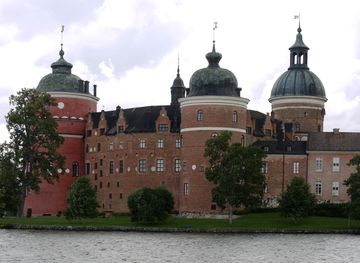
Perched on the island of Ängsö in Lake Mälaren, Ängsö Slott is a medieval fortress turned elegant castle, boasting over 800 years of history. Built in the 1480s as a defensive stronghold, it features a cubic four-story structure of stone and brick, crowned by an 18th-century lanternin. Owned by noble families like Sparre and Piper, the castle holds tales of sieges, royal intrigue, and resident ghosts, including the spectral hound and vengeful Brita Bååt. Surrounded by ancient grave fields, 18th-century crofts, and a 14th-century chapel, it offers a hauntingly beautiful glimpse into Sweden's feudal past. Open daily 11am-4pm, entry is free, with guided tours revealing preserved rococo interiors and eerie legends.
On-site amenities
 Restrooms
 Drink options
 Food options
 Seating areas
 Trash bins
 Information boards
Opening hours
- Every day11 am–4 pm
Opening hours as listed on the venue’s Google Business Profile. Hours can change for services and special events, so check with the venue before you go.
- Address
- Engsö Slott, 725 98 Västerås
- Phone
- Website
Getting there
Ferry
Car + Walk
Bus + Ferry
Private Boat
Discover more about Ängsö Slott
Island Origins and Medieval Foundations
Ängsö Slott stands on an island in Lake Mälaren, first mentioned as Engsev in a 1167 letter from King Knut Eriksson, who inherited it from his father Erik Jedvardsson. Human presence dates back 1,500 years, with three preserved grave fields containing 150 graves attesting to early settlements across what were once two larger islands amid a surrounding archipelago. By 1272, Riseberga Abbey exchanged the estate for lands with Greger Birgersson, an illegitimate son of Birger Jarl, marking its transition to secular noble hands.In the 1480s, riksråd Bengt Fadersson Sparre constructed the core fortress, a sturdy stone-and-brick edifice designed for defense amid turbulent times. This cubic, four-story building forms the castle's heart, its lower levels enduring from the medieval era despite later modifications.
Sieges, Treachery, and Royal Seizure
Bengt's son, Knut Bengtsson Sparre, a loyalist to King Kristian II, met his end in 1521, shot while defending Västerås against Gustav Vasa's forces. The following year, after a prolonged siege, Ängsö fell to Vasa, who held it until 1538, when it returned to Knut's daughter Hillevi Knutsdotter, married to Arvid Trolle. The estate passed through families like Posse and back to Sparre, embodying Sweden's shifting power dynamics during the liberation wars.Until 1691, Ängsö's lords wielded 'hals- och handrätt'—authority over life and death—via a local court of a lagläsare and twelve peasants, independent even from bishopric oversight. A chapel built around 1340 anchored the island's spiritual life, tied closely to the manor.
Baroque Transformations and Piper Legacy
The 1630s saw Per Sparre expand the structure, as depicted in Erik Dahlbergh's Suecia antiqua et hodierna. In 1710, Christina Piper acquired it as a fideicommiss for her family, though she never resided there. Her son, Carl Fredric Piper, oversaw major restorations from 1740-1747 under Carl Hårleman's designs, adding the top floor, mansard roof with lanternin, garden wings, and a historical library.The Piper family held Ängsö until 1971, when it passed to Västerås city via Westmannastiftelsen. Uninhabited since 1959, the castle preserves rococo interiors, offering a window into 18th-century aristocratic life amid rustic island surroundings.
Haunted Halls and Spectral Inhabitants
Ängsö claims Sweden's most ghosts. Brita Bååt, a notoriously cruel resident who outlived two husbands, haunts the King's Room and Great Hall at 8pm, her fate sealed on a Julafton when skeletal apparitions assaulted her en route to church—her slöja scarred by a spectral sword, a 'bloodstone' embedded in the churchyard wall.Other phantoms include puckelryggige Anders Luxemburg, last to see Karl XII alive, whose ghost terrifies; a shadowy dice-player who gifted Johan Sigismund Sparre a protective gold chain; and Eva Sophia von Fersen's hound Cottilion, buried at her feet. These tales infuse the castle with an eerie allure.
Rustic Island Life and Preserved Relics
Sixty crofts from the 1700s-1800s dotted the island, tenants sustaining on livestock and paying rent in labor, eggs, or grain. Four soldier crofts were added late 1600s; ruins and clearance cairns remain. The estate's self-contained world, from chapel to stables, evokes a bygone feudal order in Mälaren's serene waters.
Evendo Review Centre
 Google
Guest reviews
Best time to go
Quietest: Jan, Feb & Mar · before 9am or at 8pm
Busy times are Evendo estimates for a typical year, to help you plan. Actual crowds vary with events, school holidays and the weather.
Explore Ängsö Slott on the map
A handpicked selection of must-see spots near Ängsö Slott, mapped for you.
Get your free copy of our complete guide to Ängsö Slott, delivered straight to you.
Everything on this page, from opening hours and how to get there to Eve’s tips and the best time to go, in one PDF you can read offline, print or share.
Already have an account? Sign in
Your Ängsö Slott guide is ready.
We'll send it to · Not you? Sign out

Getting your guide ready…
We are putting together a fresh copy of the Ängsö Slott guide. This can take up to a minute.
This can take a few moments. If your browser asks, choose Allow so the download can start. You'll find the guide in your Downloads folder.
Nothing happened? Download it again
Sorry, the guide is taking longer than usual. Please try again in a minute, or get it by email instead.
Other nearby places you may find interesting
The closest places of the same kind, if this one is not quite what you had in mind.
-
-
-
-
-


Swipe for more places
More to explore near Ängsö Slott

 Best experiences near Ängsö Slott
 Best hotels near Ängsö Slott
 Best landmarks near Ängsö Slott
 Best attractions near Ängsö Slott
 Best shops near Ängsö Slott
 Best restaurants near Ängsö Slott
 Best bars near Ängsö Slott
Do you manage this location?
Take control to get all the benefits, like improved information, better appearance, and stronger visibility across AI-powered discovery.
Explore more
Explore more of Södermanland
Discover Södermanland: A serene Swedish province offering rich history, stunning nature, and vibrant cultural experiences just south of Stockholm.
Explore Södermanland
Explore more of Sweden
Discover Sweden's breathtaking landscapes, vibrant cities, and rich cultural heritage. From the Northern Lights to historic castles, experience the essence of Scandinavia.
Explore Sweden
