'Arch' by Ai Weiwei, Stockholm Travel Guide
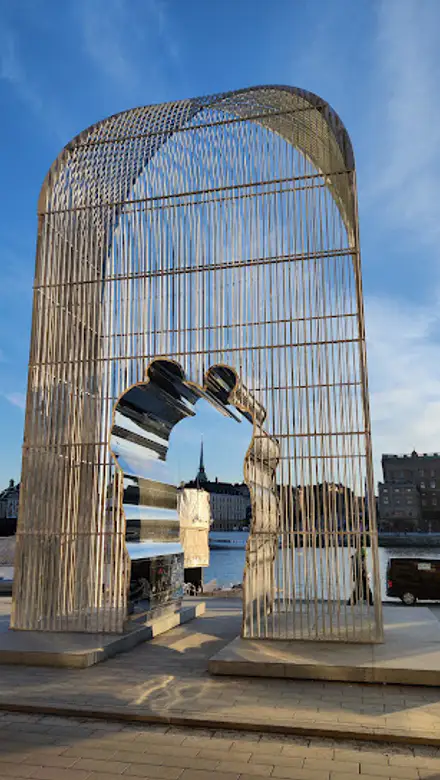
Free Guide: A 12‑metre polished‑steel, cage‑like arch pierced by two human silhouettes — Ai Weiwei’s public plea for freedom and passage beside Stockholm’s Nationalmuseum.


A brief summary of 'Arch' by Ai Weiwei
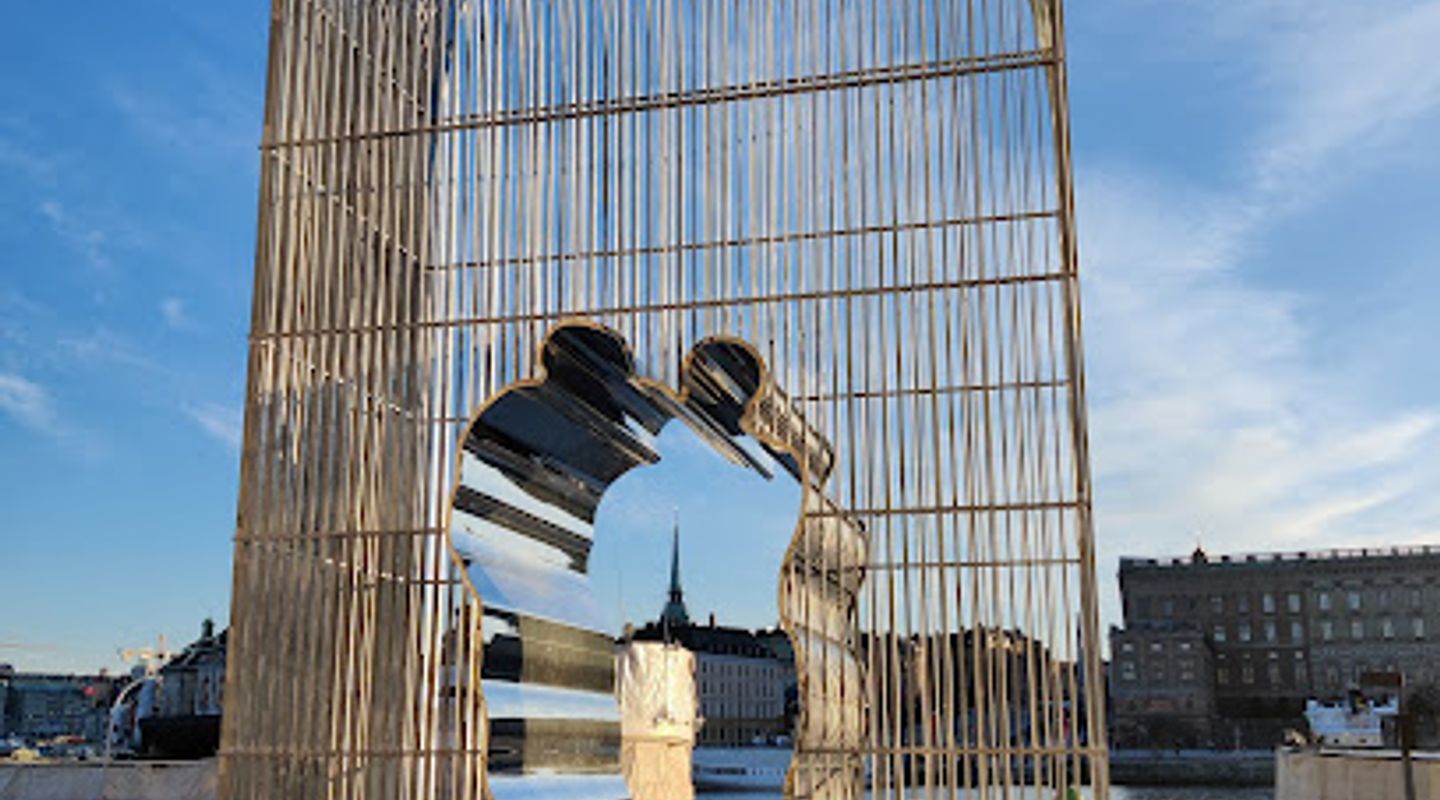
A 12‑metre polished‑steel, cage‑like arch pierced by two human silhouettes — Ai Weiwei’s public plea for freedom and passage beside Stockholm’s Nationalmuseum.
Ai Weiwei’s 'Arch' is a 12‑metre, cage‑like stainless‑steel sculpture installed outside the Nationalmuseum on the Blasieholmen peninsula in central Stockholm. Polished bars form a hollow arch pierced at its centre by the cut‑out silhouettes of two intertwined figures — a poetic, politically charged ode to freedom, movement and the human cost of borders. The work's reflective surface and waterfront setting make it a striking photographic subject at any hour.
On-site amenities
 Seating areas
 Information boards
Opening hours
- Every dayOpen 24 hours
Opening hours as listed on the venue’s Google Business Profile. Hours can change for services and special events, so check with the venue before you go.
- Address
- Södra Blasieholmshamnen 2, 111 48 Stockholm
Getting there
Public tram and bus
City bike or e‑scooter
Taxi or ride‑hail
Discover more about 'Arch' by Ai Weiwei
What the sculpture is and why it stands here
Ai Weiwei’s 'Arch' is a towering, cage‑like sculpture of polished steel that rises roughly 12 metres above the quay outside the Nationalmuseum on Blasieholmen. The body of the work resembles an oversized birdcage or vault; at its heart the metal is pierced by the negative‑space silhouettes of two people holding one another, their forms appearing to push through the bars. The piece was installed as a public artwork intended to stir reflection on freedom of movement, migration and human vulnerability, and its placement on the museum forecourt gives it a civic, outward‑facing presence.
Material, form and symbolic lines
Viewed up close, the sculpture’s mirrored steel panels create a play of reflections: the harbour, passing boats and the museum façade shimmer across the surface and bend subtly around the arch’s curvature. From different angles the cage reads alternately as containment and shelter; the negative silhouettes at the centre function as both absence and witness. The interplay of void and mass — polished metal that both conceals and reveals — is central to the work’s language and its repeated theme of human passage through barriers.
Historical threads and the artist’s voice
This iteration of 'Arch' continues a strand in Ai Weiwei’s work that engages political questions through monumental public sculpture. The piece was previously exhibited in other cities and carries layered references: to refugee movements, to constrained liberties, and to the artist’s own history of activism. Installed publicly on a museum forecourt, the sculpture functions as a civic gesture — an invitation to consider contemporary global tensions within a local urban landscape.
How the site shapes the experience
Sited on the Blasieholmen peninsula beside the Nationalmuseum and the harbour, the arch benefits from an open waterfront horizon and the traffic of the city — joggers, ferries, and the reflective activity of changing light. Sea breezes, the distant staccato of gulls and the metallic glint of the sculpture make the work feel alive to weather and time of day: a grey sky softens its mirror finish, while low sun transforms it into a luminous landmark. The surrounding paving and quay allow visitors to walk around and through visual lines without intrusive barriers, emphasising its public‑realm intent.
Photographic features and sensory details
Photographers and casual viewers alike will notice how the piece frames the human figure: the cut‑out silhouettes create photo opportunities that layer people and sculpture into one image. Up close the steel is cool to the touch and reflects the city’s colours; at night ambient lights from the museum and waterfront can scatter across the surface. The soundscape is urban but moderated by the water: distant boat motors, murmured conversation and the occasional gull, creating a contemplative setting rather than a noisy urban plaza.
Legacy and presence in the city
'Arch' is a temporary public monument intended to stimulate discourse as it occupies the museum forecourt and then moves to a future permanent location. Its scale, polished surfaces and human silhouette motif make it memorable within Stockholm’s string of waterfront artworks, where contemporary art interacts with maritime geography and civic architecture. As an artwork it functions both as an object of quiet observation and as a catalyst for broader conversations about movement, borders and human connection.
Evendo Review Centre
 Google
Guest reviews
Best time to go
Quietest: Jan, Feb & Mar · before 6am or from 11pm
Busy times are Evendo estimates for a typical year, to help you plan. Actual crowds vary with events, school holidays and the weather.
Explore 'Arch' by Ai Weiwei on the map
A handpicked selection of must-see spots near 'Arch' by Ai Weiwei, mapped for you.
Get your free copy of our complete guide to 'Arch' by Ai Weiwei, delivered straight to you.
Everything on this page, from opening hours and how to get there to Eve’s tips and the best time to go, in one PDF you can read offline, print or share.
Already have an account? Sign in
Your 'Arch' by Ai Weiwei guide is ready.
We'll send it to · Not you? Sign out

Getting your guide ready…
We are putting together a fresh copy of the 'Arch' by Ai Weiwei guide. This can take up to a minute.
This can take a few moments. If your browser asks, choose Allow so the download can start. You'll find the guide in your Downloads folder.
Nothing happened? Download it again
Sorry, the guide is taking longer than usual. Please try again in a minute, or get it by email instead.
Other nearby places you may find interesting
The closest places of the same kind, if this one is not quite what you had in mind.
-
-
-
-
-


Swipe for more places
More to explore near 'Arch' by Ai Weiwei

 Best experiences near 'Arch' by Ai Weiwei
 Best hotels near 'Arch' by Ai Weiwei
 Best landmarks near 'Arch' by Ai Weiwei
 Best attractions near 'Arch' by Ai Weiwei
 Best shops near 'Arch' by Ai Weiwei
 Best restaurants near 'Arch' by Ai Weiwei
 Best bars near 'Arch' by Ai Weiwei
Do you manage this location?
Take control to get all the benefits, like improved information, better appearance, and stronger visibility across AI-powered discovery.
Explore more

Explore more of Stockholm
Discover Stockholm: A captivating blend of history, culture, and natural beauty spread across 14 picturesque islands in Sweden's stunning capital city.
Explore Stockholm
Explore more of Sweden
Discover Sweden's breathtaking landscapes, vibrant cities, and rich cultural heritage. From the Northern Lights to historic castles, experience the essence of Scandinavia.
Explore Sweden