
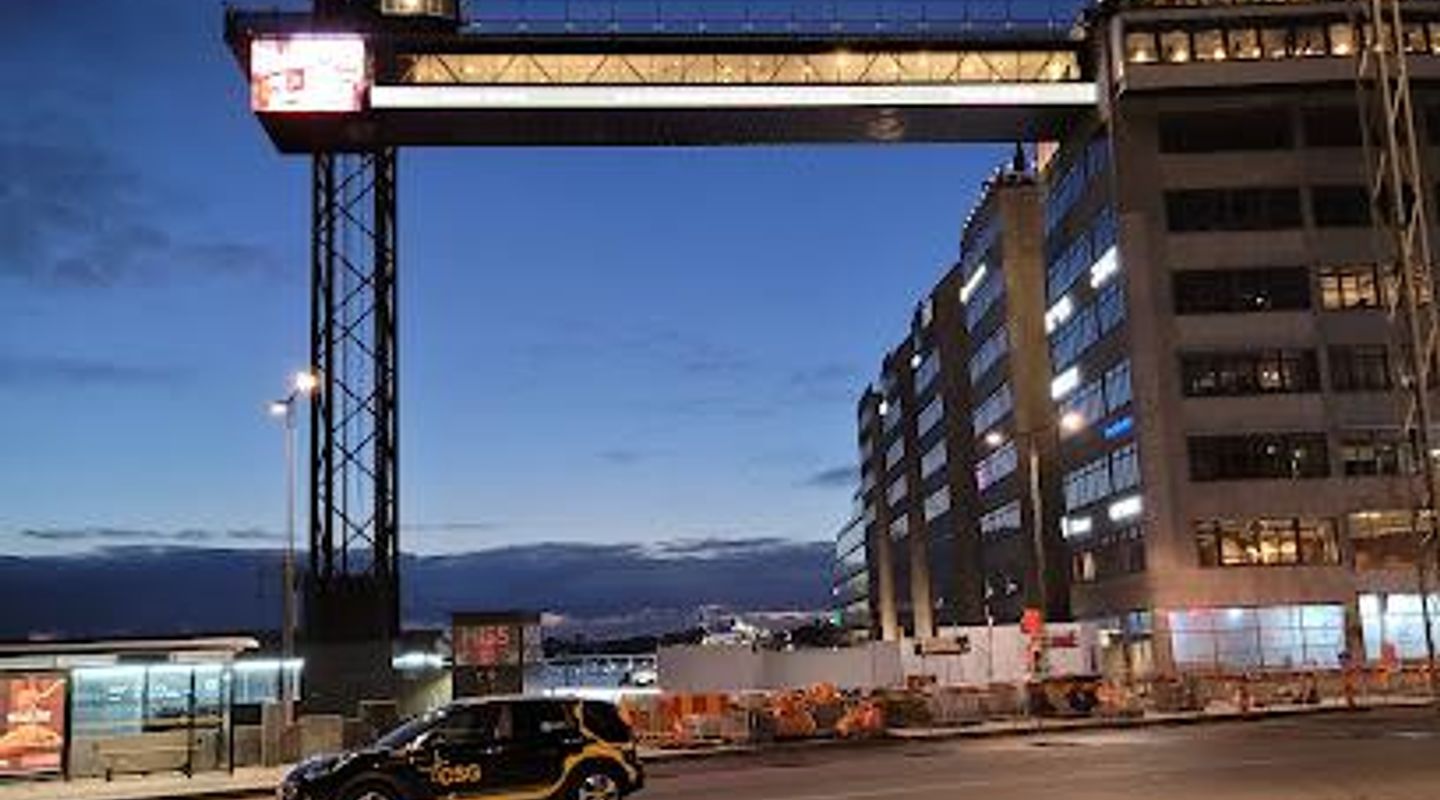
Katarina Elevator, Stockholm Travel Guide
A compact, historic public lift at Slussen offering a short mechanical ascent, city and harbour views, and a tangible slice of Stockholm’s transport history.
Katarina Elevator (Katarinahissen) is a historic public lift at Slussen on Södermalm in Stockholm that links Katarinavägen with Mosebacke torg and the heights above the harbour. The current single‑cabin structure dates from the 1930s and was replaced with a modernized cabin in 2023; it provides quick vertical transit and a compact viewing platform with sweeping city and water glimpses, blending functional engineering with local history.
A brief summary to Katarina Elevator
- Katarinavägen 3, Stockholm, 116 45, SE
- Click to display
- Duration: 0.25 to 0.75 hours
- Budget
-
 Outdoor
- Mobile reception: 4 out of 5
- Monday 8 am-10 pm
- Tuesday 8 am-10 pm
- Wednesday 8 am-10 pm
- Thursday 8 am-10 pm
- Friday 8 am-10 pm
- Saturday 8 am-10 pm
- Sunday 8 am-10 pm

Know before you go
Hi, I'm Eve. Here are a few practical things to know before exploring Katarina Elevator.
- Bring a light jacket near the platform — wind from the harbour can be stronger than at street level.
- Time a ride for late afternoon or early evening for warmer light on the water and layered city colours.
- Look for small historical plaques and the adjoining pedestrian bridges that are part of the site’s story.
Do you manage this location?
Take control to get all the benefits, like improved information, better appearance, and stronger visibility across AI-powered discovery. Learn more about listing your business on Evendo
Activate your presenceOther nearby places you may find interesting
The closest places of the same kind, if this one is not quite what you had in mind.


Explore Katarina Elevator on the Map
A handpicked selection of must-see spots near Katarina Elevator, mapped for you.
Unlock the Best of Katarina Elevator
Buy tickets
-
No tickets available
Book tours with entry


Book tours without entry


Getting There
-
Metro + Walk
Take the metro (T‑bana) to Slussen station; from the station concourse expect a 8–12 minute uphill pedestrian approach across urban stairs and ramps, terrain includes steps and inclined walkways and may be challenging with large luggage; frequent metro services run every few minutes; fare equals standard city metro ticket priced per local transit fare.
-
Tram / Bus + Short Walk
Use regional trams or city buses that stop at Slussen; combined transit and short walking time is typically 10–20 minutes depending on service; services run regularly but frequency can reduce late at night; walking routes include stairs and are not fully step‑free.
-
Taxi / Rideshare
A taxi or rideshare from central Stockholm takes about 5–12 minutes depending on traffic and time of day; expect limited street‑level stopping spots close to the lower Slussen area and possible extra time for drop‑off convenience; fares vary by provider and time but typically range within standard city taxi rates in local currency.
For the on-the-go comforts that matter to you
-
 Seating Areas
-
 Information Boards
-
 Trash Bins
Discover more about Katarina Elevator
Origin and 19th‑century engineering
The idea behind the elevator grew from Stockholm’s steep, patchwork topography and the need to connect the busy waterfront at Slussen with the higher streets of Södermalm. The very first lift on this site was authorised in 1881 and opened in 1883 as a pioneering piece of urban engineering that combined a footbridge and a mechanical lift to ease pedestrian movement up the slope. Early systems used steam power and then transitioned to electric drive as technology advanced, making the site a visible symbol of transport innovation in a rapidly modernising city.The 1930s rebuild and architectural character
During the 1930s the original installation was removed to make way for larger transport works at Slussen and a new, sturdier elevator was completed in 1936 as part of the contemporary redevelopment. The solid metal frame, viewing platform and pedestrian bridges that accompany the lift reflect functional 20th‑century construction — robust, utilitarian and integrated into the surrounding urban fabric rather than as an ornamental landmark. The elevator has historically sat beside, and been incorporated into, adjacent multi‑storey buildings and walkways that channel foot traffic across levels.Recent renewal and current form
After decades of service the installation was taken out of use for major renewal in the 2010s and returned in a redesigned form in the 2020s with a single, larger cabin replacing the older twin‑car arrangement. The modernized mechanism and cabin construction prioritise reliability and accessibility while retaining the characteristic experience of rising from the lower streets to the elevated promenade. The site now functions both as a practical vertical connection and as a concise viewpoint over harbour activity and the layered cityscape of central Stockholm.Sensory experience on site
From the elevator cabin you sense the city’s verticality: the metallic hum of the lift, the faint echo of traffic from the lower quay and the creak of footsteps on adjacent bridges. The viewing platform frames water, wharves and rooftops; gulls wheel above and ferry wakes stitch silver lines across the harbour below. In winter the metal feels cold under handrails and breath fogs the glass; on clear summer evenings the raised vantage makes the light on the water shimmer and the surrounding streets fall away in terraces.Local stories and cultural resonance
Katarina Elevator has long been a piece of Stockholm’s civic story — from its early days charging small fares, to serving as a backdrop in films and as a neighbourhood meeting point. The lift has been paired historically with nearby restaurants and terraces that trade on the sweeping sightlines it affords; its utilitarian silhouette has also been likened, in local commentary, to a modest urban tower that punctuates the Söder skyline.What to notice as you linger
Pay attention to the connection between bridge and cabin: the elevator is designed not as an isolated novelty but as a working node in a network of pedestrian passages and stairs that knit together different street levels. Look for fabric and colour changes between older masonry and newer metalwork, and for small plaques or design details that mark the phases of the elevator’s many lives. The location is compact — the experience is brief but vivid: a short mechanical ascent that places you above the bustle and gives a concentrated perspective on Stockholm’s maritime edge.












Your all‑in‑one travel companion app
Explore expert travel guides, compare and book tours, experiences, hotels, and more—all from the palm of your hand. Download now for seamless trip planning wherever your wanderlust takes you.


Explore More of Stockholm
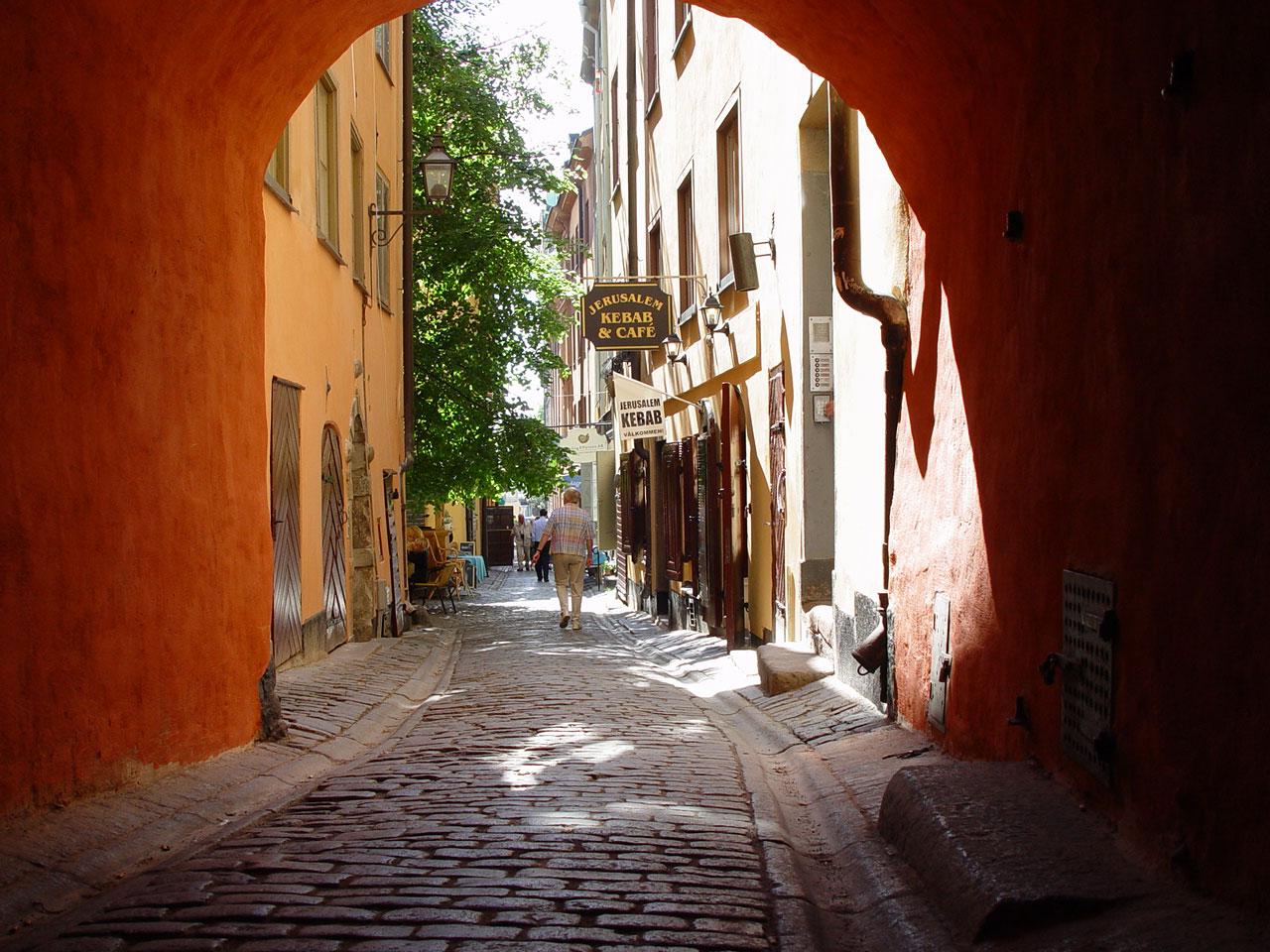
Looking beyond Katarina Elevator? Discover Stockholm for broader travel guides, local hot-spots, and regional highlights.
Explore Stockholm