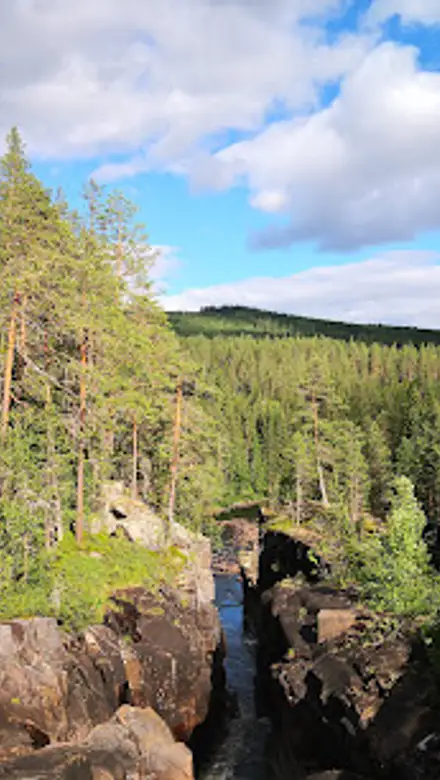
Rotensugnet Travel Guide
Free Guide: A rugged, narrow ravine where Rotälven and Rällan meet and a forceful waterfall plunges amid mossy cliffs and timber-era ruins.


A brief summary of Rotensugnet
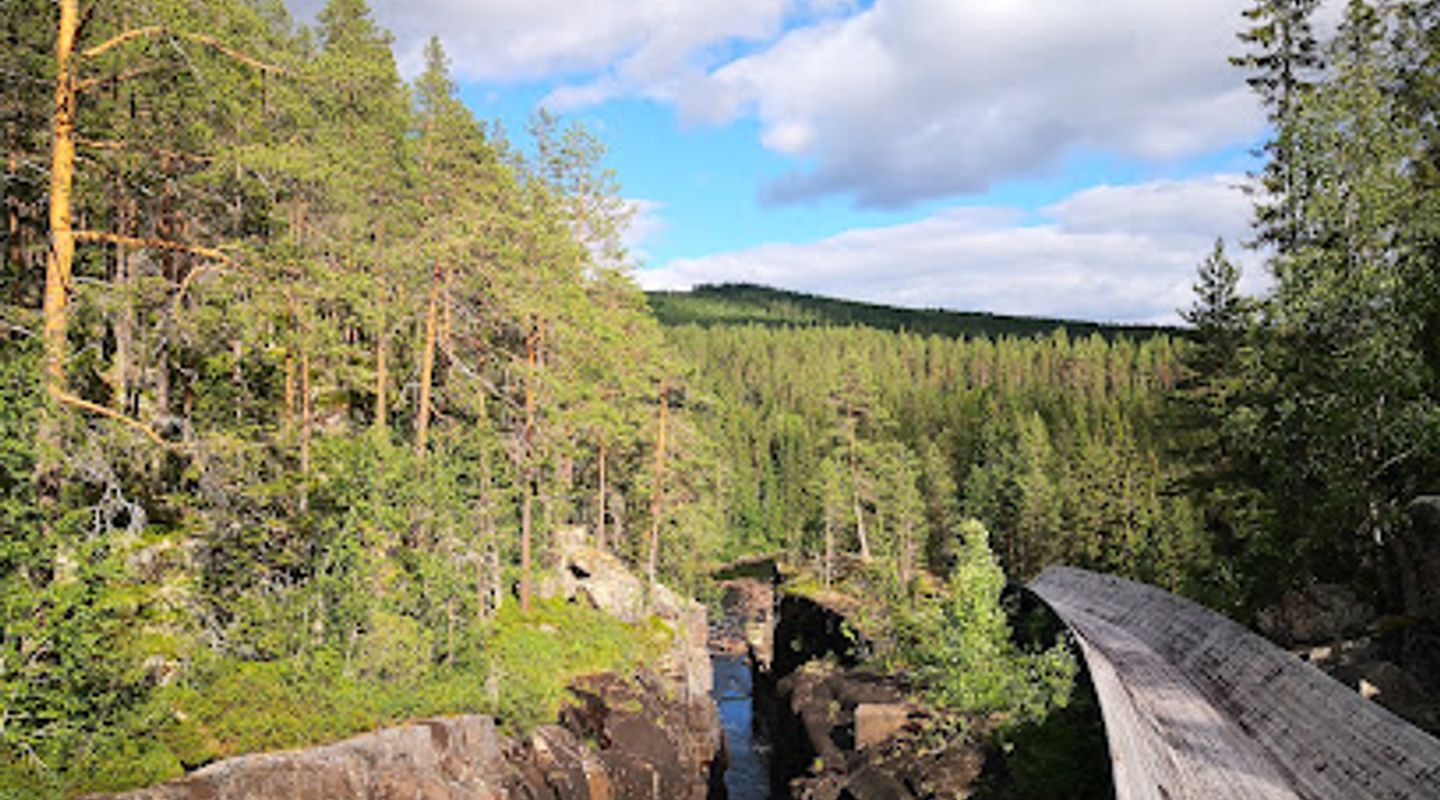
A rugged, narrow ravine where Rotälven and Rällan meet and a forceful waterfall plunges amid mossy cliffs and timber-era ruins.
Rotensugnet is a dramatic nature reserve north of Älvdalen where the Rotälven and Rällan rivers carve a deep, rocky ravine and form a small but powerful waterfall known locally as the Rotensugnet. The site combines sheer rock faces, moss-draped cliffs and remnants of historic timber-working infrastructure, offering a rugged, atmospheric spot for short hikes, geology-minded exploration and seasonally lush forest scenery.
On-site amenities
 Seating areas
 Information boards
 Trash bins
- Address
- 796 99 Älvdalen
Getting there
Car (regional roads)
Train + short walk
Guided walk or local shuttle
Discover more about Rotensugnet
The canyon carved by water and time
Rotensugnet occupies a narrow, canyon-like fissure where the Rotälven meets the Rällan and Älåsbäcken; the rivers have cut through layers of bedrock to reveal steep, stony walls and a forceful little waterfall that gives the reserve its name. The ravine’s tight, bowl-shaped sections concentrate the river’s energy and produce dramatic cascades and plunge pools amid slabs of limestone, sandstone and older crystalline rock.
Industrial traces in a wild setting
Scattered through the reserve are the quiet remains of 19th-century timber work: an old dam wall, flood-gates and sections of log channels used to guide timber past the falls. These low, weathered structures sit in contrast to the vertical cliffs and remind visitors that the landscape has long been a working place as well as a natural spectacle.
Textures of moss, lichen and microclimate
The sound of falling water creates a damp microclimate along the gorge where mosses and lichens cling to shaded rock faces, and trees grow at odd angles from crevices. After rain the trail becomes sticky with moisture and the spray from the waterfall hangs in the air, softening the light and intensifying the forest scents of wet pine, leaf litter and mineral-rich stone.
Walking the edges: trails and viewpoints
Trails in and around Rotensugnet lead you to several vantage points: a footbridge spans the Rällan giving a particularly intimate perspective of the falls, and a path that climbs toward Älåsen offers broader views of the ravine and surrounding forest. Paths can be steep and stony in places; underfoot is uneven and may be slippery when wet, so sturdy footwear and careful pacing are essential.
Seasonal character and safety notes
The reserve’s character shifts through the year: spring runoff makes the falls most vigorous, mid-summer brings rich green growth and autumn dyes the forest in ochres and rusts. Rotensugnet lies within the Älvdalen shooting area, and access may be restricted during scheduled exercises; visitors are advised to check safety notices before planning a visit. Weather and trail conditions influence both safety and the sensory experience, so expect a raw, elemental atmosphere at times.
Why Rotensugnet matters
This compact reserve is a concentrated lesson in fluvial geology, forest ecology and local industrial heritage. The interplay of water-driven erosion, layered rock, and human traces gives the site a layered narrative: a small, forceful waterfall that has shaped both stone and local livelihoods, standing now as a place to listen to water, study rock, and appreciate a rugged corner of Dalarna’s river country.
Evendo Review Centre
 Google
Guest reviews
Best time to go
Quietest: Jan, Feb & Dec · before 6am or from 8pm
Busy times are Evendo estimates for a typical year, to help you plan. Actual crowds vary with events, school holidays and the weather.
Explore Rotensugnet on the map
A handpicked selection of must-see spots near Rotensugnet, mapped for you.
Get your free copy of our complete guide to Rotensugnet, delivered straight to you.
Everything on this page, from opening hours and how to get there to Eve’s tips and the best time to go, in one PDF you can read offline, print or share.
Already have an account? Sign in
Your Rotensugnet guide is ready.
We'll send it to · Not you? Sign out

Getting your guide ready…
We are putting together a fresh copy of the Rotensugnet guide. This can take up to a minute.
This can take a few moments. If your browser asks, choose Allow so the download can start. You'll find the guide in your Downloads folder.
Nothing happened? Download it again
Sorry, the guide is taking longer than usual. Please try again in a minute, or get it by email instead.
Other nearby places you may find interesting
The closest places of the same kind, if this one is not quite what you had in mind.
-
-
-
-
-


Swipe for more places
More to explore near Rotensugnet

 Best experiences near Rotensugnet
 Best hotels near Rotensugnet
 Best landmarks near Rotensugnet
 Best attractions near Rotensugnet
 Best shops near Rotensugnet
 Best restaurants near Rotensugnet
 Best bars near Rotensugnet
Do you manage this location?
Take control to get all the benefits, like improved information, better appearance, and stronger visibility across AI-powered discovery.
Explore more

Explore more of Stöten
Discover Stöten: A premier ski resort in Sweden offering thrilling slopes, family-friendly activities, and year-round outdoor adventures in the heart of Sälen mountains.
Explore Stöten
Explore more of Sweden
Discover Sweden's breathtaking landscapes, vibrant cities, and rich cultural heritage. From the Northern Lights to historic castles, experience the essence of Scandinavia.
Explore Sweden