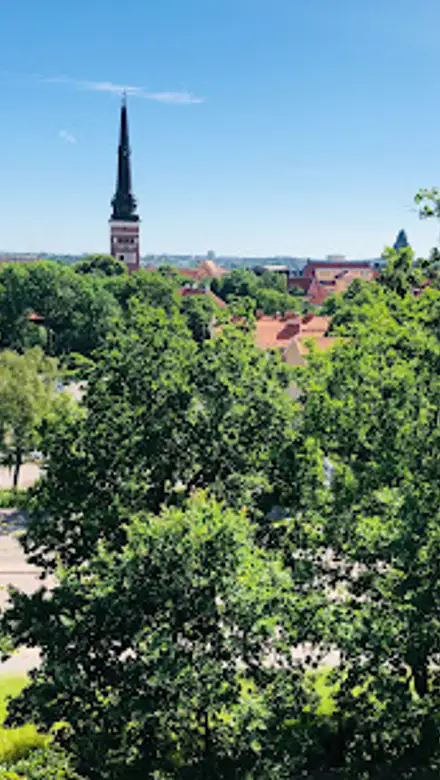
Djäkneberget, Västerås Travel Guide
Free Guide: Hilltop haven of inscribed stones, ancient trees, and city vistas—Sam Lidman's 19th-century gift to Västerås, blending history, nature, and recreation.


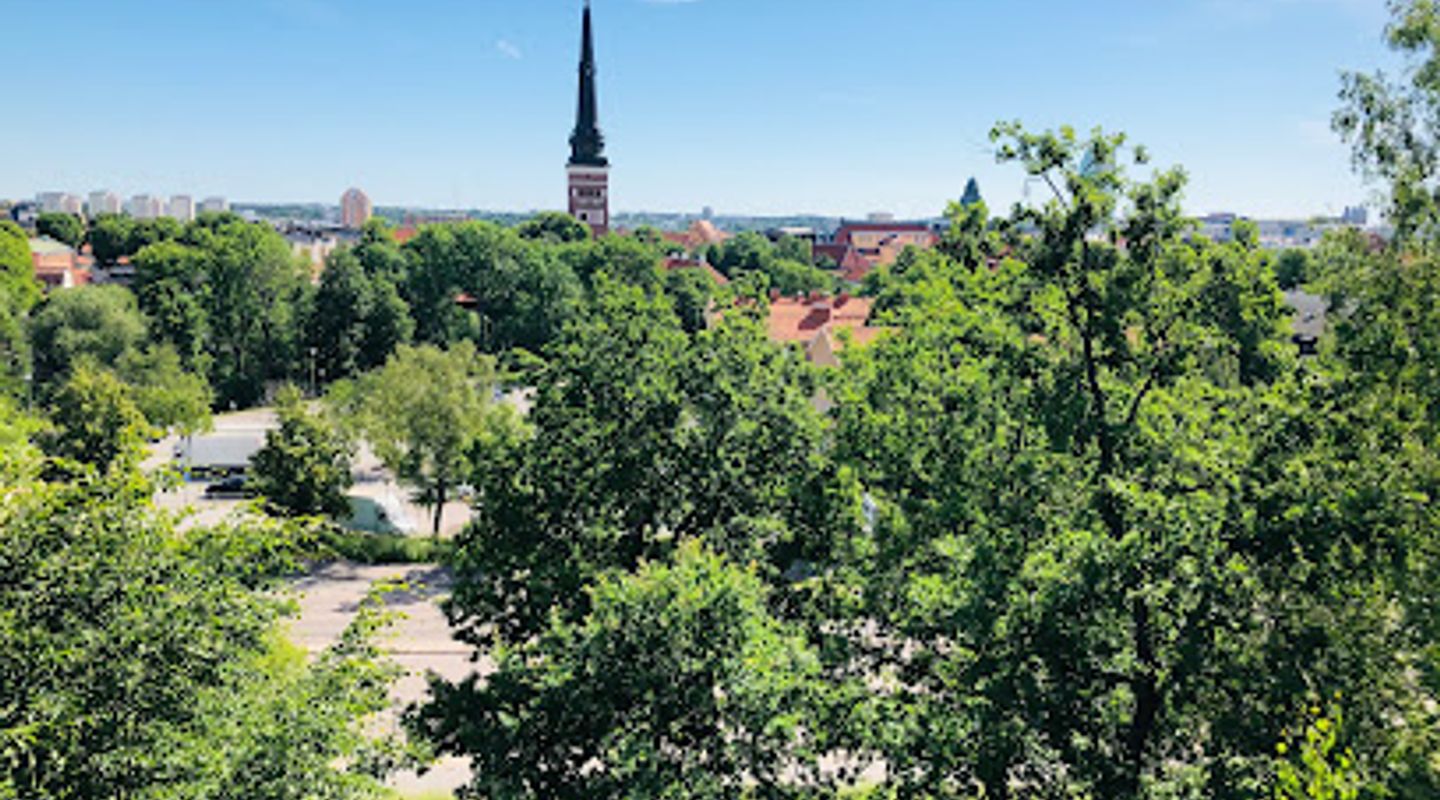
A brief summary of Djäkneberget
Hilltop haven of inscribed stones, ancient trees, and city vistas—Sam Lidman's 19th-century gift to Västerås, blending history, nature, and recreation.
Djäkneberget is a cherished nature park in Västerås, perched on a hilltop just west of the city center. Spanning about 12 hectares, it features winding paths, ancient trees, over 500 inscribed stone monuments, ponds teeming with protected amphibians, a playground, minigolf, and dance pavilion. Created in the late 19th century by eccentric teacher Sam Lidman, the park offers panoramic views of the cathedral, city hall, and Lake Mälaren, blending cultural history with serene recreation.
On-site amenities
 Restrooms
 Drink options
 Food options
 Seating areas
 Picnic areas
 Trash bins
 Information boards
Opening hours
- Every dayOpen 24 hours
Opening hours as listed on the venue’s Google Business Profile. Hours can change for services and special events, so check with the venue before you go.
- Address
- Djäknebergsgatan, 724 61 Västerås
- Website
Getting there
Bus
Walking
Cycling
Driving
Discover more about Djäkneberget
Origins in Student Revelry and Rifle Practice
Djäkneberget's name derives from 'djäkne,' the pupils of Västerås' historic gymnasium who trained in gymnastics and marksmanship here for centuries. From the 1700s, these students gathered on the hill for raucous Walpurgis Night celebrations with bonfires and fireworks, a tradition halted in the 1830s after a tragic fire claimed two lives. Later, from around 1862, the site served as a shooting range for Västerås Voluntary Sharpshooting Association, embedding it deeply in local martial and festive lore.
Sam Lidman's Visionary Transformation
The park's modern form emerged between 1862 and 1895 through the tireless efforts of Sam Lidman, a former captain and school lecturer. Transforming a barren rocky knoll into a lush oasis, Lidman personally quarried and gravelled 1,800 cubic fathoms of paths, planted 1,100 trees including oak, beech, birch, and maple, and built terraces, trails, and quaint pavilions. His crowning legacy: over 500 inscriptions etched into rocks and boulders—names, quotes, mottos reflecting philosophy, poetry, and personal devotion—all carved by his own hand.
Natural and Architectural Layers
Geologically ancient at 1.8 billion years old, the hill rose from the Littorina Sea 4,500 years ago, its granite now cradling diverse flora and fauna. Small ponds shelter protected frogs, toads, and newts, while massive trees form shaded groves. Historic water reservoirs from the late 1800s, dubbed 'Vattenborgen,' once supplied the city; one survives repurposed over time. Early 20th-century additions include a water tower designed by architect Erik Hahr, plus a statue of Lidman at the entrance inscribed 'Te chi vede'—'A God who sees you, time that flies, eternity that awaits.'
Recreational Heart of Västerås
Today, Djäkneberget pulses with community life amid its green expanses, accessible playground, and minigolf course. Summer evenings bring dancing on the pavilion, while grassy lawns host picnics and national day gatherings. Slinging paths invite contemplative walks, revealing inscribed stones like hidden messages from the past. Benches at viewpoints frame vistas of Västerås Cathedral, City Hall, the Skrapan skyscraper, and glimpses of Lake Mälaren, making it an ideal urban escape.
Cultural and Ecological Significance
Recognized for its high cultural-historical value, Djäkneberget exemplifies mid-19th-century Nordic park ideals, prioritizing native nature over formal gardens. Largely preserved in its original design, it stands as one of Sweden's earliest public natural parks. Adjacent Djäknebergsskolan, opened in 1894, now houses folk high school and art programs, reinforcing the site's educational roots. The park's biodiversity and intact features underscore its role as a living testament to human-nature harmony.
Evendo Review Centre
 Google
Guest reviews
Best time to go
Quietest: Jan, Feb & Dec · before 8am or from 11pm
Busy times are Evendo estimates for a typical year, to help you plan. Actual crowds vary with events, school holidays and the weather.
Explore Djäkneberget on the map
A handpicked selection of must-see spots near Djäkneberget, mapped for you.
Get your free copy of our complete guide to Djäkneberget, delivered straight to you.
Everything on this page, from opening hours and how to get there to Eve’s tips and the best time to go, in one PDF you can read offline, print or share.
Already have an account? Sign in
Your Djäkneberget guide is ready.
We'll send it to · Not you? Sign out

Getting your guide ready…
We are putting together a fresh copy of the Djäkneberget guide. This can take up to a minute.
This can take a few moments. If your browser asks, choose Allow so the download can start. You'll find the guide in your Downloads folder.
Nothing happened? Download it again
Sorry, the guide is taking longer than usual. Please try again in a minute, or get it by email instead.
Other nearby places you may find interesting
The closest places of the same kind, if this one is not quite what you had in mind.
-
-
-
-
-


Swipe for more places
More to explore near Djäkneberget

 Best experiences near Djäkneberget
 Best hotels near Djäkneberget
 Best landmarks near Djäkneberget
 Best attractions near Djäkneberget
 Best shops near Djäkneberget
 Best restaurants near Djäkneberget
 Best bars near Djäkneberget
Do you manage this location?
Take control to get all the benefits, like improved information, better appearance, and stronger visibility across AI-powered discovery.
Explore more

Explore more of Västerås
Discover Västerås, a captivating blend of history, nature, and modernity by the scenic Lake Mälaren, offering a rich tapestry of experiences for every traveler.
Explore Västerås
Explore more of Sweden
Discover Sweden's breathtaking landscapes, vibrant cities, and rich cultural heritage. From the Northern Lights to historic castles, experience the essence of Scandinavia.
Explore Sweden