

Free Västerås Travel Guide & Mobile App
Plan your Västerås trip with Evendo. Get free guides to top attractions, restaurants, hotels, and bars. Web access or download the mobile app.


Västerås combines Lake Mälaren waterfronts, medieval heritage, industrial history and lively cultural attractions in central Sweden, close to Stockholm.
Lake Mälaren and the City Centre
Västerås stands on the northern shore of Lake Mälaren in central Sweden, where a compact historic centre gives way to broad waterfronts, parks and a working modern city. Its setting makes the city easy to explore on foot: medieval streets gather around Västerås Cathedral, while the harbour and promenade open towards the lake. Cafés, restaurants, galleries and independent shops bring contemporary life to the centre, particularly around Stora Gatan and the older streets close to the cathedral.Read more about Västerås
Medieval Heritage and Industrial Ingenuity
A Base for Central Sweden
When is the best time to visit Västerås?
Best: June–August · 22–25°C| Month | High (°C) | Rainfall (mm) |
|---|---|---|
| January | -1 | 22 |
| February | 0 | 16 |
| March | 1 | 16 |
| April | 10 | 30 |
| May | 17 | 39 |
| June (best) | 22 | 59 |
| July (best) | 25 | 74 |
| August (best) | 24 | 67 |
| September | 19 | 53 |
| October | 12 | 37 |
| November | 5 | 29 |
| December | 1 | 25 |
Getting to and around Västerås
How to get there
Transportation
Best attractions in Västerås
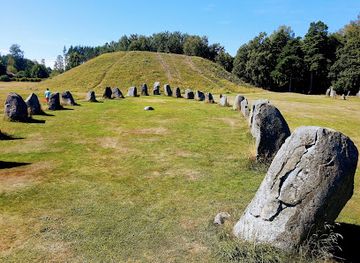
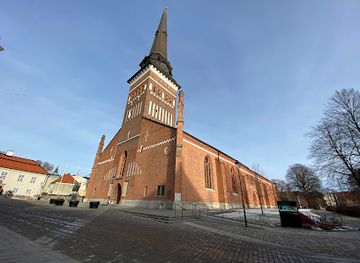
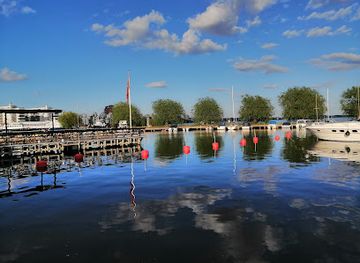
Västerås Cathedral provides a compelling starting point, with medieval architecture, royal tombs and layers of ecclesiastical history in the heart of the old city. Nearby Västerås Castle introduces the political history of the Swedish Reformation, while the Västerås Art Museum presents Swedish and international modern and contemporary art. Vallby Open Air Museum spreads across a sizeable site of historic farms, workshops and buildings from Västmanland, making regional life tangible rather than abstract. Families and engineering enthusiasts may be drawn to Kokpunkten, an indoor water park in a converted former power station, and the harbour area offers promenades, boats and views across Lake Mälaren. Outside the central streets, Anundshög reveals a prehistoric ceremonial landscape with a great burial mound and stone settings. Together these places show Västerås as a city of medieval institutions, industrial invention, regional traditions and open water.
-
Shopping mall
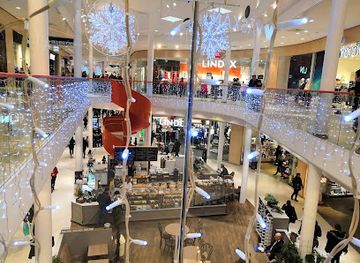
Erikslund Shopping Center
A spacious, practical retail hub in Västerås — IKEA and nearly 80 shops under one roof for everyday needs and big purchases.
15 min drive · 5.1 km from city centre
-
Aquatic centre
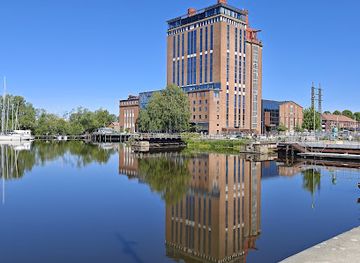
Kokpunkten Actionbad
An eight‑storey, year‑round indoor action waterpark in Västerås mixing high‑speed slides, VR rides, family splash zones and warm relaxation pools.
17 min walk · 1.3 km from city centre
-
Shopping mall
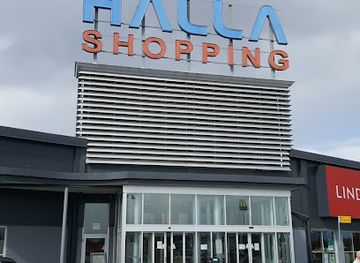
Hälla Shopping
A practical suburban shopping centre in Västerås where grocery anchors, household stores and cafés meet for efficient errands and relaxed coffee breaks.
13 min drive · 4.3 km from city centre
-
Open air museum
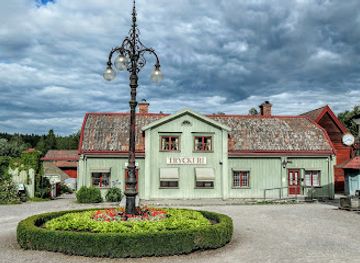
Vallby friluftsmuseum
A spacious open‑air museum where rescued farmhouses, orchards and native breeds bring centuries of Västmanland rural life back to the landscape.
6 min drive · 2.0 km from city centre
Best landmarks in Västerås
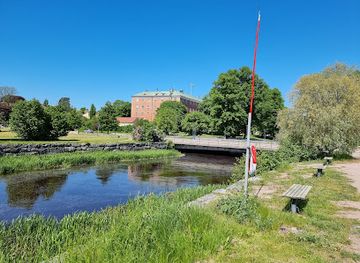
Västerås Cathedral dominates the historic centre and is one of the city's defining landmarks, its medieval fabric and later additions reflecting the importance of the former diocese. Västerås Castle, close to the cathedral, represents royal power and the political changes of the 16th century, including the setting of the 1527 Riksdag. The Old Town contains surviving historic buildings and streets that convey the scale of the medieval settlement around the Svartån. At the edge of the central area, the former ASEA industrial environment and the converted power-station building now associated with Kokpunkten recall Västerås's transformation into an international engineering city. Anundshög, outside the centre, is a major prehistoric landmark with a burial mound and stone ship settings. Together these sites connect religious authority, Swedish state formation, industrial development and much older ceremonial traditions.
-
Tourist attraction
Anundshög
Sweden's largest burial mound crowns an Iron Age power center with stone ships, runestones, and medieval thing echoes—pure Viking mystery awaits.
18 min drive · 6.1 km from city centre
-
Cathedral
Västerås Domkyrka
A medieval cathedral at the heart of Västerås — layered architecture, royal tombs and a treasury of liturgical treasures.
3 min walk · 0.3 km from city centre
-
Castle
Tidö Castle
Sweden's pristine Dutch Renaissance gem from the Great Power era, where 43 intarsia doors, motorcycle lore, and misty parklands whisper 400 years of history amid bird-filled bays.
32 min drive · 12 km from city centre
-
Tourist attraction
Västerås Castle
Riverside Renaissance fortress in Västerås, blending 16th-century royal history with scenic walks, events, and casual dining in a storied Swedish setting.
7 min walk · 0.5 km from city centre
Explore Västerås on the map
Plan your Västerås trip on one map. See where the top attractions, landmarks, restaurants, bars and hotels are, find what's near where you're staying, and book hotels and experiences in a few clicks.
Best hotels in Västerås
Best restaurants in Västerås
Västerås's dining scene reflects central Sweden's preference for seasonal produce, bread, dairy, fish, game and carefully prepared everyday cooking. Restaurants in the centre and around the harbour range from modern Swedish menus to international food, while cafés provide the customary Swedish fika of coffee with a pastry or cake. Look for dishes and ingredients associated with Swedish cooking rather than a narrowly defined Västerås speciality: pickled herring, cured salmon, meatballs, potatoes, chanterelles and locally sourced vegetables appear according to season. Bakeries and casual cafés are useful for lighter meals, and the city centre has the greatest concentration of restaurants. The waterfront adds a more open setting during warmer months, while former industrial areas have encouraged contemporary dining and hotel restaurants. Dining times and payment practices are generally flexible, but reservations may be sensible for popular evening venues and weekends.
-
Restaurant
Kajplats 9
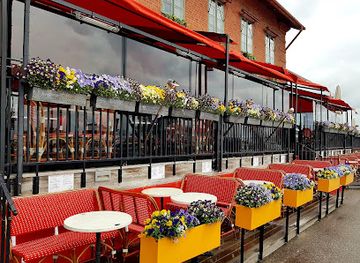
Harbour-side brasserie in Västerås offering seasonal seafood, hearty classics and a sunny terrace with views over Lake Mälaren.
11 min walk · 0.9 km from city centre
-
Tapas
Pinchos
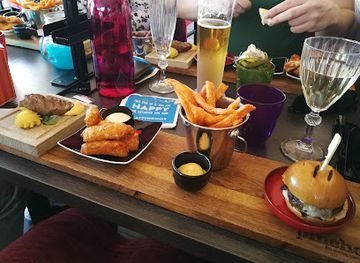
App-powered tapas paradise on Västerås' Stora Torget: global bites, circus flair, and dazzling drinks for unforgettable shared meals.
3 min walk · 0.2 km from city centre
-
Hamburger
Hamburgeriet
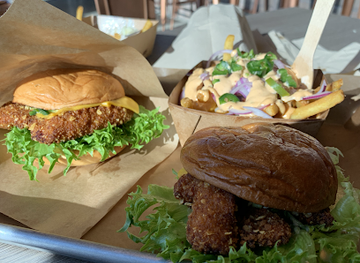
A dependable Kopparlunden burger spot offering hearty, well-built burgers, simple sides and a relaxed, family-friendly atmosphere.
10 min walk · 0.8 km from city centre
-
Restaurant
Brasserie Stadsparken
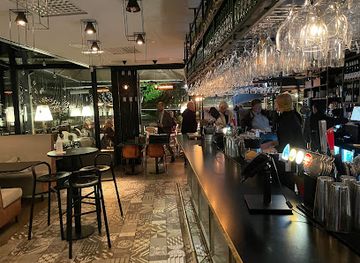
A city-centre brasserie by Stadsparken serving classic, comfort-driven dishes, a broad drinks list and late-night conviviality in Västerås.
3 min walk · 0.3 km from city centre
Best bars in Västerås
Västerås has a modest but varied evening scene concentrated mainly in the city centre, where pubs, hotel bars, cocktail venues and restaurants provide relaxed places to meet after work or sightseeing. Student life and cultural events add energy around selected evenings, while live music and performances appear in established cultural venues and event spaces rather than in a single dedicated nightlife quarter. The harbour and former industrial waterfront can offer a more atmospheric setting for an evening drink, particularly in summer, although activity is seasonal. Nightclubs and late venues exist on a smaller scale than in Stockholm, and the character of the city after dark is generally social and locally orientated rather than all-night metropolitan. Concerts, theatre and museum events can be good alternatives when visitors want an evening centred on culture rather than drinking.
-
American
O'Learys
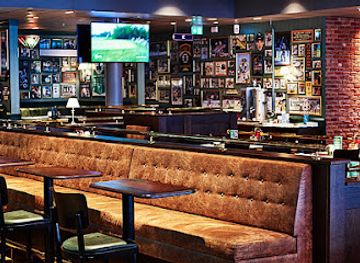
Västerås's ultimate sports bar playground: bowl strikes, savor burgers, catch live games and music in a 4000m² Boston-style haven at Stora Torget.
2 min walk · 0.1 km from city centre
-
Gastropub
The Bishops Arms - Västerås
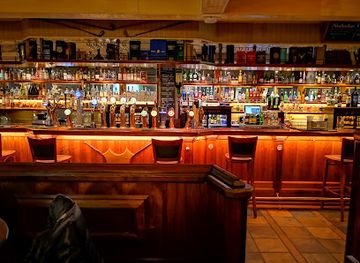
Classic British gastropub charm on Västerås’ Stora Torget — wide beers and whiskies, hearty pub food and a cosy wood-panelled interior.
2 min walk · 0.1 km from city centre
-
Bar
NOM
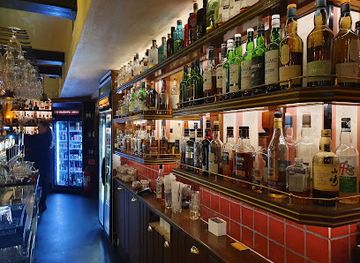
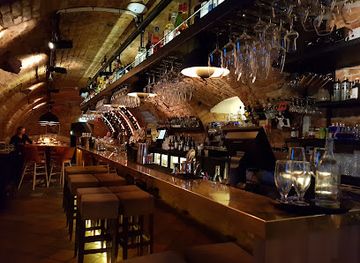
Rustic 1850s gem on Stora Gatan serving seasonal Nordic plates, fine wines, and cocktails in Västerås's heart—lunch, dinner, or AW bliss.
3 min walk · 0.2 km from city centre
-
Sports bar
Pitcher's
British-inspired sport bar in Västerås city center: smash burgers, live matches, cocktails, and group games fuel the electric pub atmosphere.
1 min walk · 0.1 km from city centre
Best nightclubs in Västerås
Västerås has a modest but varied evening scene concentrated mainly in the city centre, where pubs, hotel bars, cocktail venues and restaurants provide relaxed places to meet after work or sightseeing. Student life and cultural events add energy around selected evenings, while live music and performances appear in established cultural venues and event spaces rather than in a single dedicated nightlife quarter. The harbour and former industrial waterfront can offer a more atmospheric setting for an evening drink, particularly in summer, although activity is seasonal. Nightclubs and late venues exist on a smaller scale than in Stockholm, and the character of the city after dark is generally social and locally orientated rather than all-night metropolitan. Concerts, theatre and museum events can be good alternatives when visitors want an evening centred on culture rather than drinking.
-
Night club
Madame Josephine
Västerås's hottest new nightclub: DJ gigs, thumping beats, and endless nights of dance-floor magic in the city heart.
3 min walk · 0.2 km from city centre
-
Bar
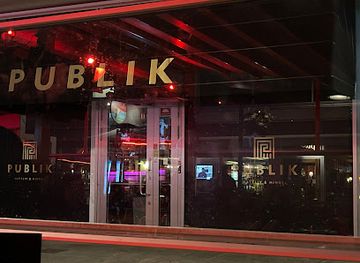
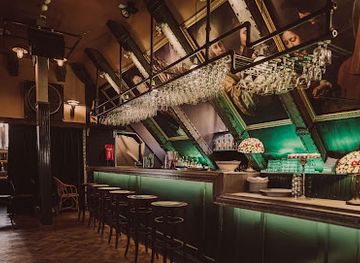
Publik
Västerås' massive nightclub with dual dance floors, rooftop terrace, and space for 1400—perfect for epic weekends of music, cocktails, and group revelry.
1 min walk · 0.1 km from city centre
-
 Night club
Bessemerska Pizzeria
Västerås' quirky pizzeria-nightclub hybrid: savor pizza by day, dance the night away on weekends amid neon glow and thumping beats.
13 min drive · 4.5 km from city centre
-
Night club
Hatten
Västerås's weekend dance haven: pulsating beats, lively crowds, and non-stop energy from 11pm to 4am on Fridays and Saturdays at Slottsgatan's hottest night club.
3 min walk · 0.2 km from city centre
Best shops in Västerås
Shopping in Västerås is centred on the pedestrian-friendly streets around Stora Gatan, with national retailers, independent shops, cafés and services gathered within an easily navigable central area. The city-centre shopping complexes, including Igor, provide a practical concentration of fashion, everyday goods and food, while smaller businesses and specialist retailers are found along adjoining streets. Visitors seeking locally characteristic purchases should look for Swedish design, craftwork, woollens, ceramics, glass, wooden objects and regional food products rather than generic souvenirs. Temporary markets and seasonal events can add a more local character, but their timing varies. The historic centre is the most pleasant area for combining retail with the cathedral quarter and riverside walks; larger out-of-centre retail areas are more functional and generally better suited to visitors searching for specific household or clothing stores.
-
Second hand store
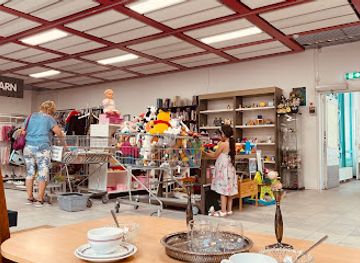
Myrorna - Second hand Västerås
Centrally located charity second‑hand shop offering rotating clothes, homeware and donation services — practical, sustainable shopping on Stora Gatan.
4 min walk · 0.3 km from city centre
-
Craft store
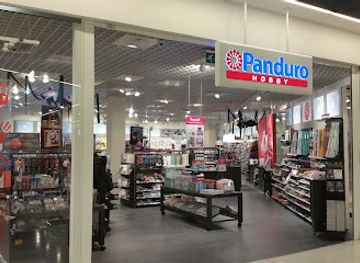
Panduro Hobby AB
A practical, well-stocked craft store in Citygallerian Igor offering supplies, kits and inspiration for makers of every level.
1 min walk · 0.1 km from city centre
-
General store
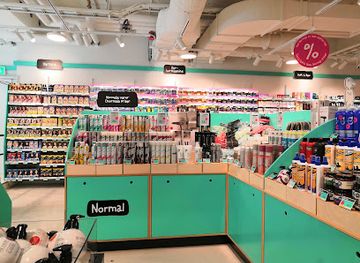
Normal
A compact, no‑frills discount general store in central Västerås specialising in toiletries and value cosmetics.
1 min walk · 0.1 km from city centre
-
Clothing store
Nya Thulins
A calm, service-minded boutique on Stora Gatan offering classic Scandinavian clothing and practical wardrobe pieces.
4 min walk · 0.3 km from city centre
Get your free copy of our complete guide to Västerås, delivered straight to you.
Everything on this page, from attractions and restaurants to essentials and local phrases, in one PDF you can read offline, print or share.
Already have an account? Sign in
Your Västerås guide is ready.
We'll send it to · Not you? Sign out

Getting your guide ready…
We are putting together a fresh copy of the Västerås guide. This can take up to a minute.
This can take a few moments. If your browser asks, choose Allow so the download can start. You'll find the guide in your Downloads folder.
Nothing happened? Download it again
Sorry, the guide is taking longer than usual. Please try again in a minute, or get it by email instead.
Västerås essentials
Currency and Payment
Safety
Emergency Situations
Do's and Don'ts
Local Tips
From Eve
Local phrases worth knowing
You don't need to get them perfect. A few words go a long way, and locals appreciate the effort.
Basics
| English | Local | Say it |
|---|---|---|
| Hello | Hej | [hey] |
| Goodbye | Hej då | [hey doh] |
| Yes | Ja | [yah] |
| No | Nej | [nay] |
| Please/You're welcome | Snälla/Tack | [snell-ah/tahck] |
| Thank you | Tack | [tahck] |
| Excuse me/Sorry | Ursäkta | [ur-sayk-tah] |
| How are you? | Hur mår du? | [hoor mohr doo] |
| Fine. And you? | Bra. Och du? | [bra. oh-sh doo] |
| Do you speak English? | Talar du engelska? | [tah-lahr doo eng-els-kah] |
| I don't understand | Jag förstår inte | [yahg fur-stor in-teh] |
Eating & Drinking
| English | Local | Say it |
|---|---|---|
| I'd like to see the menu, please | Jag skulle vilja se menyn, tack | [yahg skool-leh vil-yah seh men-in, tahck] |
| I don't eat meat | Jag äter inte kött | [yahg at-ehr in-teh shuht] |
| Cheers! | Skål! | [skohl] |
| I would like to pay, please | Jag skulle vilja betala, tack | [yahg skool-leh vil-yah bet-ah-lah, tahck] |
Emergencies
| English | Local | Say it |
|---|---|---|
| Help! | Hjälp! | [hyelp] |
| Go away! | Gå iväg! | [goh ee-vehg] |
| Call the Police! | Ring polisen! | [ring poh-lee-sehn] |
| Call a doctor! | Ring en läkare! | [ring ehn leh-kah-reh] |
| I'm lost | Jag är vilse | [yahg ehr veel-seh] |
| I'm ill | Jag är sjuk | [yahg ehr shyook] |
Shopping
| English | Local | Say it |
|---|---|---|
| I'd like to buy... | Jag skulle vilja köpa... | [yahg skool-leh vil-yah choh-pah] |
| I'm just looking | Jag tittar bara | [yahg tee-tahr bar-ah] |
| How much is it? | Hur mycket kostar det? | [hoor myk-ket kohs-tar deht] |
| That's too expensive | Det är för dyrt | [deht ehr fur deert] |
| Can you lower the price? | Kan du sänka priset? | [kahn doo sahn-kah prees-et] |
Time & Numbers
| English | Local | Say it |
|---|---|---|
| What time is it? | Vad är klockan? | [vahd ehr klohk-ahn] |
| It's one o'clock | Klockan är ett | [klohk-ahn ehr eht] |
| Half past (10) | Halv tio | [hahlv tee-oh] |
| Morning | Morgon | [mohr-gon] |
| Afternoon | Eftermiddag | [ef-ter-mee-dag] |
| Evening | Kväll | [kvell] |
| Yesterday | Igår | [ee-gohr] |
| Today | Idag | [ee-dahg] |
| Tomorrow | Imorgon | [ee-mohr-gon] |
| 1 | En | [ehn] |
| 2 | Två | [tvoh] |
| 3 | Tre | [treh] |
| 4 | Fyra | [fy-rah] |
| 5 | Fem | [fem] |
| 6 | Sex | [sehx] |
| 7 | Sju | [s-yoo] |
| 8 | Åtta | [aw-tah] |
| 9 | Nio | [nee-oh] |
| 10 | Tio | [tee-oh] |
Transport & Directions
| English | Local | Say it |
|---|---|---|
| Where's a/the...? | Var finns en/den...? | [vahr fins ehn/dehn] |
| What's the address? | Vad är adressen? | [vahd ehr ah-dress-en] |
| Can you show me (on the map)? | Kan du visa mig (på kartan)? | [kahn doo vee-sah meeg (poh kar-tahn)] |
| When's the next (bus)? | När går nästa (buss)? | [nahr gohr nes-tah (boos)] |
| A ticket (to ....) | En biljett (till ....) | [ehn beel-yet (teel)] |
History of Västerås
Early Settlement beside the Mälaren
The Västerås area has been inhabited since prehistoric times, when the shores and waterways of Lake Mälaren supported farming, fishing and trade. The most visible evidence is at Anundshög, east of the modern centre, where a large burial mound, stone ship settings and a monumental avenue indicate the importance of the landscape during the Iron Age and Viking Age. Changing water levels have altered the shoreline considerably since then, but the connection between settlement, agriculture and the Mälaren waterway remained fundamental. The early site at Anundshög and later settlement around the river Svartån show that Västerås developed within a wider regional network rather than as an isolated community.
The Medieval Town and Diocese
Västerås emerged as an important medieval settlement at the meeting point of the Svartån and Lake Mälaren. A diocese was established here in the 12th century, and Västerås Cathedral became the central religious institution of the surrounding region. Trade along the Mälaren and the river supported the town's growth, while ecclesiastical administration gave it influence beyond its modest size. The cathedral, whose present fabric includes major medieval phases, remains the clearest surviving expression of this period. The medieval street pattern around the cathedral and the river also preserves the location of the town's earliest civic and commercial core.
Reformation and Royal Assemblies
Västerås gained national importance during the political and religious upheavals of the 16th century. The Riksdag of Västerås in 1527 supported Gustav Vasa's efforts to reduce the power and wealth of the Roman Catholic Church in Sweden, making the city a significant setting in the Swedish Reformation. Västerås Castle, associated with royal administration and the crown's presence, reflects the city's strategic role during this era. Later assemblies in Västerås continued to connect the town with national political life. The Reformation transformed the cathedral, the diocese and the ownership of church property, leaving a lasting mark on the city's institutions.
Trade, Mining and Urban Growth
From the early modern period onwards, Västerås benefited from its position on Lake Mälaren and its links with the mining districts of central Sweden. Agricultural produce, iron and other goods moved through the region, while the Svartån provided both transport and power. The town expanded gradually beyond its medieval centre, and civic buildings, industries and improved communications reshaped its urban form. The arrival of the railway in the 19th century strengthened connections with Stockholm and inland Västmanland. Västerås consequently developed from a regional ecclesiastical and trading town into a more commercially active urban centre.
The Rise of Engineering Industry
The late 19th and 20th centuries brought a decisive industrial transformation. Electrical engineering and manufacturing became central to Västerås's economy, most notably through ASEA, founded in the city in 1883 and later part of ABB. Industrial employment encouraged population growth, new housing and expansion along the waterfront and railway corridors. The city's modern identity was shaped by engineers, skilled workers, technical education and international industry as much as by its medieval heritage. Former industrial environments and institutions connected with engineering now form an important part of Västerås's cultural landscape, while the sector continues to influence the city's business profile.
A Modern Mälaren City
After the Second World War, Västerås continued to grow as an industrial, educational and administrative centre, with new districts extending beyond the historic core. The city invested in cultural institutions, public spaces and its relationship with Lake Mälaren, while preserving important medieval and early modern buildings. Vallby Open Air Museum, the Västerås Art Museum and the development of the harbour area help present different aspects of regional identity, from rural traditions to contemporary creativity. Today, Västerås combines the layered history of a former diocesan and royal town with the practical character of a modern Swedish city shaped by technology, transport and the lake.
Västerås in Photos
Browse through our photo collection highlighting the charm and character of the destination.
Cities near Västerås
The closest cities to Västerås, if you have time for more than one stop.
-

-

-

-

-


Swipe for more cities
Explore more
Explore more of Sweden
Discover Sweden's breathtaking landscapes, vibrant cities, and rich cultural heritage. From the Northern Lights to historic castles, experience the essence of Scandinavia.
Explore Sweden