

Anundshög, Västerås Travel Guide
Free Guide: Sweden's largest burial mound crowns an Iron Age power center with stone ships, runestones, and medieval thing echoes—pure Viking mystery awaits.


A brief summary of Anundshög
Sweden's largest burial mound crowns an Iron Age power center with stone ships, runestones, and medieval thing echoes—pure Viking mystery awaits.
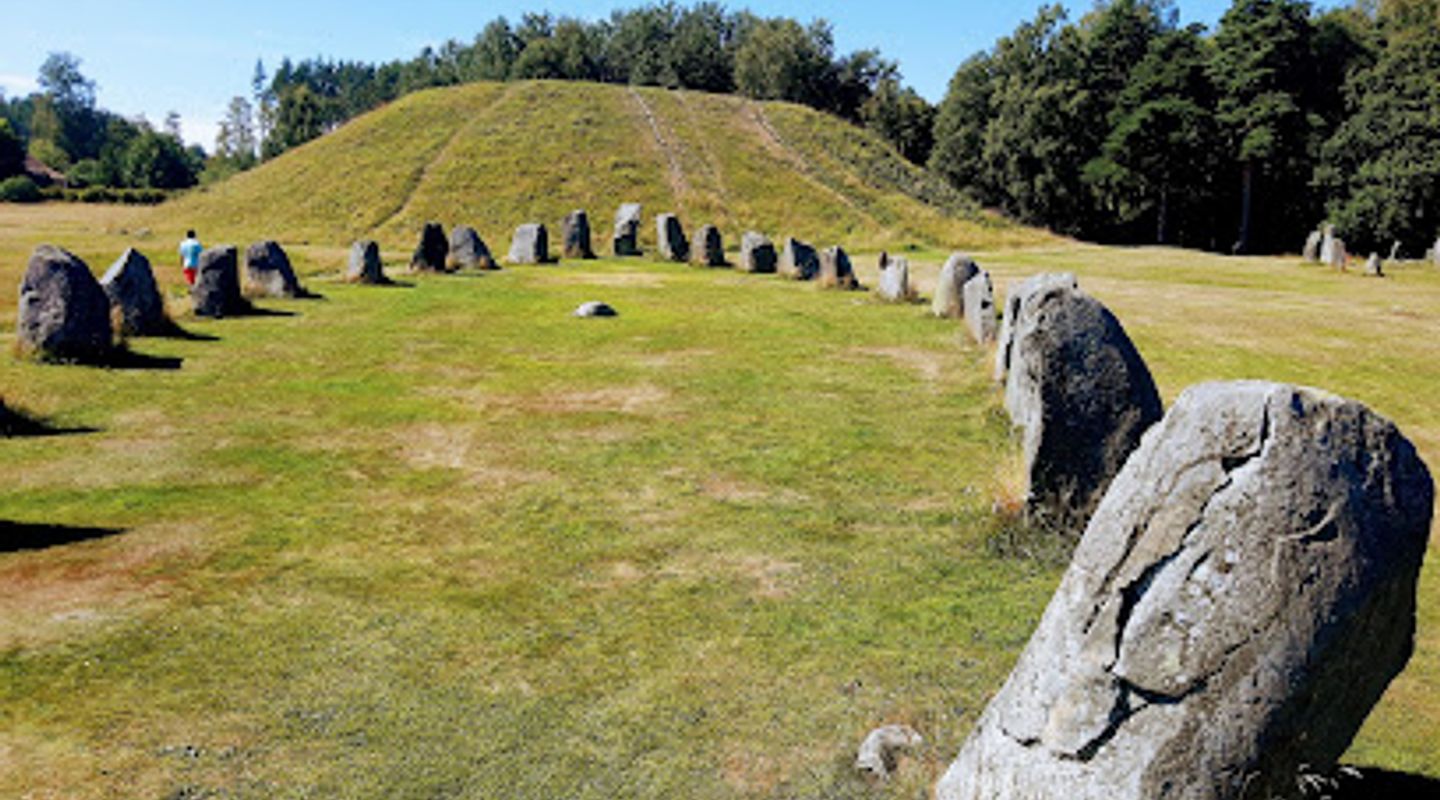
Anundshög, Sweden's largest burial mound, rises 9 meters high just outside Västerås, anchoring a vast ancient monument complex from the Iron Age. Dating to 500–1050 AD, it features stone ship settings, a towering runestone, and remnants of a medieval thing site, evoking Viking-era power and mystery amid rolling fields and forests.
On-site amenities
 Restrooms
 Drink options
 Food options
 Seating areas
 Trash bins
 Information boards
 Visitor centre
- Address
- Anundshög 5, 725 96 Västerås
- Phone
- Website
Getting there
Driving
Bus
Cycling
Walking
Discover more about Anundshög
Majestic Burial Mound and Iron Age Legacy
Anundshög stands as Sweden's grandest gravhög, a colossal earthen mound reaching 9 meters in height and spanning 64 meters in diameter. Constructed between 500 and 1050 AD during the Migration Period through Viking Age, it once towered even higher before erosion and a 1788 plundering attempt flattened its crest. Carbon dating of a hearth beneath confirms origins around 210–540 AD, marking it as a pinnacle of prehistoric engineering. Flanked by twin stone ship settings—rare oval formations of upright stones mimicking Viking vessels—this monument complex whispers of elite burials and forgotten chieftains, possibly even the legendary Bröt-Anund.
Stone Ships and Sacred Grave Field
Surrounding the central mound, Anundshög's grave field boasts 12 barrows, ten round stone settings, five ship settings, 14 standing stones, and a labyrinthine trojeborg. The twin skeppssättningar, restored in the 1930s after centuries of toppling, align dramatically with the mound, forming a unique silhouette against the sky. These Iron Age markers, from 500 BC to 1050 AD, delineate a power center in western Mälaren Valley, where ancient roads converged at a Mälaren lakeshore ford now inland. Over 50 additional stone settings dot nearby woods, remnants of a sprawling necropolis.
Runestone Monument and Ancient Pathways
Dominating the eastern approach, a 3-meter-high runestone erected in the 11th century by Folkvid commemorates his son Heden. Aligned with smaller stones along a hollow ancient road, it guards the site's entrance, once flanked by poles visible for miles—possibly from the 7th century. This Eriksgata route saw medieval kings pass to affirm their rule, with locals gathering in homage. Georadar reveals a 200-meter line of postholes leading to the mound, hinting at ceremonial processions.
Medieval Thing Site and Cultural Heart
From the 1300s, Anundshög hosted Västmanland's thing assemblies, resolving disputes amid the ship settings, as noted in medieval letters. Archaeological digs uncovered Sweden's oldest thing house remains from the early 14th century. As a Viking trade nexus and cultural hub, it bridged pagan rituals and Christian eras, its strategic ridge overlooking vanished shorelines where commerce thrived.
Labyrinth Lore and Enduring Mysteries
Nearby, a stone labyrinth fuels folklore: tales claim a girl was placed at its center, freed only by a boy navigating without touching walls, or another would try. Echoing ancient rites, this trojeborg mirrors patterns across Scandinavia. The site's untouched enigmas—who rests in the great mound? What rituals unfolded here?—invite contemplation amid whispering winds and rustling leaves.
Preserved Power in Modern Times
Today, a wooden staircase ascends the mound's restored slopes, offering panoramic views. Trails weave through the protected expanse, managed by Västerås Museum, blending raw archaeology with serene landscapes. Summer brings archaeologist-led explorations, revealing layers of 1,500 years in this unparalleled Swedish heritage gem.
Evendo Review Centre
 Google
Guest reviews
Best time to go
Quietest: Jan, Feb & Dec · before 8am or from 10pm
Busy times are Evendo estimates for a typical year, to help you plan. Actual crowds vary with events, school holidays and the weather.
Explore Anundshög on the map
A handpicked selection of must-see spots near Anundshög, mapped for you.
Get your free copy of our complete guide to Anundshög, delivered straight to you.
Everything on this page, from opening hours and how to get there to Eve’s tips and the best time to go, in one PDF you can read offline, print or share.
Already have an account? Sign in
Your Anundshög guide is ready.
We'll send it to · Not you? Sign out

Getting your guide ready…
We are putting together a fresh copy of the Anundshög guide. This can take up to a minute.
This can take a few moments. If your browser asks, choose Allow so the download can start. You'll find the guide in your Downloads folder.
Nothing happened? Download it again
Sorry, the guide is taking longer than usual. Please try again in a minute, or get it by email instead.
Other nearby places you may find interesting
The closest places of the same kind, if this one is not quite what you had in mind.
-
-
-
-
-


Swipe for more places
More to explore near Anundshög

 Best experiences near Anundshög
 Best hotels near Anundshög
 Best landmarks near Anundshög
 Best attractions near Anundshög
 Best shops near Anundshög
 Best restaurants near Anundshög
 Best bars near Anundshög
Do you manage this location?
Take control to get all the benefits, like improved information, better appearance, and stronger visibility across AI-powered discovery.
Explore more

Explore more of Västerås
Discover Västerås, a captivating blend of history, nature, and modernity by the scenic Lake Mälaren, offering a rich tapestry of experiences for every traveler.
Explore Västerås
Explore more of Sweden
Discover Sweden's breathtaking landscapes, vibrant cities, and rich cultural heritage. From the Northern Lights to historic castles, experience the essence of Scandinavia.
Explore Sweden
