
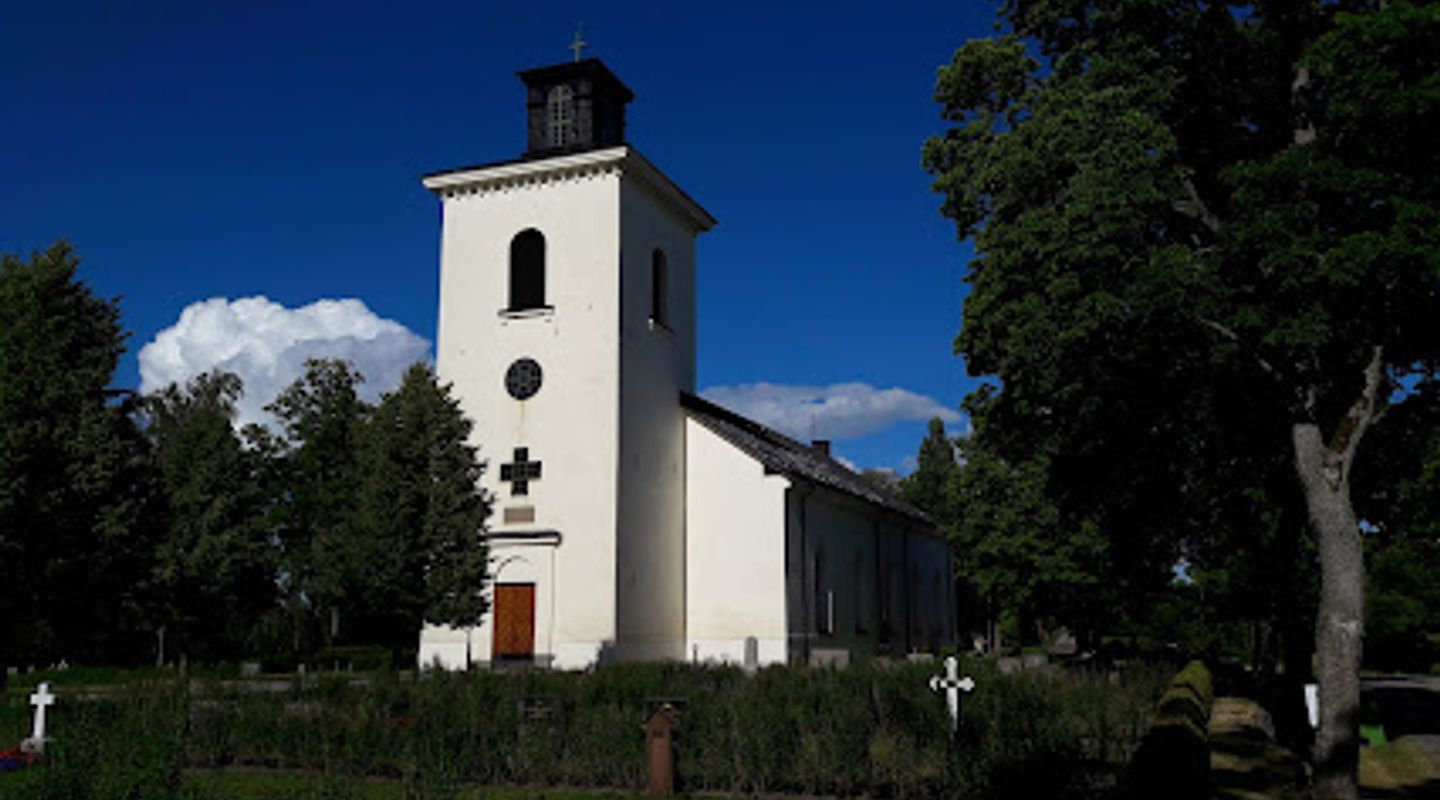
Rytterne Kyrka, Vasteras Travel Guide
Tranquil 19th-century church blending neoclassical grace with medieval relics, rising from ancient parish ruins in Västmanland's serene countryside.
Rytterne Kyrka, a stately 19th-century church in the Swedish countryside near Västerås, stands as a testament to local history. Built in 1819 after merging two medieval parishes, it features neoclassical exteriors and an interior redesigned in the 1910s with Roman basilica influences. Artifacts from earlier churches, including a late-15th-century altarpiece, enrich its sacred space. Open Thursdays and during services, it offers serene reflection amid rural Västmanland landscapes.
A brief summary to Rytterne Kyrka
- Fiholm 13, Västerås, 725 92, SE
- Click to display
- Click to display
- Duration: 0.5 to 1.5 hours
- Free
-
 Outdoor
- Mobile reception: 4 out of 5

Know before you go
Hi, I'm Eve. Here are a few practical things to know before exploring Rytterne Kyrka.
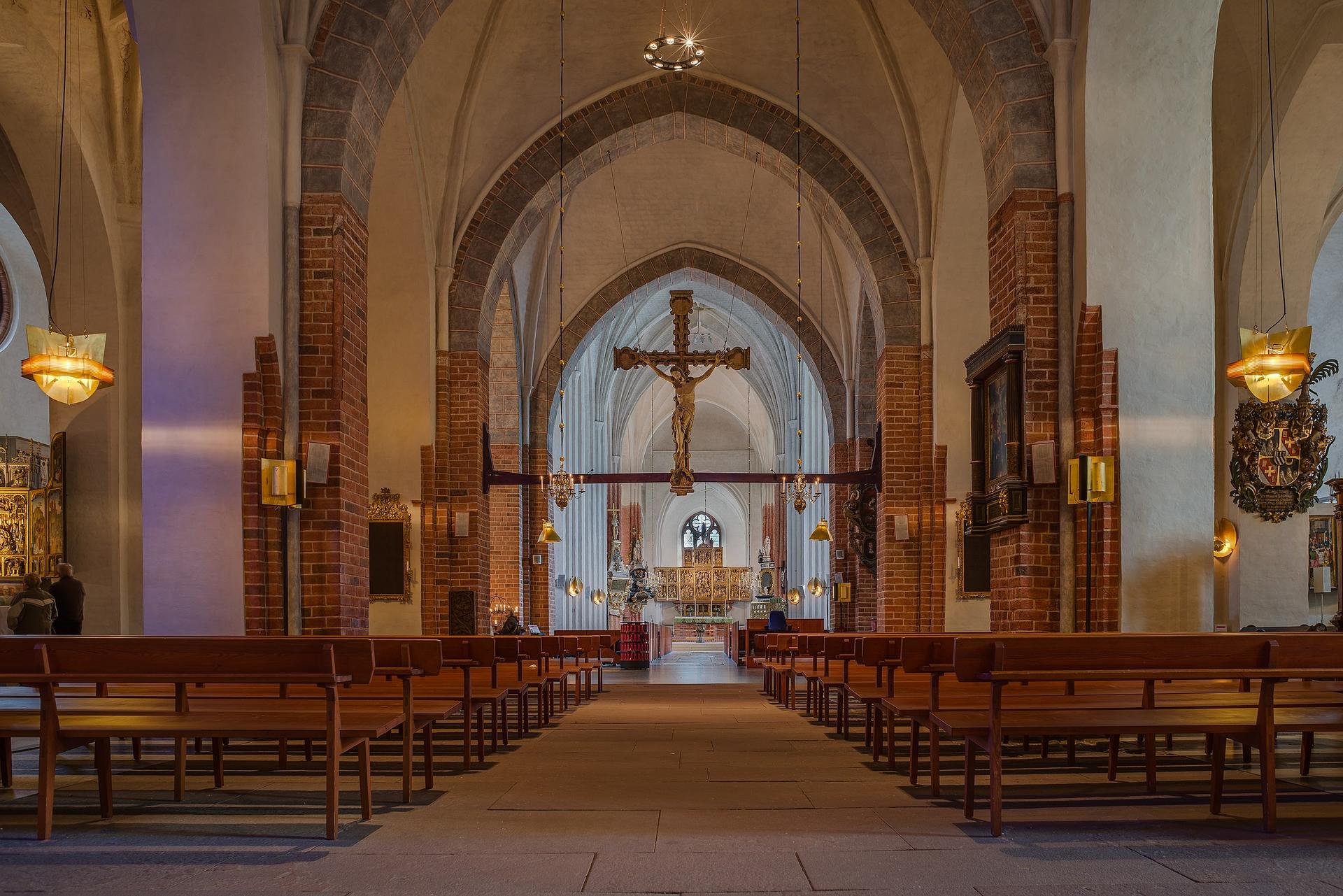
- Seek the late-15th-century altarpiece for its vivid North German carvings of sacred visions and saints.
- Note the 1531 bell's inscription, a plea for divine intercession from Reformation-era Västerås.
- Visit on Thursdays for access, or align with services to experience the space alive with music.
Do you manage this location?
Take control to get all the benefits, like improved information, better appearance, and stronger visibility across AI-powered discovery. Learn more about listing your business on Evendo
Activate your presenceOther nearby places you may find interesting
The closest places of the same kind, if this one is not quite what you had in mind.
Explore Rytterne Kyrka on the Map
A handpicked selection of must-see spots near Rytterne Kyrka, mapped for you.
Getting There
-
Bus
Regional buses from Västerås central station to Rytterne stop, 30-40 minutes, frequency every 1-2 hours on weekdays, fares 40-60 SEK, short walk from stop over flat terrain.
-
Car
Drive from Västerås via Route 252 northwest, 25-35 minutes, free roadside parking available nearby, suitable for all vehicles on paved roads.
-
Bicycle
Cycle from Västerås along quiet rural paths paralleling Route 252, 1-1.5 hours, flat terrain ideal for casual riders, bike racks at site.
-
Walking
From nearby Rytterne settlements, 20-30 minute stroll on gravel paths through fields, easy terrain but weather-dependent, no facilities en route.
For the on-the-go comforts that matter to you
-
 Seating Areas
-
 Information Boards
Discover more about Rytterne Kyrka
Origins in Medieval Ruins
Rytterne's ecclesiastical story unfolds from humble beginnings two kilometers north at Stora Rytterne kyrkoruin, constructed in the early 1200s atop an even older wooden church. This site served the community through centuries, possibly hosting royalty on a nearby estate's viewing gallery in the original tower. By the early 1300s, a portion detached to form Lilla Rytterne annex, its church rising around 1400 three kilometers northeast. Both structures, burdened by decay and growing congregations, faded as the parishes unified.Birth of a Unified Sanctuary
In 1776, locals resolved to consolidate into one parish, but construction delayed until 1815. Architect Samuel Enander, teamed with builder Olof Sjöström—veterans of similar projects like Sevalla kyrka—crafted a neoclassical gem. Whitewashed granite walls enclose a rectangular nave with a western tower, eastern apse turned sacristy, and a vast brick vault overhead. The first mass echoed in 1818, with formal dedication on May 31, 1819, amid provisional furnishings salvaged from predecessors.Interior Renewal and Sacred Relics
Acoustic woes and structural concerns prompted a bold 1915-1916 overhaul by Västerås city architect Erik Hahr. The space transformed into a Roman basilica evocation: lofty, light-filled, with integrated medieval treasures. Central is a late-1400s North German altarpiece depicting Pope Gregory I's mass, Christ's apparition, the Descent from the Cross, and saints including Birgitta of Sweden. Bells endure too—one from 1531 by Peder of Västerås, invoking divine aid; another bearing pleas to Jesus and St. Nicholas.Architectural Harmony and Rural Setting
Externally, the church retains 19th-century purity: large windows flood the interior, a modest tower caps the west, and slate roofs shelter the ensemble. Inside, simplicity reigns, enhanced by the 1910s basilica aesthetic—open, unadorned, conducive to contemplation. Nestled at Fiholm 13 amid Västmanland's gentle fields, it anchors Rytterne församling in Västerås pastorat, a living hub for worship seating 300.Enduring Spiritual Presence
Today, the church opens Thursdays 10am-12pm (through November) and during services or events, winter limited to activities. Its story weaves nobility, ruins, and resilience, embodying Västmanland's layered past. Artifacts whisper of medieval devotion, while the structure bridges eras, inviting quiet communion in a timeless rural idyll.












Your all‑in‑one travel companion app
Explore expert travel guides, compare and book tours, experiences, hotels, and more—all from the palm of your hand. Download now for seamless trip planning wherever your wanderlust takes you.


Explore More of Vasteras
Looking beyond Rytterne Kyrka? Discover Vasteras for broader travel guides, local hot-spots, and regional highlights.
Explore Vasteras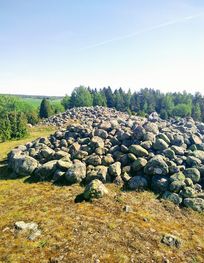
A broad prehistoric cemetery on a low ridge near Västerås — stone rings, cairns and mounds that record centuries of funerary practice.

Uncover Iron Age ramparts at Sorby Fornborg, a Migration Period hillfort near Västerås evoking ancient defenses amid Mälaren Valley's historic landscapes.
