
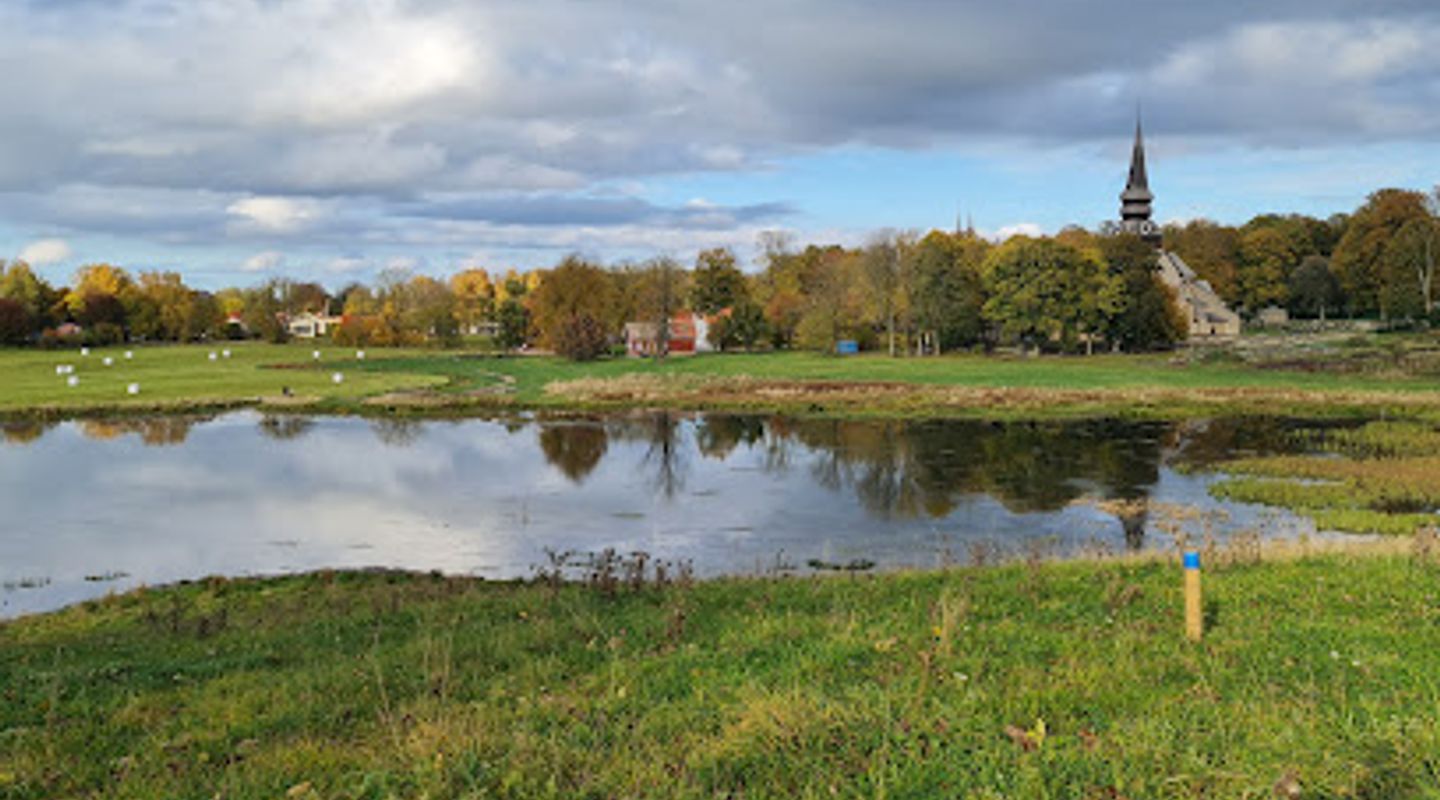
Varnhem abbey ruins, Vastergotland Travel Guide
A layered medieval site: a 12th‑century Cistercian church, royal tombs and excavated monastery ruins beneath Billingen.
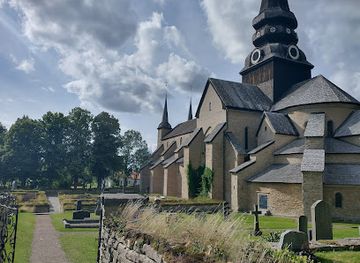
Varnhem Abbey sits at the foot of Billingen in Västergötland: a 12th‑century Cistercian foundation whose imposing stone church survives amid carefully excavated monastery ruins, a small museum and a herb garden. The church holds royal medieval burials and the tomb associated with Birger Jarl, while the surrounding park reveals Viking‑Age and early medieval remains that rewrite regional history.
A brief summary to Varnhem abbey ruins
- Axevallavägen 10, Varnhem, 532 73, SE
- Click to display
- Duration: 0.5 to 2 hours
- Budget
-
 Mixed
Mixed
- Mobile reception: 4 out of 5

Know before you go
Hi, I'm Eve. Here are a few practical things to know before exploring Varnhem abbey ruins.
- Allow at least an hour to see the church, the museum on the small hill behind it and the main open‑air ruins; wear flat shoes for grass and uneven ground.
- Check seasonal opening times for guided tours and the museum; guided talks add historical context to the stonework and burials.
- Bring a light jacket—inside the stone church and among the ruins it can feel cool even on warm days.
Do you manage this location?
Take control to get all the benefits, like improved information, better appearance, and stronger visibility across AI-powered discovery. Learn more about listing your business on Evendo
Activate your presenceOther nearby places you may find interesting
The closest places of the same kind, if this one is not quite what you had in mind.

Explore Varnhem abbey ruins on the Map
A handpicked selection of must-see spots near Varnhem abbey ruins, mapped for you.
Getting There
-
By car
Regional driving from nearby towns typically takes 20–40 minutes depending on origin; rural roads are narrow and parking at the site is limited during high season, with modest paid or donation‑based parking available near the church.
-
By regional bus
Scheduled regional buses serve the area from Skara and surrounding centres with travel times generally 25–50 minutes; service frequency is lower on weekends and public holidays, and the final approach may require a short uphill walk over grass and gravel.
-
By guided tour or seasonal shuttle
During peak season local operators run guided excursions from Skara and nearby towns with typical trip durations of 3–6 hours including other local sites; these are ticketed services with variable prices and operate mainly in summer months.
For the on-the-go comforts that matter to you
-
 Information Boards
-
 Visitor Center
-
 Seating Areas
-
 Restrooms
-
 Drink Options
Discover more about Varnhem abbey ruins
Origins and monastic foundation
Varnhem's story begins in the mid‑12th century when Cistercian monks from Clairvaux established a self‑contained abbey on the western slope of Billingen; the present church evolved from those early plans and reflects successive building phases from the French‑Romanesque beginnings through later Gothic remodelling. Archaeology shows the monks adapted an already sacred landscape — gravefields and an earlier stone church — integrating older Christian traditions into a new monastic complex.Architecture and the fabric you can see
The surviving abbey church is the dominant element: a basilica‑plan stone building whose masonry preserves romanesque and gothic features, ribbed vaulting in later phases and the structural traces of a once‑vast monastic enclosure. Much of the monastic domestic range did not survive intact; instead you encounter restored exterior walls and carefully laid turf over archaeological traces, giving a sense of the original plan without rebuilding it to a living compound.Royal burials and later patrons
Varnhem became a dynastic burial place for the House of Eric: medieval royal tombs and high‑status interments anchor the site in Sweden’s early nationhood. In the 17th century Magnus Gabriel De la Gardie restored the church and created family memorials and a mausoleum; his interventions left baroque fittings and altered the church interior, layering early medieval sacred space with later aristocratic commemoration.Archaeology, excavations and surprising earlier layers
Extensive excavations in the 1920s and renewed digs in the 20th and 21st centuries revealed surprising continuities: remains of a stone church dating to at least the 11th century, pre‑Christian burial mounds and a medieval water and sewer system beneath the monastery. Finds such as medieval conduits, hearths and grave sequences demonstrate that Varnhem was more than an isolated monastery — it was a local hub that shaped landscape, agriculture and technology.Museum, landscape and visitor experience
Behind the church a compact abbey museum presents models, excavation finds and interpretive displays that reconstruct monastic life: how cloistered monks worked the land, managed water and heated spaces. The surrounding cemetery, herb garden and grassy ruins are arranged to emphasise contemplation and to show archaeological features without obscuring the church as the central focus of the site.Character and why it matters today
Varnhem reads as a layered place where Viking‑Age Christianity, medieval monarchy and monastic discipline meet early modern restoration. The experience is tactile: cool stone underfoot, the hollow echo within the nave, exposed masonry softened by sedum and grass, and discreet information panels that point to thousands of years of continuous human presence. For anyone interested in medieval Scandinavia, ecclesiastical architecture or archaeology, Varnhem offers direct contact with long‑running historical processes rather than a single picturesque ruin.












Your all‑in‑one travel companion app
Explore expert travel guides, compare and book tours, experiences, hotels, and more—all from the palm of your hand. Download now for seamless trip planning wherever your wanderlust takes you.


Explore More of Vastergotland
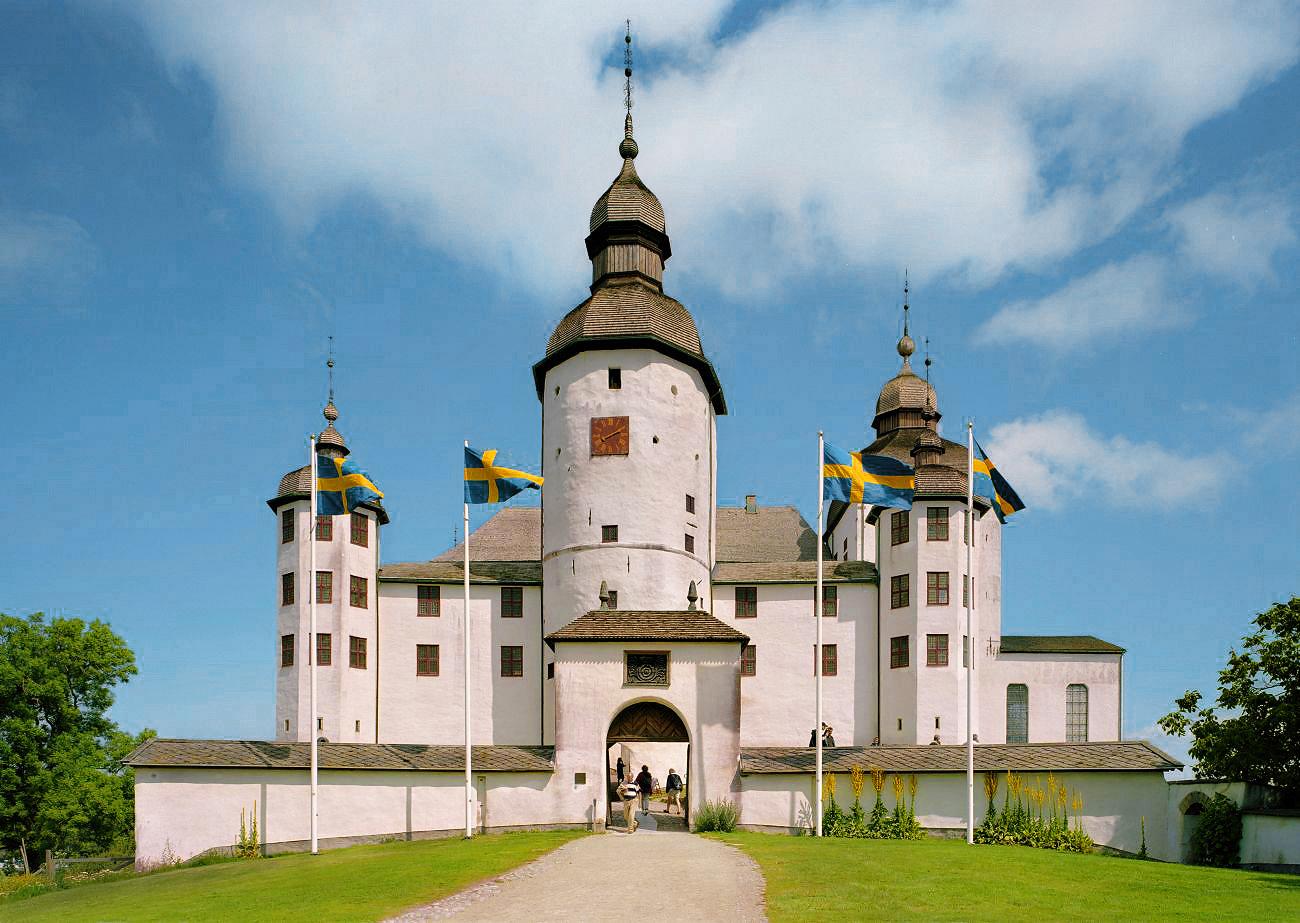
Looking beyond Varnhem abbey ruins? Discover Vastergotland for broader travel guides, local hot-spots, and regional highlights.
Explore Vastergotland
A full‑scale, seaworthy Viking longship at Blomberg — tactile craftwork, seasonal sails and maritime storytelling on Kinnekulle.
Uncover Viking Age secrets at Kata Farm, where Sweden's oldest church crypt and powerful chieftain Kata's runestone grave rewrite the dawn of Christianity amid ancient mounds and modern glass vistas.
