

Askeberga stone ship Travel Guide
Free Guide: Journey back 3,500 years to Sweden's second-largest stone ship, where 24 colossal boulders chart an ancient path to the afterlife amid tranquil Västergötland fields.


A brief summary of Askeberga stone ship
Journey back 3,500 years to Sweden's second-largest stone ship, where 24 colossal boulders chart an ancient path to the afterlife amid tranquil Västergötland fields.
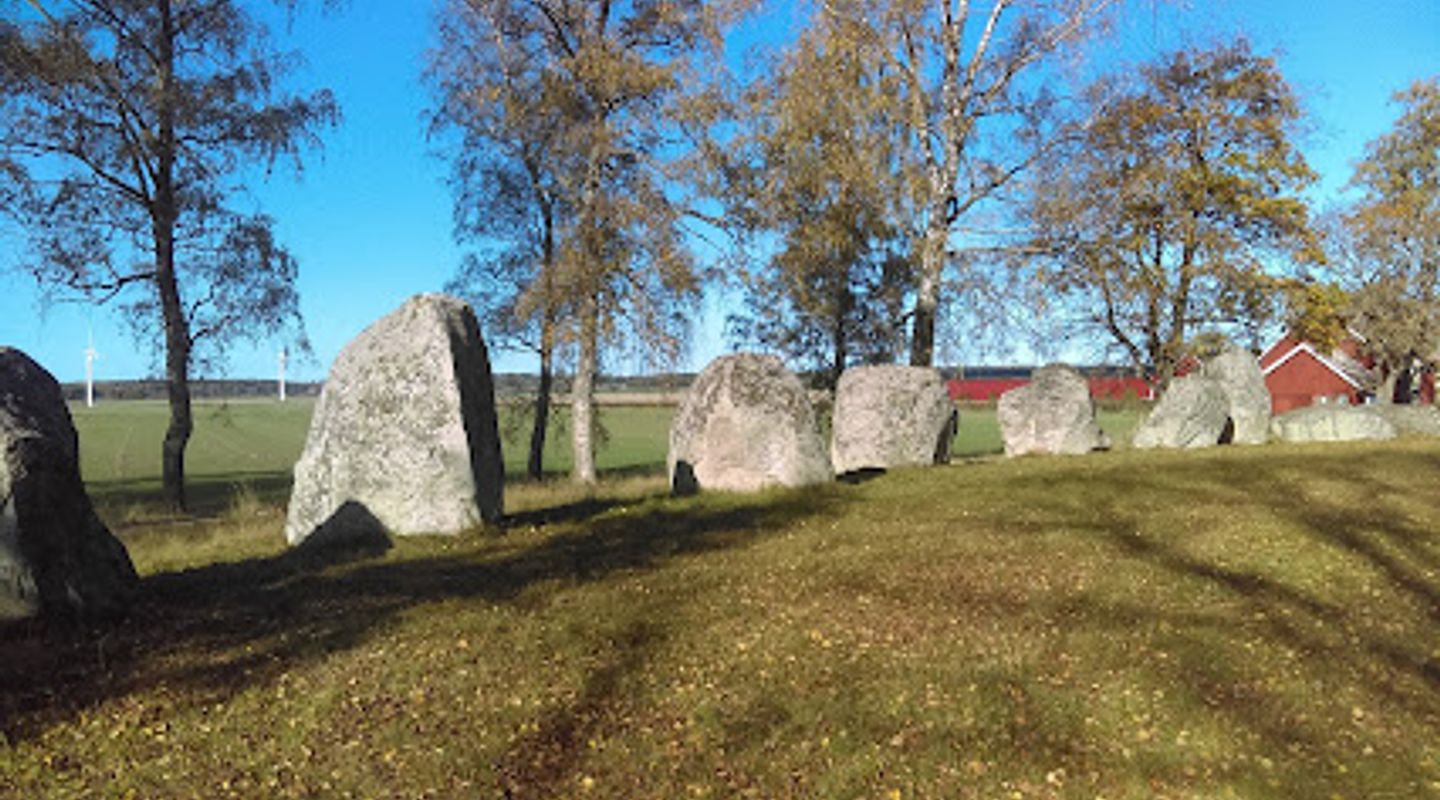
Sweden's second-largest stone ship, the Askeberga Stone Ship stands as a monumental arrangement of 24 massive boulders forming an oval boat shape in the quiet rural landscapes of Västergötland. Dating to the Bronze or Iron Age, this enigmatic site evokes ancient Scandinavian beliefs in voyages to the afterlife, surrounded by well-maintained grass and informative panels detailing archaeological theories. Ideal for quiet reflection, picnics, or photography amid serene fields, it offers a tangible link to prehistoric rituals without entrance fees or barriers.
On-site amenities
 Seating areas
 Trash bins
 Information boards
 Picnic areas
Opening hours
- Every dayOpen 24 hours
Opening hours as listed on the venue’s Google Business Profile. Hours can change for services and special events, so check with the venue before you go.
- Address
- 549 91 Askeberga
Getting there
Car
Bus
Bicycle
Discover more about Askeberga stone ship
Monumental Scale and Formation
The Askeberga Stone Ship measures 55 meters in length, making it Sweden's second-largest example of this ancient form. Composed of 24 enormous boulders, each weighing around 25 tonnes, the stones form an oval outline resembling a boat, distinct from typical ship settings by lacking prominent fore and aft stones. This configuration sets it apart, inviting contemplation of its builders' intentions amid the open countryside.
Ancient Origins and Purpose
Erected during the late Nordic Bronze Age or Iron Age, roughly 1000 BCE to 500 BCE or later into the Viking era, stone ships like Askeberga symbolized the journey to the afterlife in Scandinavian cosmology. While often linked to burials, no grave has been confirmed here, suggesting it may commemorate relatives or serve ritual purposes, as hinted by runestones. Theories connect it to Freyja's mythical realms, where ships in fields mirrored earthly monuments believed to bless the land with prosperity.
Archaeological Intrigue
Local research, including magnetometer surveys, has uncovered hidden features beneath the surface, fueling debates on its exact role. Informational signs at the site present these findings, explaining variations between Bronze Age (smaller, mound-covered) and Iron Age (larger, exposed) designs. Askeberga's massive stones, positioned farther apart, exemplify the Iron Age evolution, preserved through community efforts against early 20th-century threats of removal.
Serene Natural Setting
Nestled in the rural expanse of Askeberga near Tidan in Skövde municipality, the stone ship occupies flat, grassy terrain that enhances its dramatic presence. The surrounding fields provide unobstructed views, with walking trails inviting exploration. Maintained for public access, the site blends historical gravity with peaceful natural beauty, perfect for quiet pauses.
Cultural and Symbolic Legacy
Stone ships reflect deep-seated beliefs in boat voyages for the dead, documented from the Bronze Age through Viking times until Christianity's arrival. Askeberga endures as a gathering place since prehistoric eras, its unexplained purpose sparking ongoing fascination. Comparable sites on Gotland or at Ale's Stones underscore its place in a broader tradition of megalithic memorials across Scandinavia.
Evendo Review Centre
 Google
Guest reviews
Best time to go
Quietest: Jan, Feb & Dec · before 7am or from 8pm
Busy times are Evendo estimates for a typical year, to help you plan. Actual crowds vary with events, school holidays and the weather.
Explore Askeberga stone ship on the map
A handpicked selection of must-see spots near Askeberga stone ship, mapped for you.
Get your free copy of our complete guide to Askeberga stone ship, delivered straight to you.
Everything on this page, from opening hours and how to get there to Eve’s tips and the best time to go, in one PDF you can read offline, print or share.
Already have an account? Sign in
Your Askeberga stone ship guide is ready.
We'll send it to · Not you? Sign out

Getting your guide ready…
We are putting together a fresh copy of the Askeberga stone ship guide. This can take up to a minute.
This can take a few moments. If your browser asks, choose Allow so the download can start. You'll find the guide in your Downloads folder.
Nothing happened? Download it again
Sorry, the guide is taking longer than usual. Please try again in a minute, or get it by email instead.
Other nearby places you may find interesting
The closest places of the same kind, if this one is not quite what you had in mind.
-
-
-
-
-


Swipe for more places
More to explore near Askeberga stone ship

 Best experiences near Askeberga stone ship
 Best hotels near Askeberga stone ship
 Best landmarks near Askeberga stone ship
 Best attractions near Askeberga stone ship
 Best shops near Askeberga stone ship
 Best restaurants near Askeberga stone ship
 Best bars near Askeberga stone ship
Do you manage this location?
Take control to get all the benefits, like improved information, better appearance, and stronger visibility across AI-powered discovery.
Explore more

Explore more of Västergötland
Discover Västergötland: A blend of historical treasures, natural beauty, and cultural richness in the heart of Sweden.
Explore Västergötland
Explore more of Sweden
Discover Sweden's breathtaking landscapes, vibrant cities, and rich cultural heritage. From the Northern Lights to historic castles, experience the essence of Scandinavia.
Explore Sweden
