Bohus Fortress Travel Guide
Free Guide: Unconquered 14th-century cliffside fortress ruin with epic sieges, shadowy dungeons, and Göta River panoramas—Sweden's mightiest medieval survivor.


A brief summary of Bohus Fortress
Unconquered 14th-century cliffside fortress ruin with epic sieges, shadowy dungeons, and Göta River panoramas—Sweden's mightiest medieval survivor.
Perched dramatically on a cliff overlooking the Göta River, Bohus Fortress is a 14th-century ruin that withstood 14 sieges without ever falling. This historic site in Kungälv offers rugged stone walls, a chilling dungeon, interactive exhibits on Nordic battles, and sweeping views, blending military history with natural beauty in a culturally rich setting.
On-site amenities
 Restrooms
 Drink options
 Food options
 Seating areas
 Picnic areas
 Trash bins
 Information boards
Opening hours
- Mon10 am–6 pm
- Tue10 am–6 pm
- Wed10 am–6 pm
- Thu10 am–6 pm
- Fri10 am–6 pm
- Sat10 am–4 pm
- Sun10 am–6 pm
Opening hours as listed on the venue’s Google Business Profile. Hours can change for services and special events, so check with the venue before you go.
- Address
- Fästningsparken 3, 442 31 Kungälv
- Phone
- Website
Getting there
Bus
Car
Train
Boat
Discover more about Bohus Fortress
Strategic Birth on a River Cliff
In 1308, Norwegian King Haakon V Magnusson ordered the construction of Bohus Fortress on a commanding 40-meter cliff above the Nordre River, now part of the Göta River system. This strategic position guarded vital trade routes and borders, its natural moat provided by the flowing waters below. The fortress's thick granite walls and imposing towers were designed to repel invaders, embodying medieval engineering prowess amid Sweden's rugged west coast landscape.The site's defensibility proved legendary from the outset, as early fortifications evolved into a sprawling complex with courtyards, barracks, and defensive bastions.
Unconquered Through Endless Sieges
Bohus Fortress endured 14 major sieges over its active centuries, from Danish and Norwegian assaults to relentless Swedish bombardments, yet it never surrendered. The most grueling came in 1678, when 15,000 attackers pummeled 800 defenders with cannon fire for two months during the Scanian War. Despite heavy damage, the garrison held, showcasing the resilience of its Finnish and Swedish troops.Rebuilt in the early 17th century after a devastating 1560s attack, the fortress transitioned from Norwegian stronghold to Swedish territory following the 1658 Treaty of Roskilde, marking a pivotal shift in Nordic power dynamics.
Prison of Kings and Outcasts
Beyond defense, Bohus served as a notorious prison from the 14th century until 1789. Political dissidents, radicals like Pietist preacher Thomas Leopold—who endured 42 years in its dank dungeon—and common criminals faced hard labor or isolation here. Executions and punishments reflected the era's harsh justice, with the fortress walls echoing tales of defiance and despair.Exhibits detail these stories, from royal captives to societal outcasts, illuminating the human cost of medieval law enforcement within its shadowy cells.
Christian IV's Fleeting New Kungälv
During the 1611-1613 Kalmar War, Danish King Christian IV relocated the town of Kungahälla to Fästningsholmen island beside the fortress for protection, creating 'New Kungälv.' This short-lived settlement of wooden homes and markets thrived briefly before Swedish forces burned it in the 1640s. Ruins and archaeological finds evoke this turbulent chapter of border conflicts.The experiment highlighted the fortress's role in urban defense, blending military might with civilian life amid constant warfare.
Ruins Reshaped by Nature and Time
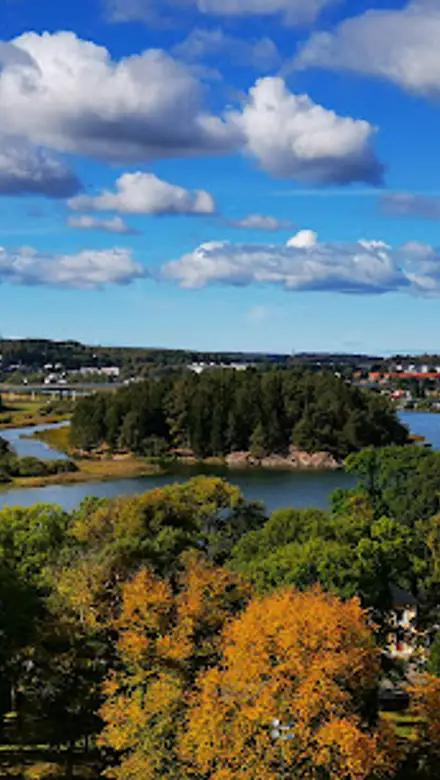
Today, Bohus stands as Sweden's most powerful fortress ruin, its weathered stones cloaked in ivy and moss, with uneven rocky paths winding through open courtyards. The Göta River's misty breath rises from below, while gulls wheel overhead against Bohuslän's forested horizons. Seasonal winds carry the scent of pine and river dampness, enhancing the atmospheric exploration.Digital tours and information boards in multiple languages bring the past alive, allowing visitors to trace defensive circuits and peer into restored chambers.
Legacy of Nordic Endurance
Named one of Västra Götaland's seven wonders, Bohus Fortress encapsulates 700 years of war, diplomacy, and cultural exchange. Its survival through sieges, reconstructions, and abandonment underscores themes of unyielding fortitude. As a living ruin, it invites contemplation of how geography and human will forged Nordic history, standing sentinel over Kungälv's timeless valley.
Evendo Review Centre
 Google
Guest reviews
Best time to go
Quietest: Jan, Feb & Dec · before 8am or from 7pm
Busy times are Evendo estimates for a typical year, to help you plan. Actual crowds vary with events, school holidays and the weather.
Explore Bohus Fortress on the map
A handpicked selection of must-see spots near Bohus Fortress, mapped for you.
Get your free copy of our complete guide to Bohus Fortress, delivered straight to you.
Everything on this page, from opening hours and how to get there to Eve’s tips and the best time to go, in one PDF you can read offline, print or share.
Already have an account? Sign in
Your Bohus Fortress guide is ready.
We'll send it to · Not you? Sign out

Getting your guide ready…
We are putting together a fresh copy of the Bohus Fortress guide. This can take up to a minute.
This can take a few moments. If your browser asks, choose Allow so the download can start. You'll find the guide in your Downloads folder.
Nothing happened? Download it again
Sorry, the guide is taking longer than usual. Please try again in a minute, or get it by email instead.
Other nearby places you may find interesting
The closest places of the same kind, if this one is not quite what you had in mind.
-
-
-
-
-


Swipe for more places
More to explore near Bohus Fortress

 Best experiences near Bohus Fortress
 Best hotels near Bohus Fortress
 Best landmarks near Bohus Fortress
 Best attractions near Bohus Fortress
 Best shops near Bohus Fortress
 Best restaurants near Bohus Fortress
 Best bars near Bohus Fortress
Do you manage this location?
Take control to get all the benefits, like improved information, better appearance, and stronger visibility across AI-powered discovery.
Explore more

Explore more of Västergötland
Discover Västergötland: A blend of historical treasures, natural beauty, and cultural richness in the heart of Sweden.
Explore Västergötland
Explore more of Sweden
Discover Sweden's breathtaking landscapes, vibrant cities, and rich cultural heritage. From the Northern Lights to historic castles, experience the essence of Scandinavia.
Explore Sweden