Näs Castle Travel Guide
Free Guide: Sweden's oldest royal castle ruins on Visingsö, where medieval kings ruled, feasted, and fell amid Lake Vättern's strategic shores—evocative stones steeped in 12th-century drama.


A brief summary of Näs Castle
Sweden's oldest royal castle ruins on Visingsö, where medieval kings ruled, feasted, and fell amid Lake Vättern's strategic shores—evocative stones steeped in 12th-century drama.
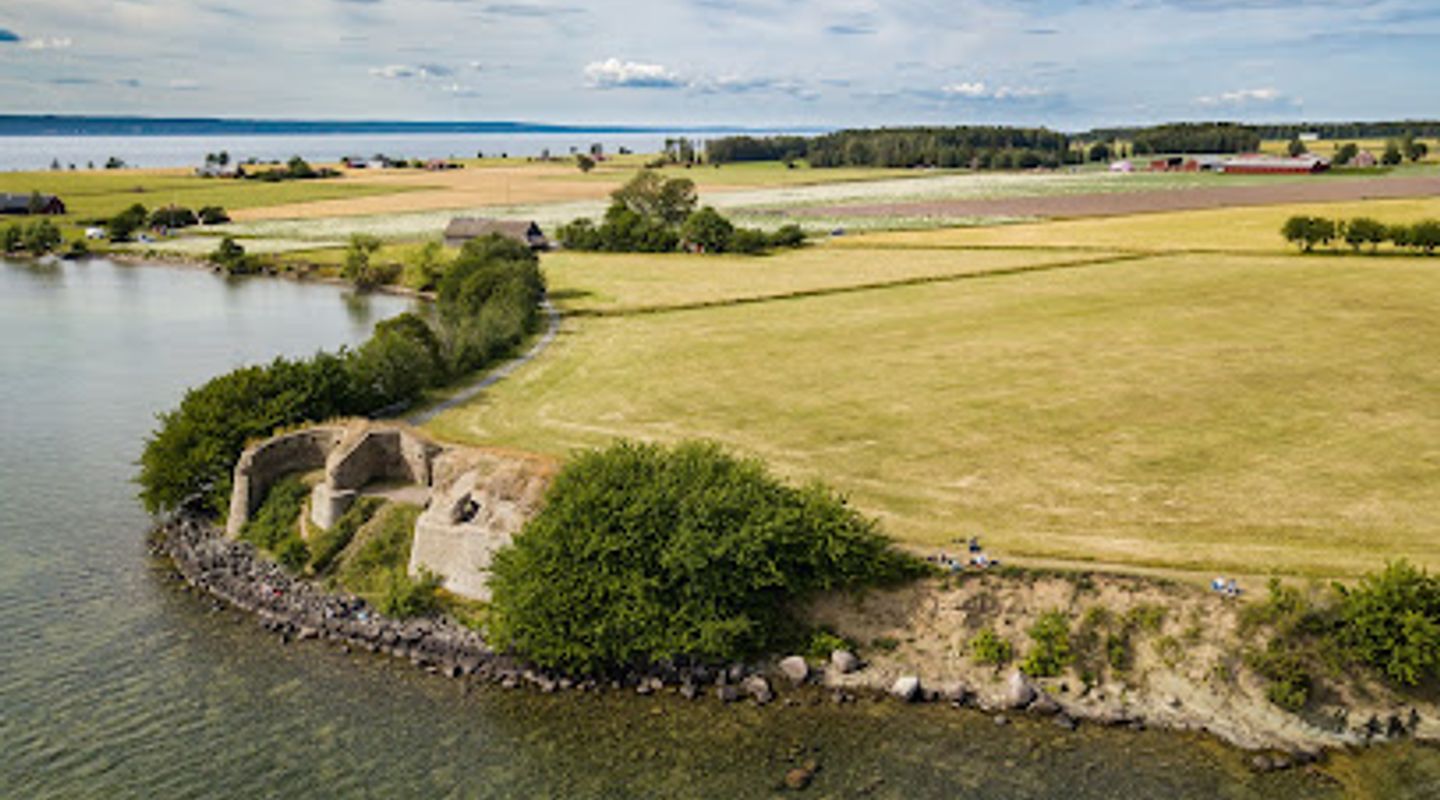
Perched on Visingsö's southeastern promontory, Näs Castle Ruins stand as one of Sweden's oldest stone structures, built in the 12th century as a royal residence amid fierce power struggles. These evocative remnants overlook Lake Vättern, whispering tales of kings, assassinations, and destruction in 1318. Explore the round and square towers, vaulted storehouse, and eroded walls that once guarded vital shipping routes. Restored in the early 1900s, the site offers a tangible link to Sweden's medieval past, with information boards illuminating its dramatic history. Ideal for history enthusiasts seeking atmospheric ruins in a scenic island setting.
On-site amenities
 Information boards
 Trash bins
 Seating areas
Opening hours
- Every dayOpen 24 hours
Opening hours as listed on the venue’s Google Business Profile. Hours can change for services and special events, so check with the venue before you go.
- Address
- 563 94 Visingsö
Getting there
Ferry
Bus + Bike
Car + Ferry
Horse Carriage
Discover more about Näs Castle
Birth of a Royal Stronghold
Näs Castle emerged in the first half of the 12th century on Visingsö's southeastern tip, one of Sweden's earliest non-church stone buildings. Likely initiated by King Sverker I the Elder or his son Karl Sverkersson of the House of Sverker, it symbolized power during a turbulent era of rival dynasties vying for the throne. The strategic lakeside position allowed surveillance of Lake Vättern's shipping lanes, vital for trade and control.[1][2]The House of Sverker held extensive lands on Visingsö, making the island a natural base. Construction manifested royal authority amid conflicts between the Sverkers and the House of Eric, who alternated power through the 12th and 13th centuries.
Kings' Residence and Tragic Ends
Näs served as a royal residence for at least five or six Swedish kings, hosting hunts, festivities, and critical meetings. Karl Sverkersson resided here until his 1167 assassination by supporters of rival King Knut Eriksson. Subsequent rulers like Erik Knutsson died in 1216, Sverker II the Younger in 1222, and Magnus III Ladulås in 1290—the last king to use the castle.[1][2][6]These deaths underscore Visingsö's role in Sweden's medieval power plays. The castle's halls echoed with royal intrigue, its towers witnessing the rise and fall of dynasties.
Destruction Amid Civil Strife
After Magnus III's death, feuds between his sons sparked civil war. In 1318, King Birger Magnusson pledged Näs to his brother-in-law, Denmark's King Eric VI. Rebels from Småland seized and burned the castle that year while Birger was exiled, reducing it to ruins.[1][2]Much of the structure eroded into Lake Vättern over centuries, with jetties and outbuildings lost to the waters. Divers later recovered artifacts like a bronze horse-shaped weight, hinting at the site's former extent.
Architectural Legacy Uncovered
Early 1900s excavations and restorations revealed key features: a round tower, a square residential tower with vaulted ground-floor storehouse, and an intervening hall wall. The upper floor held private quarters, including a privy with a visible exterior chute. No palisades or moats have been found, suggesting a compact fortified residence.[1]Archaeological dives confirmed western jetties and frontal buildings, painting a picture of a functional royal outpost adapted to its promontory setting.
Visingsö's Enduring Allure
Today, Näs Castle Ruins blend seamlessly with Visingsö's dramatic landscape, where Lake Vättern's vast waters meet ancient stone. The site's promontory location offers sweeping views, evoking the isolation and command kings once enjoyed. Information boards and good lighting enhance exploration, inviting reflection on Sweden's formative centuries.[7][8]Surrounded by the island's oak forests and gravel paths, Näs remains a cornerstone of Visingsö's historical tapestry, complementing legends of giants and tufts of grass forming the isle itself.[3][5]
Evendo Review Centre
 Google
Guest reviews
Best time to go
Quietest: Jan, Feb & Dec · before 7am or from 8pm
Busy times are Evendo estimates for a typical year, to help you plan. Actual crowds vary with events, school holidays and the weather.
Explore Näs Castle on the map
A handpicked selection of must-see spots near Näs Castle, mapped for you.
Get your free copy of our complete guide to Näs Castle, delivered straight to you.
Everything on this page, from opening hours and how to get there to Eve’s tips and the best time to go, in one PDF you can read offline, print or share.
Already have an account? Sign in
Your Näs Castle guide is ready.
We'll send it to · Not you? Sign out

Getting your guide ready…
We are putting together a fresh copy of the Näs Castle guide. This can take up to a minute.
This can take a few moments. If your browser asks, choose Allow so the download can start. You'll find the guide in your Downloads folder.
Nothing happened? Download it again
Sorry, the guide is taking longer than usual. Please try again in a minute, or get it by email instead.
Other nearby places you may find interesting
The closest places of the same kind, if this one is not quite what you had in mind.
-
-
-
-
-


Swipe for more places
More to explore near Näs Castle

 Best experiences near Näs Castle
 Best hotels near Näs Castle
 Best landmarks near Näs Castle
 Best attractions near Näs Castle
 Best shops near Näs Castle
 Best restaurants near Näs Castle
 Best bars near Näs Castle
Do you manage this location?
Take control to get all the benefits, like improved information, better appearance, and stronger visibility across AI-powered discovery.
Explore more

Explore more of Västergötland
Discover Västergötland: A blend of historical treasures, natural beauty, and cultural richness in the heart of Sweden.
Explore Västergötland
Explore more of Sweden
Discover Sweden's breathtaking landscapes, vibrant cities, and rich cultural heritage. From the Northern Lights to historic castles, experience the essence of Scandinavia.
Explore Sweden