

Anundshög Travel Guide
Free Guide: Sweden's largest burial mound anchors a Viking Age power center with ship settings, runestones, and medieval thing site amid evocative Badelunda trails.


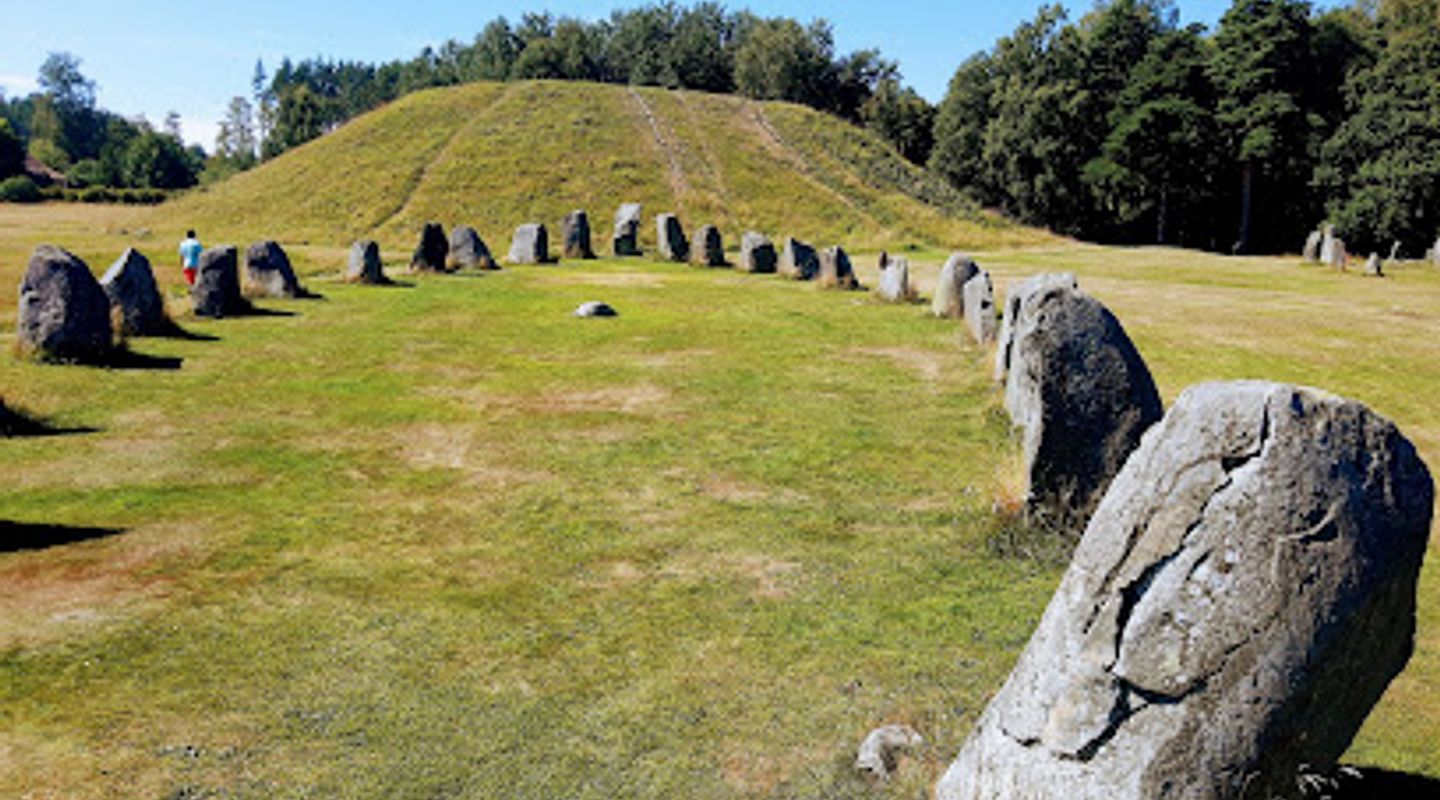
A brief summary of Anundshög
Sweden's largest burial mound anchors a Viking Age power center with ship settings, runestones, and medieval thing site amid evocative Badelunda trails.
Anundshög, Sweden's largest burial mound, towers 9 meters high in a vast ancient monument complex outside Västerås. Dating from 500–1050 CE, it anchors a site with 12 barrows, 10 stone circles, five ship settings, 14 standing stones, and a towering runestone. Once a Viking Age power center, trade hub, and medieval thing site, it offers evocative trails through Iron Age history amid open fields and forests.
On-site amenities
 Restrooms
 Drink options
 Food options
 Seating areas
 Trash bins
 Information boards
 Visitor centre
- Address
- Anundshög 5, 725 96 Västerås
- Phone
- Website
Getting there
Driving
Bus
Cycling
Walking
Discover more about Anundshög
Majestic Heart of Iron Age Power
Anundshög stands as Sweden's grandest burial mound, a colossal earthwork rising 9 meters above the Badelunda ridge, its flattened summit bearing scars from a failed 1788 looting attempt. Erected between 500 and 1050 CE during the Migration Period to Viking Age, the mound likely enshrines a chieftain or king from western Mälardalen's elite. Surrounding it sprawls one of Sweden's largest preserved ancient complexes, with 12 additional barrows, ten round stone settings, five monumental ship-shaped stone arrangements, 14 upright stones marking ancient paths, and a labyrinth evoking mythic rituals.
Runestone Sentinel and Trade Nexus
Dominating the entrance, a 3-meter-tall runestone from the 11th century commemorates a local notable, its serpentine carvings a testament to Viking literacy and prestige. Positioned at a vital crossroads—possibly along the Eriksgatan, the kings' ceremonial route—Anundshög buzzed as a commercial and cultural hub. The ancient Mälaren shoreline lapped nearby, facilitating trade, while standing stones guided travelers through this strategic pass.
Medieval Assembly and Enduring Mystique
By the Middle Ages, the mound transformed into a thingstead, Västmanland's open-air court where disputes were settled under the open sky, as documented in 14th-century letters. Medieval chroniclers noted gatherings at 'Anunda Högh,' underscoring its continuous ritual importance. Legends whisper of Bröt-Anund, a saga king, resting within, while the stone labyrinth fueled tales of courtship trials: a girl placed at its center, awaiting a suitor to navigate its twists without touching the walls.
Archaeological Echoes Unearthed
Georadar surveys in 2008 revealed a 200-meter line of postholes leading from a ancient ford to the mound, hinting at a ceremonial avenue lined with massive timbers or stones for assemblies. Carbon-dating places early activity from 210–540 CE, bridging Bronze Age roots to Viking culmination. Restoration in 1970 healed plunder wounds, preserving the site's integrity amid gravel pits that claimed neighboring barrows.
Timeless Landscape of Stone and Soil
Wander trails weave through heather-dotted fields and birch groves, where ship settings mimic longships frozen in stone, symbolizing voyages to the afterlife. The twin ship settings flanking the mound form a unique national monument, evoking seafaring prowess inland. Seasonal mists cloak the heights, amplifying the aura of ancient potency in this open-air archive of Swedish prehistory.
Evendo Review Centre
 Google
Guest reviews
Best time to go
Quietest: Jan, Feb & Dec · before 7am or from 9pm
Busy times are Evendo estimates for a typical year, to help you plan. Actual crowds vary with events, school holidays and the weather.
Explore Anundshög on the map
A handpicked selection of must-see spots near Anundshög, mapped for you.
Get your free copy of our complete guide to Anundshög, delivered straight to you.
Everything on this page, from opening hours and how to get there to Eve’s tips and the best time to go, in one PDF you can read offline, print or share.
Already have an account? Sign in
Your Anundshög guide is ready.
We'll send it to · Not you? Sign out

Getting your guide ready…
We are putting together a fresh copy of the Anundshög guide. This can take up to a minute.
This can take a few moments. If your browser asks, choose Allow so the download can start. You'll find the guide in your Downloads folder.
Nothing happened? Download it again
Sorry, the guide is taking longer than usual. Please try again in a minute, or get it by email instead.
Other nearby places you may find interesting
The closest places of the same kind, if this one is not quite what you had in mind.
-
-
-
-
-


Swipe for more places
More to explore near Anundshög

 Best experiences near Anundshög
 Best hotels near Anundshög
 Best landmarks near Anundshög
 Best attractions near Anundshög
 Best shops near Anundshög
 Best restaurants near Anundshög
 Best bars near Anundshög
Do you manage this location?
Take control to get all the benefits, like improved information, better appearance, and stronger visibility across AI-powered discovery.
Explore more
Explore more of Västmanland
Discover Västmanland: A blend of natural beauty, historical treasures, and modern attractions in the heart of Sweden.
Explore Västmanland
Explore more of Sweden
Discover Sweden's breathtaking landscapes, vibrant cities, and rich cultural heritage. From the Northern Lights to historic castles, experience the essence of Scandinavia.
Explore Sweden
