

St Görans Ruin, Visby Travel Guide
Free Guide: Whispers of medieval isolation echo through St Görans Ruin, a leprosy asylum church whose stone arches guard Visby's poignant Hanseatic secrets outside the ancient walls.


A brief summary of St Görans Ruin
Whispers of medieval isolation echo through St Görans Ruin, a leprosy asylum church whose stone arches guard Visby's poignant Hanseatic secrets outside the ancient walls.
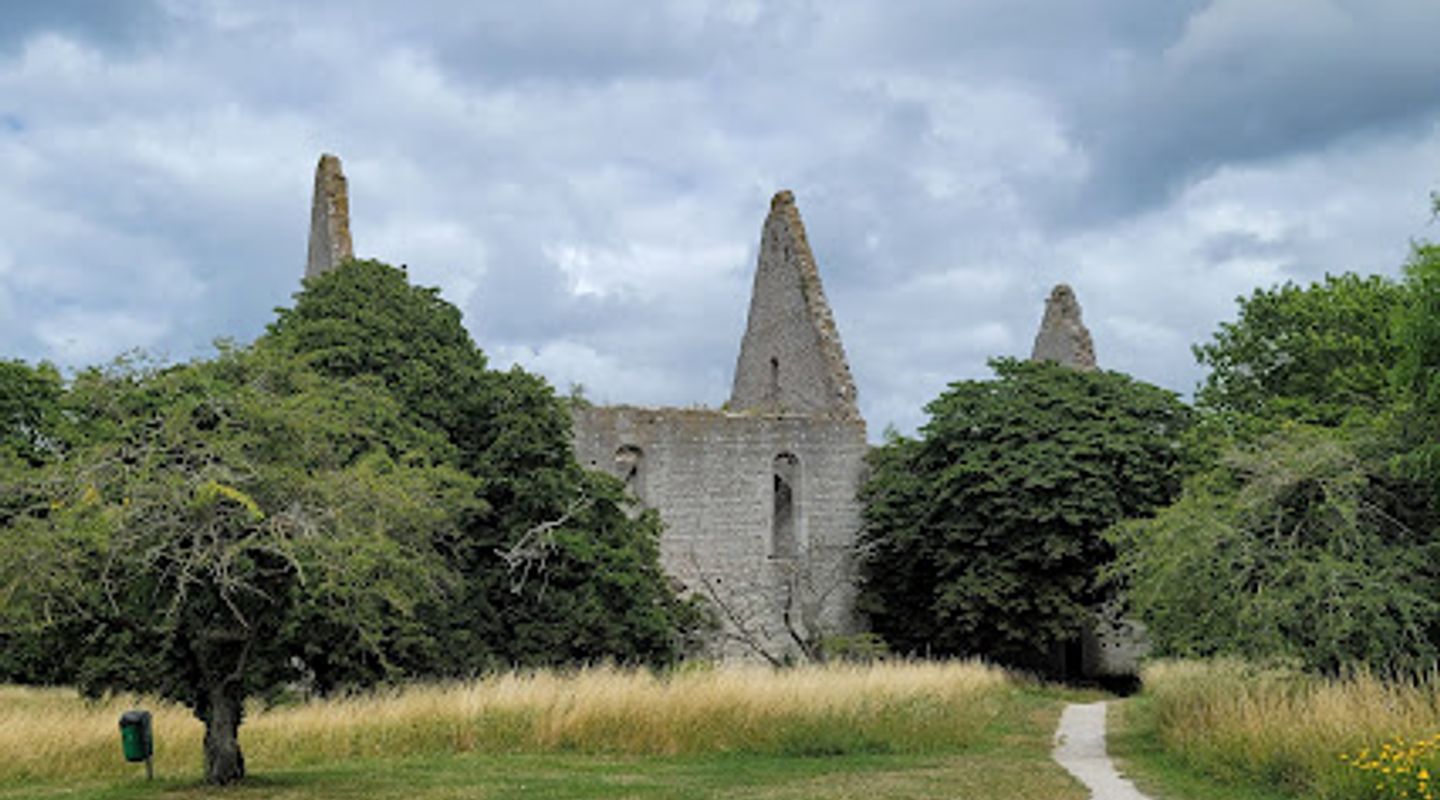
St Görans Ruin stands as a poignant medieval church remnant outside Visby's northern ring wall, originally constructed in the 13th century as part of a leprosy asylum. Its weathered stone arches and serene grounds evoke the city's Hanseatic past, offering a tranquil spot amid Gotland's historic landscape. Well-preserved despite centuries of decay, it whispers tales of isolation, faith, and resilience in the face of medieval plagues.
On-site amenities
 Trash bins
 Information boards
 Seating areas
Opening hours
- Every dayOpen 24 hours
Opening hours as listed on the venue’s Google Business Profile. Hours can change for services and special events, so check with the venue before you go.
- Address
- Munkstigen 10, 621 55 Visby
- Phone
- Website
Getting there
Walking
Bus
Bicycle
Taxi
Discover more about St Görans Ruin
Medieval Origins Beyond the Walls
Built in the early to mid-13th century, St Görans Ruin served as the church for a leprosy asylum, deliberately positioned outside Visby's protective ring wall to quarantine those afflicted with the disease. This location reflected the harsh realities of medieval society, where sufferers were segregated from the thriving Hanseatic trading hub within. The structure's robust stone construction speaks to the era's architectural prowess, with foundations laid during Gotland's prosperous church-building period from the 12th to 14th centuries.The ruin's establishment ties into Visby's role as a key Baltic port, attracting German merchants who influenced much of the island's cultural and religious life. Initially possibly catering to this German-speaking community, it later became synonymous with care for the leprous, blending spiritual solace with medical isolation.
Architectural Echoes of Faith
What remains are striking stone arches rising gracefully against the sky, remnants of a once-complete nave and chancel. The layout follows typical Gotlandic medieval designs, with thick walls designed for longevity amid harsh island weather. Unlike grander city churches, St Göran's modest scale suited its asylum function, yet its preservation rivals more central ruins.Excavations have uncovered artifacts hinting at pre-Christian activity, including runestones nearby, underscoring Gotland's layered pagan-to-Christian transition. The ruin's intact silhouette allows visitors to envision sermons echoing through the open air, masses held for the marginalized.
Decline Amid Historical Turmoil
Visby's golden age waned after the Black Death, the 1361 Battle of Visby, and Danish invasions, curtailing church maintenance. The 1525 Lübeck pillage accelerated decay, as economic decline and the Reformation rendered multiple churches obsolete. Stones from abandoned sites like this were quarried for other uses until 19th-century protections halted further dismantling.By 1805, Swedish law safeguarded Gotland's ruins, with state funding for conservation from 1863. St Görans endured as a testament to these shifts, its isolation sparing it from urban redevelopment while exposing it to natural erosion.
Serene Grounds and Atmosphere
Nestled along Munkstigen near the northern wall, the site exudes quiet introspection. Overgrown grasses frame the stones in summer, while winter frost accentuates their stark forms. The absence of crowds fosters a meditative air, ideal for pondering the lives once confined here.Birdsong and distant sea breezes enhance the sensory experience, connecting the ruin to Gotland's rugged coastal essence. Sunlight filters through arches, casting ethereal patterns on the ground, a natural light show in this outdoor historical theater.
Enduring Legacy in Visby's Tapestry
As one of twelve Visby church ruins within or near the walls, St Görans contributes to the city's UNESCO-protected medieval skyline. It symbolizes Gotland's Christianization and communal responses to affliction, standing resilient against time's ravages. Today, it invites contemplation of humanity's shared vulnerabilities across centuries.
Evendo Review Centre
 Google
Guest reviews
Best time to go
Quietest: Jan, Feb & Nov · before 7am or from 8pm
Busy times are Evendo estimates for a typical year, to help you plan. Actual crowds vary with events, school holidays and the weather.
Explore St Görans Ruin on the map
A handpicked selection of must-see spots near St Görans Ruin, mapped for you.
Get your free copy of our complete guide to St Görans Ruin, delivered straight to you.
Everything on this page, from opening hours and how to get there to Eve’s tips and the best time to go, in one PDF you can read offline, print or share.
Already have an account? Sign in
Your St Görans Ruin guide is ready.
We'll send it to · Not you? Sign out

Getting your guide ready…
We are putting together a fresh copy of the St Görans Ruin guide. This can take up to a minute.
This can take a few moments. If your browser asks, choose Allow so the download can start. You'll find the guide in your Downloads folder.
Nothing happened? Download it again
Sorry, the guide is taking longer than usual. Please try again in a minute, or get it by email instead.
Other nearby places you may find interesting
The closest places of the same kind, if this one is not quite what you had in mind.
-
-
-
-
-


Swipe for more places
More to explore near St Görans Ruin

 Best experiences near St Görans Ruin
 Best hotels near St Görans Ruin
 Best landmarks near St Görans Ruin
 Best attractions near St Görans Ruin
 Best shops near St Görans Ruin
 Best restaurants near St Görans Ruin
 Best bars near St Görans Ruin
Do you manage this location?
Take control to get all the benefits, like improved information, better appearance, and stronger visibility across AI-powered discovery.
Explore more

Explore more of Visby
Discover Visby, Sweden's medieval marvel on the island of Gotland, where history, charm, and natural beauty converge in a UNESCO World Heritage site.
Explore Visby
Explore more of Sweden
Discover Sweden's breathtaking landscapes, vibrant cities, and rich cultural heritage. From the Northern Lights to historic castles, experience the essence of Scandinavia.
Explore Sweden
