Hofkirche St. Leodegar, Lucerne's Renaissance Landmark
Lucerne’s principal Catholic church pairs Renaissance architecture, a lakefront setting, and a calm interior with deep civic and religious history.
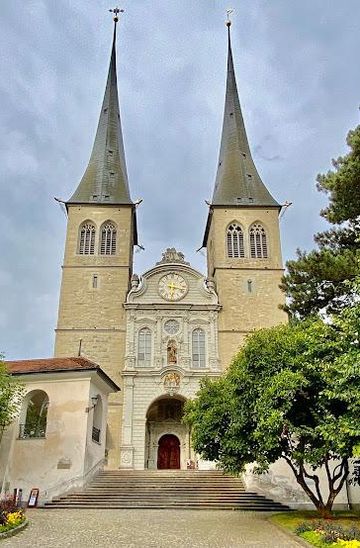
Hofkirche St. Leodegar is Lucerne’s principal Catholic church and one of Switzerland’s key Renaissance-era sacred buildings. Set close to the lakefront, it combines a monumental exterior with a calm, formal interior of artwork, furnishings, and historic detail. Most visits are short and self-guided, but the church rewards a slower look for architecture, heritage, and a quiet pause in the city centre.
A brief summary to Hofkirche St. Leodegar
- St. Leodegarstrasse 6, Lucerne, 6006, CH
- Click to display
- Click to display
- Duration: 0.25 to 1.5 hours
- Free
-
 Mixed
Mixed
- Mobile reception: 4 out of 5
- Monday 7 am-7 pm
- Tuesday 7 am-7 pm
- Wednesday 7 am-7 pm
- Thursday 7 am-7 pm
- Friday 7 am-7 pm
- Saturday 7 am-7 pm
- Sunday 7 am-7 pm

Know before you go
Hi, I'm Eve. Here are a few practical things to know before exploring Hofkirche St. Leodegar.
- Plan a short visit of 15 to 30 minutes unless you are attending a service or focusing on architecture.
- Keep your voice low inside; this is an active parish church as well as a heritage site.
- The exterior and skyline presence are as important as the interior, so allow time to view the church from outside.
Do you manage this location?
Take control to get all the benefits, like improved information, better appearance, and stronger visibility across AI-powered discovery. Learn more
Activate your presenceOther nearby places you may find interesting

Getting There
-
Rail
From Zurich, take an intercity train to Lucerne, then continue on foot or by local transit; the final approach is straightforward and urban.
-
Walking
If you are already in central Lucerne or near the lakeside, walking is the simplest option and usually the most practical.
-
Taxi
A taxi is useful if you are carrying luggage or arriving from another part of the city, though central traffic and parking can be inconvenient.
-
Public Transport
City buses and local transit are the easiest low-stress way to reach the church from Lucerne station or nearby districts.
For the on-the-go comforts that matter to you
-
 Seating Areas
-
 Information Boards
Discover more about Hofkirche St. Leodegar
What it is
Hofkirche St. Leodegar is the Catholic parish church of Lucerne, but it functions as more than a parish building. It is one of the city’s defining landmarks and one of the most important Renaissance-era church buildings in Switzerland. The site carries a long religious history, with origins reaching back to the 8th century, and it remains an active place of worship as well as a heritage monument.The church’s status comes from both age and presence. It stands with real authority in the urban fabric of central Lucerne, its towers and massing giving it a strong skyline profile. For travellers, it is not an all-day attraction but a concentrated stop: a place to read the building from the outside, step into the nave, and take in the layered atmosphere of a church that has remained central to civic life for centuries.Atmosphere and setting
The setting is distinctly urban and historic. Hofkirche sits near the lakefront, surrounded by city streets and older buildings rather than gardens or open countryside. That gives the visit a particular rhythm: you move from the bustle of Lucerne into a quieter, more formal interior where the soundscape drops away and the pace slows.Outside, the church reads as a substantial stone landmark; inside, the mood is restrained and contemplative. Visitors usually spend time looking at the nave, the artwork, and the furnishings, then perhaps linger briefly in the churchyard or around the exterior. It is a place for observation rather than activity, and it suits travellers who prefer architecture, religious heritage, and a measured, self-guided visit.How a visit unfolds
Most people come for a short stop of 15 to 30 minutes, though architecture enthusiasts and those interested in organ music or church history may stay longer. The experience usually begins with the exterior, which is the most immediate visual draw, before moving inside to take in the scale of the nave and the details of the interior.Because the church is active, the tone should remain respectful. You are likely to encounter a mix of visitors and worshippers, and the building’s function as a parish church is part of its character. The visit is straightforward and self-guided, with no need for elaborate planning. In practical terms, it works well as part of a central Lucerne walking route, especially when paired with the nearby lakeside area and historic centre.Practical expectations
Access is easy by city standards. From Lucerne station or the main visitor areas, the church is a simple walk, and public transport is the most convenient approach for travellers coming from elsewhere in the city or from Zurich by rail. Driving is possible, but central parking can be limited and paid.The church is best visited in daylight, when the exterior is easier to read and the surrounding streets feel more open. Weather has little effect on the core experience because the main visit is indoors, though rain, cold, or winter wind can make the walk less pleasant. Facilities are basic rather than tourist-oriented, so do not expect a full visitor centre. This is a heritage church first, and that is exactly why it is worth the stop: it offers a compact, authentic look at Lucerne’s religious and civic history without demanding much time.Explore the best of what Hofkirche St. Leodegar has to offer













More about Central Switzerland
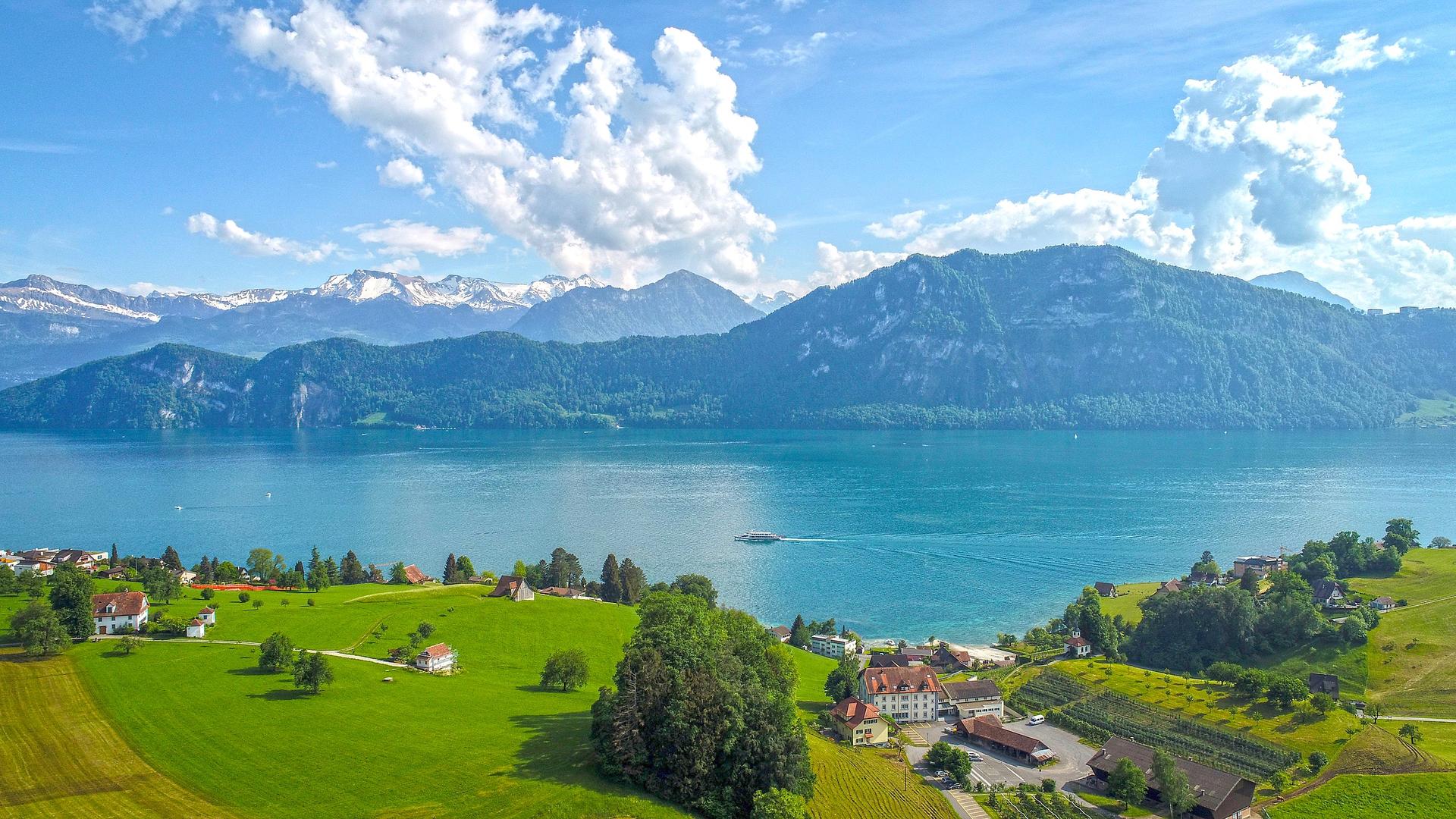
Discover Central Switzerland: A blend of history, culture, and stunning natural landscapes in the heart of Switzerland.
Tell me more about Central Switzerland
Experience the breathtaking views and scenic boat trips at Luzern Bahnhofquai, the gateway to Lake Lucerne's beauty in Switzerland.
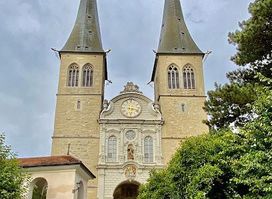
Discover the stunning Hofkirche St. Leodegar in Lucerne, an architectural marvel blending spiritual serenity with cultural vibrancy.