Background

Museum Haus Dix: Otto Dix’s Lake Constance Home in Hemmenhofen

A preserved artist house on the Höri peninsula, where Otto Dix lived and worked in a quiet lakeside setting with garden and museum rooms.

★★★★★4.6 (192)

Museum Haus Dix preserves the former home and garden of Otto Dix on the Höri peninsula, where the artist lived from 1936 to 1969. This compact museum feels domestic rather than monumental: rooms with original or period furnishings, reproductions of Dix’s work, and a garden that is part of the historic ensemble. It suits travellers who want art history with a strong sense of place.

Plan your visit

A brief summary to Museum Haus Dix

Opening times, essentials, and a few local tips gathered into one calmer, easier-to-scan planning section.

Plan your visit

📍
Otto-Dix-Weg 6, Gaienhofen, Hemmenhofen, 78343, DE
🕒
Duration: 0.75 to 2.5 hours
💷
Mid ranged
🏛
Mixed
📶
Mobile reception: 4 out of 5
Eve
From Eve

Know before you go

Hi, I'm Eve. Here are a few practical things to know before exploring Museum Haus Dix.

Local know-how to help you travel smarter and make the most of every moment.

Treat this as a heritage visit, not a large museum outing; the strongest experience comes from the house, garden, and interpretation together.
A guided visit adds useful context on Dix’s later years, the family home, and the building’s restoration history.
If you are arriving by car, plan for limited parking and expect a short walk through the village.
The garden is part of the attraction, so mild dry weather makes the visit noticeably better.

Discover more about Museum Haus Dix

What it is

Museum Haus Dix is the former residence of German artist Otto Dix and his family in Hemmenhofen, on the Höri peninsula above Lake Constance’s Untersee. It is best understood as an artist house museum rather than a large gallery: the appeal lies in the preserved domestic setting, the garden, and the way the site frames Dix’s later life and work. The house and grounds are treated as one historic ensemble, so the visit feels intimate and carefully curated.

What you see and how it feels

Inside, the rooms are arranged to evoke the period when Dix lived here from 1936 to 1969, after losing his Dresden professorship under the Nazi regime. Expect a quiet sequence of interiors, interpretive displays, reproductions of his work, and details that connect the house to his paintings of the Lake Constance landscape. The atmosphere is restrained and reflective, with little of the bustle or scale of a major city museum. The garden matters as much as the building: it softens the experience, adds seasonal colour, and gives the house its setting in the village.

Why people come

Travellers come here for a focused encounter with one of the major German artists of the 20th century, and for the chance to see where his later years unfolded. The museum is especially rewarding if you already know Dix’s work, but it also works as an introduction to the artist’s life on the Höri and to the wider cultural landscape around Lake Constance. Guided visits are particularly useful, because they add context about family life, the house’s restoration, and recent discoveries in the building, including cellar wall paintings.

Practical expectations

This is a compact stop, not an all-day attraction. A straightforward visit may take under an hour, while a more relaxed one with the garden and café can stretch to around two hours. It is easiest to reach by regional transport or car, but neither approach is especially urban or immediate, so it works best as a planned half-day or day trip. The site is most appealing in mild weather, when the garden and village setting add to the visit. In colder or wet conditions, the experience becomes more indoor and shorter, though the museum still holds its interest as a heritage site.

Explore places near Museum Haus Dix

    See all →

    Unlock the Best of Museum Haus Dix

    Find tickets, tours with entry, and experiences available for this location.

    Buy tickets

    No tickets available

    Book tours with entry

    No tours with entry available

    Book tours without entry

    No tours without entry available

    Getting There

    Public transport

    Regional train connections toward the Lake Constance and Schaffhausen area, then a local bus to Hemmenhofen, make this feasible without a car, though the trip is not especially direct.

    Public transport

    A local bus stop in Hemmenhofen is followed by a short walk of roughly 500 metres, so last-mile access is manageable once you reach the village.

    Driving

    Driving is the simplest approach, but parking is limited, so allow extra time and expect to leave the car near the church or in nearby village spaces.

    Day trip

    From Zurich or other regional bases, this works best as a planned half-day or day trip rather than a spontaneous stop.

    For the on-the-go comforts that matter to you

    Restrooms
    Drink Options
    Food Options
    Seating Areas
    Sheltered Areas
    Information Boards

    Plan around the quieter times

    A quick look at seasonal patterns and peak visiting hours.

    Busiest months of the year

    Seasonality

    Busiest hours of the day

    Footfall
    Mobile App
    Get the app

    Your all‑in‑one travel companion app

    Explore expert travel guides, compare and book tours, experiences, hotels, and more—all from the palm of your hand. Download now for seamless trip planning wherever your wanderlust takes you.
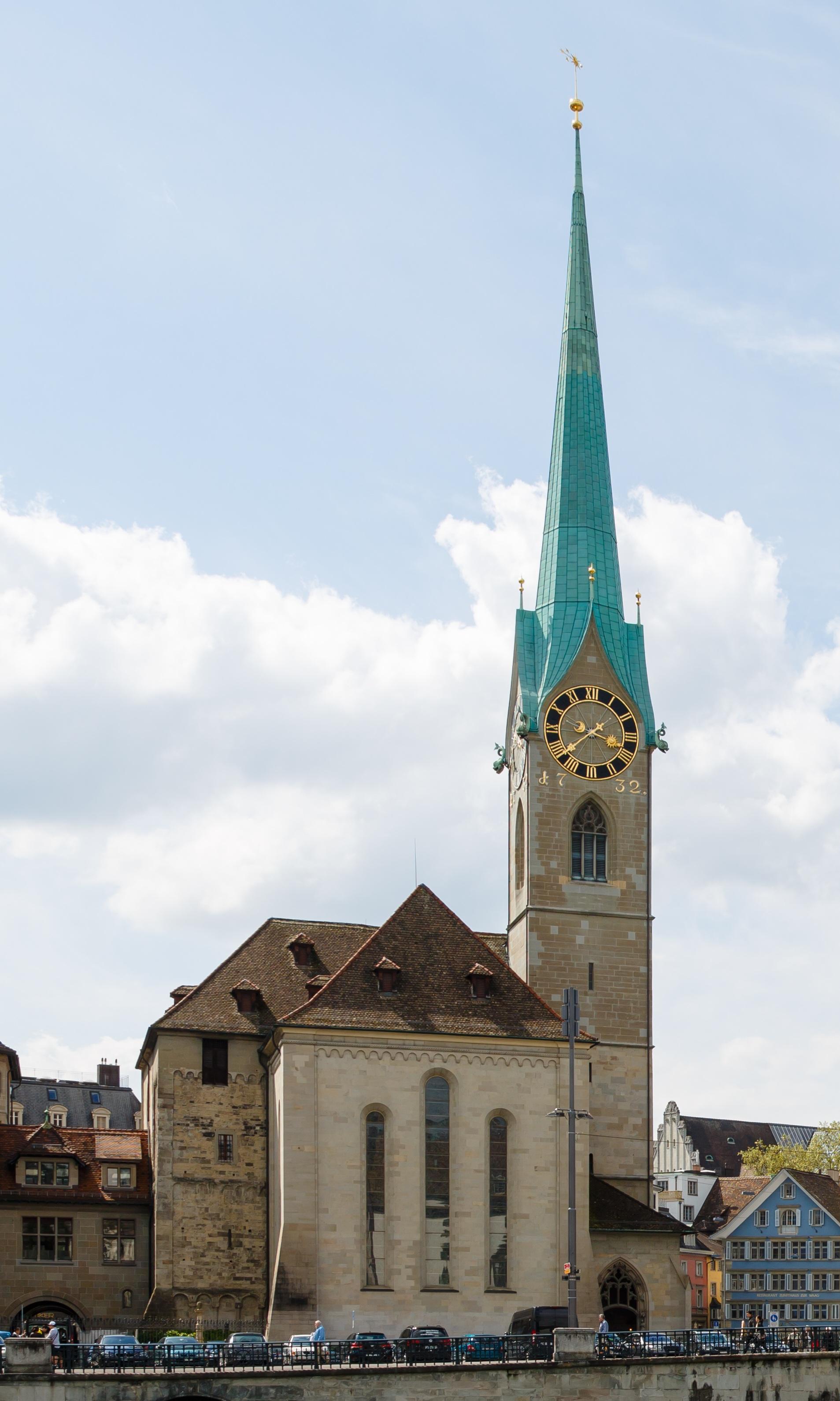
    File:Zürich Switzerland-Münsterbrücke-and-Fraumünster-01 (cropped).jpg -  Wikimedia Commons

    More about Zurich

    Explore Zurich: A perfect blend of historical charm and modern sophistication, offering culture, nature, and gourmet delights in the heart of Switzerland.

    Tell me more about Zurich

    Select Currency

    Choose the currency you want prices to display in.