

Lucerne Needle Dam: a working river monument on the Reuss
A rare manual needle weir in central Lucerne, where the Reuss surges past old-town bridges and a still-working piece of 19th-century engineering.
The Lucerne Needle Dam is a compact but striking piece of river engineering in the city centre, where the Reuss pushes through timber needles and stonework beside the old town. It is less a place to linger than a place to pause: listen to the water, watch the current break around the weir, and take in one of Lucerne’s most unusual historic structures.
A brief summary to Lucerne Needle Dam
- Reusssteg, Lucerne, 6003, CH
- Click to display
- Click to display
- Duration: 0.1 to 0.5 hours
- Free
-
 Outdoor
- Mobile reception: 5 out of 5

Know before you go
Hi, I'm Eve. Here are a few practical things to know before exploring Lucerne Needle Dam.
- View it from both the riverbank and the nearby bridge for the clearest sense of how the water is controlled.
- Pair it with a walk through Lucerne’s old town; the site is small and works best as part of a wider riverfront circuit.
- Go in good light if you want strong photos, since the moving water and masonry lose detail in rain or low visibility.
Do you manage this location?
Take control to get all the benefits, like improved information, better appearance, and stronger visibility across AI-powered discovery. Learn more
Activate your presence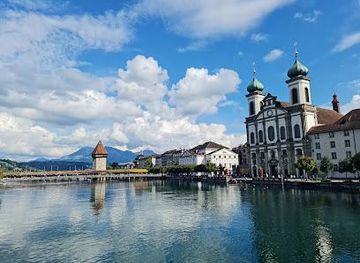

Getting There
-
On foot
The easiest approach is a walk through central Lucerne; from the station area, allow about 10 to 15 minutes depending on pace.
-
Public transport
Local buses can shorten the walk, but the site is in the city centre and is usually simplest to reach on foot.
-
By train
From Zurich or other Swiss cities, take a direct train to Lucerne, then continue on foot through the old town streets.
-
By car
Driving is possible, but city-centre parking is the main constraint; public transport is generally the more practical choice.
For the on-the-go comforts that matter to you
-
 Restrooms
-
 Drink Options
-
 Food Options
-
 Seating Areas
-
 Sheltered Areas
-
 Trash Bins
-
 Information Boards
Discover more about Lucerne Needle Dam
What it is
The Lucerne Needle Dam, also known as the Reuss Weir, is a 19th-century hydraulic monument on the Reuss River in central Lucerne. Built between 1859 and 1861, it is one of the few preserved needle weirs still in operation, using timber “needles” to help regulate Lake Lucerne’s water level. It is both a working piece of infrastructure and a historical landmark, which gives it a different character from the city’s churches, squares, and museums.What you see on arrival
The setting is urban and open, with the river running hard through the middle of the city. The weir is compact, but the movement of water makes it feel larger than it is. From the riverbank, you see the flow breaking into white water and the masonry and timber elements that give the site its technical look. The best views are often from nearby bridges, especially the Spreuer Bridge, where the river corridor, old town facades, and the weir line up in a single frame.How a visit unfolds
Most travellers spend only a short time here. You approach on foot as part of an old-town walk, stop to watch the water, take a few photos, and move on. There is no sense of a formal attraction with exhibits or a ticketed entry sequence; the appeal lies in the sight and sound of the river and in the fact that this is still a functioning system, not a preserved shell. Because the site is outdoors and central, it fits easily into a self-guided loop through Lucerne’s historic core.Why travellers come
People visit for three reasons: the engineering, the river views, and the convenience. It is a rare example of a manual needle weir, so it interests travellers who like industrial heritage and city infrastructure. It is also a good photo stop, especially in clear weather when the water is bright and the old town edges are sharp. And because it sits in the middle of Lucerne, it requires little planning: you can reach it on foot from the station or combine it with nearby bridges, riverfront streets, and other central sights.Practical expectations
This is not a long-stay attraction. A few minutes is enough for a look; 15 to 30 minutes works well if you want to walk around the area and photograph it from different angles. There are no clear on-site visitor facilities, so expect to use the surrounding city centre for restrooms, food, and shelter. The experience is weather-sensitive: rain, low cloud, or winter slush can make the riverfront less comfortable and less photogenic, while bright daylight brings out the contrast between rushing water and historic stone.Explore the best of what Lucerne Needle Dam has to offer













More about Central Switzerland
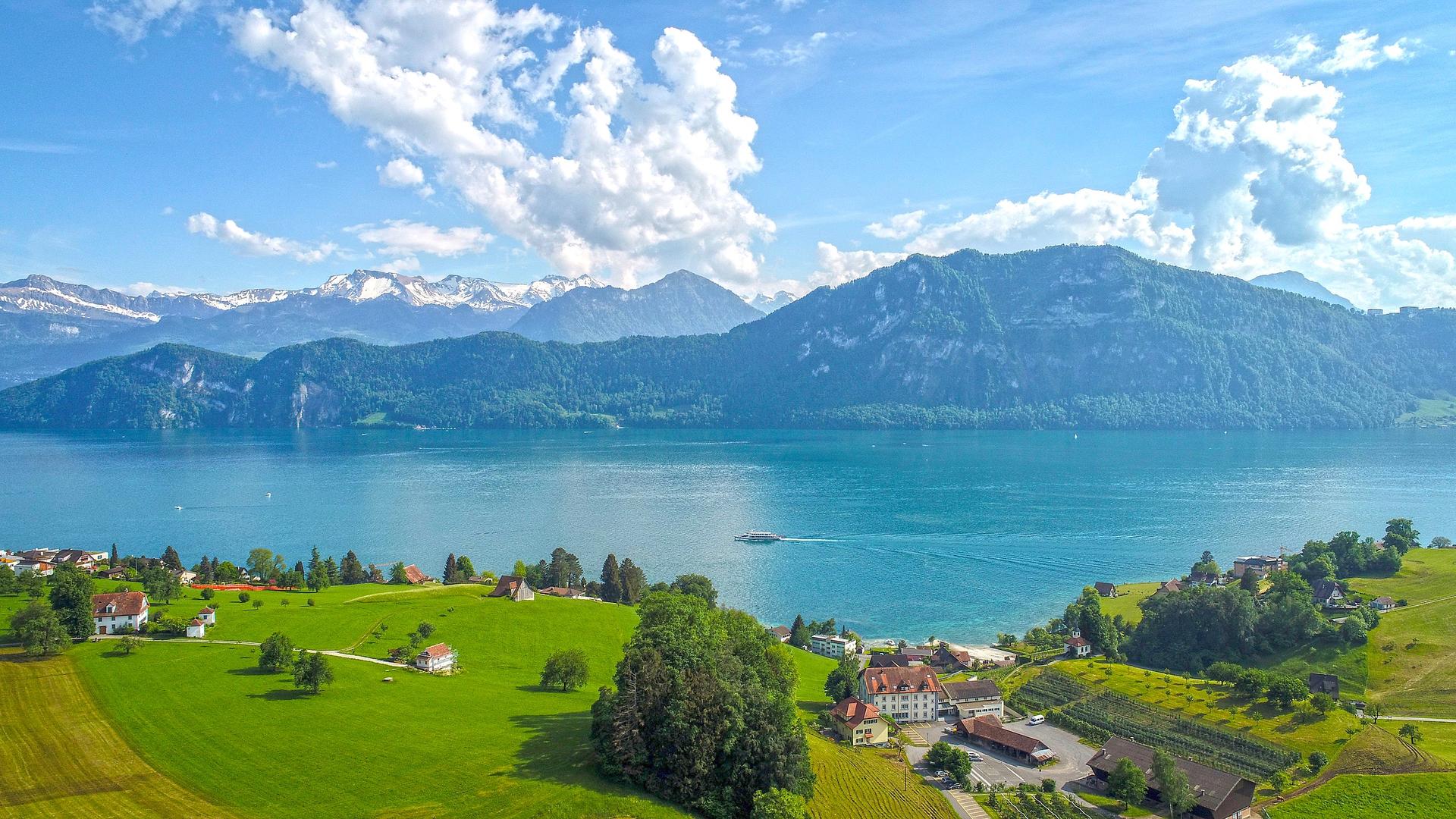
Discover Central Switzerland: A blend of history, culture, and stunning natural landscapes in the heart of Switzerland.
Tell me more about Central Switzerland
Explore the historical beauty and vibrant culture of Kornmarkt in Lucerne, a must-visit square showcasing stunning medieval architecture.
A functional Reuss crossing in Emmen, with open river views, local traffic flow, and a brief stopover feel rather than a full attraction.
