

Free West Caicos Travel Guide & Mobile App
Explore West Caicos with free travel guides. Discover regional history, expert tips, proposed trips, and audio guides on web or mobile app.


West Caicos offers remote beaches, saline wetlands, marine wildlife and fragile historic remains on a boat-accessed island in the Turks and Caicos Islands.
Read more about West Caicos
When is the best time to visit West Caicos?
Best: January–March · 27–28°C| Month | High (°C) | Rainfall (mm) |
|---|---|---|
| January (best) | 27 | 36 |
| February (best) | 28 | 33 |
| March (best) | 28 | 34 |
| April | 29 | 36 |
| May | 31 | 66 |
| June | 31 | 84 |
| July | 32 | 84 |
| August | 32 | 102 |
| September | 32 | 114 |
| October | 31 | 112 |
| November | 29 | 81 |
| December | 28 | 46 |
Getting to and around West Caicos
How to get there
Transportation
Best attractions in West Caicos
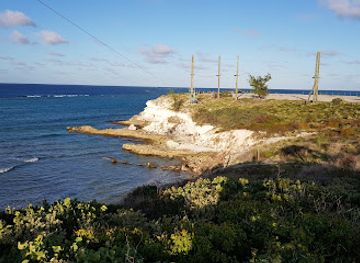
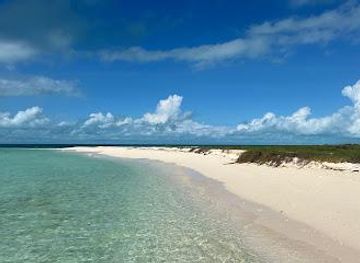
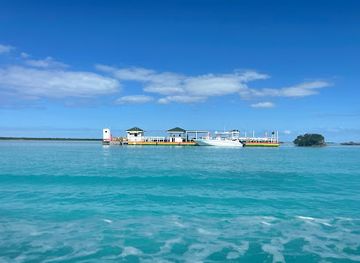
West Caicos’s attractions are primarily natural and exploratory rather than built for mass tourism. Boat excursions may reveal pale beaches, shallow turquoise water, coral habitats and secluded coves along a coast that has no resort strip or public visitor centre. Lake Catherine, an inland saline lagoon, is a significant landscape feature, while the island’s dry scrub provides habitat for reptiles, birds and other wildlife adapted to the Caicos environment. The surrounding waters can offer opportunities for swimming, snorkelling, diving and wildlife watching, subject to weather, local regulations and the judgement of the boat operator. On land, the interest lies in seeing how salt, farming and settlement once attempted to use this difficult environment. Foundations, walls and other historic traces are modest and fragile, not a fully restored attraction with interpretive facilities. Visitors should not expect marked trails, toilets, cafés, hire equipment or staffed activities. Access may also be affected by private ownership, conservation requirements, shallow banks and changing development arrangements. West Caicos is therefore most rewarding for travellers who value a quiet marine landscape and are prepared for a carefully managed, self-sufficient excursion rather than a conventional sightseeing itinerary.
-
 Resort hotel
Beaches Turks & Caicos
Experience unparalleled luxury and relaxation at Beaches Turks & Caicos, the ultimate resort hotel in paradise, perfect for families and couples alike.
-
Historical landmark
Grand Turk Lighthouse
Discover the historic Grand Turk Lighthouse, a stunning landmark offering breathtaking views and a glimpse into the maritime heritage of the Turks and Caicos Islands.
-
Boat tour agency
Big Blue Collective
Discover breathtaking underwater adventures and serene kayaking experiences with Big Blue Collective in the stunning Turks & Caicos Islands.
-
Resort hotel
The Palms Turks and Caicos
Discover luxury and serenity at The Palms Turks and Caicos, a premier resort on Grace Bay Beach offering stunning views and top-notch amenities.
Best landmarks in West Caicos
West Caicos’s most important landmarks are landscape features and archaeological remnants rather than monumental architecture. Lake Catherine is the island’s defining inland feature: a broad saline lagoon whose enclosed waters contrast with the open sea and dry limestone scrub around it. The island’s exposed western and southern shorelines, including the area around Northwest Point, provide strong visual evidence of its remote position at the edge of the Caicos Bank, though access and landing conditions vary. Scattered foundations, walls and other traces associated with former agricultural and settlement efforts are reminders of the commercial schemes that once sought to use the island. They are not a restored town or formal museum and should be viewed without climbing, dismantling or removing material. The beaches and surrounding shallow marine habitats are also significant natural landmarks, particularly where changing light reveals the distinction between lagoon, bank and open Caribbean water. No single civic building or historic fort dominates West Caicos; its character comes from the relationship between abandoned human works, saline wetlands, low scrub and a largely undeveloped coast.
-
Resort hotel
Beaches Turks & Caicos
Experience the ultimate family getaway at Beaches Turks & Caicos, where luxury meets adventure on pristine Caribbean shores.
-
Resort hotel
Club Med Turkoise
Experience the ultimate Caribbean getaway at Club Med Turkoise, where stunning beaches and exciting activities create unforgettable memories.
-
Restaurant
Da Conch Shack
Experience the authentic flavors of the Caribbean at Da Conch Shack, a vibrant beachside restaurant in Turks and Caicos, known for its fresh seafood.
-
Hotel
Seven Stars Resort and Spa
Discover unparalleled luxury and relaxation at Seven Stars Resort and Spa, a premier destination on the breathtaking Grace Bay in the Turks and Caicos Islands.
Explore West Caicos on the map
Plan your trip on one map. See where the top cities, national parks and sights are, and book hotels and experiences in a few clicks.
Best hotels in West Caicos
Best restaurants in West Caicos
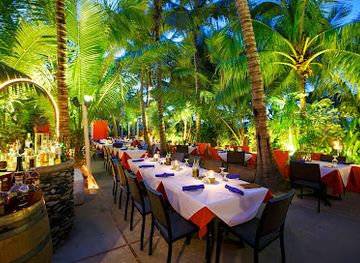
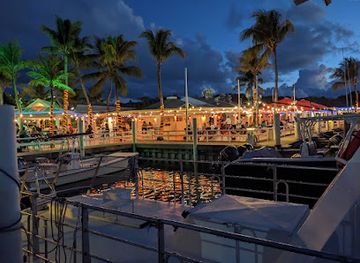
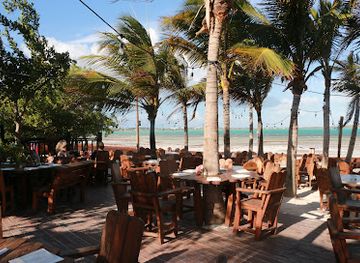
West Caicos has no resident restaurant scene, cafés, food shops or working hospitality district. Visitors need to eat before departure or arrange packed food and drinks with their charter operator, taking all packaging and waste back to the mainland. The island’s culinary relevance is therefore indirect: its coastal setting belongs to a territory where seafood, conch and Caribbean-influenced cooking are prominent in the wider dining culture, particularly on nearby Providenciales outside this region. Boat excursions may include a packed picnic or an informal beach meal, but this should never be assumed and must be confirmed in advance. Freshwater, ice, refrigeration and cooking facilities are not available as ordinary public services on West Caicos. Travellers should carry more water than they expect to need in the heat and avoid leaving food scraps that could attract wildlife. For a proper meal, Providenciales provides the territory’s broadest choice of restaurants, from casual local cooking to contemporary dining, whereas West Caicos itself is best approached as a food-free nature excursion unless supplies have been specially arranged.
-
Restaurant
Da Conch Shack
Experience authentic Caribbean cuisine at Da Conch Shack in Turks & Caicos - where fresh seafood meets stunning ocean views.
-
Restaurant
Coco Bistro
Experience fine Caribbean dining at Coco Bistro in Grace Bay - where exquisite cuisine meets stunning tropical ambiance.
-
Restaurant
Mango Reef Restaurant & Bar
Experience the best of Caribbean dining at Mango Reef Restaurant & Bar in beautiful Turks and Caicos Islands.
-
Restaurant
Bugaloos
Experience authentic Caribbean cuisine at Bugaloos in Turks & Caicos – where every meal is a celebration of flavor and culture.

Best bars in West Caicos
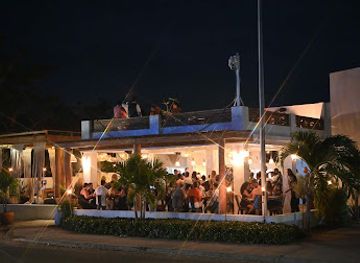
West Caicos has no bars, nightclubs, pubs, hotels or established evening entertainment. Because the island is uninhabited and difficult to access after dark, visits normally take place during daylight hours and return by boat to Providenciales or another populated island. Evening life in the wider Turks and Caicos Islands is concentrated elsewhere, particularly around the resort and dining areas of Providenciales outside West Caicos, where visitors can find restaurants, hotel bars and a modest range of live music or late-night venues. A private charter may offer a sunset cruise, but this is an excursion format rather than a permanent nightlife scene and depends on weather, operator policy and safe navigation. Alcohol should be consumed cautiously on any boat trip, with local maritime rules and crew instructions taking priority. West Caicos’s defining evening experience is quietness and darkness, not organised entertainment.
-
Restaurant
Da Conch Shack
Experience the best of Caribbean cuisine at Da Conch Shack, a beachfront gem in Turks & Caicos, renowned for its fresh conch dishes and vibrant atmosphere.
-
Restaurant
Mango Reef Restaurant & Bar
Experience the vibrant flavors of the Caribbean at Mango Reef Restaurant & Bar in the beautiful Turks & Caicos Islands.
-
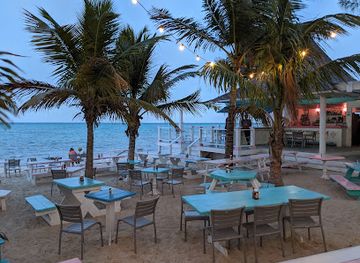
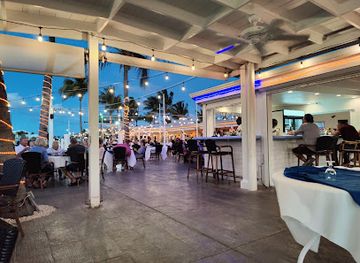
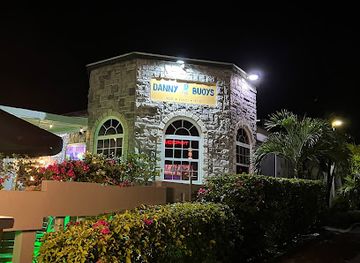
American
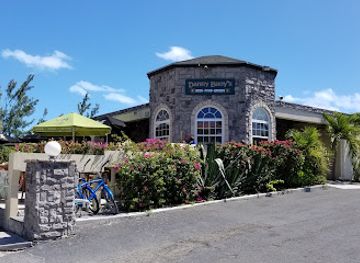
Danny Buoy's
Discover the vibrant flavors of American cuisine at Danny Buoy's, where delicious food meets the lively spirit of Grace Bay, Turks & Caicos.
-
Restaurant
Bugaloos
Experience the fresh flavors of the Caribbean at Bugaloos in Turks & Caicos, where unique dining meets vibrant island culture.

Best nightclubs in West Caicos
West Caicos has no bars, nightclubs, pubs, hotels or established evening entertainment. Because the island is uninhabited and difficult to access after dark, visits normally take place during daylight hours and return by boat to Providenciales or another populated island. Evening life in the wider Turks and Caicos Islands is concentrated elsewhere, particularly around the resort and dining areas of Providenciales outside West Caicos, where visitors can find restaurants, hotel bars and a modest range of live music or late-night venues. A private charter may offer a sunset cruise, but this is an excursion format rather than a permanent nightlife scene and depends on weather, operator policy and safe navigation. Alcohol should be consumed cautiously on any boat trip, with local maritime rules and crew instructions taking priority. West Caicos’s defining evening experience is quietness and darkness, not organised entertainment.
-
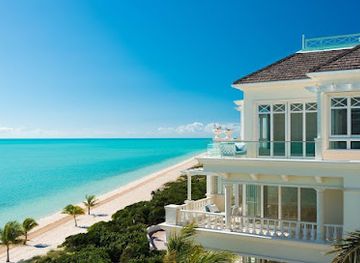
Resort hotel
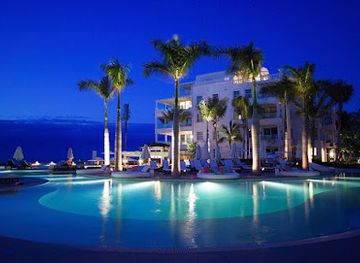
The Shore Club Turks & Caicos
Experience unparalleled luxury and adventure at The Shore Club Turks & Caicos, where turquoise waters meet white sandy beaches.
-
Restaurant
Aziza Restaurant & Lounge Turks-Caicos Providenciales
Discover the vibrant flavors of Middle Eastern cuisine at Aziza Restaurant & Lounge in Turks and Caicos, where fine dining meets an unforgettable nightlife experience.
-
Bar
Noah's Ark Beach Club TCI
Experience the vibrant atmosphere of Noah's Ark Beach Club TCI, where tropical drinks and stunning ocean views create the perfect escape in the heart of Turks & Caicos.
-
Bar
Blu Bar & Lounge
Discover the vibrant nightlife at Blu Bar & Lounge in Grace Bay, where refreshing cocktails and stunning views create unforgettable moments.

Best shops in West Caicos
West Caicos has no shops, market, high street, craft outlet or commercial shopping facility. Everything needed for a visit, including food, water, sun protection, snorkelling supplies and suitable footwear, must be purchased or packed before departure. Providenciales, outside West Caicos and the territory’s main visitor centre, is the practical place to obtain provisions, while local businesses elsewhere in the Turks and Caicos Islands offer the wider selection of souvenirs and regional products. Visitors may find island-themed crafts, artwork, clothing, books, locally produced food items and marine-inspired gifts in established shopping areas on populated islands, but these should not be presented as products made on West Caicos itself. Do not collect shells, corals, stones, archaeological fragments or other natural and historic material as souvenirs. The most responsible memento of a West Caicos excursion is a photograph and the memory of a landscape left as it was found.
-
Resort hotel
Beaches Turks & Caicos
Experience the enchanting beauty and luxurious comfort of Beaches Turks & Caicos, a premier resort hotel perfect for families and romantic escapes.
-
Resort hotel
The Palms Turks and Caicos
Experience the ultimate luxury and tranquility at The Palms Turks and Caicos, where stunning beaches meet unparalleled service.
-
Gift shop
House of Unicorn
Explore the magical House of Unicorn in Grace Bay, Turks & Caicos, where unique gifts and local artisan crafts await you.
-
Shopping Centre
The Regent Village
Experience the luxury shopping and vibrant dining scene at The Regent Village in Grace Bay, your ultimate destination in Turks & Caicos.
Get your free copy of our complete guide to West Caicos, delivered straight to you.
Everything on this page, from attractions and restaurants to essentials and local phrases, in one PDF you can read offline, print or share.
Already have an account? Sign in
Your West Caicos guide is ready.
We'll send it to · Not you? Sign out

Getting your guide ready…
We are putting together a fresh copy of the West Caicos guide. This can take up to a minute.
This can take a few moments. If your browser asks, choose Allow so the download can start. You'll find the guide in your Downloads folder.
Nothing happened? Download it again
Sorry, the guide is taking longer than usual. Please try again in a minute, or get it by email instead.
West Caicos essentials
Currency and Payment
Safety
Emergency Situations
Do's and Don'ts
Local Tips
From Eve
Local phrases worth knowing
You don't need to get them perfect. A few words go a long way, and locals appreciate the effort.
Basics
| English | Local | Say it |
|---|---|---|
| Hello | Hello | [Heh-lo] |
| Goodbye | Bye | [Bye] |
| Yes | Yeah | [Yeh] |
| No | No | [No] |
| Please/You're welcome | Please | [Pleez] |
| Thank you | Thank you | [Thank yuh] |
| Excuse me/Sorry | Sorry | [Saw-ree] |
| How are you? | How yuh doin'? | [How yuh doin'?] |
| Fine. And you? | I’m fine. An’ yuh? | [I'm fine. An' yuh?] |
| Do you speak English? | Yuh speak English? | [Yuh speak English?] |
| I don't understand | I no understand | [I no understand] |
Eating & Drinking
| English | Local | Say it |
|---|---|---|
| I'd like to see the menu, please | Can I see di menu, please? | [Can I see di menu, pleez?] |
| I don't eat meat | I no eat meat | [I no eat meat] |
| Cheers! | Cheers! | [Cheers!] |
| I would like to pay, please | I wan pay, please | [I wan pay, pleez] |
Emergencies
| English | Local | Say it |
|---|---|---|
| Help! | Help! | [Help!] |
| Go away! | Git away! | [Git away!] |
| Call the Police! | Call di Police! | [Call di Police!] |
| Call a doctor! | Call a doctor! | [Call a doctor!] |
| I'm lost | I lost | [I lost] |
| I'm ill | I sick | [I sick] |
Shopping
| English | Local | Say it |
|---|---|---|
| I'd like to buy... | I wan buy... | [I wan buy...] |
| I'm just looking | I just lookin' | [I just lookin'] |
| How much is it? | How much dat? | [How much dat?] |
| That's too expensive | Dat too expensive | [Dat too expensive] |
| Can you lower the price? | Can yuh drop di price? | [Can yuh drop di price?] |
Time & Numbers
| English | Local | Say it |
|---|---|---|
| What time is it? | Wha time it be? | [Wha time it be?] |
| It's one o'clock | It one o'clock | [It one o'clock] |
| Half past (10) | Half past ten | [Half past ten] |
| Morning | Mornin' | [Mornin'] |
| Afternoon | Afternoon | [Afternoon] |
| Evening | Evenin' | [Evenin'] |
| Yesterday | Yesterday | [Yesterday] |
| Today | Today | [Today] |
| Tomorrow | Tomorrow | [Tomorrow] |
| 1 | One | [Wun] |
| 2 | Two | [Too] |
| 3 | Three | [Tree] |
| 4 | Four | [For] |
| 5 | Five | [Faiv] |
| 6 | Six | [Siks] |
| 7 | Seven | [Sev-en] |
| 8 | Eight | [Ait] |
| 9 | Nine | [Nain] |
| 10 | Ten | [Ten] |
Transport & Directions
| English | Local | Say it |
|---|---|---|
| Where's a/the...? | Wheh di...? | [Wheh di...?] |
| What's the address? | Wha di address? | [Wha di address?] |
| Can you show me (on the map)? | Can yuh show me (pon di map)? | [Can yuh show me (pon di map)?] |
| When's the next (bus)? | When di next (bus)? | [When di next (bus)?] |
| A ticket (to ....) | A ticket (to....) | [A ticket (to....)] |
History of West Caicos
Lucayan Settlement Before European Colonisation
The Turks and Caicos Islands were inhabited by Lucayan Taíno people before European arrival, and West Caicos forms part of that wider archaeological landscape. Evidence across the archipelago indicates communities adapted to shallow banks, coastal resources and a dry island environment. Although West Caicos has not developed as a major archaeological tourism site, the island’s caves, coastal areas and abandoned settlement zones should be regarded as culturally sensitive. European colonisation brought catastrophic disruption through enslavement, disease and forced labour, largely ending indigenous society in the islands.
Spanish and Early Colonial Encounters
Following Columbus’s voyages, the Turks and Caicos Islands entered Spanish imperial maps and maritime networks. The islands were not settled as a large Spanish colony, but their position among the Bahamian and Caribbean sea routes exposed them to changing claims, ship traffic and exploitation. West Caicos’s shallow banks and reefs later became relevant to sailors navigating between the larger islands. This early period established the strategic and maritime context in which later British control and commercial schemes developed.
Salt, Farming and the Search for Commercial Settlement
From the seventeenth and eighteenth centuries, the Turks and Caicos Islands became associated particularly with salt production, supported by naturally shallow ponds and strong evaporation. West Caicos also attracted attempts at agricultural settlement, including efforts connected with cotton and other plantation-style enterprises. Dry conditions, limited freshwater and difficult transport restricted their long-term success. The remains of walls, foundations and altered land around former work areas record these ambitions, while the absence of a continuing town reflects the island’s environmental and economic limitations.
Nineteenth-Century Decline and Abandonment
Commercial activity on West Caicos proved difficult to sustain, and the island eventually lost its settled population. Its isolation, lack of reliable freshwater and limited agricultural potential made it less competitive than more productive or better-connected islands. As settlement declined, scrub and saline landscapes gradually reclaimed much of the former working environment. The island’s abandoned structures and field traces therefore represent not a continuously inhabited historic village but the remnants of schemes that were attempted and later relinquished.
Modern Conservation and Development Proposals
During the modern era, West Caicos attracted interest because of its beaches, marine setting and proximity to Providenciales, while its lack of permanent residents also preserved a relatively undeveloped character. Plans for major tourism development have been proposed at different times, but implementation and access arrangements have not transformed the island into an established resort destination. Today, its terrestrial and marine environments remain central to its significance, and any future development must be considered alongside archaeological protection, shoreline dynamics and the conservation of surrounding habitats.
West Caicos in the Contemporary Turks and Caicos Islands
West Caicos is administered within the Turks and Caicos Islands, a British Overseas Territory whose modern economy is strongly shaped by tourism, financial services and maritime activity. Its contemporary role differs from that of Providenciales, where most visitor services are concentrated: West Caicos is primarily a remote excursion landscape rather than a population centre. This distinction matters when interpreting its ruins, beaches and wetlands, since the island has no resident community providing the shops, roads and services normally associated with a developed destination.
West Caicos in Photos
Browse through our photo collection highlighting the charm and character of the destination.
Neighbouring regions of West Caicos
The closest regions to West Caicos, if you have time for more than one.

Swipe for more regions
Explore more

Explore more of Turks and Caicos Islands
Discover the pristine beaches, luxurious resorts, and vibrant culture of Turks and Caicos Islands, a tropical paradise in the Atlantic Ocean.
Explore Turks and Caicos Islands