

Durrington Walls, Wiltshire Travel Guide
Explore Durrington Walls, the UK’s largest Neolithic henge and ancient village site, a monumental ceremonial landscape near Stonehenge.
Durrington Walls, near Amesbury and Salisbury, is the largest known Neolithic henge in the UK, dating from around 2000 to 1600 BCE. It features massive earthworks enclosing an ancient village site thought to be home to the builders of Stonehenge. Recent discoveries reveal a vast circle of deep shafts surrounding the site, underscoring its ceremonial significance in prehistoric Britain.
A brief summary to Durrington Walls
- Salisbury, Amesbury, GB
- Click to display
- Click to display
- Duration: 1 to 3 hours
- Mid ranged
-
 Outdoor
- Mobile reception: 4 out of 5

Know before you go
Hi, I'm Eve. Here are a few practical things to know before exploring Durrington Walls.
- Visit during daylight hours to fully appreciate the scale of the earthworks and surrounding landscape.
- Combine your visit with nearby Stonehenge and Woodhenge for a comprehensive experience of the Neolithic landscape.
- Wear comfortable walking shoes as the site covers a large open area with uneven terrain.
- Check National Trust resources for guided tours and archaeological talks to deepen your understanding.
Do you manage this location?
Take control to get all the benefits, like improved information, better appearance, and stronger visibility across AI-powered discovery. Learn more about listing your business on Evendo
Activate your presenceOther nearby places you may find interesting
The closest places of the same kind, if this one is not quite what you had in mind.
Explore Durrington Walls on the Map
A handpicked selection of must-see spots near Durrington Walls, mapped for you.
Unlock the Best of Durrington Walls
Buy tickets
-
No tickets available
Book tours with entry


Book tours without entry

Getting There
-
Train and Bus
Take a train to Salisbury from London or other regional hubs, then catch the direct bus service to Amesbury; the journey from Salisbury to Amesbury takes approximately 20-30 minutes. From Amesbury, a 20-minute walk or local taxi ride leads to Durrington Walls. Bus services operate regularly but check schedules seasonally. Train fares from London start around £15-£30 one way.
-
Car
Driving from Salisbury or nearby towns takes about 15-25 minutes via A303 and local roads. Limited parking is available near Amesbury; expect a short walk to the site. Parking may require a small fee. Note that the area can be busy during peak tourist seasons.
-
Guided Tour
Join a guided archaeological or heritage tour departing from Salisbury or Amesbury, typically lasting 3-5 hours. These tours include transport and expert commentary, with prices ranging from £40 to £70 per person.
For the on-the-go comforts that matter to you
-
 Restrooms
-
 Information Boards
-
 Seating Areas
-
 Trash Bins
Discover more about Durrington Walls
Architectural Grandeur of a Neolithic Monument
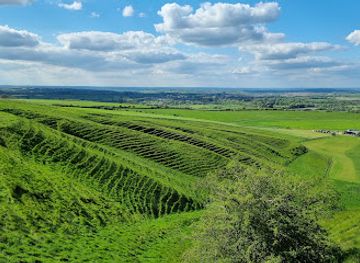
Durrington Walls stands as the largest Neolithic henge in the United Kingdom, its massive circular earthworks spanning nearly 500 meters in diameter. Built around 2500 BCE, shortly after the construction of Stonehenge's sarsen circle, the henge comprises towering banks and ditches that once enclosed a vibrant prehistoric community. Archaeological evidence reveals that the site also hosted a palisaded enclosure formed by approximately 300 large wooden posts arranged in a precise ring, suggesting complex ceremonial or defensive purposes. The scale and sophistication of these constructions reflect the monumental efforts of Neolithic societies on Salisbury Plain.A Thriving Neolithic Village and Ritual Landscape
Beneath the earthworks lies the remains of a Neolithic village, believed to have housed the builders of Stonehenge. This settlement was occupied for a relatively brief period, approximately 10 to 12 years, as indicated by the renewal patterns of chalk floors and pit recuts. The village's proximity to Stonehenge and other ancient monuments situates Durrington Walls within a rich ritual landscape, where large-scale feasting and gatherings likely took place. Isotope analysis of animal bones suggests that people traveled great distances to participate in these communal events, highlighting the site's role as a social and ceremonial hub.Recent Archaeological Discoveries and Their Significance
In recent years, groundbreaking discoveries have transformed understanding of Durrington Walls. Archaeologists uncovered a vast circle of over 20 colossal shafts, each about 10 meters wide and 5 meters deep, arranged with remarkable geometric precision around the henge. This circle, more than two kilometers in diameter, is believed to have marked a sacred boundary, emphasizing the site's ritual importance. Such findings underscore the advanced engineering skills and cosmological knowledge of Neolithic peoples, suggesting that Durrington Walls was not only a settlement but also a monumental ceremonial complex.Interconnectedness with Stonehenge and the Wider Landscape
Durrington Walls is integrally linked to Stonehenge and other nearby prehistoric sites such as Woodhenge and the Stonehenge Avenue. Together, these monuments form part of a larger World Heritage Site that provides unparalleled insight into Neolithic and Bronze Age ceremonial and mortuary practices. The entire landscape, dotted with burial mounds and cursus monuments, reflects a sophisticated spiritual worldview centered on ancestor veneration and solar alignments, particularly the solstices. Durrington Walls, with its scale and complexity, exemplifies the communal and ritual life of prehistoric Britain.Experiencing the Ancient Past Today
Today, visitors to Durrington Walls can appreciate the vastness of the earthworks and imagine the vibrant life of the Neolithic community that once thrived here. The site’s open landscape offers sweeping views of Salisbury Plain and a tangible connection to the ancient past. While much of the original wooden structures have vanished, the earthworks remain a powerful testament to prehistoric ingenuity and social organization. The ongoing archaeological research continues to reveal new layers of history, enriching our understanding of this remarkable site.Preservation and Educational Importance
Managed by the National Trust, Durrington Walls is preserved as a key component of the Stonehenge and Avebury World Heritage Site. It serves as an invaluable resource for education and research, helping to illuminate the lives and beliefs of Neolithic peoples. Interpretive materials and guided tours provide context for visitors, fostering appreciation for the site’s archaeological significance and the broader prehistoric landscape of Wiltshire.












Your all‑in‑one travel companion app
Explore expert travel guides, compare and book tours, experiences, hotels, and more—all from the palm of your hand. Download now for seamless trip planning wherever your wanderlust takes you.


Explore More of Wiltshire
Looking beyond Durrington Walls? Discover Wiltshire for broader travel guides, local hot-spots, and regional highlights.
Explore Wiltshire
Explore the ancient timber circles and earthworks of The Sanctuary, a mystical Neolithic site within the Avebury World Heritage landscape.
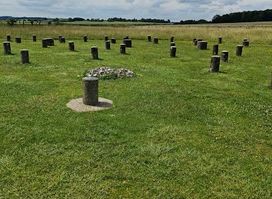
Explore Woodhenge, a Neolithic timber circle near Stonehenge, revealing ancient ceremonial mysteries through its aligned wooden posts and sacred landscape.
