Royal Crescent, Bath Travel Guide
Free Guide: Experience the grandeur of Georgian architecture and history at Bath’s iconic Royal Crescent, a sweeping terrace of elegant 18th-century homes.


A brief summary of Royal Crescent
Experience the grandeur of Georgian architecture and history at Bath’s iconic Royal Crescent, a sweeping terrace of elegant 18th-century homes.
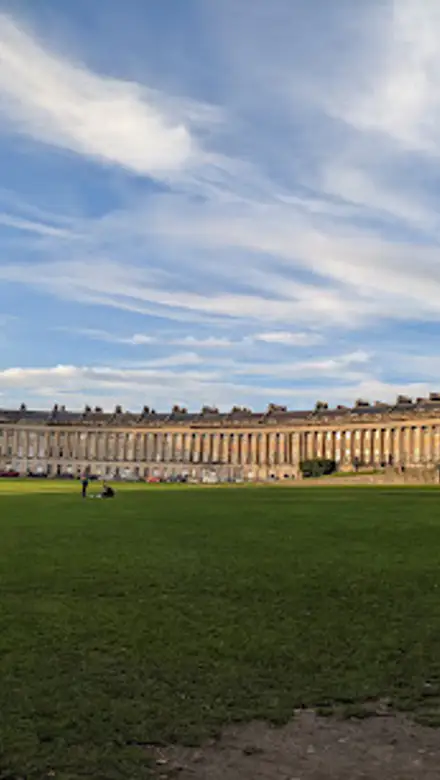
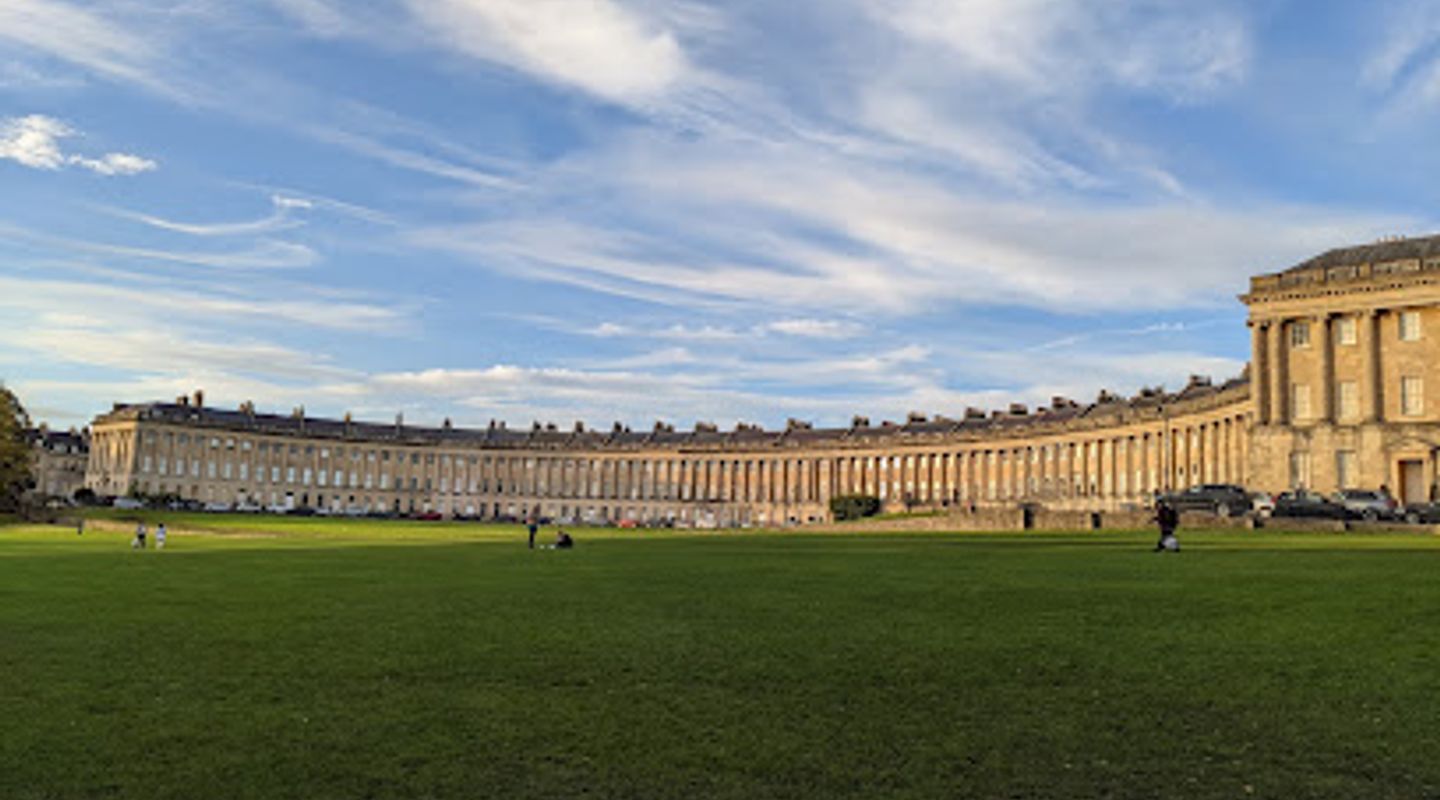
The Royal Crescent in Bath is a sweeping crescent of 30 Grade I listed Georgian terrace houses, built between 1767 and 1774 by architect John Wood the Younger. Renowned as one of the finest examples of Georgian architecture in the UK, it features a grand façade of Ionic columns overlooking Royal Victoria Park. The site includes the No. 1 Royal Crescent museum, a luxury hotel, and private residences, all set amidst tranquil lawns and a distinctive ha-ha wall.
On-site amenities
 Restrooms
 Seating areas
 Information boards
Opening hours
- Every dayOpen 24 hours
Opening hours as listed on the venue’s Google Business Profile. Hours can change for services and special events, so check with the venue before you go.
- Address
- The Royal Crescent, Royal Cres, Bath BA1 2LX
- Phone
Getting there
Train and Taxi
Bus
Walking
Discover more about Royal Crescent
Architectural Masterpiece of Georgian Design
The Royal Crescent is celebrated as one of the greatest achievements of Georgian architecture in the United Kingdom. Designed by John Wood the Younger and constructed from 1767 to 1774, it comprises 30 terraced houses arranged in a perfect sweeping crescent that spans approximately 500 feet. The façade is distinguished by 114 Ionic columns, each 30 inches in diameter and 47 feet tall, resting on a rusticated ground floor. The central house is unique with two sets of coupled columns framing a single window, marking the midpoint of the crescent. The elegant symmetry, classical proportions, and refined details exemplify 18th-century British architectural ideals.
Historic Significance and Notable Residents
The land for the Royal Crescent was purchased from Sir Benet Garrard in 1766, and each purchaser of the façade section commissioned their own architect to build behind it, resulting in varied interiors behind the uniform exterior. Over the centuries, the Crescent has been home to many notable figures, including Prince Frederick, Duke of York. Today, the crescent remains a prestigious address with a mix of private homes, a museum, and a luxury hotel. The No. 1 Royal Crescent house has been restored to reflect the lifestyle of wealthy Georgian residents and is managed by the Bath Preservation Trust.
No. 1 Royal Crescent Museum: A Window into 18th-Century Life
No. 1 Royal Crescent serves as a historic house museum, meticulously restored and furnished to depict the period from 1776 to 1796. Visitors can explore ten display rooms featuring authentic furniture, art, and household objects that reveal the social customs and daily life of Bath’s Georgian elite. The museum also offers immersive experiences with film and sound to bring the past vividly to life. It hosts rotating exhibitions, including recent showcases exploring Jane Austen’s complex relationship with Bath. The museum’s location and appearance have made it a popular filming site, notably for the Netflix series Bridgerton.
Landscape and Unique Features
In front of the Royal Crescent stretches a broad lawn that gently slopes down to Royal Victoria Park, separated by a ha-ha—a sunken stone wall and ditch that preserves uninterrupted views while keeping grazing animals away from the formal gardens. This subtle landscaping element enhances the Crescent’s grandeur and provides a serene green space for visitors and residents alike. The Crescent’s honey-colored Bath stone façade harmonizes beautifully with the surrounding greenery, creating a timeless and picturesque setting.
Cultural Impact and Filming Location
The Royal Crescent has been a favored location for film and television productions, embodying the elegance and charm of Georgian England. It has appeared in adaptations of Jane Austen’s works, including Persuasion, as well as in the 2008 film The Duchess. More recently, it gained international recognition as the exterior of the Featherington family home in Bridgerton. These appearances have cemented its status as a cultural icon and a symbol of historic British heritage.
Visitor Experience and Preservation
Visitors to the Royal Crescent can enjoy strolling along the crescent’s lawn, admiring the architectural details, and visiting the No. 1 museum for an immersive historical experience. The Royal Crescent Hotel & Spa offers luxurious accommodation and dining in the central portion of the crescent, blending heritage with modern comfort. The site is protected as a Grade I listed building, ensuring its preservation for future generations. Restrictions such as the ban on coach tours help maintain its tranquil atmosphere and protect the quality of life for residents.
Evendo Review Centre
 Google
Guest reviews
Best time to go
Quietest: Jan, Feb & Dec · before 6am or at 10pm
Busy times are Evendo estimates for a typical year, to help you plan. Actual crowds vary with events, school holidays and the weather.
Explore Royal Crescent on the map
A handpicked selection of must-see spots near Royal Crescent, mapped for you.
Get your free copy of our complete guide to Royal Crescent, delivered straight to you.
Everything on this page, from opening hours and how to get there to Eve’s tips and the best time to go, in one PDF you can read offline, print or share.
Already have an account? Sign in
Your Royal Crescent guide is ready.
We'll send it to · Not you? Sign out

Getting your guide ready…
We are putting together a fresh copy of the Royal Crescent guide. This can take up to a minute.
This can take a few moments. If your browser asks, choose Allow so the download can start. You'll find the guide in your Downloads folder.
Nothing happened? Download it again
Sorry, the guide is taking longer than usual. Please try again in a minute, or get it by email instead.
Unlock the best of Royal Crescent
Skip-the-line tickets, guided tours with entry, and walking tours of the area, booked in a few clicks.
 Tour with entry
Explore Bath & Stonehenge Self-Guided Audio Tours
from $19.04 Tour with entry
Bath: Local Pubs & Historic Sights Walking Tour (3h)
from $48.36 Tour with entry
Private Family Walking Tour in Historic Bath
from $1,262.55 Tour with entry
Private Christmas Walking Tour in Bath with Festive Pudding
from $1,471.55
Other nearby places you may find interesting
The closest places of the same kind, if this one is not quite what you had in mind.
-
-
-
-
-


Swipe for more places
More to explore near Royal Crescent

 Best experiences near Royal Crescent
 Best hotels near Royal Crescent
 Best landmarks near Royal Crescent
 Best attractions near Royal Crescent
 Best shops near Royal Crescent
 Best restaurants near Royal Crescent
 Best bars near Royal Crescent
Do you manage this location?
Take control to get all the benefits, like improved information, better appearance, and stronger visibility across AI-powered discovery.
Explore more

Explore more of Bath
Discover Bath: A harmonious blend of Roman history, Georgian elegance, and natural beauty in the heart of England's countryside.
Explore Bath
Explore more of United Kingdom
Discover the United Kingdom: A blend of rich history, stunning landscapes, and vibrant cities, offering a unique travel experience for every visitor.
Explore United Kingdom