Pembroke College, Cambridge Travel Guide
Free Guide: A working 1347 college with Cambridge’s oldest gatehouse and Wren’s first completed building, set around quiet courts and gardens.


A brief summary of Pembroke College
A working 1347 college with Cambridge’s oldest gatehouse and Wren’s first completed building, set around quiet courts and gardens.
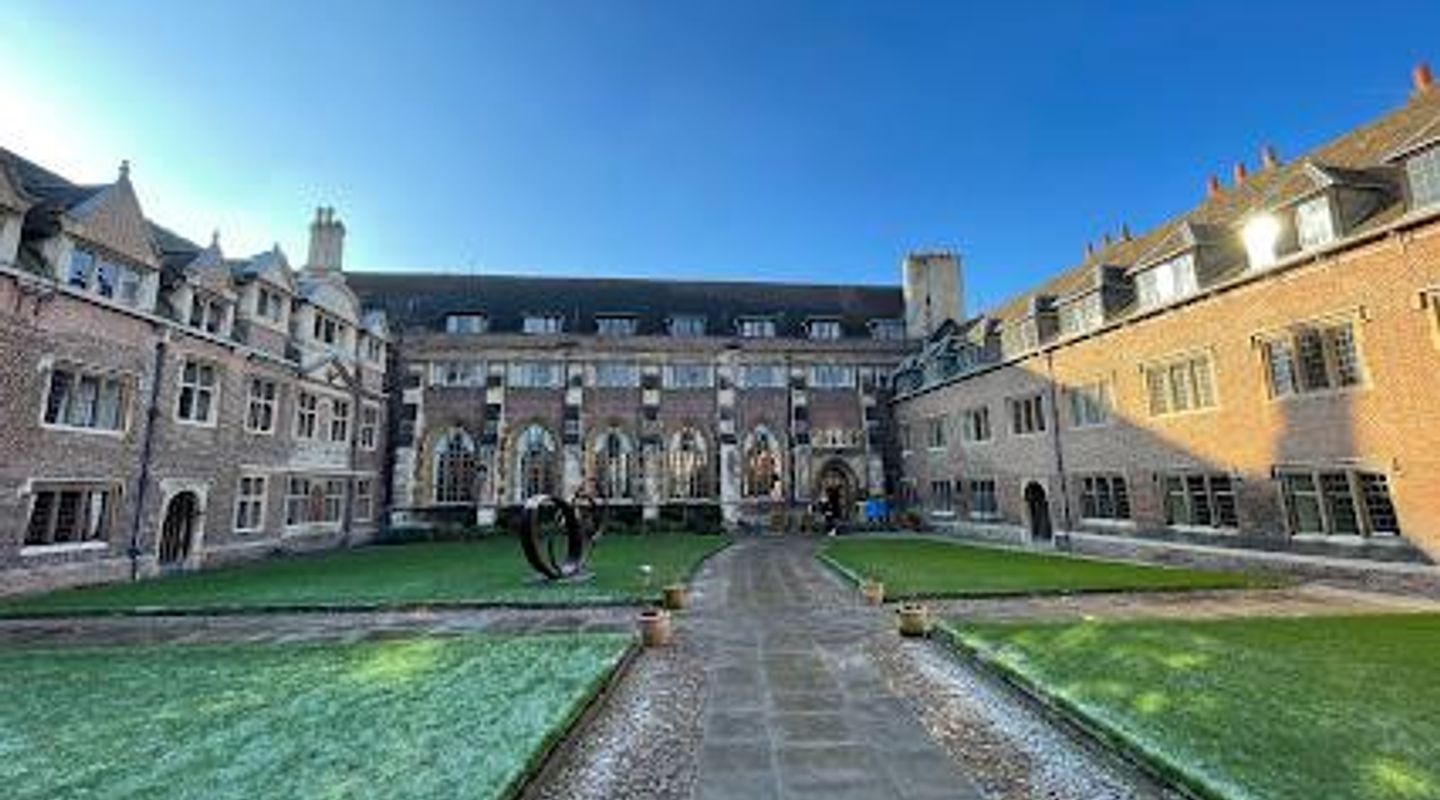
Pembroke College occupies its original 1347 site on Trumpington Street and remains a working part of the University of Cambridge. The compact grounds include the oldest surviving gatehouse in the city and the first building completed by Christopher Wren. Visitors follow paved paths through enclosed courts and gardens that contain an orchard, plane trees and a historic bowling green. The experience is quiet and residential, with most time spent outdoors and only the Chapel open to the public. The visit suits travellers interested in layered university architecture and peaceful historic gardens rather than large-scale attractions.
On-site amenities
 Seating areas
 Sheltered areas
 Information boards
- Address
- Trumpington St Cambridge
- Phone
- Website
Getting there
Walking
Cycling
Bus
Taxi
Discover more about Pembroke College
Founding and Continuous History
Pembroke College was established on Christmas Eve 1347 by Marie de St Pol, Countess of Pembroke, under licence from Edward III. It is the third-oldest surviving college on its original site and has retained an unbroken constitution since foundation. The original chapel, now the Old Library, was the first purpose-built college chapel in Cambridge. The present Chapel, constructed 1663–1665, fulfilled a vow made by Matthew Wren after his imprisonment during the Civil War and stands as the first completed work by his nephew Christopher Wren.
Architecture Across Seven Centuries
The college displays buildings from every century since 1347. The 14th-century gatehouse remains the oldest in Cambridge. Later additions include Victorian work by Alfred Waterhouse and George Gilbert Scott. Brick and stone courts enclose the site, with the Wren Chapel providing the principal classical interior. Interiors beyond the Chapel, including the library, stay closed to visitors; only the courts, gardens and Chapel are accessible.
Enclosed Courts and Gardens
The grounds consist of Old Court, Ivy Court, New Court and later additions. Large gardens contain an orchard, mature plane trees, lawns and a reputed historic bowling green. Paved paths link the spaces, with some ramps and gentle slopes. The setting is compact and walkable, offering a sheltered outdoor circuit that typically takes 45–60 minutes. The atmosphere stays scholarly and residential because students and fellows continue to live and work on site.
Visitor Experience and Pacing
Most visitors arrive on foot from central Cambridge points and spend their time strolling the courts, viewing the Chapel when no service is in progress, and walking the gardens. Photography is common but unobtrusive. The pace is unhurried yet brief; few linger beyond an hour. The college is quieter than King’s or Trinity, so crowds remain modest even in peak tourist months.
Access, Closures and Practical Details
The entrance lies on Trumpington Street, five to ten minutes’ walk south of Market Square. No visitor parking exists on site. The college closes from late April to late June during exam season, with dates varying yearly; additional closures occur for events. Group visits require advance booking through the Porters’ Lodge. The Chapel may be unavailable during services. Weather affects enjoyment of the gardens more than access itself; rain reduces comfort outdoors while courts and the Chapel offer limited shelter.
Who Visits and Why
The site attracts architecture enthusiasts, university-history followers, photographers and travellers seeking a calm garden setting within the city centre. Families and children can enjoy the gardens when interest exists, though no dedicated activities are provided. Wheelchair users find most garden areas reachable by paved paths, though some historic surfaces remain uneven. The college functions as a living academic community rather than a preserved monument, which shapes the restrained and authentic visitor experience.
Evendo Review Centre
 Google
Guest reviews
Best time to go
Quietest: Apr, May & Jun · before 10am or from 5pm
Busy times are Evendo estimates for a typical year, to help you plan. Actual crowds vary with events, school holidays and the weather.
Explore Pembroke College on the map
A handpicked selection of must-see spots near Pembroke College, mapped for you.
Get your free copy of our complete guide to Pembroke College, delivered straight to you.
Everything on this page, from opening hours and how to get there to Eve’s tips and the best time to go, in one PDF you can read offline, print or share.
Already have an account? Sign in
Your Pembroke College guide is ready.
We'll send it to · Not you? Sign out

Getting your guide ready…
We are putting together a fresh copy of the Pembroke College guide. This can take up to a minute.
This can take a few moments. If your browser asks, choose Allow so the download can start. You'll find the guide in your Downloads folder.
Nothing happened? Download it again
Sorry, the guide is taking longer than usual. Please try again in a minute, or get it by email instead.
Unlock the best of Pembroke College
Skip-the-line tickets, guided tours with entry, and walking tours of the area, booked in a few clicks.

Other nearby places you may find interesting
The closest places of the same kind, if this one is not quite what you had in mind.
-
-
-
-
-


Swipe for more places
More to explore near Pembroke College

 Best experiences near Pembroke College
 Best hotels near Pembroke College
 Best landmarks near Pembroke College
 Best attractions near Pembroke College
 Best shops near Pembroke College
 Best restaurants near Pembroke College
 Best bars near Pembroke College
Do you manage this location?
Take control to get all the benefits, like improved information, better appearance, and stronger visibility across AI-powered discovery.
Explore more

Explore more of Cambridge
Cambridge travel guide: explore historic colleges, the River Cam, museums, medieval chapels, riverside punting, independent shops and local culture.
Explore Cambridge
Explore more of United Kingdom
Discover the United Kingdom: A blend of rich history, stunning landscapes, and vibrant cities, offering a unique travel experience for every visitor.
Explore United Kingdom