

Free Cambridge Travel Guide & Mobile App
Plan your Cambridge trip with Evendo. Get free guides to top attractions, restaurants, hotels, and bars. Web access or download the mobile app.


Cambridge combines medieval colleges, river punting, world-changing science, museums and independent food culture in one historic English city to explore.
Collegiate Heritage
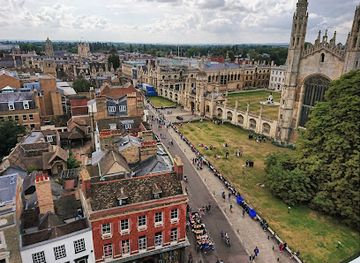
Cambridge is a compact city in eastern England whose identity is inseparable from the University of Cambridge, founded in the early thirteenth century. Its historic centre is shaped by college courts, medieval lanes, scholarly libraries and riverside gardens, with the towers and fan vault of King's College Chapel forming the most recognisable part of the skyline. Yet the university is not a single enclosed campus: its colleges, museums and teaching buildings are woven through the streets, creating an urban landscape where centuries-old stonework stands beside bookshops, cafés and laboratories.Read more about Cambridge
The River and the Fens
Science, Culture, and City Life
When is the best time to visit Cambridge?
Best: June–August · 21–24°C| Month | High (°C) | Rainfall (mm) |
|---|---|---|
| January | 7 | 50 |
| February | 8 | 46 |
| March | 10 | 43 |
| April | 13 | 43 |
| May | 17 | 46 |
| June (best) | 21 | 43 |
| July (best) | 23 | 43 |
| August (best) | 24 | 46 |
| September | 21 | 43 |
| October | 16 | 43 |
| November | 11 | 46 |
| December | 9 | 43 |
Getting to and around Cambridge
How to get there
Transportation
Best attractions in Cambridge
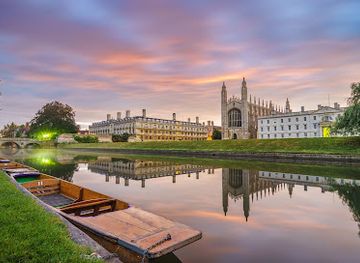
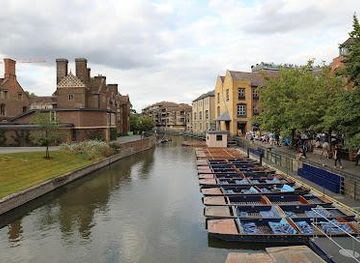
Cambridge's principal attractions are concentrated within a walkable centre, beginning with the University of Cambridge colleges and their historic courts, chapels and gardens. King's College Chapel is known for its late Gothic architecture and fan vault, while the College Backs offer riverside views best appreciated on foot or from a traditional punt. The Fitzwilliam Museum brings together European art and antiquities in a monumental neoclassical building, and the Museum of Archaeology and Anthropology traces human cultures across the world. The Sedgwick Museum of Earth Sciences and the Polar Museum provide more specialised experiences, reflecting Cambridge's scientific traditions. Around the market square, the Round Church and Senate House add historic character, while the Botanic Garden offers a cultivated landscape south of the centre. Beyond the colleges, Mill Road, the Riverside and Grantchester Meadows reveal the city's everyday neighbourhood life and fenland setting.
-
Shopping Centre
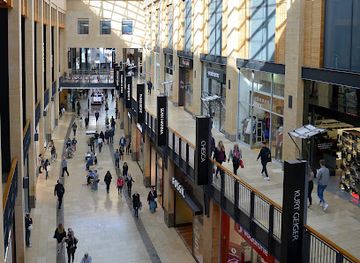
Grand Arcade
Cambridge's largest indoor shopping centre with John Lewis anchor, 60 retailers and central location steps from historic streets.
3 min walk · 0.2 km from city centre
-
Museum
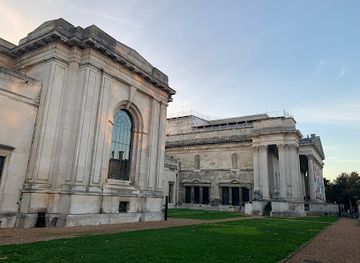
The Fitzwilliam Museum
Cambridge university museum displaying half a million objects from antiquity to modern art inside a neo-classical Trumpington Street building.
7 min walk · 0.6 km from city centre
-
Historical landmark
National Trust - Anglesey Abbey, Gardens and Lode Mill
Jacobean house, 20th-century themed gardens and working watermill on the Cambridgeshire fen edge, five and a half miles from Cambridge.
28 min drive · 9.2 km from city centre
-
Botanical garden
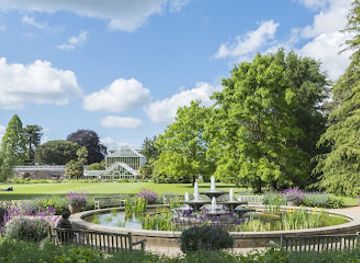
Cambridge University Botanic Garden
A 16-hectare university botanic garden with themed outdoor collections, glasshouses and a Grade II* historic landscape one mile south of Cambridge centre.
18 min walk · 1.4 km from city centre

Best landmarks in Cambridge
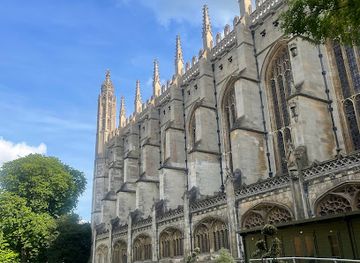
King's College Chapel is Cambridge's defining architectural landmark, its Perpendicular Gothic exterior and vast fan-vaulted interior expressing the wealth and ambition of the late medieval college. Nearby, the Senate House marks the ceremonial centre of the university, while the Wren Library at Trinity College represents the scholarly grandeur of the later seventeenth century. The Mathematical Bridge at Queens' College, a timber footbridge rebuilt in the nineteenth century, is celebrated for its elegant engineering and river setting. The Bridge of Sighs at St John's College provides another recognisable view over the Cam, and the Round Church, formally the Church of the Holy Sepulchre, is one of England's notable medieval round churches. The Corpus Clock adds a modern landmark, its sculptural timepiece contrasting with the surrounding historic stone buildings.
-
Church
King's College Chapel
Perpendicular Gothic chapel on King's Parade with fan-vaulted ceiling and extensive stained glass in central Cambridge.
2 min walk · 0.2 km from city centre
-
Anglican church
Great St Mary's
Cambridge's official University Church with a 123-step tower offering 360-degree views over college rooftops and King's College Chapel.
1 min walk · 0.1 km from city centre
-
Bridge
Bridge of Sighs
Enclosed 19th-century bridge linking St John's College buildings across the River Cam in Cambridge.
5 min walk · 0.4 km from city centre
-
Bridge
Magdalene Bridge
Stone bridge over the River Cam linking central Cambridge streets with Magdalene College.
7 min walk · 0.5 km from city centre
Explore Cambridge on the map
Plan your Cambridge trip on one map. See where the top attractions, landmarks, restaurants, bars and hotels are, find what's near where you're staying, and book hotels and experiences in a few clicks.
Neighbourhoods in Cambridge
-

-
-

-

-


Swipe for more neighbourhoods
Best hotels in Cambridge
Best restaurants in Cambridge
Cambridge's dining scene combines comfortable English traditions with the international character brought by its university and research communities. The city market offers changing stalls and casual food, while Mill Road is particularly known for independent restaurants, cafés, bakeries and cuisines from across the world. Fitzbillies on Trumpington Street is associated with its Chelsea buns, a long-established local sweet treat, and traditional pubs provide familiar British dishes alongside modern menus. Cambridge's proximity to the Cambridgeshire fens supports seasonal vegetables and regional produce, while contemporary restaurants draw on broader European and global influences. Breakfast cafés, vegetarian kitchens, specialist coffee shops and food stalls make the centre easy to explore informally. Dining around the historic core can be atmospheric, whereas Mill Road and the railway-station area offer a more mixed, neighbourhood-oriented range of places to eat.
-
Brasserie
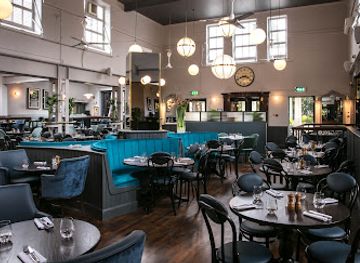
Browns Cambridge
Converted Edwardian hospital wing serving British brasserie classics opposite the Fitzwilliam Museum on Trumpington Street.
8 min walk · 0.6 km from city centre
-
British
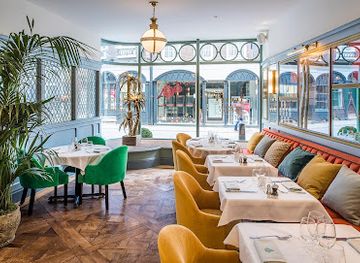
The Ivy Cambridge Brasserie
All-day British brasserie on Trinity Street with Art-Deco interiors, set menus and private dining for city-centre meals and graduations.
2 min walk · 0.2 km from city centre
-
Gastropub
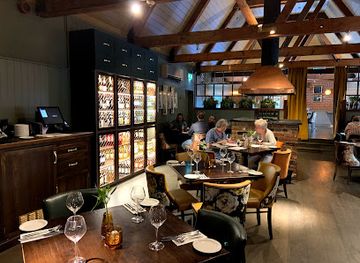
Green Man Cambridge
Grade II listed 15th-century gastropub on Trumpington High Street serving British seasonal food and ales with a large garden
10 min drive · 3.2 km from city centre
-
Restaurant
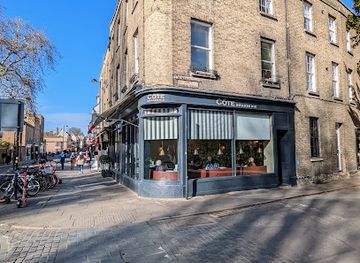
Côte Cambridge
French brasserie on Cambridge’s historic Bridge Street offering all-day dining near the colleges and River Cam
6 min walk · 0.5 km from city centre
Best bars in Cambridge
Cambridge's evening life is shaped more by historic pubs, student societies, theatre and live music than by a large club scene. Traditional pubs around the centre and near the colleges provide atmospheric settings for local ales, conversation and informal meals, while Mill Road has bars and cafés with a more independent, international feel. The Cambridge Corn Exchange hosts touring music and comedy, the Cambridge Arts Theatre presents drama and musicals, and ADC Theatre is closely associated with student productions. Live performances and social events also take place at venues such as The Junction in the station-side area, which has a stronger contemporary music and club programme. Evening walks along the illuminated college streets and river are popular, though access to private college grounds is restricted and quiet residential areas call for considerate behaviour.
-
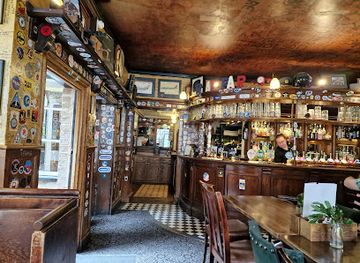
Pub
Eagle
17th-century Cambridge pub where DNA was announced and wartime airmen left ceiling graffiti
2 min walk · 0.2 km from city centre
-
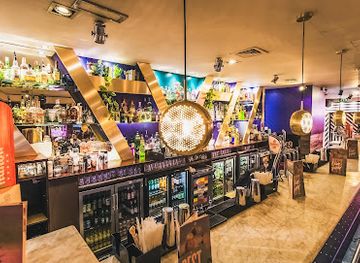
Bar
Revolution Cambridge
Central Cambridge bar and club with restaurant, lounge, karaoke and heated rooftop terrace across multiple floors
4 min walk · 0.3 km from city centre
-
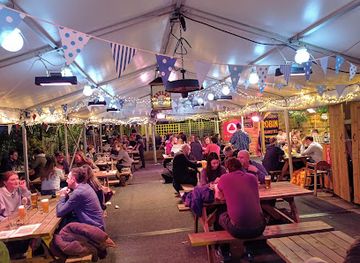
Pub
The Cambridge Blue
Victorian freehouse on Gwydir Street with up to fourteen rotating cask ales and a spacious rear garden used year-round.
18 min walk · 1.4 km from city centre
-
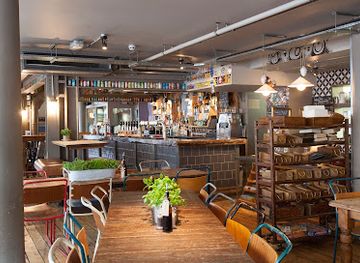
Pub
The Cambridge Brew House
City-centre brewpub with visible on-site tanks, craft beer wall, and smoked menu items in Cambridge since 2013.
4 min walk · 0.3 km from city centre
Best nightclubs in Cambridge
Cambridge's evening life is shaped more by historic pubs, student societies, theatre and live music than by a large club scene. Traditional pubs around the centre and near the colleges provide atmospheric settings for local ales, conversation and informal meals, while Mill Road has bars and cafés with a more independent, international feel. The Cambridge Corn Exchange hosts touring music and comedy, the Cambridge Arts Theatre presents drama and musicals, and ADC Theatre is closely associated with student productions. Live performances and social events also take place at venues such as The Junction in the station-side area, which has a stronger contemporary music and club programme. Evening walks along the illuminated college streets and river are popular, though access to private college grounds is restricted and quiet residential areas call for considerate behaviour.
-
Pub
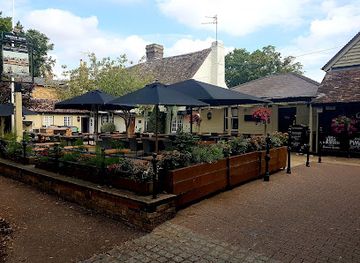
Fort St George
Traditional pub on Midsummer Common serving Greene King beers and meals with outdoor seating facing open grass.
12 min walk · 1.0 km from city centre
-
Nightclub
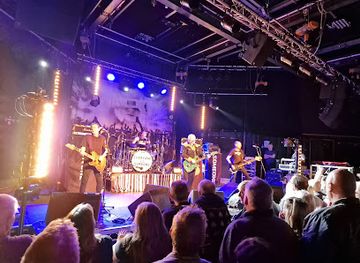
Cambridge Junction
Multi-room Cambridge venue running club nights alongside comedy, live music and theatre programming.
6 min drive · 2.0 km from city centre
-
Pub
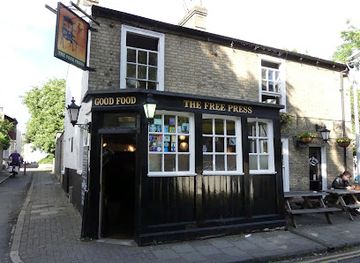
The Free Press
Traditional Cambridge pub with 1834 licence, tiny historic snug and walled garden serving cask ales and seasonal British food.
10 min walk · 0.8 km from city centre
-
Nightclub
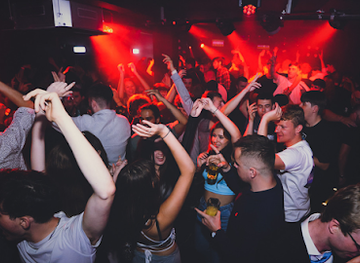
MASH
Late-night independent club on Market Passage offering genre nights, live gigs and student-focused drinks deals until 03:30.
2 min walk · 0.1 km from city centre
Best shops in Cambridge
Cambridge shopping ranges from the open-air market in the historic centre to independent streets beyond the main college quarter. Market Square is the traditional focus for food, crafts, clothing and changing stalls, while the pedestrianised Grand Arcade and Lion Yard provide mainstream retail close to the central colleges. Sidney Street, St Andrew's Street and Petty Cury contain familiar shops, cafés and bookshops, whereas Mill Road is better suited to independent browsing, international groceries, vintage goods and small specialist businesses. University-themed books, prints and gifts are widely available, but local character is also found in Cambridge-made crafts, regional food products and traditional bakery goods. The area around the railway station has a more modern commercial feel, while nearby Downing Street and Trumpington Street combine shops with museums, colleges and cafés.
-
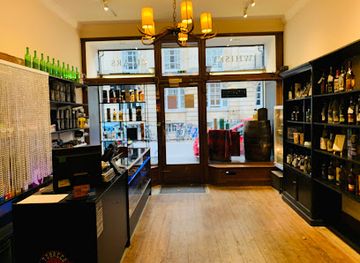
Cigar shop
Robert Graham 1874 - whisky & cigars
Independent Cambridge shop stocking whiskies and cigars with a dedicated downstairs sampling lounge on a pedestrian city-centre street.
3 min walk · 0.2 km from city centre
-
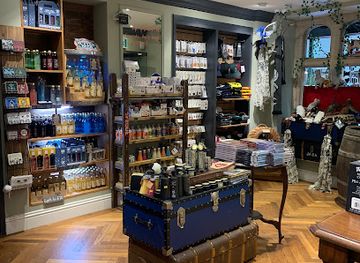
Gift shop
The Department of Magical Gifts
Independent Harry Potter and fantasy gift shop on Cambridge’s pedestrian Rose Crescent with animatronics and occasional live magic.
1 min walk · 0.1 km from city centre
-
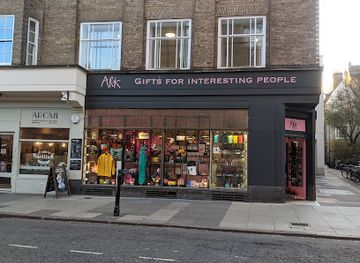
Gift shop
Ark
Independent Cambridge gift shop beside the Arts Theatre offering British-made leather goods and quirky design objects in a compact Peas Hill unit.
1 min walk · 0.1 km from city centre
-
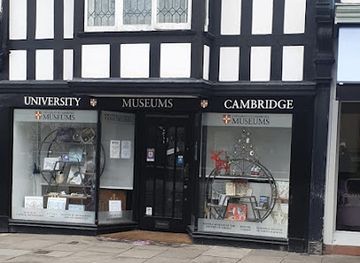
Gift shop
University of Cambridge Museums Shop
Compact city-centre shop offering University of Cambridge Museums collection gifts opposite King's College on historic King's Parade.
1 min walk · 0.1 km from city centre
Get your free copy of our complete guide to Cambridge, delivered straight to you.
Everything on this page, from attractions and restaurants to essentials and local phrases, in one PDF you can read offline, print or share.
Already have an account? Sign in
Your Cambridge guide is ready.
We'll send it to · Not you? Sign out

Getting your guide ready…
We are putting together a fresh copy of the Cambridge guide. This can take up to a minute.
This can take a few moments. If your browser asks, choose Allow so the download can start. You'll find the guide in your Downloads folder.
Nothing happened? Download it again
Sorry, the guide is taking longer than usual. Please try again in a minute, or get it by email instead.
Cambridge essentials
Currency and Payment
Safety
Emergency Situations
Do's and Don'ts
Local Tips
From Eve
Local phrases worth knowing
You don't need to get them perfect. A few words go a long way, and locals appreciate the effort.
Basics
| English | Local | Say it |
|---|---|---|
| Hello | Alright mate | [al-right mayt] |
| Goodbye | See ya later | [see ya lay-ter] |
| Yes | Yeah | [yeh] |
| No | Nah | [nah] |
| Please/You're welcome | Cheers | [cheers] |
| Thank you | Ta | [ta] |
| Excuse me/Sorry | Sorry mate | [sor-ry mayt] |
| How are you? | Alright? | [al-right] |
| Fine. And you? | Not bad. You? | [not bad. yu] |
| Do you speak English? | Do you speak English? | [Do yu speak in-glish] |
| I don't understand | I ain't got a clue | [I aint got a clue] |
Eating & Drinking
| English | Local | Say it |
|---|---|---|
| I'd like to see the menu, please | Can I have a look at the menu, please | [can I hav a loo-k at the menu, please] |
| I don't eat meat | I don't eat meat | [I don't eat meet] |
| Cheers! | Cheers! | [cheers] |
| I would like to pay, please | Can I pay, please | [can I pay, please] |
Emergencies
| English | Local | Say it |
|---|---|---|
| Help! | Help! | [help] |
| Go away! | Clear off! | [clear off] |
| Call the Police! | Ring the Old Bill! | [ring the old bil] |
| Call a doctor! | Get a doctor! | [get a doctor] |
| I'm lost | I'm lost | [I'm lost] |
| I'm ill | I'm feeling rough | [I'm feel-ing ruff] |
Shopping
| English | Local | Say it |
|---|---|---|
| I'd like to buy... | I'm interested in buying... | [I'm in-ter-est-ed in buy-ing] |
| I'm just looking | Just having a browse | [just hav-ing a browz] |
| How much is it? | How much does it cost? | [how much duz it cost] |
| That's too expensive | That's a bit pricey | [that's a bit pry-see] |
| Can you lower the price? | Any chance of a discount? | [any chance of a dis-count] |
Time & Numbers
| English | Local | Say it |
|---|---|---|
| What time is it? | What's the time? | [what's the time] |
| It's one o'clock | It's one o'clock | [It's one o'clock] |
| Half past (10) | Half ten | [half ten] |
| Morning | Morning | [morning] |
| Afternoon | Afternoon | [afternoon] |
| Evening | Evening | [evening] |
| Yesterday | Yesterday | [yester-day] |
| Today | Today | [to-day] |
| Tomorrow | Tomorrow | [tomor-row] |
| 1 | One | [wun] |
| 2 | Two | [too] |
| 3 | Three | [three] |
| 4 | Four | [four] |
| 5 | Five | [five] |
| 6 | Six | [six] |
| 7 | Seven | [seven] |
| 8 | Eight | [ate] |
| 9 | Nine | [nien] |
| 10 | Ten | [ten] |
Transport & Directions
| English | Local | Say it |
|---|---|---|
| Where's a/the...? | Where's the...? | [where's the] |
| What's the address? | What's the address? | [what's the address] |
| Can you show me (on the map)? | Can you show me (on the map)? | [can yu show me on the map] |
| When's the next (bus)? | When's the next (bus)? | [whens the next bus] |
| A ticket (to ....) | A ticket (to ....) | [a ticket to] |
History of Cambridge
Roman Settlement beside the Cam
The Cambridge area was occupied before Roman rule, but the Romans established a settlement and military presence near the river crossing at what is now Castle Hill. Known as Durolipons, it lay on routes linking settlements across eastern Britain and benefited from the Cam as a route for movement and trade. Archaeological evidence indicates roads, buildings and industrial activity, although the settlement was not one of Roman Britain's largest towns. After Roman administration ended in the early fifth century, activity continued in changing forms around the river and its crossings. The archaeological remains beneath modern Cambridge provide the earliest substantial evidence for the city's strategic importance, while the general alignment of later roads and crossings reflects the long significance of this meeting point between upland routes and the fenland waterways.
Anglo-Saxon Borough and Norman Castle
An Anglo-Saxon settlement developed around the river crossing, and Cambridge appears in the Anglo-Saxon Chronicle as Grantanbrycge, a name associated with the bridge on the Granta, an earlier name for the Cam. Following the Norman Conquest, William the Conqueror ordered a castle on Castle Hill in 1068 to secure control of the town and its route through eastern England. The castle itself was repeatedly altered and eventually disappeared apart from archaeological traces and the mound, but Cambridge grew as a market and administrative centre. Its position beside the navigable river and near the fenland edge made it useful for trade in grain, wool and other goods, establishing the civic foundations on which the medieval town and university would develop.
The University Takes Root
Scholars from Oxford began arriving in Cambridge in 1209, traditionally linked to disputes at Oxford, and the new academic community gradually became a permanent institution. Peterhouse, founded in 1284, was the first Cambridge college, followed by foundations such as King's College, founded by Henry VI in 1441, and Queens' College in 1448. Colleges provided accommodation, teaching and religious discipline for scholars, while the town remained a separate commercial and civic community. Medieval Cambridge expanded around the university, its market and religious houses, leaving a legacy of courts, chapels and streets that still defines the centre. The relationship between townspeople and university members was often tense, with disputes over rents, trade and jurisdiction shaping local politics for centuries.
Reformation and Early Modern Change
The Tudor Reformation transformed Cambridge's religious and institutional life. Monasteries and religious houses were dissolved under Henry VIII, while college chapels and teaching were reshaped by Protestant reforms. The university became an important setting for religious debate, and figures associated with the English Reformation studied or taught there. During the seventeenth-century Civil Wars, Cambridge supported Parliament, and its colleges contributed plate and resources to the parliamentary cause; Oliver Cromwell, a local landowner and Member of Parliament for Cambridge, became one of the period's leading figures. The Restoration altered the political climate, but Cambridge remained a national centre of learning. Its buildings, libraries and collegiate institutions absorbed these changes without losing the medieval framework of the city.
Science and the Age of Reason
Cambridge's influence expanded dramatically through mathematics and natural philosophy. Isaac Newton studied at Trinity College and later held the Lucasian Professorship, developing ideas that transformed the understanding of motion, gravity and light. In the nineteenth century, Charles Darwin's Cambridge education preceded his work on evolution, while figures including James Clerk Maxwell advanced the study of electromagnetism. The university's scientific culture was supported by observatories, laboratories, learned societies and new institutions, including the Cavendish Laboratory, opened in 1874. These developments changed Cambridge's physical character as well as its intellectual life, adding purpose-built scientific buildings to the colleges and encouraging links between academic research, engineering and industry.
Modern University and Technology City
Cambridge grew beyond its historic core during the nineteenth and twentieth centuries as rail connections, new housing and civic institutions altered the scale of the town. The arrival of the railway in 1845 strengthened links with London and the wider region, while municipal expansion brought schools, hospitals and public buildings. After the Second World War, research and technology became increasingly important, with the Cambridge Science Park opening in 1970 and helping establish the wider area as a centre for scientific and technology companies. The university remains central, but modern Cambridge also includes diverse residential neighbourhoods, creative organisations and an international workforce. Its present identity therefore combines medieval collegiate traditions with research, entrepreneurship and a growing city population.
Cambridge in Photos
Browse through our photo collection highlighting the charm and character of the destination.
Cities near Cambridge
The closest cities to Cambridge, if you have time for more than one stop.
-

-

-

-

-


Swipe for more cities
Explore more

Explore more of United Kingdom
Discover the United Kingdom: A blend of rich history, stunning landscapes, and vibrant cities, offering a unique travel experience for every visitor.
Explore United Kingdom