Background

Pero's Bridge: Bristol’s Symbolic Horned Footbridge

A striking pedestrian bridge in Bristol honoring Pero Jones, blending artistic design with powerful historical remembrance.

★★★★★4.5 (290)

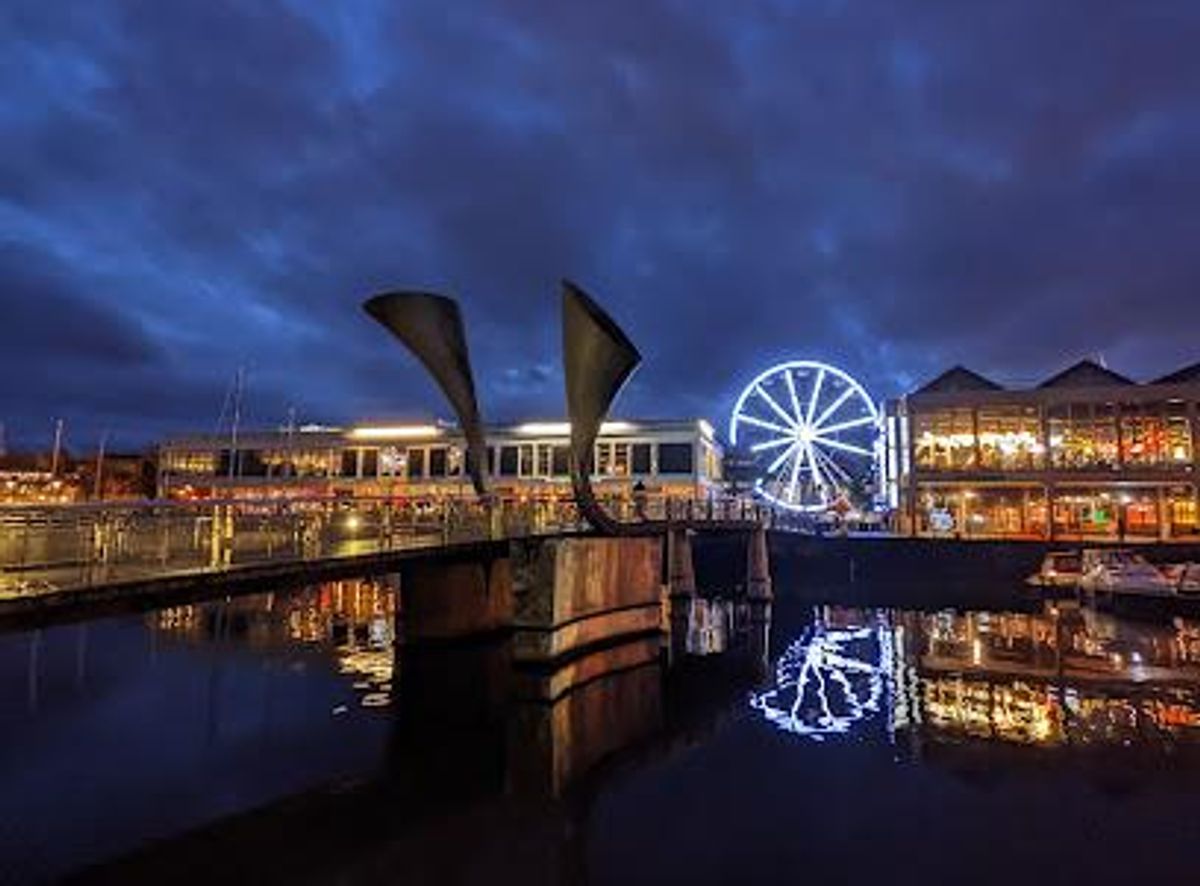
Pero's Bridge is a distinctive pedestrian bascule bridge spanning Bristol’s Floating Harbour, named to honor Pero Jones, an enslaved African who lived in Bristol in the 18th century. Opened in 1999, its unique horn-shaped counterweights and elegant design connect Queen Square and Millennium Square, serving as a subtle yet powerful memorial to the city’s complex history with the transatlantic slave trade.

Plan your visit

A brief summary to Pero's Bridge

Opening times, essentials, and a few local tips gathered into one calmer, easier-to-scan planning section.

Plan your visit

📍
Pero's Bridge, Bristol, BS1 5UH, GB
🕒
Duration: 0.5 to 1.5 hours
💷
Free
🏛
Outdoor
📶
Mobile reception: 4 out of 5

Explore places near Pero's Bridge

    See all →

    Unlock the Best of Pero's Bridge

    Find tickets, tours with entry, and experiences available for this location.

    Buy tickets

    No tickets available

    Book tours with entry

    No tours with entry available

    Book tours without entry

    No tours without entry available

    Getting There

    Bus

    Take bus routes 8 or 9 from Bristol city center, which run frequently every 10-15 minutes, stopping near Queen Square. The journey takes approximately 10-15 minutes. Tickets cost around £2-£3 one way. Note that buses may be busy during peak hours.

    Train and Walk

    Arrive at Bristol Temple Meads railway station, then enjoy a 20-minute walk along the harbour to Pero's Bridge. The walk is mostly flat and accessible, passing through scenic waterfront areas.

    Taxi or Rideshare

    A taxi or rideshare from Bristol Temple Meads to Pero's Bridge takes about 5-10 minutes depending on traffic. This option offers door-to-door convenience but can cost £7-£12.

    For the on-the-go comforts that matter to you

    Seating Areas
    Information Boards
    Trash Bins

    Local tips

    Visit during daylight hours to fully appreciate the bridge’s unique horn-shaped counterweights and harbour views.
    Look for the nearby M Shed museum to learn more about Bristol’s history with the slave trade and Pero Jones’s story.
    Be mindful that the bridge has a 1-tonne weight limit and no lift operation as of 2025 due to structural repairs.
    Observe the love locks attached to the railings, a modern tradition adding a personal touch to this historic site.

    Pero's Bridge location weather suitability

    Catch the right light and the right mood, whether you want a bright city moment or a more cinematic evening visit.

    Weather icon
    Any Weather
    Weather icon
    Clear Skies
    Weather icon
    Rain / Wet Weather
    Weather icon
    Mild Temperatures

    Discover more about Pero's Bridge

    A Unique Architectural Landmark in Bristol’s Harbour

    Pero's Bridge is a pedestrian bascule bridge completed in 1999 that spans St Augustine's Reach in Bristol Harbour. Designed by Irish sculptor Eilis O’Connell in collaboration with Ove Arup & Partners engineers, the bridge features three spans: two fixed outer sections and a central lifting section that provides an 11-metre navigation channel for boats. Its most striking visual elements are the pair of horn-shaped sculptures, known colloquially as the “horns of plenty,” which serve as counterweights for the lifting mechanism. These distinctive horns have earned the bridge nicknames such as the “Horned Bridge” and “Shrek’s Bridge,” reflecting their whimsical, ear-like appearance.

    Commemorating Pero Jones and Bristol’s History

    The bridge is named after Pero Jones, an enslaved African who was brought to Bristol in 1783 from the Caribbean island of Nevis. Purchased at age 12 by John Pinney, a wealthy Bristol merchant and plantation owner, Pero served as Pinney’s personal servant for over three decades. Naming the bridge after Pero was a deliberate act to acknowledge Bristol’s historical involvement in the transatlantic slave trade and to honor the lives of those enslaved individuals whose stories are often overlooked. Despite some controversy over whether the naming was tokenistic, Pero's Bridge remains the only prominent physical memorial to slavery in Bristol aside from a plaque at the nearby M Shed museum.

    Urban Regeneration and Cultural Significance

    Pero's Bridge was part of a broader urban regeneration initiative aimed at revitalizing Bristol’s harbourside area and improving public spaces. By linking Queen Square and Millennium Square, the bridge enhances pedestrian connectivity while also inviting reflection on the city’s complex past. The bridge’s artistic design and historical resonance symbolize Bristol’s ongoing efforts to confront and reconcile with its legacy of slavery, making it a meaningful landmark beyond its functional role.

    A Gathering Place with Contemporary Traditions

    Over time, Pero's Bridge has evolved into a popular meeting spot and a site where visitors and locals attach love locks to its railings as tokens of affection. This practice adds a contemporary layer of social interaction to the bridge, blending personal stories with the broader historical narrative it represents. However, the accumulation of these locks has created maintenance challenges, including the removal of several tonnes of locks to preserve the structure.

    Structural Challenges and Preservation Efforts

    In 2025, inspections revealed major structural issues with the bridge, leading to a weight limit and a suspension of the lifting function to ensure safety. Bristol City Council has allocated funds to repair and maintain the bridge, emphasizing its importance as both a functional crossing and a cultural monument. These efforts highlight the ongoing commitment to preserving this unique symbol of Bristol’s heritage.

    Legacy and Reflection

    Pero's Bridge stands as a subtle yet powerful memorial to an enslaved individual and the broader history of slavery connected to Bristol. It encourages visitors to reflect on the city’s past while appreciating the bridge’s artistic and engineering qualities. Though its significance remains understated in the urban landscape, the bridge’s name and design foster awareness and dialogue about historical injustices and the importance of remembrance.

    A brief summary to Pero's Bridge

    Use Tower Bridge as your starting point for nearby food, family ideas, nightlife, and more local discoveries.

    Plan around the quieter times

    A quick look at seasonal patterns and peak visiting hours.

    Busiest months of the year

    Seasonality

    Busiest hours of the day

    Footfall
    Mobile App
    Get the app

    Your all‑in‑one travel companion app

    Explore expert travel guides, compare and book tours, experiences, hotels, and more—all from the palm of your hand. Download now for seamless trip planning wherever your wanderlust takes you.
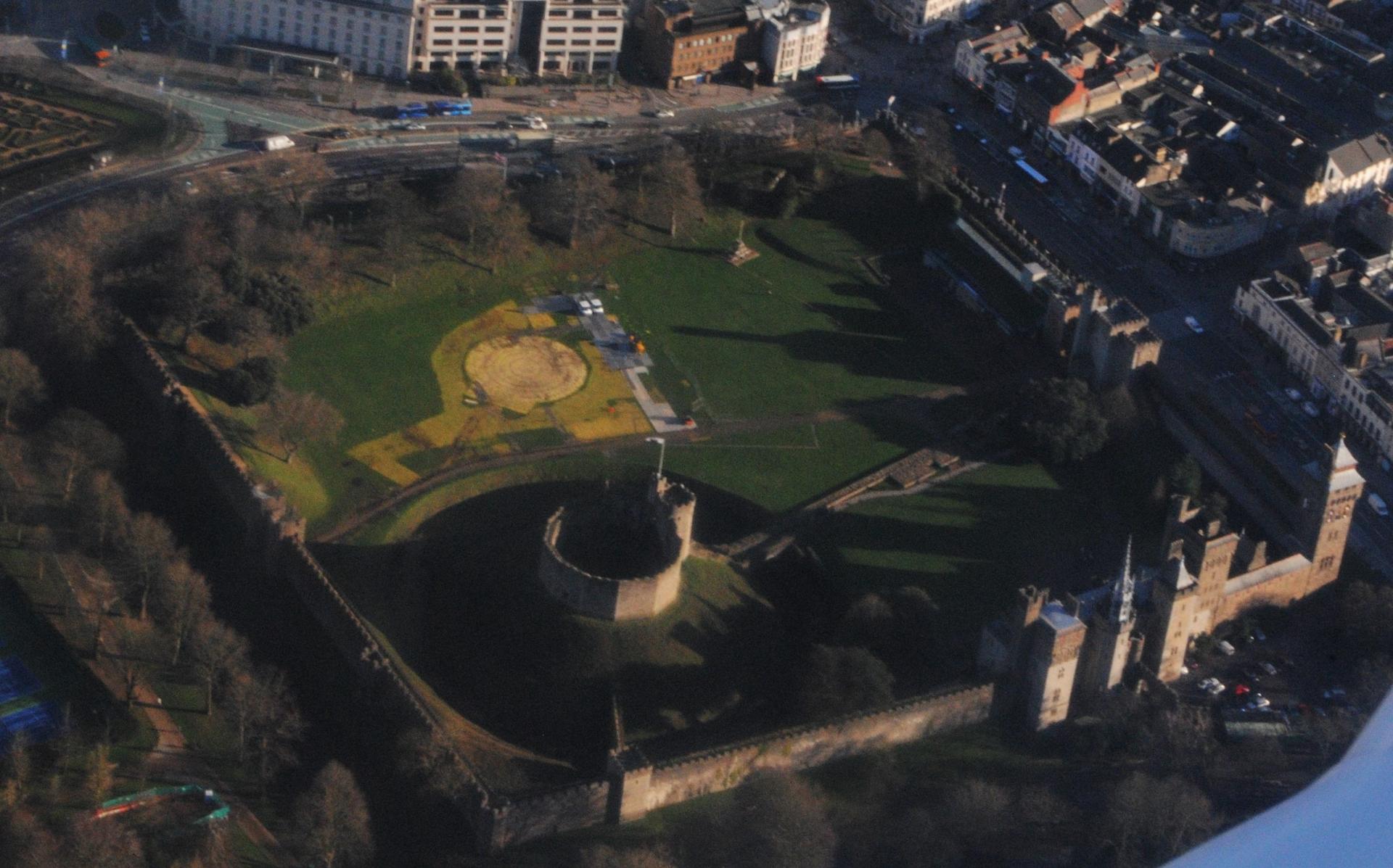
    File:Aerial view of Cardiff Castle.jpg - Wikipedia

    More about Cardiff

    Discover Cardiff, the vibrant capital of Wales, where ancient history meets modern charm in a city brimming with culture, sports, and stunning waterfront views.

    Tell me more about Cardiff
    Select Currency

    Choose the currency you want prices to display in.