

Free Cardiff Travel Guide & Mobile App
Plan your Cardiff trip with Evendo. Get free guides to top attractions, restaurants, hotels, and bars. Web access or download the mobile app.


Cardiff combines a medieval castle, waterfront culture, grand civic architecture and Welsh traditions with lively museums, markets and green spaces to explore.
A Capital Shaped by Coal and Culture
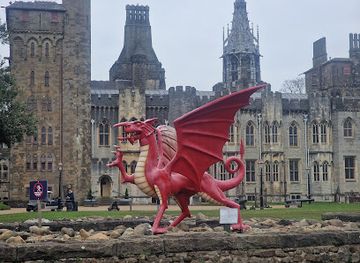
Cardiff is a compact capital where Welsh national identity, Victorian ambition and contemporary waterfront life meet. At its centre, Cardiff Castle occupies the site of a Roman fort and carries traces of medieval rule, nineteenth-century Gothic revival and the wealth generated by the South Wales coal trade. Around it, the civic centre unfolds in a grand sequence of stone buildings, including the National Museum Cardiff, City Hall and the striking Temple of Peace.Read more about Cardiff
Streets, Stadiums and City Life
The Bay and Green Cardiff
When is the best time to visit Cardiff?
Best: June–August · 19–21°C| Month | High (°C) | Rainfall (mm) |
|---|---|---|
| January | 8 | 80 |
| February | 9 | 70 |
| March | 11 | 70 |
| April | 13 | 60 |
| May | 16 | 60 |
| June (best) | 19 | 60 |
| July (best) | 21 | 70 |
| August (best) | 21 | 70 |
| September | 19 | 70 |
| October | 15 | 80 |
| November | 11 | 80 |
| December | 9 | 80 |
Getting to and around Cardiff
How to get there
Transportation
Best attractions in Cardiff
Cardiff Castle provides a layered introduction to the city, combining Roman remains, a medieval keep and the ornate nineteenth-century interiors created for the Marquesses of Bute. Across the road, the National Museum Cardiff presents Welsh art, natural history and geology in an imposing civic setting, while Bute Park offers riverside paths and open lawns behind the castle. The city's Victorian and Edwardian arcades, including Morgan Quarter and Castle Quarter, lead to independent shops, cafés and small businesses beneath elaborate glass roofs. In Cardiff Bay, the Wales Millennium Centre anchors a cultural district of theatres, exhibitions and waterfront promenades, with the Senedd and Norwegian Church adding architectural and historical interest. St Fagans National Museum of History, in the west of Cardiff, extends sightseeing into an open-air collection of historic Welsh buildings and provides a wider social context for the capital's urban heritage.
-
Castle
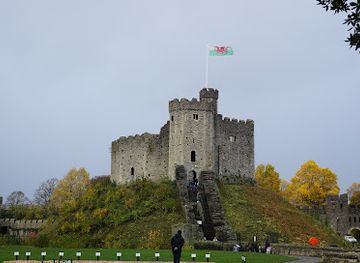
Cardiff Castle
Nearly 2,000 years of history converge in Wales' most captivating castle, where Roman forts, Norman keeps, Victorian splendor, and wartime shelters tell an evolving story.
5 min walk · 0.4 km from city centre
-
Shopping Centre
St David’s Dewi Sant
Cardiff’s largest shopping centre with over 160 shops, vibrant dining, and family-friendly entertainment in the city heart.
2 min walk · 0.1 km from city centre
-
 Stadium
Principality Stadium
Cardiff’s iconic national stadium with a retractable roof, hosting world-class rugby, concerts, and events in the heart of Wales.
6 min walk · 0.4 km from city centre
-
History museum
St. Fagans National Museum of History
Explore Wales’ rich heritage through over 40 historic buildings and living crafts in a stunning open-air museum set around a 16th-century castle.
20 min drive · 6.7 km from city centre


Best landmarks in Cardiff
Cardiff Castle is the city's defining historic landmark, with a medieval keep and later Gothic revival interiors built around the remains of a Roman fort. The civic centre forms an impressive ensemble of early twentieth-century public architecture, including City Hall, the National Museum Cardiff and the Temple of Peace, whose pale stone buildings reflect Cardiff's rise as a capital. The Principality Stadium, set beside the River Taff, is a modern landmark and an important symbol of Welsh sporting life. Across the water, the Wales Millennium Centre is recognisable for its monumental inscription and copper-toned exterior, while the Senedd uses glass, timber and steel to express the work of devolved government. The Norwegian Church recalls Cardiff's maritime past and its links with international seafarers and the port.
-
Stadium
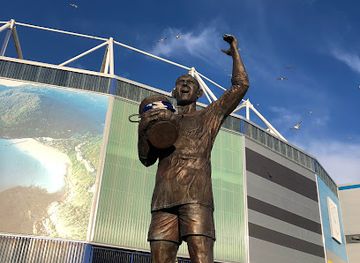
Cardiff City Stadium
Wales's premier football arena where passion meets modern sport in the heart of Cardiff.
6 min drive · 2.0 km from city centre
-
Historical landmark
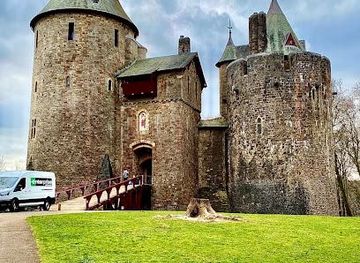
Castell Coch
A fairytale fortress of Victorian imagination rising from medieval foundations in ancient Welsh woodland.
25 min drive · 8.2 km from city centre
-
Tourist attraction
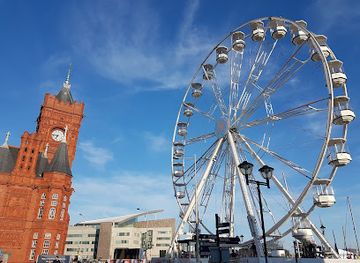
Roald Dahl Plass
Where industrial heritage meets modern culture—Cardiff's iconic plaza named for author Roald Dahl.
6 min drive · 2.0 km from city centre
-
Museum
Museum of Cardiff
Explore the vibrant history and culture of Cardiff in the heart of the city at the Museum of Cardiff, housed in the historic Old Library.
1 min walk · 0.1 km from city centre
Explore Cardiff on the map
Plan your Cardiff trip on one map. See where the top attractions, landmarks, restaurants, bars and hotels are, find what's near where you're staying, and book hotels and experiences in a few clicks.
Neighbourhoods in Cardiff
-

-

-

-


Swipe for more neighbourhoods
Best hotels in Cardiff
Best restaurants in Cardiff
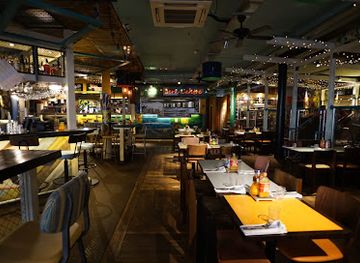
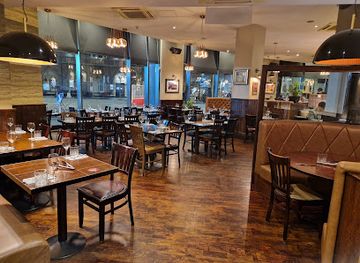
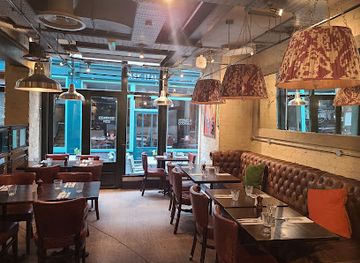
Cardiff's food scene reflects both Welsh tradition and the capital's increasingly international population. Welsh cakes, bara brith, cawl and Glamorgan sausages appear in cafés, bakeries and modern interpretations of Welsh cooking, while locally sourced lamb, seafood and cheeses feature on seasonal menus. The city centre's arcades and lanes contain cafés, restaurants and casual dining, with further choice in Canton, Pontcanna and Roath, where independent businesses sit among neighbourhood shops. Cardiff Market remains a useful place to encounter everyday produce, baked goods and prepared food, while the Bay has dining rooms overlooking the water. Restaurants range from informal curry houses, East Asian kitchens and Middle Eastern eateries to contemporary establishments exploring Welsh ingredients; menus and trading arrangements vary, so checking current details is sensible.
-
Caribbean
Turtle Bay Cardiff
Caribbean soul meets Welsh hospitality—bold jerk, tropical cocktails, and island warmth in Cardiff city centre.
2 min walk · 0.2 km from city centre
-
Brazilian
Viva Brazil Cardiff
Experience authentic Brazilian rodizio dining with unlimited charcoal-grilled meats and vibrant flavours in the heart of Cardiff city centre.
5 min walk · 0.4 km from city centre
-
British
Bill's Cardiff Central Restaurant
All-day British dining in Cardiff's vibrant arcade—fresh, seasonal, and genuinely welcoming to families and their four-legged friends.
3 min walk · 0.2 km from city centre
-
British
Cosy Club
Stylish British dining with vintage charm and all-day menus in Cardiff’s St David's Dewi Sant centre.
1 min walk · 0.1 km from city centre
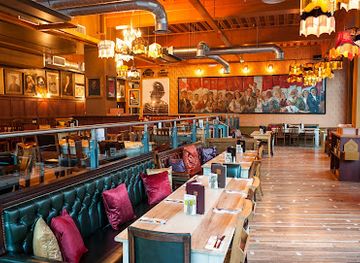
Best bars in Cardiff
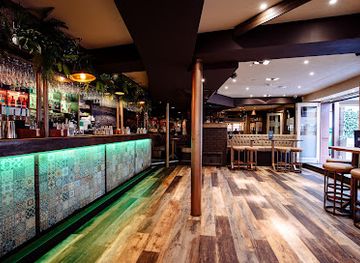
Cardiff has a concentrated evening scene, with traditional pubs, independent bars, cocktail venues and clubs spread through the city centre, especially around St Mary Street, Womanby Street and the streets near the arcades. Womanby Street is closely associated with live music and smaller performance venues, while the Principality Stadium brings a different rhythm on match and concert nights. The city also has theatres and cultural venues for evenings centred on performance rather than drinking, including Wales Millennium Centre in Cardiff Bay and the New Theatre in the centre. Canton and Pontcanna offer a more neighbourhood-oriented selection of pubs and bars. Crowds vary sharply with sporting fixtures and university terms, and Cardiff's nightlife is generally busiest at weekends rather than evenly active every night.
-
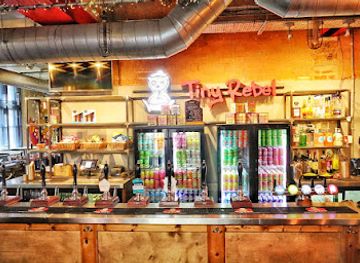
Pub
Tiny Rebel Cardiff
Vibrant craft beer pub near Principality Stadium with lively music, quirky style, and great British food in the heart of Cardiff.
4 min walk · 0.3 km from city centre
-
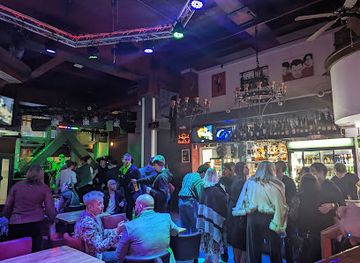
Bar
The Live Lounge Cardiff
Cardiff’s energetic live music bar and nightclub offering affordable drinks, hearty food, and nonstop entertainment until 4am.
3 min walk · 0.3 km from city centre
-
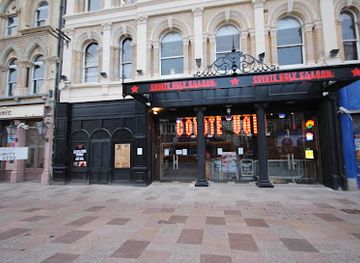
Grill
Coyote Ugly Saloon Cardiff
Experience Cardiff’s wildest bar and grill with live barmaid performances, hearty American food, and late-night party vibes on St Mary Street.
4 min walk · 0.3 km from city centre
-
Cocktail bar
Peppermint Bar
Sophisticated cocktails, vibrant atmosphere, and lively late-night fun in the heart of Cardiff city centre.
4 min walk · 0.3 km from city centre
Best nightclubs in Cardiff
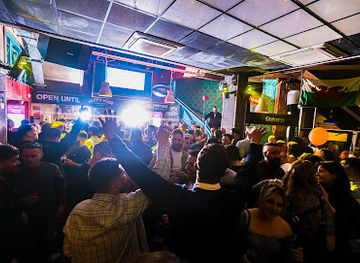
Cardiff has a concentrated evening scene, with traditional pubs, independent bars, cocktail venues and clubs spread through the city centre, especially around St Mary Street, Womanby Street and the streets near the arcades. Womanby Street is closely associated with live music and smaller performance venues, while the Principality Stadium brings a different rhythm on match and concert nights. The city also has theatres and cultural venues for evenings centred on performance rather than drinking, including Wales Millennium Centre in Cardiff Bay and the New Theatre in the centre. Canton and Pontcanna offer a more neighbourhood-oriented selection of pubs and bars. Crowds vary sharply with sporting fixtures and university terms, and Cardiff's nightlife is generally busiest at weekends rather than evenly active every night.
-
Nightclub
Retro
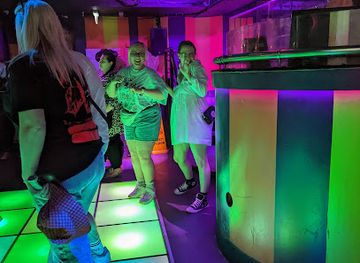
Experience Cardiff’s energetic throwback nightclub with three floors, karaoke, and a lively party vibe until the early hours.
4 min walk · 0.3 km from city centre
-
Nightclub
Popworld - Cardiff
A lively late-night hotspot in Cardiff serving up cheesy pop tunes, creative cocktails, and unforgettable party vibes.
2 min walk · 0.2 km from city centre
-
Nightclub
Mary's Cardiff
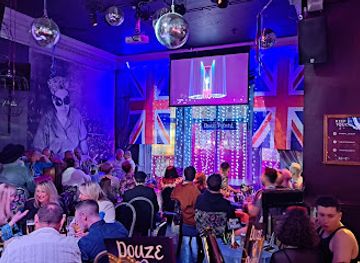
Lively gay cabaret nightclub in Cardiff city centre with vibrant shows, premium cocktails, and an inclusive atmosphere.
3 min walk · 0.2 km from city centre
-
Nightclub
Kapu
Tiki-styled cocktail bar and late-night club on St Mary Street — handcrafted, colourful cocktails and a buzzy, compact party atmosphere.
3 min walk · 0.3 km from city centre

Best shops in Cardiff
Cardiff combines mainstream retail with a strong collection of historic arcades and independent traders. Queen Street and St David's shopping centre provide the largest concentration of familiar high-street stores, while the Victorian and Edwardian arcades offer smaller boutiques, specialist shops, cafés, record stores and jewellers in distinctive covered passages. Cardiff Market, near St Mary Street, is the traditional place to browse food stalls, household goods and local trading businesses, with Welsh cakes and other edible specialities making practical souvenirs. Independent shops are particularly noticeable around the arcades, Pontcanna, Roath and nearby Cowbridge Road East, while the Bay has a more leisure-focused retail character. Visitors seeking Welsh-made gifts can look for locally produced textiles, ceramics, preserves, books and food products, checking provenance rather than assuming every souvenir is made in Wales.
-
Shopping Centre
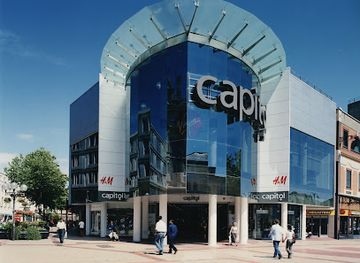
Capitol Cardiff
Cardiff's central shopping destination blending contemporary retail with Victorian-inspired architecture.
5 min walk · 0.4 km from city centre
-
Shopping Centre
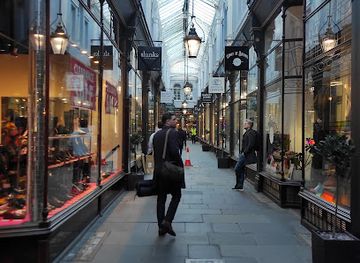
Morgan Quarter
Discover Cardiff’s charming Morgan Quarter, a historic Victorian arcade blending unique shops, cozy cafes, and timeless architecture in the city centre.
2 min walk · 0.2 km from city centre
-
Gift shop
Menkind
Discover quirky gadgets, unique gifts, and pop culture treasures at Menkind, Cardiff’s premier gift shop for all ages and tastes.
2 min walk · 0.1 km from city centre
-
Gift shop
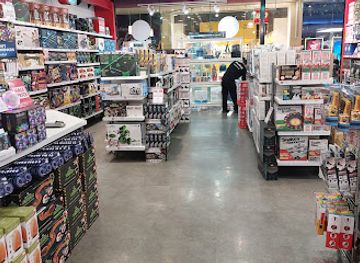
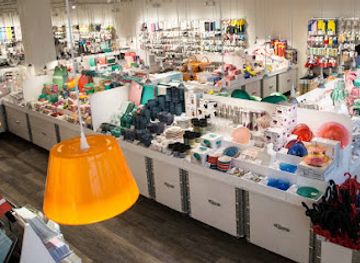
Flying Tiger
Discover quirky Scandinavian gifts and creative everyday essentials at Flying Tiger in Cardiff’s St David's Centre.
1 min walk · 0.1 km from city centre
Get your free copy of our complete guide to Cardiff, delivered straight to you.
Everything on this page, from attractions and restaurants to essentials and local phrases, in one PDF you can read offline, print or share.
Already have an account? Sign in
Your Cardiff guide is ready.
We'll send it to · Not you? Sign out

Getting your guide ready…
We are putting together a fresh copy of the Cardiff guide. This can take up to a minute.
This can take a few moments. If your browser asks, choose Allow so the download can start. You'll find the guide in your Downloads folder.
Nothing happened? Download it again
Sorry, the guide is taking longer than usual. Please try again in a minute, or get it by email instead.
Cardiff essentials
Currency and Payment
Safety
Emergency Situations
Do's and Don'ts
Local Tips
From Eve
Local phrases worth knowing
You don't need to get them perfect. A few words go a long way, and locals appreciate the effort.
Basics
| English | Local | Say it |
|---|---|---|
| Hello | Helo | [heh-loh] |
| Goodbye | Hwyl fawr | [hoyl vower] |
| Yes | Ie | [yay] |
| No | Na | [nah] |
| Please/You're welcome | Os gwelwch yn dda/ Croeso | [oss gwell-ookh un thah/ croy-so] |
| Thank you | Diolch | [dee-olkh] |
| Excuse me/Sorry | Ymddiheuriad | [um-thee-hair-yahd] |
| How are you? | Sut wyt ti? | [sit weet tee] |
| Fine. And you? | Iawn. A ti? | [yown. ah tee] |
| Do you speak English? | Ydych chi'n siarad Saesneg? | [uh-dikh kheehn shiarad sighs-neg] |
| I don't understand | Fydw i ddim yn deall | [vid-oo ee thim un deh-al] |
Eating & Drinking
| English | Local | Say it |
|---|---|---|
| I'd like to see the menu, please | Hoffwn i weld y fwydlen, os gwelwch yn dda | [hoh-vun ee weld uh voo-id-len, oss gwell-ookh un thah] |
| I don't eat meat | Dydw i ddim yn bwyta cig | [dih-dwee ee thim un boo-ee-ta keeg] |
| Cheers! | Iechyd da! | [yeh-khid dah!] |
| I would like to pay, please | Hoffwn i dalu, os gwelwch yn dda | [hoh-vun ee dah-lee, oss gwell-ookh un thah] |
Emergencies
| English | Local | Say it |
|---|---|---|
| Help! | Cymorth! | [kum-orth!] |
| Go away! | Dychwelyd! | [duh-khweh-lid!] |
| Call the Police! | Galw'r Heddlu! | [gah-loo'r heh-dh-lee!] |
| Call a doctor! | Galw meddyg! | [gah-loo meh-dh-ig!] |
| I'm lost | Dw i wedi colli | [doo ee weh-dee koh-lee] |
| I'm ill | Dw i'n sâl | [doo een sahl] |
Shopping
| English | Local | Say it |
|---|---|---|
| I'd like to buy... | Hoffwn i brynu... | [hoh-vun ee brin-ee...] |
| I'm just looking | Dw i jyst yn edrych | [doo ee yist un ed-rikh] |
| How much is it? | Faint ydy o? | [vint uh-dee oh?] |
| That's too expensive | Mae hynny'n rhy drud | [my hun-een ree drid] |
| Can you lower the price? | Allwch chi leihau'r pris? | [ahl-kh oo khih lay-hai'r prees?] |
Time & Numbers
| English | Local | Say it |
|---|---|---|
| What time is it? | Pa bryd ydy hi? | [pah breed uh-dee hee?] |
| It's one o'clock | Mae hi'n un o'r gloch | [my hee'n in or gloch] |
| Half past (10) | Hanner awr (10) | [han-er ow-r (10)] |
| Morning | Bore | [bore-eh] |
| Afternoon | Pryd nos | [preed nos] |
| Evening | Pryd noswaith | [preed nos-wythe] |
| Yesterday | Ddoe | [thoy] |
| Today | Heddiw | [hed-ee] |
| Tomorrow | Fory | [vor-ee] |
| 1 | Un | [een] |
| 2 | Dau | [die] |
| 3 | Tri | [tree] |
| 4 | Pedair | [ped-eye-r] |
| 5 | Pump | [pum-p] |
| 6 | Chwech | [khwehkh] |
| 7 | Saith | [sah-eeth] |
| 8 | Wyth | [withe] |
| 9 | Naw | [naow] |
| 10 | Deg | [deg] |
Transport & Directions
| English | Local | Say it |
|---|---|---|
| Where's a/the...? | Ble mae'r...? | [bleh my-ehr...?] |
| What's the address? | Beth ydy'r cyfeiriad? | [beth uh-dee'r kuh-veh-ree-ad?] |
| Can you show me (on the map)? | Allwch chi ddangos i mi (ar y map)? | [ahl-kh oo khih thang-os ee mee (ar uh map)?] |
| When's the next (bus)? | Pryd mae'r (bws) nesaf? | [preed my-ehr (boos) ness-af?] |
| A ticket (to ....) | Tocyn (i....) | [tok-in (ee....)] |
History of Cardiff
Roman Fort and Medieval Settlement
Cardiff developed beside the River Taff at a strategic crossing close to the Severn estuary. The Romans established a fort here, probably in the first century, and the surviving masonry incorporated into Cardiff Castle records that early military presence. After the Roman period, a settlement continued around the site, although the form of medieval Cardiff was shaped most decisively after the Norman Conquest. Robert Fitzhamon established a Norman lordship in Glamorgan in the late eleventh century, and a castle and walled town grew around the river crossing. Cardiff became an important local market and administrative centre, while the castle remained the dominant symbol of authority. Parts of the medieval town plan can still be sensed around the castle and central streets, even though later expansion transformed much of the historic core.
The Marquesses of Bute
From the late eighteenth century, Cardiff Castle and the surrounding estate were associated with the Marquesses of Bute, whose influence helped transform the town. John Crichton-Stuart, second Marquess of Bute, inherited extensive Glamorgan lands and invested heavily in Cardiff's docks, while his son, the third Marquess, became one of the period's great industrial landlords and patrons of architecture. The castle was remodelled in an elaborate Gothic revival style by architect William Burges during the nineteenth century, creating richly decorated interiors that contrast with the medieval keep. Bute's investments in dock infrastructure and urban development helped Cardiff handle the rapidly expanding coal trade. The family's legacy is visible not only at the castle but also in Bute Park and the wider planning of the civic centre.
Coal, Docks and Global Trade
The industrial expansion of the South Wales coalfield changed Cardiff from a modest market town into a major export port. The Glamorganshire Canal reached Cardiff in 1794, improving the movement of coal, and the Bute West Dock opened in 1839, followed by further dock construction as production increased. Railways connected the port with mining communities in the valleys, and Cardiff became closely linked to the global coal trade, supplying steamships and industries overseas. Migrants arrived for work, creating a more diverse urban society and expanding neighbourhoods beyond the old town. By the early twentieth century, Cardiff was widely recognised as one of the world's leading coal-exporting ports. The docklands, warehouses and transport infrastructure laid the economic foundations for the modern capital, even as industrial decline later required extensive regeneration.
A Welsh Capital Emerges
Cardiff's civic importance grew alongside its industrial wealth. The city received city status in 1905 and became the capital of Wales in 1955, a decision that formalised its role as the country's principal administrative and cultural centre. The civic centre around Cathays Park developed in the late nineteenth and early twentieth centuries with buildings such as City Hall, the National Museum Cardiff and the Law Courts, creating a monumental setting for public life. Cardiff University, founded in 1883 as the University College of South Wales and Monmouthshire, strengthened the city's intellectual character. The twentieth century also saw the consolidation of national institutions, broadcasting and cultural organisations in the capital. Cardiff's identity consequently became broader than its port economy, combining municipal power, education, arts and Welsh public life.
War, Industry and Social Change
Cardiff's docks and railway connections made the city strategically important during both world wars, while its industrial communities experienced the wider social pressures of wartime mobilisation, economic fluctuation and post-war reconstruction. The decline of coal exports after the Second World War had profound consequences for the port and for the communities tied to mining and heavy industry. Cardiff's economy gradually shifted towards administration, education, retail, media, services and culture. The city also became an important centre for Welsh-language institutions and national political life, particularly after the establishment of devolved government. These changes reshaped the relationship between the city centre, the docks and surrounding neighbourhoods, leaving a capital that retained industrial memories while developing new civic and cultural functions.
The Regenerated Cardiff Bay
The former docklands underwent one of Britain's most substantial urban regeneration projects from the late twentieth century. The Cardiff Bay Development Corporation, established in 1983, oversaw major changes, including the Cardiff Bay Barrage completed in 1999, which created a large freshwater lagoon and new public spaces. Cultural and civic buildings followed, notably the Wales Millennium Centre, opened in 2004, and the Senedd, the home of the Welsh Parliament, opened in 2006. The redevelopment brought leisure, arts, housing and offices to areas once dominated by warehouses and maritime industry. It also prompted debate about displacement, environmental change and the balance between regeneration and established communities. Today, the Bay remains a visible expression of Cardiff's transition from coal-exporting port to modern national capital.
Cardiff in Photos
Browse through our photo collection highlighting the charm and character of the destination.
Cities near Cardiff
The closest cities to Cardiff, if you have time for more than one stop.
-

-

-

-

-


Swipe for more cities
Explore more

Explore more of United Kingdom
Discover the United Kingdom: A blend of rich history, stunning landscapes, and vibrant cities, offering a unique travel experience for every visitor.
Explore United Kingdom