

Manchester United, Lancashire Travel Guide
Experience the legendary home of Manchester United where football history, passion, and iconic moments come alive in the Theatre of Dreams.
Old Trafford, located on Sir Matt Busby Way in Old Trafford, Manchester, is the iconic home stadium of Manchester United Football Club. Opened in 1910 and nicknamed the 'Theatre of Dreams,' it has a seating capacity of around 74,000 and has witnessed legendary players and historic matches. The stadium blends rich history with modern facilities, offering a compelling experience for football fans and visitors alike.
A brief summary to Manchester United
- Sir Matt Busby Way, Manchester, Old Trafford, Stretford, M16 0RA, GB
- Click to display
- Click to display
- Duration: 1 to 3 hours
- Mid ranged
-
 Outdoor
- Mobile reception: 5 out of 5
- Monday 9 am-5 pm
- Tuesday 9 am-5 pm
- Wednesday 9 am-5 pm
- Thursday 9 am-5 pm
- Friday 9 am-5 pm
- Saturday 9 am-5 pm
- Sunday 9 am-5 pm

Know before you go
Hi, I'm Eve. Here are a few practical things to know before exploring Manchester United.
- Book stadium tours in advance to explore behind-the-scenes areas including the players’ tunnel and trophy room.
- Visit on match days to soak in the electric atmosphere but arrive early to avoid crowds.
- Check the official Manchester United website for ticket availability and event schedules.
- Explore the nearby Manchester United Museum and megastore for memorabilia and history.
Do you manage this location?
Take control to get all the benefits, like improved information, better appearance, and stronger visibility across AI-powered discovery. Learn more about listing your business on Evendo
Activate your presenceOther nearby places you may find interesting
The closest places of the same kind, if this one is not quite what you had in mind.
Explore Manchester United on the Map
A handpicked selection of must-see spots near Manchester United, mapped for you.
Getting There
-
Train
Take a train to Manchester Piccadilly, then transfer to a tram on the Metrolink Altrincham line towards Old Trafford. The tram ride takes approximately 15-20 minutes with stops near the stadium. Trams run frequently, and a single ticket costs around £3-£5.
-
Bus
Several bus routes serve the Old Trafford area from Manchester city center, including routes 250 and 255. The journey takes about 25-35 minutes depending on traffic. Bus fares typically range from £2 to £4 per trip.
-
Car
Driving to Old Trafford is possible but parking is limited on match days. Nearby public car parks are available with fees around £10-£20. Expect heavy traffic on event days, and consider arriving early to secure parking.
-
Walking
If staying in central Manchester, walking to Old Trafford is feasible in about 45-60 minutes. The route is mostly flat and urban, suitable for most fitness levels, but not recommended for those with mobility issues.
For the on-the-go comforts that matter to you
-
 Restrooms
-
 Drink Options
-
 Food Options
-
 Seating Areas
-
 Information Boards
-
 Visitor Center
Discover more about Manchester United
Origins and Architectural Vision
Old Trafford was conceived in the early 20th century as Manchester United sought a larger venue to accommodate its growing fan base. Designed by the renowned architect Archibald Leitch, construction began in 1909 near the Trafford Park industrial estate and was completed by early 1910. The stadium opened officially on 19 February 1910 with a match against Liverpool. Originally, it featured one covered stand and open terraces on the other three sides, boasting a capacity of just over 80,000, making it one of the largest and most advanced stadiums of its era.Trials, War Impact, and Rebirth
Old Trafford’s history was dramatically affected during World War II when German air raids heavily damaged the stadium. From 1941 to 1949, Manchester United played their home games at rivals Manchester City's Maine Road while the stadium underwent extensive rebuilding. The reopening in 1949 marked a new chapter, though with a reduced capacity and without full cover initially. The post-war years saw incremental improvements and expansions, restoring Old Trafford’s status as a premier football venue.Evolution Through the Decades
Throughout the latter half of the 20th century, Old Trafford underwent numerous renovations. The 1960s brought a sleek cantilever stand replacing the United Road side, introducing private boxes and modern facilities. The stadium adapted to changing safety regulations after the Hillsborough disaster, converting to an all-seater stadium in the 1990s. This involved demolishing the famous Stretford End terraces and adding tiers to the North, East, and West stands, gradually increasing capacity to around 68,000. Further expansions in the early 2000s added upper-tier corners, reaching the current capacity of approximately 74,000.Legacy, Culture, and Iconic Moments
Nicknamed the 'Theatre of Dreams' by club legend Bobby Charlton, Old Trafford has been home to football icons such as George Best, Eric Cantona, Cristiano Ronaldo, and Sir Alex Ferguson’s managerial era. It has hosted significant events beyond club football, including World Cup matches, European finals, and major concerts. The stadium embodies the passion, resilience, and global appeal of Manchester United, symbolizing football heritage and community spirit.Modern Amenities and Future Prospects
Today, Old Trafford combines historic charm with modern amenities such as advanced digital screens, Wi-Fi, hospitality suites, and enhanced seating comfort. Despite physical constraints like the railway line behind the South Stand limiting expansion, plans remain to further modernize facilities, improve accessibility, and adopt sustainable practices. These efforts ensure Old Trafford remains a leading football venue and a must-visit destination for fans worldwide.Experiencing Old Trafford
Visitors to Old Trafford can immerse themselves in the rich atmosphere of the stadium, whether on match days or through guided tours that showcase trophies, dressing rooms, and the pitch. The surrounding area on Sir Matt Busby Way is steeped in football culture, making it a pilgrimage site for enthusiasts eager to connect with the legacy of one of football’s greatest clubs.












Your all‑in‑one travel companion app
Explore expert travel guides, compare and book tours, experiences, hotels, and more—all from the palm of your hand. Download now for seamless trip planning wherever your wanderlust takes you.


Explore More of Lancashire
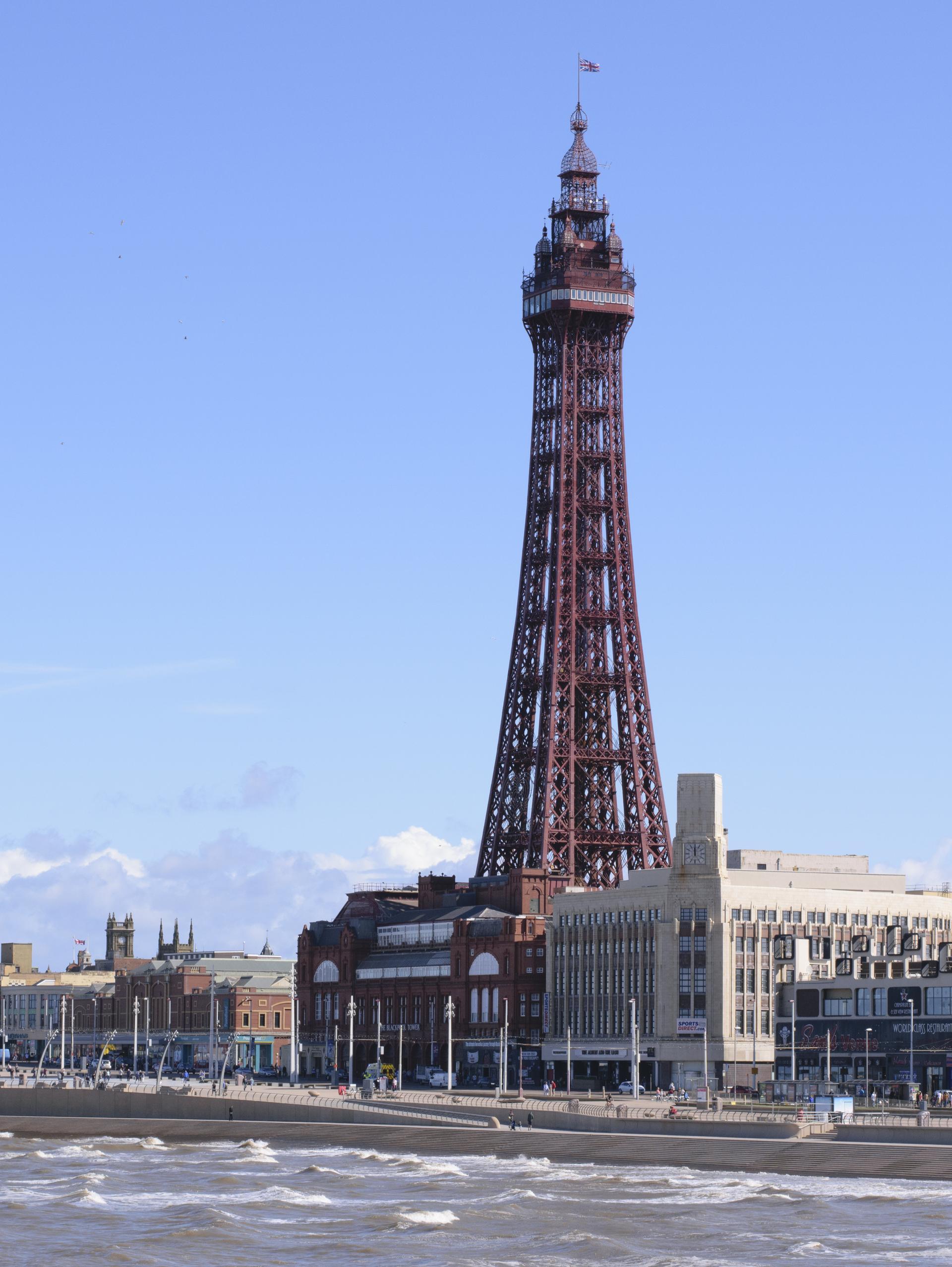
Looking beyond Manchester United? Discover Lancashire for broader travel guides, local hot-spots, and regional highlights.
Explore Lancashire
Explore Manchester’s historic heart where Roman ruins, scenic canals, and vibrant culture converge in the UK’s first Urban Heritage Park.
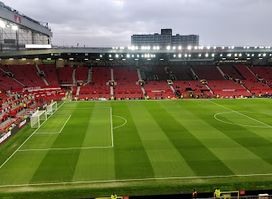
Explore Old Trafford, the iconic 'Theatre of Dreams' and largest football club stadium in the UK, home to Manchester United's legendary legacy.
