

Free Lancashire Travel Guide & Mobile App
Explore Lancashire with free travel guides. Discover regional history, expert tips, proposed trips, and audio guides on web or mobile app.


Explore Lancashire for historic Lancaster, industrial heritage, Lancashire cheese, Morecambe Bay and walking across Bowland and Pendle.
Read more about Lancashire
When is the best time to visit Lancashire?
Best: July–September · 18–20°C| Month | High (°C) | Rainfall (mm) |
|---|---|---|
| January | 6 | 80 |
| February | 6 | 71 |
| March | 9 | 66 |
| April | 11 | 51 |
| May | 15 | 60 |
| June | 18 | 71 |
| July (best) | 20 | 86 |
| August (best) | 20 | 81 |
| September (best) | 18 | 70 |
| October | 13 | 91 |
| November | 9 | 81 |
| December | 6 | 75 |
Getting to and around Lancashire
How to get there
Transportation
Top city travel guides in Lancashire
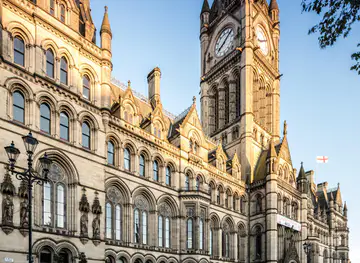
The cities of Lancashire, and the easiest places to base yourself.
-
-

-


Swipe for more cities
Destinations in Lancashire
Resorts, valleys and scenic spots worth a trip of their own.
-

-


Swipe for more destinations
Best attractions in Lancashire
Lancashire’s attractions combine the layered history of its towns with a varied outdoor landscape. Lancaster offers a compact historic centre, Lancaster Castle, museums and Georgian streets, while nearby Morecambe provides seafront architecture, views across the bay and access to coastal walking. Preston’s Harris museum and gallery, civic spaces and river corridor give the county’s urban heart a strong cultural focus. In the east, Clitheroe Castle and the wider Ribble Valley lead into country parks, villages and walks beneath Pendle Hill. The Forest of Bowland National Landscape is the principal destination for open-country walking, cycling, birdwatching and dark-sky appreciation, with routes ranging from accessible valley paths to exposed moorland. Historic houses and gardens, including Gawthorpe Hall near Padiham and Leighton Hall near Carnforth, explore the county’s landed and industrial connections. Former mill towns contain museums, canals, textile heritage and restored industrial buildings, while family attractions and wildlife sites are distributed around the more populated parts of the county. The result is a visitor landscape that favours varied day trips: architecture in one town, a country walk in another, and coastal or food-focused experiences elsewhere.
-
Historical landmark
Royal Albert Dock Liverpool
Historic waterfront marvel blending maritime heritage, world-class museums, vibrant dining, and scenic River Mersey views in Liverpool’s cultural heart.
-
Stadium
Anfield
Experience the legendary Anfield stadium, home to Liverpool FC’s rich history, iconic Kop atmosphere, and unforgettable football moments.
-
Shopping Centre
Liverpool ONE
Liverpool ONE: The UK’s largest open-air shopping and leisure hub in the vibrant heart of Liverpool city centre.
-
Science museum
Science and Industry Museum
Explore 250 years of innovation and industrial heritage at Manchester’s iconic Science and Industry Museum, where history meets hands-on science fun.


Best landmarks in Lancashire
Lancaster Castle is Lancashire’s most recognisable historic building, occupying a strategic position above the River Lune and reflecting royal, judicial and prison history over many centuries. Lancaster’s stone-built centre also contains the Priory Church, elegant Georgian streets and the former port area. Pendle Hill is the county’s defining natural landmark, its distinctive profile linked to local folklore, early modern religious history and extensive walking routes. Clitheroe Castle, with its keep on a limestone outcrop, is a prominent symbol of the Ribble Valley and its medieval defensive past. The Ashton Memorial in Lancaster’s Williamson Park provides a striking civic monument above the city, while the Morecambe Winter Gardens and Midland Hotel represent the resort architecture of the bay. Gawthorpe Hall near Padiham illustrates the county’s country-house tradition and links to the industrial textile landscape. In former mill towns, long brick terraces, canals, viaducts and surviving spinning mills form a less monumental but essential landmark group, showing how manufacturing shaped Lancashire’s towns. Together these places express the region’s principal themes: medieval authority, coastal leisure, upland identity and industrial transformation.
-
Stadium
Etihad Stadium
Manchester City's iconic 61,000-capacity stadium offering immersive tours and world-class matchday experiences.
-
Sculpture
The Beatles Statue
A bronze tribute to John, Paul, George, and Ringo on Liverpool’s iconic waterfront – a must-see for every Beatles fan.
-
Castle
Lancaster Castle
Medieval fortress where justice, punishment, and history converge across nearly 1,000 years.
-
Catholic cathedral
Liverpool Metropolitan Cathedral
Modernist Catholic cathedral with iconic Crown of Glass lantern, circular design, and masterpiece stained glass by John Piper.


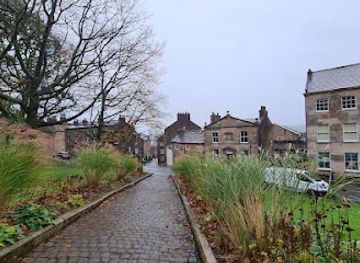

Explore Lancashire on the map
Plan your trip on one map. See where the top cities, national parks and sights are, and book hotels and experiences in a few clicks.
Best hotels in Lancashire
Best restaurants in Lancashire
Lancashire’s food identity is rooted in practical northern cooking, dairy farming and the produce of its coast and market gardens. Lancashire cheese, traditionally crumbly or creamy depending on style and age, appears in farm shops, cheeseboards, cafés and modern menus. Local baking includes butter-rich cakes, pies, Eccles-style pastries and other regional products shared across the North West, while traditional Lancashire hotpot remains associated with slow cooking, lamb and layered potatoes. Around Morecambe Bay and the coast, seafood features alongside fish-and-chip shops and contemporary restaurants; inland, pubs, rural inns and farm cafés make use of local meat, vegetables and preserves. Lancaster and Preston have the broadest choice of international and modern British dining, while market towns provide independent cafés, bakeries and food shops. Farmers’ markets and farm shops are useful places to find cheese, chutneys, bread and seasonal produce, although provenance varies, so labels are worth checking. Dining hours can be limited in villages, especially outside peak seasons.
-
Pub
The Philharmonic Dining Rooms
A Grade I-listed Victorian gem serving classic British fare in one of England's most ornate pubs.
-
Restaurant
The Barn at Scorton
A charming blend of dining, garden centre, and gift shop delights in the heart of Scorton, Lancashire.
-
Italian
The Italian Orchard
Spacious and stylish Italian dining in Broughton, offering a vast menu and lively atmosphere for families and groups.
-
Pub
Merchants 1688
Historic 17th-century wine cellar pub serving modern British cuisine with local ingredients beside Lancaster Castle.


Best bars in Lancashire
Lancashire’s evening life is concentrated in Lancaster, Preston and the larger towns rather than spread evenly across the county. Lancaster has a substantial student influence, with traditional pubs, independent bars, live music, theatres and small venues around the city centre. Preston offers a broader urban mix of pubs, restaurants, bars, music and late-night entertainment, while towns such as Clitheroe and Blackburn have more localised scenes. In rural Bowland, the Ribble Valley and the villages around Pendle, evenings generally centre on historic inns, village pubs, hotel bars and restaurants rather than nightclubs. Morecambe combines traditional seafront and town-centre venues with live entertainment, though its choice changes over time. Independent breweries and taprooms may be found in parts of the county, but opening arrangements are often seasonal or event-based. Check current listings and transport carefully before planning a late night outside the main urban centres, as rural buses and taxis can be limited.
-
Pub
Bellflower
A historic and family-friendly country pub in Garstang offering home-cooked British classics, award-winning ales, and a welcoming atmosphere.
-
Cocktail bar
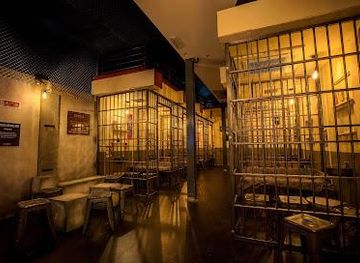
Alcotraz Manchester: Cell Block Three-Four
Step inside Alcotraz Manchester for an immersive prison-themed cocktail adventure with bespoke drinks and live theatrical storytelling.
-
Pub
Merchants 1688
Historic 17th-century wine cellar pub in Lancaster serving modern British cuisine with locally sourced ingredients and craft ales.
-
Pub
Ribchester Arms
A charming Lancashire inn blending historic roots, hearty gastropub fare, and cozy comfort in the heart of Ribchester.



Best nightclubs in Lancashire
Lancashire’s evening life is concentrated in Lancaster, Preston and the larger towns rather than spread evenly across the county. Lancaster has a substantial student influence, with traditional pubs, independent bars, live music, theatres and small venues around the city centre. Preston offers a broader urban mix of pubs, restaurants, bars, music and late-night entertainment, while towns such as Clitheroe and Blackburn have more localised scenes. In rural Bowland, the Ribble Valley and the villages around Pendle, evenings generally centre on historic inns, village pubs, hotel bars and restaurants rather than nightclubs. Morecambe combines traditional seafront and town-centre venues with live entertainment, though its choice changes over time. Independent breweries and taprooms may be found in parts of the county, but opening arrangements are often seasonal or event-based. Check current listings and transport carefully before planning a late night outside the main urban centres, as rural buses and taxis can be limited.
-
Nightclub
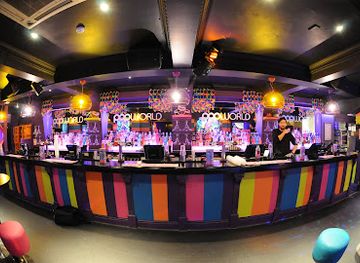
Popworld - Preston
Popworld Preston offers a vibrant retro nightclub experience with flashing dancefloors, cheesy pop hits, and a lively atmosphere in the heart of Preston.
-
Nightclub
The Warehouse
Three floors of diverse music and vibrant nightlife in Preston’s welcoming alternative club scene.
-
Night Club
The Redroom Burnley
Experience Burnley’s vibrant nightlife with The Redroom’s lively music, diverse drinks, and late-night party atmosphere in the town centre.
-
Nightclub
Ibiza Nightclub
Experience Wigan’s vibrant nightlife at Ibiza Nightclub, where music, dance, and unforgettable Saturday nights come alive until dawn.


Best shops in Lancashire
Shopping in Lancashire is strongest in its market towns and larger urban centres, with different places offering distinct experiences. Lancaster combines high-street retail with independent bookshops, galleries, cafés, antiques and craft-oriented businesses around its historic streets. Preston provides the county’s broadest mainstream shopping offer, alongside markets and independent retailers, while towns such as Clitheroe, Garstang, Ormskirk and Kirkham are useful for smaller-scale browsing, local produce and specialist shops. Farm shops and village delis are good places to look for Lancashire cheese, preserves, biscuits, bread, spirits and seasonal goods, though not every product is made within the county. Craft galleries and studios sell ceramics, textiles, jewellery and paintings inspired by northern landscapes, while antique shops are particularly associated with market-town streets and rural areas. Morecambe’s shopping is closely tied to its seafront and town centre, with a mixture of independent businesses and everyday services rather than a luxury retail district. Weekly markets and regular farmers’ markets vary by location and season, so visitors should check current local arrangements before making a special journey.
-
Shopping outlet
Affinity Lancashire Outlet Shopping
Discover unbeatable deals and a family-friendly shopping experience by the scenic Fleetwood harbour marina at Affinity Lancashire Outlet Shopping.
-
Shopping Centre
Charter Walk Shopping Centre
Burnley’s accessible and family-friendly shopping centre with over 85 stores, sensory facilities, and community-focused amenities.
-
Shopping Centre
The Arndale Shopping Centre
Morecambe’s only covered shopping centre offering everyday retail and discount stores in a convenient town centre location.
-
Sportswear Shop
LFC Official Club Store
The largest Liverpool FC store worldwide, offering official merchandise and immersive fan experiences just steps from Anfield Stadium.


Get your free copy of our complete guide to Lancashire, delivered straight to you.
Everything on this page, from attractions and restaurants to essentials and local phrases, in one PDF you can read offline, print or share.
Already have an account? Sign in
Your Lancashire guide is ready.
We'll send it to · Not you? Sign out

Getting your guide ready…
We are putting together a fresh copy of the Lancashire guide. This can take up to a minute.
This can take a few moments. If your browser asks, choose Allow so the download can start. You'll find the guide in your Downloads folder.
Nothing happened? Download it again
Sorry, the guide is taking longer than usual. Please try again in a minute, or get it by email instead.
Lancashire essentials
Currency and Payment
Safety
Emergency Situations
Do's and Don'ts
Local Tips
From Eve
Local phrases worth knowing
You don't need to get them perfect. A few words go a long way, and locals appreciate the effort.
Basics
| English | Local | Say it |
|---|---|---|
| Hello | Ey up | [Ey up] |
| Goodbye | Ta-ra | [Ta-ra] |
| Yes | Aye | [Aye] |
| No | Nah | [Nah] |
| Please/You're welcome | Please/No problem | [Please/No problem] |
| Thank you | Cheers | [Cheers] |
| Excuse me/Sorry | Sorry | [Sorry] |
| How are you? | How do? | [How do?] |
| Fine. And you? | Reyt. An you? | [Reyt. An you?] |
| Do you speak English? | Can tha speak English? | [Can tha speak English?] |
| I don't understand | I dunna understand | [I dunna understand] |
Eating & Drinking
| English | Local | Say it |
|---|---|---|
| I'd like to see the menu, please | Can I see the menu, please? | [Can I see the menu, please?] |
| I don't eat meat | I don't eat meat | [I don't eat meat] |
| Cheers! | Cheers! | [Cheers!] |
| I would like to pay, please | Can I pay, please? | [Can I pay, please?] |
Emergencies
| English | Local | Say it |
|---|---|---|
| Help! | Help! | [Help!] |
| Go away! | Clear off! | [Clear off!] |
| Call the Police! | Ring the coppers! | [Ring the coppers!] |
| Call a doctor! | Get a doc! | [Get a doc!] |
| I'm lost | I'm lost | [I'm lost] |
| I'm ill | I'm poorly | [I'm poorly] |
Shopping
| English | Local | Say it |
|---|---|---|
| I'd like to buy... | I want to buy... | [I want to buy...] |
| I'm just looking | Just having a look | [Just having a look] |
| How much is it? | How much's this? | [How much's this?] |
| That's too expensive | That's well pricey | [That's well pricey] |
| Can you lower the price? | Can tha do it cheaper? | [Can tha do it cheaper?] |
Time & Numbers
| English | Local | Say it |
|---|---|---|
| What time is it? | Wot time is it? | [Wot time is it?] |
| It's one o'clock | It's one o'clock | [It's one o'clock] |
| Half past (10) | Half ten | [Half ten] |
| Morning | Mornin' | [Mornin'] |
| Afternoon | Arvo | [Arvo] |
| Evening | Evenin' | [Evenin'] |
| Yesterday | Yest'day | [Yest'day] |
| Today | To'day | [To'day] |
| Tomorrow | To'morrow | [To'morrow] |
| 1 | One | [One] |
| 2 | Two | [Two] |
| 3 | Three | [Three] |
| 4 | Four | [Four] |
| 5 | Five | [Five] |
| 6 | Six | [Six] |
| 7 | Seven | [Seven] |
| 8 | Eight | [Eight] |
| 9 | Nine | [Nine] |
| 10 | Ten | [Ten] |
Transport & Directions
| English | Local | Say it |
|---|---|---|
| Where's a/the...? | Where's a/the...? | [Where's a/the...?] |
| What's the address? | Wot's the address? | [Wot's the address?] |
| Can you show me (on the map)? | Can tha show me on t'map? | [Can tha show me on t'map?] |
| When's the next (bus)? | Wen's the next (bus)? | [Wen's the next (bus)?] |
| A ticket (to ....) | A ticket (to ....) | [A ticket (to ....)] |
History of Lancashire
Prehistoric Landscapes and Roman Roads
Lancashire contains evidence of prehistoric activity in its uplands, valleys and coastal margins, including burial monuments, earthworks and long-used routes across the Pennines. Roman occupation brought forts, roads and administrative links to the area. The Roman fort at Lancaster, established beside the River Lune, formed an important military base overlooking the western approaches, while roads connected the settlement with other parts of northern Britain. Much of the visible Roman infrastructure has disappeared beneath later towns and fields, but the pattern of routes and the archaeological record demonstrate the county’s long-standing strategic importance.
Medieval Lancaster and the County Palatine
After the Norman Conquest, Lancaster developed as a castle town and port on the River Lune. Lancaster Castle, built and repeatedly altered over the medieval and early modern periods, embodied both royal authority and the power of the Duchy of Lancaster. The county became a palatinate, giving its rulers unusually extensive rights of administration and justice. Monasteries and religious houses also shaped the countryside, with foundations such as Whalley Abbey managing land, farming and religious life. Medieval market towns and parish churches established settlement patterns that remain visible across the county.
The House of Lancaster and the Wars of the Roses
Lancashire gave its name to the Lancastrian royal line during the dynastic conflicts of the fifteenth century. The House of Lancaster contested the English throne with the Yorkists in the Wars of the Roses, a struggle that affected noble families and estates across northern England. Henry Tudor’s victory at Bosworth in 1485 ended the main phase of the conflict and linked the Lancastrian claim to the Tudor monarchy. Although the battles were fought in several regions beyond Lancashire, the county’s name, aristocratic loyalties and later historical memory became closely associated with this defining episode.
Ports, Agriculture and Atlantic Trade
From the seventeenth century, Lancashire’s ports and coastal settlements supported trade in agricultural goods, coal, textiles and manufactured products. Lancaster became particularly involved in Atlantic commerce, including voyages connected with the slave trade, a history now examined through local museums, archives and public interpretation. Inland agriculture supplied growing towns, while rivers and improved roads linked rural producers with markets. The county’s maritime and commercial prosperity helped finance Georgian buildings, warehouses and civic improvements, even as it was entangled in the exploitation and inequalities of Britain’s wider imperial economy.
The Cotton Revolution
From the late eighteenth century, Lancashire became one of the world’s principal centres of cotton spinning and weaving. Water-powered mills were followed by steam-driven factories, particularly in towns such as Blackburn, Burnley, Nelson, Accrington and surrounding districts. Canals, turnpike roads and railways moved raw cotton, coal, workers and finished cloth. The industry created employment and urban growth but also produced crowded housing, dangerous work and sharp social divisions. Mill buildings, terraced streets, canals and workers’ institutes still provide a material record of the industrial landscape.
Railways, Reform and Urban Society
Nineteenth-century railways transformed Lancashire’s geography, connecting industrial towns with Manchester, Liverpool, the national network and coastal resorts. Preston grew as a major railway and manufacturing centre, while Lancaster benefited from improved links to ports and other northern cities. Industrial society also generated organised labour, religious communities, cooperative movements and campaigns for political reform. Public parks, libraries, mechanics’ institutes and municipal buildings reflected the expanding ambitions of urban populations. The county’s towns became places where industrial wealth, working-class politics and civic improvement developed side by side.
Industrial Decline and a Diversified Lancashire
Cotton manufacturing declined sharply during the twentieth century as overseas competition, changing technology and economic restructuring reduced employment in the mills. Many factories closed or changed use, while engineering, aerospace, education, health services, retail, tourism and logistics assumed greater importance. Lancaster and Preston developed strong cultural and educational roles, and rural Lancashire attracted visitors for walking, heritage and food. Industrial decline left lasting social and architectural legacies, but the county’s present identity is not solely industrial: its coast, uplands, market towns and historic buildings now form important parts of a more varied economy.
Lancashire in Photos
Browse through our photo collection highlighting the charm and character of the destination.
Neighbouring regions of Lancashire
The closest regions to Lancashire, if you have time for more than one.
-
-

-
-

-


Swipe for more regions
Explore more

Explore more of United Kingdom
Discover the United Kingdom: A blend of rich history, stunning landscapes, and vibrant cities, offering a unique travel experience for every visitor.
Explore United Kingdom