
James Clerk Maxwell Statue, Clackmannanshire Travel Guide
Honoring James Clerk Maxwell, the father of modern physics, with a striking bronze statue set amidst Edinburgh’s elegant Georgian New Town.
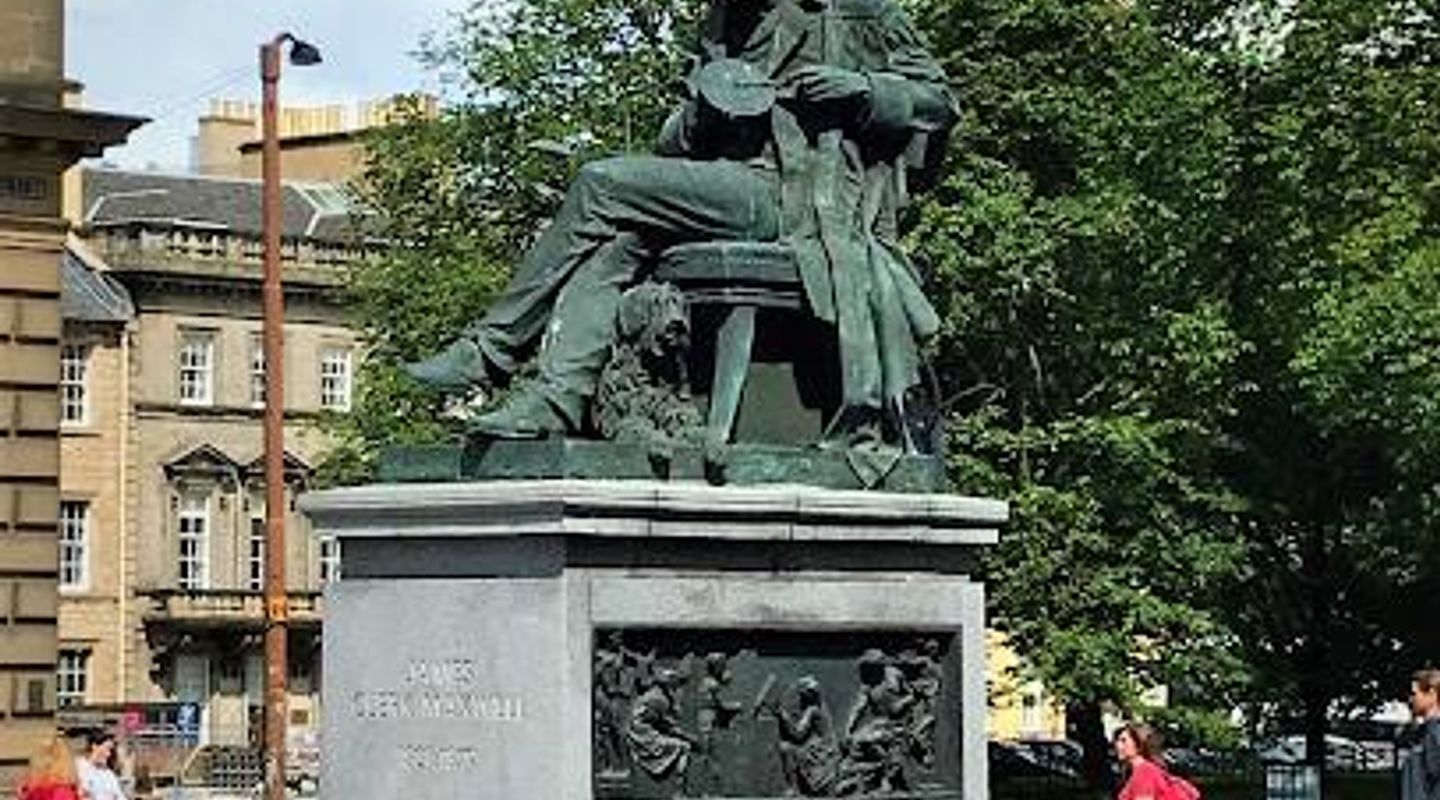
The James Clerk Maxwell Statue, unveiled in 2008 and sculpted by Alexander Stoddart, honors one of Scotland’s greatest scientists. Situated on George Street in Edinburgh’s New Town, the bronze statue depicts Maxwell seated with his dog Toby at his feet, holding a spinning colour top symbolizing his pioneering work in colour photography and electromagnetic theory. The statue stands amidst elegant Georgian architecture, linking Maxwell’s legacy to the city’s rich intellectual and cultural heritage.
A brief summary to James Clerk Maxwell Statue
- 22-26 George St, Edinburgh, EH2 2PQ, GB
- Click to display
- Click to display
- Duration: 0.25 to 1 hours
- Free
-
 Outdoor
- Mobile reception: 5 out of 5

Know before you go
Hi, I'm Eve. Here are a few practical things to know before exploring James Clerk Maxwell Statue.
- Take time to read the bas-reliefs on the statue’s plinth to understand Maxwell’s place between Newton and Einstein.
- Explore nearby George Street to enjoy its Georgian architecture, upscale shops, and vibrant dining options.
- Visit on a clear day to appreciate the statue’s details and the surrounding historic streetscape.
- Combine your visit with a stop at the James Clerk Maxwell Museum at 14 India Street for deeper insight into his life.
Do you manage this location?
Take control to get all the benefits, like improved information, better appearance, and stronger visibility across AI-powered discovery. Learn more about listing your business on Evendo
Activate your presenceOther nearby places you may find interesting
The closest places of the same kind, if this one is not quite what you had in mind.
Explore James Clerk Maxwell Statue on the Map
A handpicked selection of must-see spots near James Clerk Maxwell Statue, mapped for you.
Unlock the Best of James Clerk Maxwell Statue
Buy tickets
-
No tickets available
Book tours with entry
-
No tours available
Book tours without entry

Getting There
-
Bus
Several Lothian Buses routes serve George Street, including routes 3, 23, and 27, with stops within 300 meters of the statue. Travel time from Edinburgh Waverley Station is approximately 10-15 minutes. Tickets cost around £1.80-£2.00. Buses run frequently but check schedules for evening service.
-
Tram
The Edinburgh Trams run from the airport to York Place, about a 10-minute walk from George Street. Tram journeys from the city centre to York Place take 5-7 minutes. A single ticket costs around £1.80. The tram is accessible and runs every 7-10 minutes during the day.
-
Walking
From Princes Street or Edinburgh Waverley Station, a 10-15 minute walk along well-paved, mostly flat streets leads to George Street. The route is wheelchair accessible and passes through central shopping and cultural areas.
For the on-the-go comforts that matter to you
-
 Restrooms
-
 Drink Options
-
 Food Options
-
 Seating Areas
-
 Information Boards
Discover more about James Clerk Maxwell Statue
Commemorating a Scientific Giant
The James Clerk Maxwell Statue, located at 22-26 George Street in Edinburgh, celebrates the life and achievements of one of the most influential physicists in history. Maxwell (1831–1879) formulated the classical theory of electromagnetic radiation, laying the groundwork for modern physics and technologies such as radio, television, radar, and mobile communications. Sculpted by Alexander Stoddart and unveiled in 2008, the statue presents Maxwell seated thoughtfully, clutching a spinning colour top—a reference to his groundbreaking creation of the first colour photographic image in 1861 using red, green, and blue filters. At his feet sits his loyal dog, Toby, adding a personal touch to the monument.Artistic and Symbolic Details
The bronze statue rests on a granite plinth adorned with bas-reliefs that honor scientific luminaries Isaac Newton and Albert Einstein, symbolically linking Maxwell’s work between these two titans of physics. The plinth also features the four Maxwell Equations, fundamental to electromagnetic theory. This artistic composition not only commemorates Maxwell’s scientific legacy but also situates him within the continuum of scientific discovery, emphasizing his profound influence on both his predecessors and successors.Setting Within Edinburgh’s New Town
George Street, where the statue stands, is the principal thoroughfare of Edinburgh’s UNESCO-listed New Town, renowned for its elegant Georgian architecture and vibrant cultural life. Originally designed in the 18th century as a residential area for the city’s elite, George Street evolved into a bustling commercial and social hub lined with upscale boutiques, restaurants, and historic landmarks. The statue’s location near St Andrew Square places it in a prominent and accessible position, surrounded by architectural grandeur and rich urban history.Maxwell’s Enduring Legacy
James Clerk Maxwell’s discoveries underpin much of modern technology and scientific thought. His electromagnetic theory paved the way for innovations that define contemporary life, from wireless communication to GPS. Einstein himself acknowledged Maxwell’s foundational role in physics, famously stating that his own theories owed much to Maxwell’s equations. The statue serves as a modest yet powerful tribute to Maxwell’s enduring impact, inviting reflection on the scientific advancements that shape our world.Visitor Experience and Cultural Context
Visitors to the statue can appreciate not only the artistry of Stoddart’s work but also the rich historical context of George Street and Edinburgh’s New Town. The street’s blend of historic buildings, cultural venues like the nearby Royal Society of Edinburgh, and vibrant city life provides an engaging backdrop. The statue is both a cultural landmark and a point of inspiration, celebrating Scotland’s contribution to global science and innovation.Scientific Inspiration in the Heart of Edinburgh
The James Clerk Maxwell Statue stands as a beacon of intellectual achievement amid the bustling cityscape. It reminds visitors of the power of curiosity and the transformative nature of scientific inquiry. The presence of Maxwell’s statue on George Street highlights Edinburgh’s role as a city of enlightenment, where history, culture, and science converge to inspire future generations.More to explore near James Clerk Maxwell Statue













Your all‑in‑one travel companion app
Explore expert travel guides, compare and book tours, experiences, hotels, and more—all from the palm of your hand. Download now for seamless trip planning wherever your wanderlust takes you.


Explore More of Clackmannanshire
Looking beyond James Clerk Maxwell Statue? Discover Clackmannanshire for broader travel guides, local hot-spots, and regional highlights.
Explore Clackmannanshire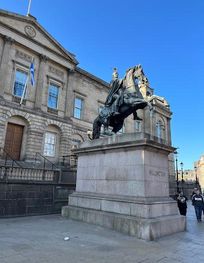
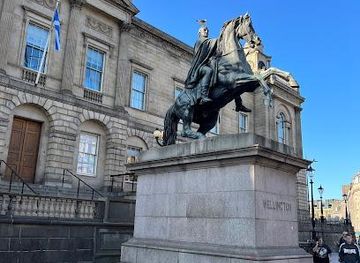
Historic bronze statue of the Duke of Wellington on horseback, a proud symbol of Edinburgh’s military heritage and artistic excellence.
A towering neoclassical column in Edinburgh’s New Town, commemorating Henry Dundas with rich history and architectural grandeur.
