

Free Clackmannanshire Travel Guide & Mobile App
Explore Clackmannanshire with free travel guides. Discover regional history, expert tips, proposed trips, and audio guides on web or mobile app.


Explore Clackmannanshire’s Ochil Hills, wooded glens, historic towers, industrial heritage and compact Scottish market towns.
Read more about Clackmannanshire
When is the best time to visit Clackmannanshire?
Best: June–August · 19–21°C| Month | High (°C) | Rainfall (mm) |
|---|---|---|
| January | 6 | 60 |
| February | 7 | 45 |
| March | 9 | 50 |
| April | 13 | 40 |
| May | 16 | 40 |
| June (best) | 19 | 50 |
| July (best) | 21 | 60 |
| August (best) | 21 | 60 |
| September | 18 | 50 |
| October | 14 | 50 |
| November | 8 | 60 |
| December | 7 | 65 |
Getting to and around Clackmannanshire
How to get there
Transportation
Top city travel guides in Clackmannanshire
The cities of Clackmannanshire, and the easiest places to base yourself.

Swipe for more cities
Best attractions in Clackmannanshire
Clackmannanshire’s attractions are concentrated within a manageable area, making it possible to combine heritage and countryside without long journeys. Alloa Tower provides one of the region’s most substantial historic experiences, while Castle Campbell above Dollar brings together a fortified residence, woodland paths and a dramatic glen setting. Clackmannan Tower offers further insight into the county’s medieval associations. The Ochil Hills are the natural focus for walking, with routes in and around Dollar Glen, Alva Glen and the slopes above Menstrie and Tillicoultry. Gartmorn Dam provides a gentler landscape of water, woodland and former industrial infrastructure. Town museums, historic streets, surviving mill buildings and local cultural venues explain the county’s connections with textiles, coal, brewing and the River Forth. Visitors can also use the area for cycling, birdwatching, informal family walks and views across central Scotland, while the compact geography allows outdoor activities to be paired with cafés, galleries and heritage visits in the nearby towns.
-
Castle
Stirling Castle
Explore Stirling Castle, a majestic Renaissance fortress and royal residence steeped in Scottish history and breathtaking views.
-
Historical landmark
The National Wallace Monument
Explore Scotland’s iconic 220ft tower honoring Sir William Wallace, blending history, stunning views, and national pride atop Abbey Craig near Stirling.
-
Tourist attraction
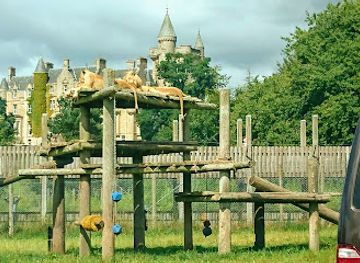
Blair Drummond Safari and Adventure Park
Experience Scotland’s premier safari adventure with exotic animals, thrilling dinosaur exhibits, and a giant playground for family fun near Stirling.
-
Shopping Centre
The Thistles Shopping Centre
A modern shopping destination in Stirling’s city centre with diverse stores, dining, and accessible facilities for all visitors.



Best landmarks in Clackmannanshire
Alloa Tower is Clackmannanshire’s most imposing historic landmark, a tall medieval residence whose scale reflects the importance of the Erskine family and Alloa estate. Above Dollar, Castle Campbell occupies a wooded ravine rather than an exposed hilltop, giving the building and its setting a distinctive relationship with the Ochil landscape. Clackmannan Tower stands above the old burgh and is closely associated with the Bruce family tradition and the town’s medieval identity. The Ochil Hills themselves are the county’s defining natural landmark, forming a continuous backdrop from Dollar towards Menstrie and Tillicoultry and creating the glens through which many local burns descend. Gartmorn Dam is a different kind of landmark: an engineered reservoir connected with the area’s industrial development and now a recognisable recreational landscape. In Alloa, the River Forth and the town’s surviving industrial buildings point to the port, brewing and manufacturing networks that once shaped the county’s prosperity.
-
Historical landmark
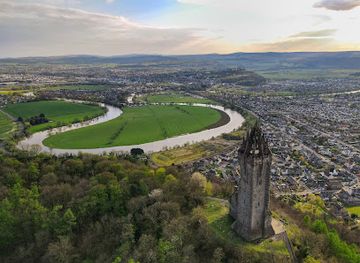
The National Wallace Monument
A towering tribute to Scotland’s national hero, offering history, stunning views, and a journey through the legacy of William Wallace.
-
Abbey
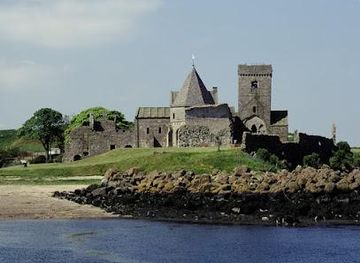
Inchcolm Abbey
Scotland's best-preserved medieval abbey on a wildlife-rich island accessible only by ferry.
-
Monument
Robert the Bruce Statue
A majestic 19th-century statue honoring Robert the Bruce, Scotland’s legendary king, overlooking Stirling Castle and the historic Bannockburn battlefield.
-
Historical landmark
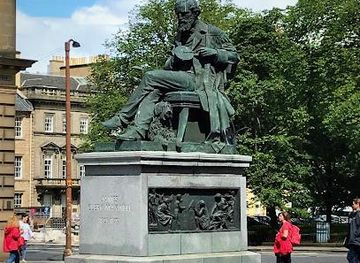
James Clerk Maxwell Statue
Honoring James Clerk Maxwell, the father of modern physics, with a striking bronze statue set amidst Edinburgh’s elegant Georgian New Town.

Explore Clackmannanshire on the map
Plan your trip on one map. See where the top cities, national parks and sights are, and book hotels and experiences in a few clicks.
Best hotels in Clackmannanshire
Best restaurants in Clackmannanshire
Dining in Clackmannanshire reflects its position in central Scotland: the larger towns offer cafés, pubs, takeaways and contemporary restaurants, while villages and foothill settlements provide a smaller selection of casual places and traditional inns. Menus commonly draw on Scottish produce, including beef, lamb, game, seasonal vegetables, smoked fish and shellfish from the wider Forth and east-coast supply network. Haggis, Cullen skink, soups, pies and oat-based baking are familiar Scottish choices, though they belong to the broader national food tradition rather than being exclusive to the county. Alloa’s historic brewing identity remains an important part of the region’s food-and-drink story, and local venues may feature Scottish ales alongside modern drinks. Farmers’ markets and independent food shops are useful for picnic supplies, bakery goods and regional produce, particularly when exploring the glens and hill roads. Advance planning is sensible for rural dining, where opening patterns and seating can be more limited than in Alloa.
-
Restaurant
River House Stirling
Premier dining with stunning Stirling Castle views, local flavors, and a tranquil loch setting in a stylish, family-friendly venue.
-
Gastropub
The Birds & Bees
Rustic charm and seasonal flavors combine at The Birds & Bees, Stirling’s beloved gastropub and event venue in a restored farmhouse.
-
Scottish
Brea - Scottish Restaurant
Experience the finest fresh, locally sourced Scottish cuisine in a warm, award-winning bistro setting in the heart of Stirling.
-
Cafe
Söderberg The Meadows
Authentic Scandinavian bakery and café in Edinburgh offering fresh sourdough, Swedish pastries, and vibrant brunch near the University of Edinburgh.


Best bars in Clackmannanshire
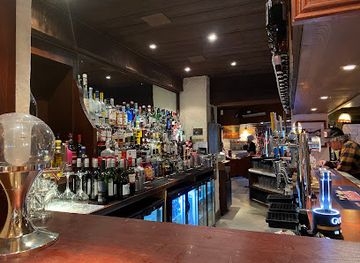
Evening life in Clackmannanshire is centred mainly on traditional pubs, restaurants, community venues and occasional live music rather than a large nightclub circuit. Alloa has the broadest choice, with pubs and bars serving residents, commuters and weekend visitors, while Dollar, Tillicoultry, Alva and Menstrie offer a quieter village and small-town atmosphere. The county’s brewing heritage gives local drinking culture a historical dimension, but visitors do not need to drink alcohol to engage with the region’s evening life; cafés, restaurants, theatre, music and community events are also part of the picture. Nightlife can be seasonal and event-led, and late-night options are more limited outside Alloa. Check current opening arrangements and transport home before spending an evening in a smaller settlement, particularly if staying outside the main towns.
-
Bar
Innis & Gunn Edinburgh City Centre Brewery Taproom
A vibrant Edinburgh taproom blending craft beer excellence with hearty Scottish steak frites in a lively city centre setting.
-
Gastropub
The Birds & Bees
A cozy, award-winning gastropub in a restored farmstead offering local dishes, real ales, and warm hospitality near Stirling’s historic landmarks.
-
Pub
Royal Oak Alloa
A welcoming Scottish pub and hotel in Alloa, blending traditional charm with hearty cuisine and comfortable stays.
-
Gastropub
Nicky-Tams Bar & Bothy
Historic Scottish gastropub in Stirling with warm hospitality, great burgers, and vibrant live music in a cozy, authentic setting.



Best nightclubs in Clackmannanshire
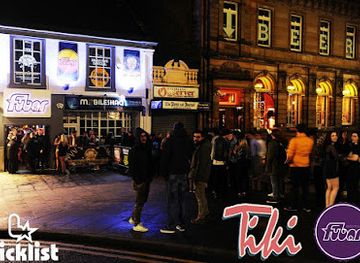
Evening life in Clackmannanshire is centred mainly on traditional pubs, restaurants, community venues and occasional live music rather than a large nightclub circuit. Alloa has the broadest choice, with pubs and bars serving residents, commuters and weekend visitors, while Dollar, Tillicoultry, Alva and Menstrie offer a quieter village and small-town atmosphere. The county’s brewing heritage gives local drinking culture a historical dimension, but visitors do not need to drink alcohol to engage with the region’s evening life; cafés, restaurants, theatre, music and community events are also part of the picture. Nightlife can be seasonal and event-led, and late-night options are more limited outside Alloa. Check current opening arrangements and transport home before spending an evening in a smaller settlement, particularly if staying outside the main towns.
-
Pub
The Bobbing John
Historic Alloa pub with a Victorian charm, named after a local industrial pioneer, offering real ales, hearty food, and a large beer garden.
-
Nightclub
Fubar Nightclub
Energetic Stirling nightclub with diverse music, lively crowds, and a spirited atmosphere in a compact, central venue.
-
Nightclub
City Nightclub
Experience Falkirk’s vibrant nightlife at City Nightclub, the town’s energetic weekend hotspot for music, dancing, and late-night fun.
-
Night Club
XOXO
Central Scotland’s largest nightclub offering vibrant nightlife, pool hall fun, and private event spaces in the heart of Falkirk.



Best shops in Clackmannanshire
Shopping in Clackmannanshire is primarily local and practical, with Alloa providing the broadest choice of high-street shops, supermarkets, cafés and independent services. Smaller towns such as Dollar, Tillicoultry, Alva and Menstrie offer a more limited mix of local retailers, galleries, charity shops and specialist businesses, often best explored alongside a heritage or walking visit. Look for Scottish food products, bakery goods, whisky and craft drinks, books, knitwear, artwork and small handmade items rather than a large luxury-shopping scene. Markets and community events can provide seasonal produce, crafts and second-hand goods, but dates and locations vary, so check locally before travelling. The county’s textile history makes woollen goods and locally made crafts particularly appropriate souvenirs, while Alloa’s brewing heritage gives food-and-drink products a strong regional association. For major retail centres, visitors generally travel beyond Clackmannanshire to larger towns and cities in central Scotland.
-
Shopping outlet
Affinity Sterling Mills Outlet Shopping
Outlet shopping with Ochil Hill views, over 25 brands, free parking, and family-friendly facilities.
-
Shopping Centre
Stirling Arcade
Discover the charm of Victorian elegance and independent shopping in Stirling’s beautifully restored arcade.
-
Discount shop
B&M Home Store with Garden Centre
Affordable home and garden essentials combined in a convenient Alloa retail park location, open daily with extended hours.
-
Hardware Shop
Buick's (Alloa) Ltd
A trusted family-run hardware store in Alloa offering quality tools, DIY supplies, and personalized service for over three generations.


Get your free copy of our complete guide to Clackmannanshire, delivered straight to you.
Everything on this page, from attractions and restaurants to essentials and local phrases, in one PDF you can read offline, print or share.
Already have an account? Sign in
Your Clackmannanshire guide is ready.
We'll send it to · Not you? Sign out

Getting your guide ready…
We are putting together a fresh copy of the Clackmannanshire guide. This can take up to a minute.
This can take a few moments. If your browser asks, choose Allow so the download can start. You'll find the guide in your Downloads folder.
Nothing happened? Download it again
Sorry, the guide is taking longer than usual. Please try again in a minute, or get it by email instead.
Clackmannanshire essentials
Currency and Payment
Safety
Emergency Situations
Do's and Don'ts
Local Tips
From Eve
Local phrases worth knowing
You don't need to get them perfect. A few words go a long way, and locals appreciate the effort.
Basics
| English | Local | Say it |
|---|---|---|
| Hello | Hullo | [huh-loh] |
| Goodbye | Cheerio | [cheer-ee-oh] |
| Yes | Aye | [eye] |
| No | Nae | [nay] |
| Please/You're welcome | Please/Naebody's botherin' | [pleez/nae-bod-eez bother-in'] |
| Thank you | Thanks a lot | [thanks uh lot] |
| Excuse me/Sorry | Excuse me/Sorry | [ex-kyooz mee/sor-ee] |
| How are you? | How's it gaun? | [how's it gon?] |
| Fine. And you? | Aye, awright. An yersel? | [eye, aw-right. an yer-sel?] |
| Do you speak English? | Dae ye speak English? | [day ye speak ing-glish?] |
| I don't understand | Ah dinnae understand | [ah din-ay un-der-stand] |
Eating & Drinking
| English | Local | Say it |
|---|---|---|
| I'd like to see the menu, please | Ah'd like tae see the menu, please | [ahd lik tay see thuh men-yoo, pleez] |
| I don't eat meat | Ah dinnae eat meat | [ah din-ay eet meet] |
| Cheers! | Cheers! | [cheers] |
| I would like to pay, please | Ah'd like tae pay, please | [ahd lik tay pay, pleez] |
Emergencies
| English | Local | Say it |
|---|---|---|
| Help! | Help! | [help] |
| Go away! | Gie us peace! | [gee us peace] |
| Call the Police! | Phone the polis! | [fone thuh poh-lis] |
| Call a doctor! | Phone a doctor! | [fone a dock-tor] |
| I'm lost | Ah'm lost | [ahm lost] |
| I'm ill | Ah'm no well | [ahm no well] |
Shopping
| English | Local | Say it |
|---|---|---|
| I'd like to buy... | Ah'd like tae buy... | [ahd lik tay buy...] |
| I'm just looking | Ah'm just lookin' | [ahm just look-in'] |
| How much is it? | How much's that? | [how much's that?] |
| That's too expensive | That's a bit dear | [that's a bit deer] |
| Can you lower the price? | Can ye lower the price? | [can ye low-er thuh price?] |
Time & Numbers
| English | Local | Say it |
|---|---|---|
| What time is it? | Whit time is it? | [whit time is it?] |
| It's one o'clock | It's one o'clock | [it's won uh-clock] |
| Half past (10) | Half past ten | [half past ten] |
| Morning | Mornin' | [mor-nin'] |
| Afternoon | Afternoon | [af-ter-noon] |
| Evening | Evenin' | [ee-venin'] |
| Yesterday | Yestreen | [yes-treen] |
| Today | Taday | [tuh-day] |
| Tomorrow | Morn's morn | [morn's morn] |
| 1 | 1 | [1] |
| 2 | 2 | [2] |
| 3 | 3 | [3] |
| 4 | 4 | [4] |
| 5 | 5 | [5] |
| 6 | 6 | [6] |
| 7 | 7 | [7] |
| 8 | 8 | [8] |
| 9 | 9 | [9] |
| 10 | 10 | [10] |
Transport & Directions
| English | Local | Say it |
|---|---|---|
| Where's a/the...? | Whar's a/the...? | [whar's a/the...?] |
| What's the address? | Whit’s the address? | [whit’s thuh ad-dress?] |
| Can you show me (on the map)? | Can ye show me (on the map)? | [can ye show mee (on thuh map)?] |
| When's the next (bus)? | When's the next (bus)? | [when's thuh next (bus)?] |
| A ticket (to ....) | A ticket (ta ....) | [a tick-it (ta ....)] |
History of Clackmannanshire
Early Settlement and the Ochil Landscape
The Ochil foothills and the lower Forth valley have attracted settlement for thousands of years because they combine fertile lowland, fresh water, woodland and access to river routes. Evidence for prehistoric activity survives in the wider central Scottish landscape, while later communities used the hills for grazing and the valley floor for cultivation. Clackmannanshire’s later towns developed on this foundation, often beside burns or transport routes descending from the Ochils. The contrast between open farmland, wooded glens and higher hill ground remains an important clue to how people used the county before industrialisation.
Medieval Burghs, Castles and Noble Families
During the medieval period, Clackmannanshire was shaped by aristocratic estates, defended residences and developing burghs. Clackmannan grew around its tower and local market functions, while Dollar became associated with Castle Campbell, originally known as Castle Gloom. Alloa’s tower and estate were linked to the Erskines, Earls of Mar, whose influence extended well beyond the county. These buildings were not isolated monuments: they controlled land, reflected political alliances and connected local communities to the wider power structures of the Scottish kingdom.
The Reformation and Early Modern Change
The religious and political upheavals of sixteenth- and seventeenth-century Scotland affected Clackmannanshire as they did other parts of the country. Castle Campbell became an important Campbell residence, while the Erskine family at Alloa remained prominent in national affairs. The area’s churches, tower houses and estate landscapes record a period when family allegiance, Protestant reform and royal politics were closely connected. The later decline of some fortified residences also reflects changing military technology and the growing preference among wealthy families for more comfortable, less defensive houses.
The River Forth, Port Trade and Alloa
Alloa’s position close to the River Forth encouraged trade, shipping and industrial growth. Its port handled goods moving between central Scotland and wider markets, while the river connected the town to other settlements around the Forth estuary. Navigation depended on changing channels and tides, but the location remained valuable for commerce. Coal, grain, timber and manufactured goods all formed part of the region’s economic story at different times. Alloa’s river-related development helped turn it from a small burgh into the county’s principal commercial centre.
Textiles and the Ochil Watercourses
From the eighteenth century, the streams flowing from the Ochils powered textile production in Tillicoultry, Alva and neighbouring settlements. Woollen manufacture, spinning and weaving became major employers, and the industry influenced housing, roads and the shape of the towns. Water power was later supplemented by steam and other forms of industrial energy, allowing production to expand and adapt. Much of the industry has disappeared or changed character, but former mills, workers’ housing and the burns running through the foothill settlements preserve the physical memory of this period.
Coal, Brewing and Industrial Expansion
Coal mining became another important part of Clackmannanshire’s economy, supplying local industry and contributing to wider energy networks. At the same time, Alloa developed a substantial brewing tradition, supported by water supplies, agricultural connections and access to transport. Brewing and related trades helped give the town a national commercial profile, while mining shaped communities across the county. Industrial expansion brought employment and prosperity for some, but also difficult working conditions, environmental change and dependence on industries vulnerable to technological and economic shifts.
Deindustrialisation and a New Regional Role
During the twentieth century, textile production, mining, port activity and large-scale brewing declined or were transformed. Clackmannanshire responded by developing a more diversified economy, with services, small businesses, manufacturing and commuting links to Stirling, the Forth corridor and larger Scottish cities. Former industrial landscapes have increasingly been interpreted as heritage, while reservoirs, glens and hill paths have gained importance for recreation. The modern county therefore combines the built evidence of industrial Scotland with a contemporary role as a compact residential, cultural and countryside region.
Clackmannanshire in Photos
Browse through our photo collection highlighting the charm and character of the destination.
Neighbouring regions of Clackmannanshire
The closest regions to Clackmannanshire, if you have time for more than one.
-

-
-

-

-


Swipe for more regions
Explore more

Explore more of United Kingdom
Discover the United Kingdom: A blend of rich history, stunning landscapes, and vibrant cities, offering a unique travel experience for every visitor.
Explore United Kingdom