Blackfriars Chapel, St Andrews: A Tranquil Medieval Ruin in the Heart of the City
Discover the serene ruins of Blackfriars Chapel, a unique 16th-century Dominican friary remnant blending Scottish and Dutch medieval architecture in St Andrews.
A Legacy of Dominican Scholarship and Devotion
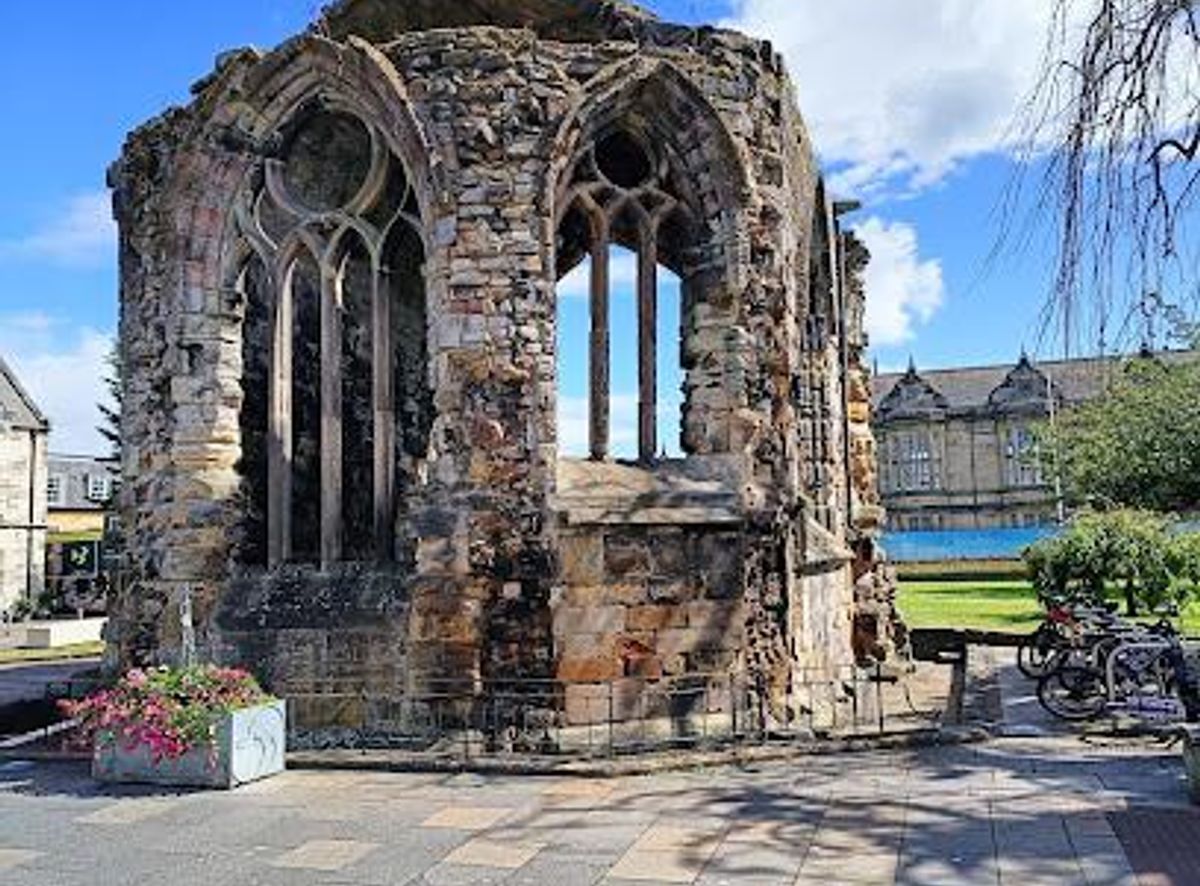
Blackfriars Chapel is the sole surviving fragment of the Dominican friary of St Mary, established in St Andrews around 1464. Initially home to just two friars, the friary flourished in the early 16th century thanks to a generous bequest from William Elphinstone, Bishop of Aberdeen and a key religious figure. His legacy funded the construction of a new friary building beginning in 1516 and supported the maintenance of five friars dedicated to preaching, teaching, and scholarship. The chapel itself was built in 1525 as an addition to the original church, uniquely extending ten feet onto South Street due to space constraints within the friary grounds.Architectural Distinctiveness and Artistic Details
The chapel’s polygonal plan and large windows with intricate tracery showcase a striking blend of Scottish and Dutch influences. The window designs, featuring simple loop-like forms, echo the brick architecture of the Low Countries, reflecting the Dominican order’s reform connections with Holland around 1510. The stone-vaulted ceiling is characteristically Scottish, adorned with carved bosses symbolizing Christ’s Passion and the Hepburn family arms, honoring Dean George Hepburn who oversaw the chapel’s construction. This fusion of styles makes Blackfriars Chapel architecturally unique among Scotland’s medieval religious sites.The Turbulence of the Reformation and Survival as a Ruin
The friary’s flourishing was abruptly ended during the Scottish Reformation. In June 1559, Protestant reformers violently expelled the friars and destroyed much of the friary complex. Blackfriars Chapel was left in ruins, the only visible remnant of the once extensive religious establishment. Despite its ruinous state, the chapel remains a poignant symbol of the religious upheavals of the 16th century and the enduring legacy of the Dominican friars in St Andrews.Setting and Atmosphere in Contemporary St Andrews
Today, Blackfriars Chapel stands quietly on South Street, nestled amid the bustle of a busy urban environment near Madras College. The ruins occupy a small park-like area, offering a tranquil contrast to the surrounding streets. Its atmospheric stone walls and window openings invite reflection on the layers of history embedded in the site. The chapel’s presence enriches the historic fabric of St Andrews, complementing nearby landmarks such as the cathedral and castle.Historical Significance and Cultural Heritage
As one of the few surviving Dominican friary remains in Scotland, Blackfriars Chapel holds significant cultural and historical value. It represents the Dominican order’s role in medieval Scottish religious life, education, and diplomacy, linked to figures like William Elphinstone. The chapel’s architecture also illustrates the cross-cultural influences between Scotland and continental Europe during the late Middle Ages. Managed by Historic Environment Scotland since 1911, the site is preserved as a protected monument, accessible to those interested in Scotland’s ecclesiastical past.Visitor Experience and Interpretation
Visitors to Blackfriars Chapel can explore the evocative ruins at their own pace, appreciating the craftsmanship of the stonework and the chapel’s distinctive form. Informational boards provide historical context, enhancing understanding of the friary’s foundation, its destruction, and the chapel’s architectural features. The site is especially atmospheric at dusk when lighting accentuates the ruins. While modest in scale, Blackfriars Chapel offers a compelling window into St Andrews’ medieval heritage and the dramatic religious transformations of the 16th century.Local tips
- Visit during daylight hours to fully appreciate the chapel’s architectural details and tranquil atmosphere.
- Combine your visit with nearby historic sites like St Andrews Cathedral and Castle for a comprehensive medieval experience.
- Bring a camera to capture the chapel’s distinctive polygonal shape and large traceried windows.
- Read the onsite information boards to understand the chapel’s history and its role in the Reformation.
A brief summary to Blackfriars Chapel
- South St, St Andrews, GB
- Visit website
- Monday 12 am-12 am
- Tuesday 12 am-12 am
- Wednesday 12 am-12 am
- Thursday 12 am-12 am
- Friday 12 am-12 am
- Saturday 12 am-12 am
- Sunday 12 am-12 am
Getting There
-
Bus
Local bus services connect St Andrews town center with stops near South Street. The journey from the railway station takes about 10-15 minutes. Buses run frequently during the day with fares around £2-£4.
-
Walking
If you are already in central St Andrews, Blackfriars Chapel is accessible on foot within 10-15 minutes from the main shopping areas. The route is along paved streets and suitable for most mobility levels.
-
Taxi
Taxis are readily available in St Andrews and can reach Blackfriars Chapel within 5-10 minutes from most town locations. Typical fares range from £5 to £10 depending on distance and time of day.