
Llawhaden Castle, Dyfed Travel Guide
Explore the atmospheric ruins of a fortified bishop’s palace with panoramic views over Pembrokeshire’s serene countryside.
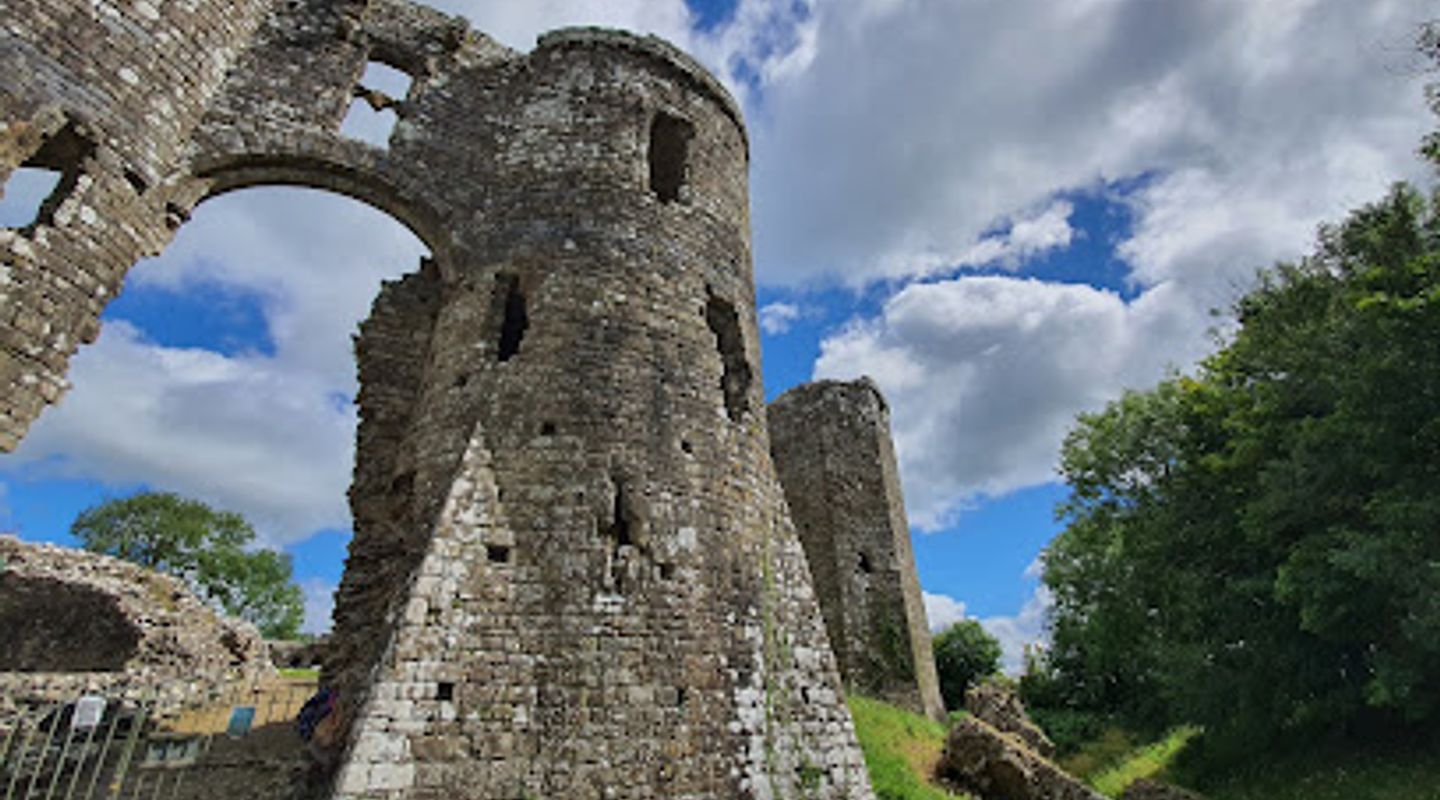
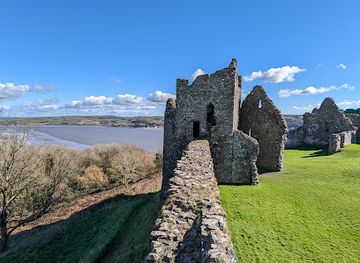
Llawhaden Castle, perched on Tal-Y-Bont Hill near Narberth in Pembrokeshire, Wales, is a striking medieval ruin that served as a fortified residence for the Bishops of St Davids. Known for its impressive twin-towered gatehouse, chapel, and panoramic views over the Vale of the Eastern Cleddau, the castle offers visitors a free, atmospheric glimpse into Welsh history amid tranquil countryside surroundings.
A brief summary to Llawhaden Castle
- Tal-Y-Bont Hill, Narberth, Llawhaden, SA67 8HL, GB
- Click to display
- Duration: 1 to 2.5 hours
- Free
-
 Outdoor
- Mobile reception: 4 out of 5
- Monday 10 am-4 pm
- Tuesday 10 am-4 pm
- Wednesday 10 am-4 pm
- Thursday 10 am-4 pm
- Friday 10 am-4 pm
- Saturday 10 am-4 pm
- Sunday 10 am-4 pm

Know before you go
Hi, I'm Eve. Here are a few practical things to know before exploring Llawhaden Castle.
- Visit on weekdays or weekday afternoons for a quieter experience with easier parking.
- Wear sturdy shoes as some paths and steps can be uneven or slippery, especially when wet.
- Bring a picnic to enjoy on the grassy grounds while soaking in the scenic views.
- Dogs on short leads are welcome on the ground floor areas of the castle.
- Limited parking is available near the castle; arrive early to secure a spot.
Do you manage this location?
Take control to get all the benefits, like improved information, better appearance, and stronger visibility across AI-powered discovery. Learn more about listing your business on Evendo
Activate your presenceOther nearby places you may find interesting
The closest places of the same kind, if this one is not quite what you had in mind.
Explore Llawhaden Castle on the Map
A handpicked selection of must-see spots near Llawhaden Castle, mapped for you.
Getting There
-
Car
Driving to Llawhaden Castle from Narberth takes about 10 to 15 minutes via the A478 and B4314 roads. Limited free parking with approximately five spaces is available near the castle. Roads are paved but narrow; parking fills early on busy days.
-
Public Transport
Take a train to Narberth Station, then a local bus or taxi to Llawhaden. Bus services are infrequent, so check schedules in advance. The bus fare ranges from £2 to £5. From Llawhaden village, the castle is a short walk.
-
Walking
From Narberth town center, a scenic 40-minute walk of about 2 miles leads to Llawhaden Castle along country lanes and minor roads. The terrain is mostly flat but includes some uneven surfaces.
For the on-the-go comforts that matter to you
-
 Parking
-
 Information Boards
-
 Seating Areas
-
 Trash Bins
Discover more about Llawhaden Castle
A Noble Residence with a Turbulent Past
Llawhaden Castle began as an earth and timber fortification in the 12th century, built by Norman Bishop Bernard. It evolved through the centuries into a fortified bishop’s palace, reflecting the power and wealth of the Bishops of St Davids. The castle’s stone defenses were strengthened after a siege by the Welsh Lord Rhys in the late 12th century. Bishop Thomas Bek expanded the castle and founded the village of Llawhaden in the late 13th century. The 14th century saw the addition of the iconic twin-towered gatehouse and other grand features, including private apartments, a courtyard, and lodgings for guests and garrison troops.Architectural Highlights and Ruins to Explore
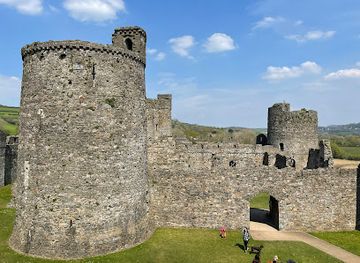
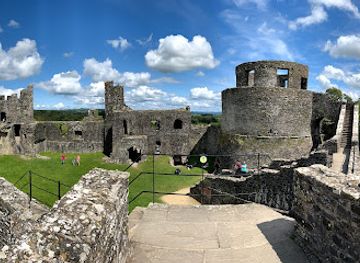
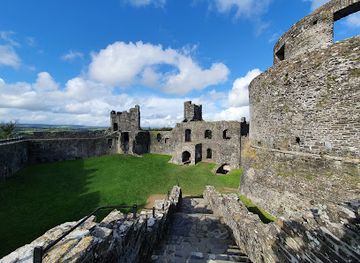
Visitors can explore the castle’s well-preserved remains, including the imposing twin-towered gatehouse that still stands to its full height, polygonal towers, and sections of the curtain wall. The castle’s chapel features arched windows and a cruciform ceiling, while the five-storied tower-porch offers sweeping views of the surrounding countryside. The outer south wall is notably intact and includes a modern staircase that allows access to the battlements. Though the castle was abandoned after the 16th century Dissolution of the Monasteries, its ruins retain a stately presence and invite imaginative exploration.Setting and Scenic Surroundings
Situated on elevated ground overlooking the Vale of the Eastern Cleddau River, Llawhaden Castle commands panoramic views across the lush Pembrokeshire landscape. The site’s grassy grounds and largely flat internal areas make for a peaceful visit, with the natural beauty of the Welsh countryside providing a tranquil backdrop to the historic ruins. The castle’s location on Tal-Y-Bont Hill enhances its dramatic silhouette against the skyline, especially during sunrise and sunset.Visitor Experience and Practical Information
Llawhaden Castle is open daily from 10am to 4pm throughout the year, except for Christmas and New Year holidays. Entry is free, making it an accessible destination for history enthusiasts and casual visitors alike. The terrain is generally easy, though some paths can be uneven or slippery when wet, so sturdy footwear is recommended. Limited parking is available near the castle, with approximately five spaces within 250 meters. Dogs on short leads are welcome on ground floor levels. There are no visitor facilities such as shops, cafes, or restrooms on site, so visitors should plan accordingly.Historical Anecdotes and Legacy
Llawhaden Castle was once a prison in the 15th century and was fortified against Owain Glyndŵr’s 1402 rebellion. Though a license to demolish the fortress was granted in 1616, it was never carried out, allowing the ruins to survive. Today, the castle is managed by Cadw, the Welsh historic buildings agency, preserving this evocative monument as a window into medieval ecclesiastical power and Pembrokeshire’s rich heritage.Imaginative Exploration and Cultural Significance
The castle’s atmospheric ruins inspire visitors to imagine the lives of bishops, soldiers, and villagers who once inhabited this fortified palace. Its blend of residential comfort and defensive strength makes it unique among Welsh castles. The site’s peaceful setting encourages reflection on the passage of time and the layered history embedded in its stone walls, making Llawhaden Castle a memorable cultural landmark in Wales.












Your all‑in‑one travel companion app
Explore expert travel guides, compare and book tours, experiences, hotels, and more—all from the palm of your hand. Download now for seamless trip planning wherever your wanderlust takes you.


Explore More of Dyfed
Looking beyond Llawhaden Castle? Discover Dyfed for broader travel guides, local hot-spots, and regional highlights.
Explore Dyfed
Explore 35 acres of historic gardens, rare trees, and inspiring sculptures surrounding a Norman castle in tranquil Pembroke Dock.

A vibrant family farm adventure with frisbee golf, crazy golf, and playful animal encounters in picturesque Pembrokeshire countryside.
