

Free Dyfed Travel Guide & Mobile App
Explore Dyfed with free travel guides. Discover regional history, expert tips, proposed trips, and audio guides on web or mobile app.


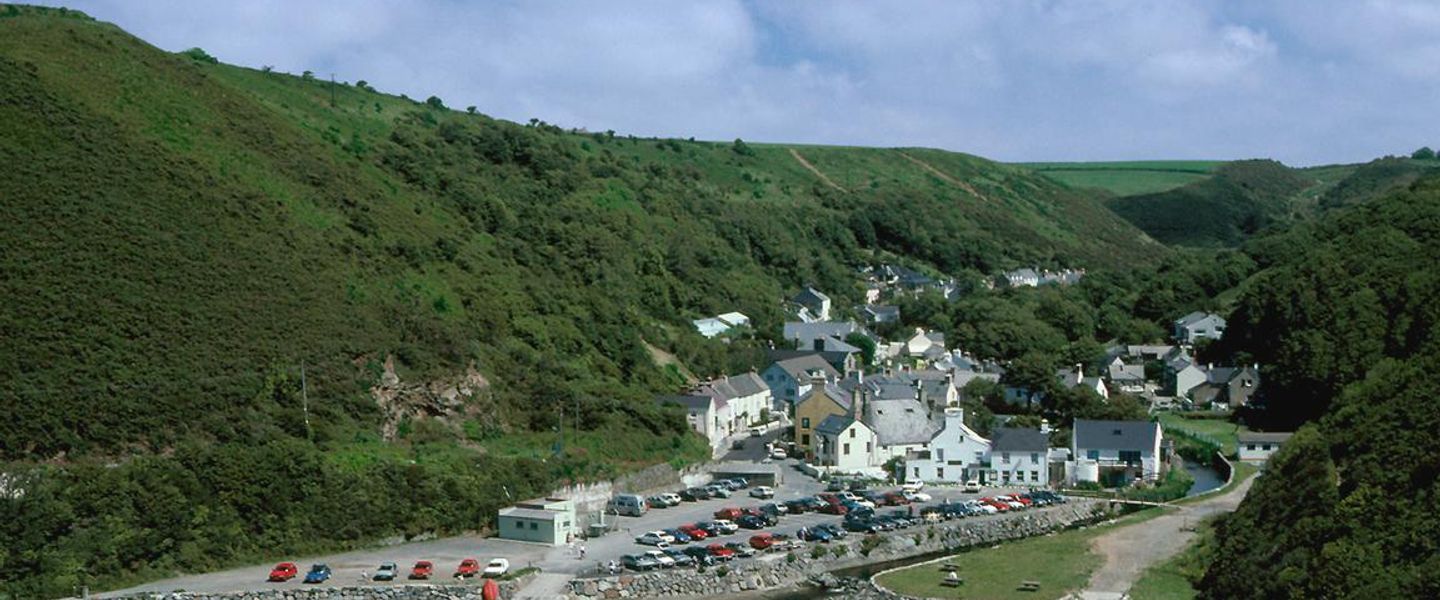


Explore Dyfed in south-west Wales for Pembrokeshire coast walks, Ceredigion beaches, Carmarthenshire castles, Welsh culture and rural landscapes.
Read more about Dyfed
When is the best time to visit Dyfed?
Best: June–August · 20–22°C| Month | High (°C) | Rainfall (mm) |
|---|---|---|
| January | 9 | 100 |
| February | 9 | 80 |
| March | 11 | 90 |
| April | 14 | 70 |
| May | 16 | 70 |
| June (best) | 20 | 70 |
| July (best) | 22 | 80 |
| August (best) | 21 | 80 |
| September | 18 | 80 |
| October | 14 | 100 |
| November | 10 | 100 |
| December | 8 | 100 |
Getting to and around Dyfed
How to get there
Transportation
Top city travel guides in Dyfed
The cities of Dyfed, and the easiest places to base yourself.

Swipe for more cities
Destinations in Dyfed
Resorts, valleys and scenic spots worth a trip of their own.
-

-


Swipe for more destinations
Best attractions in Dyfed
Dyfed's attractions range from Atlantic coastline to inland heritage. Pembrokeshire Coast National Park provides the region's defining outdoor experience, with long-distance walking, beaches, sea cliffs, boat trips and wildlife watching around headlands and offshore islands. St Davids Cathedral, the ruins of nearby Bishop's Palace and the medieval walls of Tenby add a strong historical dimension. In Carmarthenshire, visitors can explore the gardens at National Botanic Garden of Wales, the country house and parkland of Dinefwr, and the landscapes associated with Laugharne and Dylan Thomas. Ceredigion offers the seafront and cultural institutions of Aberystwyth, the harbour and castle remains at Cardigan, beaches along Cardigan Bay and rural heritage in the Teifi valley. Across the region, castles, prehistoric monuments, woollen mills, farm attractions and forest paths provide variety. Outdoor activities are shaped by the coast and countryside: walking, cycling, surfing, kayaking, horse riding and wildlife observation are all possible, but conditions and access differ widely between exposed shorelines, managed gardens and remote upland routes.
-
National park
Eryri National Park (Snowdonia)
Explore Wales’ largest national park with majestic peaks, rich heritage, and tranquil dark skies in the heart of Snowdonia.
-
National park
Pembrokeshire Coast National Park
Explore Britain’s only coastal national park, where rugged cliffs, golden beaches, and vibrant wildlife create a stunning outdoor playground.
-
History museum
St. Fagans National Museum of History
Explore Wales’s rich heritage through historic buildings, crafts, and scenic parkland at this leading open-air museum near Cardiff.
-
 National museum
National Museum Cardiff
Discover Wales’s national treasure trove of art, natural history, and heritage in the heart of Cardiff’s elegant civic centre.
Best landmarks in Dyfed
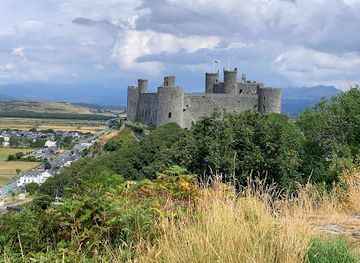
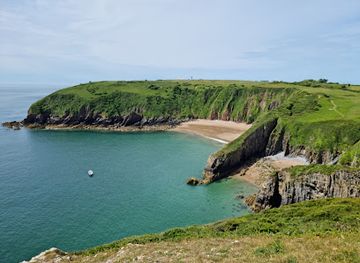
The most recognisable landmark in Dyfed is St Davids Cathedral, whose scale and setting reflect the international importance of medieval pilgrimage on the western peninsula. Nearby Bishop's Palace adds a dramatic ecclesiastical ruin, while Pembroke Castle rises above a tidal waterway and is closely linked with the medieval March and the birth of Henry VII. Tenby's town walls and harbour preserve the outline of a fortified medieval port. Inland, Dinefwr Castle stands above the Towy valley as a reminder of the Welsh kingdom of Deheubarth, and Carreg Cennen Castle occupies a striking limestone position near the Carmarthenshire uplands. Pentre Ifan is one of the region's most evocative prehistoric monuments, formed from enormous stones in the Preseli landscape. Aberystwyth Pier and its hilltop castle express a later, Victorian and university-era identity, while the long curve of Cardigan Bay and the cliffs of the Pembrokeshire coast provide natural landmarks whose appearance changes with weather, light and tide.
-
Cathedral
St Davids Cathedral
Explore St Davids Cathedral, a majestic spiritual landmark with centuries of history, stunning architecture, and a serene atmosphere in Wales’ smallest city.
-
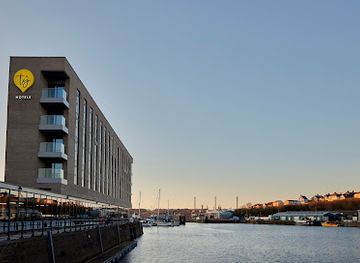
Hotel
Tŷ Milford Waterfront
Modern nautical charm meets stunning marina views at Tŷ Milford Waterfront, a stylish family-friendly hotel in scenic Milford Haven.
-
Hotel
Imperial Hotel, Tenby
Historic hotel on Tenby’s ancient walls with stunning sea views, modern comforts, and a vibrant seaside dining experience.
-
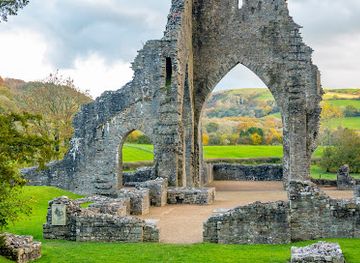
Tourist attraction
Talley Abbey
Wales' only Premonstratensian abbey, where medieval ambition meets lakeside serenity.

Explore Dyfed on the map
Plan your trip on one map. See where the top cities, national parks and sights are, and book hotels and experiences in a few clicks.
Best hotels in Dyfed
Best restaurants in Dyfed
Dining in Dyfed reflects both land and sea. Pembrokeshire and Cardigan Bay provide opportunities to eat locally caught fish and shellfish, while Carmarthenshire's farms contribute Welsh lamb, beef, vegetables, dairy products and fruit. Welsh cakes, bara brith and laverbread are widely associated with Welsh food culture, and Pembrokeshire potatoes and Ceredigion cheeses are useful regional specialities to look for in shops, cafés and menus. Market towns offer bakeries, cafés, pubs and practical lunch stops, while coastal towns combine seafood restaurants with informal places serving contemporary Welsh cooking. Rural inns and farm shops often foreground seasonal produce, and farmers' markets are especially useful for cheese, preserves, bread and cider. Dining choices become more limited in small villages outside peak periods, so reservations or an earlier meal can be sensible when staying in remote areas. Menus may appear in Welsh and English, reflecting the region's bilingual cultural setting.
-
Pizza
Pizzatipi
Rustic wood-fired pizzas served riverside under a giant tipi in the heart of Cardigan.
-
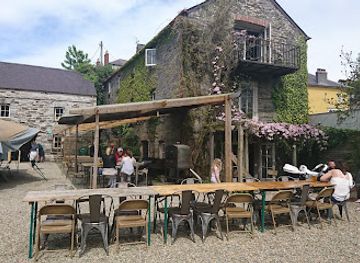
Gastropub
The Ferry Inn
Scenic riverside gastropub in St Dogmaels offering fresh local seafood, hearty British fare, and a warm, family-friendly atmosphere.
-
Italian
Florentino's
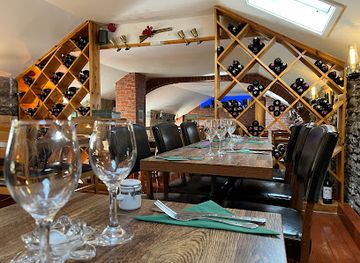
Experience authentic Italian flavors and warm rustic charm in Carmarthen’s historic Florentino's, featuring homemade pasta and wood-fired pizzas.
-
Family friendly
Harvester St Catherines Walk
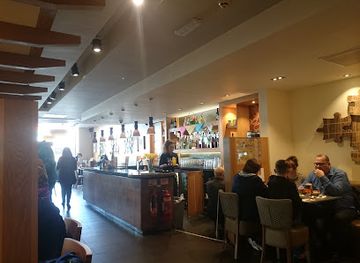
Family-friendly British grill restaurant in Carmarthen with fresh food, unlimited salad bar, and a welcoming atmosphere in St Catherine's Walk.
Best bars in Dyfed
Evening life in Dyfed is generally centred on traditional pubs, hotel bars, restaurants, live music and community venues rather than a dense nightclub scene. Aberystwyth has the broadest late-evening choice because of its university population, with pubs, bars and performance spaces concentrated around the town centre and seafront. Carmarthen, Haverfordwest, Tenby and Cardigan also offer pubs, cafés and occasional live entertainment, while coastal resorts become busier during summer. In smaller villages, the local pub may be the principal social venue, and rural evenings are usually quieter than those in the larger towns. Breweries, cider producers and occasional tasting events add interest for visitors seeking regional drinks, but availability varies. Check transport before going out in the countryside, as late buses are limited and walking along unlit rural roads is not advisable.
-
Bar
Wisemans Bridge Inn
Traditional Welsh coastal inn with a unique sitting room bar, beachside charm, and warm hospitality in the heart of Wisemans Bridge.
-
Pub
Sloop Inn
Historic seaside pub in Porthgain offering hearty Welsh fare, local ales, and a cozy harbor-side atmosphere.
-
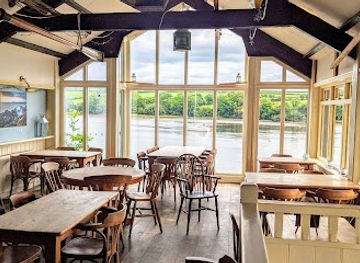
Gastropub
The Ferry Inn
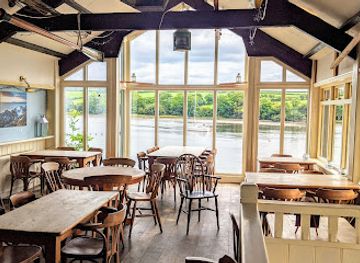
Charming riverside gastropub in St Dogmaels offering fresh local cuisine, craft beers, and scenic views over the River Teifi.
-
Pub
Y Cerrig Glas
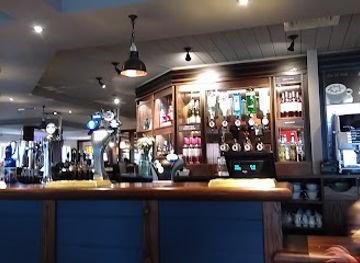
A family-friendly pub in Pembroke Dock offering classic British dishes, play areas for kids, and a welcoming atmosphere for all ages.


Best nightclubs in Dyfed
Evening life in Dyfed is generally centred on traditional pubs, hotel bars, restaurants, live music and community venues rather than a dense nightclub scene. Aberystwyth has the broadest late-evening choice because of its university population, with pubs, bars and performance spaces concentrated around the town centre and seafront. Carmarthen, Haverfordwest, Tenby and Cardigan also offer pubs, cafés and occasional live entertainment, while coastal resorts become busier during summer. In smaller villages, the local pub may be the principal social venue, and rural evenings are usually quieter than those in the larger towns. Breweries, cider producers and occasional tasting events add interest for visitors seeking regional drinks, but availability varies. Check transport before going out in the countryside, as late buses are limited and walking along unlit rural roads is not advisable.
-
Nightclub
The Gremlin Club
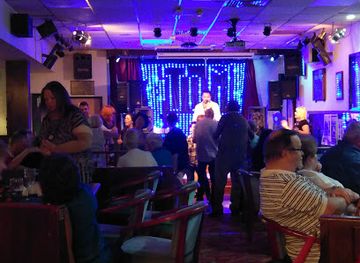
Vibrant nightlife and lively open mic nights in the heart of Carmarthen’s social scene.
-
Nightclub
Eddie Rocks
A lively multi-floor nightclub in Haverfordwest offering diverse music, vibrant atmosphere, and a safe, welcoming space for nightlife enthusiasts.
-
Nightclub
Pier Pressure
Aberystwyth’s historic Royal Pier offers lively nightlife, family fun, and stunning coastal views all year round.
-
Nightclub
Sands Nightclub
Experience Saundersfoot’s vibrant nightlife at Sands Nightclub, the town’s energetic hub for music, dancing, and socializing.



Best shops in Dyfed
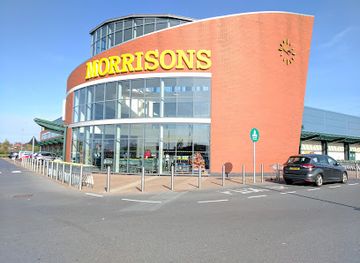
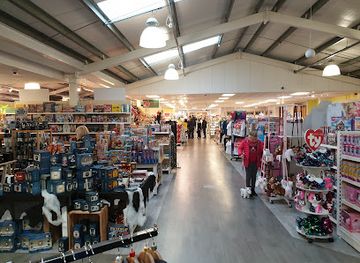
Shopping in Dyfed is strongest in its market towns, where independent butchers, bakeries, bookshops, galleries, cafés and practical high-street businesses serve local communities. Carmarthen is the largest general shopping centre in the region, while Aberystwyth combines university-town retail with Welsh books, music, crafts and seafront shops. Cardigan has a particularly strong association with independent businesses, galleries and the creative economy of the Teifi valley; Tenby and St Davids offer seasonal coastal retail, art and locally themed gifts. Farm shops and town markets are good places to buy Welsh cheese, preserves, honey, bread, cider and other produce. Look for woollen goods, ceramics, woodwork, prints and handmade jewellery when seeking a more regional souvenir, although quality and provenance vary. Rural shopping hours can be limited outside the main towns, and seasonal markets or temporary craft fairs should be checked locally rather than assumed to operate year-round.
-
Shopping Centre
Parc Pemberton Retail Park
Llanelli’s vibrant retail park offering leading brands, leisure spots, and easy access near Parc Y Scarlets stadium.
-
Department store
Vincent Davies
A traditional Welsh department store with a café, furniture, clothing, and homewares – a one-stop shop in Haverfordwest.
-
Shopping Centre
Withybush Retail Park
A vibrant shopping destination in Haverfordwest offering diverse stores, dining, and free parking for a convenient retail experience.
-
Market
Cardigan Guildhall Market
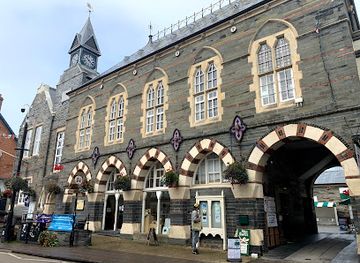
A historic Gothic Revival market in Cardigan offering diverse local crafts, food, and culture across two lively floors.

Get your free copy of our complete guide to Dyfed, delivered straight to you.
Everything on this page, from attractions and restaurants to essentials and local phrases, in one PDF you can read offline, print or share.
Already have an account? Sign in
Your Dyfed guide is ready.
We'll send it to · Not you? Sign out

Getting your guide ready…
We are putting together a fresh copy of the Dyfed guide. This can take up to a minute.
This can take a few moments. If your browser asks, choose Allow so the download can start. You'll find the guide in your Downloads folder.
Nothing happened? Download it again
Sorry, the guide is taking longer than usual. Please try again in a minute, or get it by email instead.
Dyfed essentials
Currency and Payment
Safety
Emergency Situations
Do's and Don'ts
Local Tips
From Eve
Local phrases worth knowing
You don't need to get them perfect. A few words go a long way, and locals appreciate the effort.
Basics
| English | Local | Say it |
|---|---|---|
| Hello | Shwmae | [shoo-my] |
| Goodbye | Hwyl fawr | [hoyl vowr] |
| Yes | Ie | [yay] |
| No | Nac ydw | [nak uh-doo] |
| Please/You're welcome | Os gwelwch yn dda | [oss gwell-ookh un thah] |
| Thank you | Diolch | [dee-olkh] |
| Excuse me/Sorry | Mae'n ddrwg gennyf | [mine droog gen-iv] |
| How are you? | Sut wyt ti? | [sit weet tee] |
| Fine. And you? | Iawn. A ti? | [ee-own. Ah tee] |
| Do you speak English? | Ydych chi'n siarad Saesneg? | [uh-dikh chee-un sha-rad sighs-neg] |
| I don't understand | Dydw i ddim yn deall | [dih-doo ee dim un deh-al] |
Eating & Drinking
| English | Local | Say it |
|---|---|---|
| I'd like to see the menu, please | Hoffwn i weld y fwydlen, os gwelwch yn dda | [hoff-oon ee weld uh voo-id-len, oss gwell-ookh un thah] |
| I don't eat meat | Dydw i ddim yn bwyta cig | [dih-doo ee dim un boo-ee-ta keeg] |
| Cheers! | Iechyd da! | [yeh-kid dah] |
| I would like to pay, please | Hoffwn i dalu, os gwelwch yn dda | [hoffen ee tal-ee, oss gwell-ookh un thah] |
Emergencies
| English | Local | Say it |
|---|---|---|
| Help! | Help! | [help] |
| Go away! | Dewch yma! | [day-ooch um-ah] |
| Call the Police! | Galw'r Heddlu! | [gahl-oor heth-lee] |
| Call a doctor! | Galw meddyg! | [gahl-oo meth-ig] |
| I'm lost | Dwi wedi colli | [dwee weh-dee koh-lee] |
| I'm ill | Dwi'n sâl | [dwee-un sahl] |
Shopping
| English | Local | Say it |
|---|---|---|
| I'd like to buy... | Hoffwn i brynu... | [hoffen ee brin-ee] |
| I'm just looking | Dydw i'n edrych yn unig | [dih-doo een ed-rikh un een-ig] |
| How much is it? | Faint mae'n costio? | [vint mine cost-ee-o] |
| That's too expensive | Mae hynny'n rhy drud | [my hun-nee un ree drid] |
| Can you lower the price? | Gallech chi leihau'r pris? | [gall-eck chee lay-hy-ahr prees] |
Time & Numbers
| English | Local | Say it |
|---|---|---|
| What time is it? | Faint ydy hi? | [vint uh-dee hee] |
| It's one o'clock | Mae hi'n un o'r gloch | [my heen un or gloch] |
| Half past (10) | Hanner awr (10) | [han-er ow-er (10)] |
| Morning | Bore | [bor-eh] |
| Afternoon | Prynhawn | [prin-hawn] |
| Evening | Noswaith | [nos-wythe] |
| Yesterday | Ddoe | [thoy] |
| Today | Heddiw | [hed-ee] |
| Tomorrow | Yfory | [uh-vor-ee] |
| 1 | Un | [een] |
| 2 | Dau | [die] |
| 3 | Tri | [tree] |
| 4 | Pedwar | [ped-war] |
| 5 | Pump | [pimp] |
| 6 | Chwech | [khwehkh] |
| 7 | Saith | [sighth] |
| 8 | Wyth | [weeth] |
| 9 | Naw | [now] |
| 10 | Deg | [deg] |
Transport & Directions
| English | Local | Say it |
|---|---|---|
| Where's a/the...? | Ble mae'r...? | [blay my-are] |
| What's the address? | Beth yw'r cyfeiriad? | [beth yoo-are kuh-very-ad] |
| Can you show me (on the map)? | Allwch chi fy arddangos (ar y map)? | [ahl-leek chee veh ar-ghang-oss (ar uh map)] |
| When's the next (bus)? | Pryd mae'r (bws) nesaf? | [preed my-are (boos) ness-af] |
| A ticket (to ....) | Tocyn (i....) | [tok-in (ee....)] |
History of Dyfed
Prehistoric monuments and the Preseli bluestones
Dyfed contains an exceptional concentration of prehistoric monuments, including chambered tombs, standing stones, stone circles and defended hillforts. The Preseli Hills in Pembrokeshire are particularly important because geological evidence links their bluestones with the Stonehenge monument in Wiltshire, although the precise movement and purpose of the stones remain subjects of research. Sites such as Pentre Ifan, one of Wales's best-known Neolithic burial chambers, reveal the sophistication of communities living in the region thousands of years ago. Their legacy is visible across upland ridges and farming landscapes rather than in a single archaeological centre.
Roman Wales and the road network
Roman influence reached south-west Wales through military occupation, roads, forts and administrative settlements. The fort at Llandovery, known as Alabum, helped control routes between the southern valleys and western territory, while the Roman settlement at Carmarthen, Moridunum, became an important regional centre. Roman power did not erase existing communities, and the landscape remained a meeting point between imperial administration and local societies. Archaeological remains, altered road patterns and discoveries in towns such as Carmarthen provide evidence of the region's integration into the wider Roman province of Britannia.
The medieval kingdoms of Deheubarth
Much of modern Dyfed formed the heartland of Deheubarth, a medieval Welsh kingdom whose rulers competed with neighbouring Welsh princes and the Norman lords advancing from the east. King Hywel Dda is traditionally associated with the codification of Welsh law in the tenth century, while later rulers developed centres at places including Dinefwr. Castles, churches and earthworks record centuries of political change. The continuing importance of Welsh law, dynastic power and ecclesiastical institutions helped shape the cultural identity of south-west Wales long after the kingdom itself disappeared.
Pilgrimage, monasteries and the Norman frontier
The western peninsula became an important Christian landscape, with St Davids developing as a major pilgrimage destination associated with Dewi Sant, the patron saint of Wales. The cathedral and earlier ecclesiastical foundations reflect links across the Irish Sea and the broader medieval Christian world. Norman and Marcher authority brought castles and new lordships to parts of the region, including Pembroke and the lands around Carmarthen. The resulting mixture of Welsh religious traditions, Norman fortification and international pilgrimage remains legible in the architecture and settlement pattern of western Dyfed.
The woollen industry and rural trade
From the eighteenth century onwards, the Teifi valley and neighbouring parts of Ceredigion and Carmarthenshire became associated with woollen production. Water-powered mills processed locally produced fleece into blankets, cloth and other textiles, linking rural farms with domestic and overseas markets. The industry encouraged the growth of mill settlements and supported a network of market towns, transport routes and small workshops. Although many mills have closed or changed use, surviving buildings and local craft traditions recall an economy based on sheep farming, water power and skilled textile work.
Industrialisation, coal and harbour towns
Dyfed was less dominated by heavy industry than the South Wales Valleys, but coal, limestone, tinplate, quarrying, agriculture and maritime trade all influenced its development. Llanelli grew through coal and metalworking, while ports and estuaries supported the movement of minerals, agricultural goods and manufactured products. Railways later connected coastal towns and inland communities with national markets, transforming travel and commerce. The industrial past survives in docklands, railway structures, civic buildings and the altered landscapes of the coastal plain, even where traditional industries have declined.
Twentieth-century Welsh cultural life
During the twentieth century, Dyfed remained an important centre of Welsh-language culture, nonconformist religious life, literature, music and education. The expansion of Aberystwyth University helped give Ceredigion an international academic dimension, while local eisteddfodau and choirs continued older traditions of performance and public debate. Writers including Dylan Thomas drew on the landscapes and communities of Carmarthenshire, particularly around Laugharne. Later, the creation of modern local authorities and the growth of national parks and heritage tourism reshaped how the historic county is administered and experienced.
Dyfed in Photos
Browse through our photo collection highlighting the charm and character of the destination.
Neighbouring regions of Dyfed
The closest regions to Dyfed, if you have time for more than one.
-

-

-

-

-


Swipe for more regions
Explore more

Explore more of United Kingdom
Discover the United Kingdom: A blend of rich history, stunning landscapes, and vibrant cities, offering a unique travel experience for every visitor.
Explore United Kingdom