Background

Blackfriars Chapel, St Andrews: A Medieval Dominican Legacy

Discover the haunting ruins of Blackfriars Chapel, a rare medieval Dominican landmark blending Scottish and Dutch Gothic styles in historic St Andrews.

★★★★★4.3 (251)

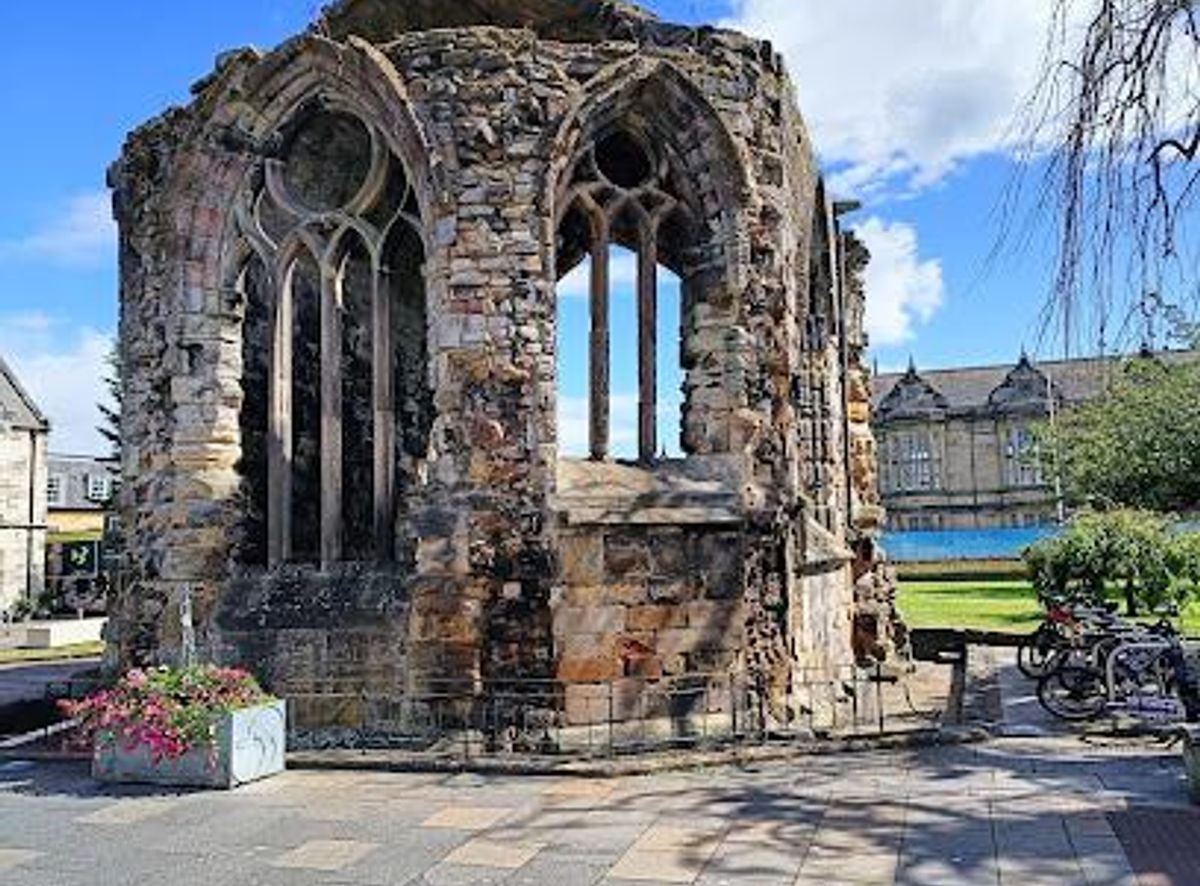
Blackfriars Chapel in St Andrews is the evocative ruin of a 16th-century Dominican friary chapel, built in the 1520s and destroyed during the Scottish Reformation in 1559. This rare surviving fragment of the Dominican presence in Scotland features distinctive Scottish and Low Countries architectural influences and stands on busy South Street as a tranquil historic landmark.

Plan your visit

A brief summary to Blackfriars Chapel

Opening times, essentials, and a few local tips gathered into one calmer, easier-to-scan planning section.

Plan your visit

📍
South St, St Andrews, GB
🕒
Duration: 0.5 to 1 hours
💷
Free
🏛
Outdoor
📶
Mobile reception: 4 out of 5

Explore places near Blackfriars Chapel

    See all →

    Unlock the Best of Blackfriars Chapel

    Find tickets, tours with entry, and experiences available for this location.

    Buy tickets

    No tickets available

    Book tours with entry

    No tours with entry available

    Book tours without entry

    No tours without entry available

    Getting There

    Bus

    Take the Stagecoach bus routes serving St Andrews town center; from the bus stop on South Street, it is a 5-10 minute walk to Blackfriars Chapel. Buses run frequently throughout the day. Tickets cost approximately £1.50–£3.00 depending on the route.

    Walking

    Blackfriars Chapel is centrally located in St Andrews and easily accessible on foot from the town center. Walking from the railway station takes about 20-25 minutes along mostly flat, paved streets.

    Taxi

    Local taxis offer quick access to Blackfriars Chapel from anywhere in St Andrews, typically taking under 5 minutes within town limits. Expect fares around £5-£8.

    For the on-the-go comforts that matter to you

    Information Boards
    Seating Areas
    Trash Bins

    Local tips

    Visit during daylight hours to fully appreciate the intricate stone tracery and carved bosses in natural light.
    Combine your visit with nearby historic sites like St Andrews Cathedral and the Old Course for a rich cultural day.
    Bring a camera for atmospheric photos, especially in soft morning or late afternoon light.
    Read up on the Scottish Reformation to better understand the chapel’s dramatic history and significance.

    Blackfriars Chapel location weather suitability

    Catch the right light and the right mood, whether you want a bright city moment or a more cinematic evening visit.

    Weather icon
    Any Weather
    Weather icon
    Rain / Wet Weather
    Weather icon
    Clear Skies
    Weather icon
    Mild Temperatures

    Discover more about Blackfriars Chapel

    The Origins and Dominican Heritage

    Blackfriars Chapel is the last visible remnant of the Dominican friary of St Mary, established in St Andrews around 1464. The Dominican Order, known as Blackfriars for their black cloaks, were devoted to preaching, teaching, and scholarship, closely linked to medieval universities. Initially a small community of friars, the friary was revitalized through a generous bequest by William Elphinstone, Bishop of Aberdeen, in 1514. This funding enabled the construction of a new convent and chapel, supporting a community of five friars dedicated to religious study and service.

    Architectural Distinctiveness and Dutch Influence

    Constructed around 1525 as an extension to the friary church, the chapel is notable for its polygonal plan and large windows with elaborate tracery. The window designs display a clear Dutch influence, reflecting reforms brought by the Dominican Congregation of Holland around 1510. The chapel’s stone-vaulted ceiling and carved bosses at the rib junctions are characteristically Scottish, featuring religious symbolism and the Hepburn family arms, honoring the dean who oversaw the building work. This blend of Scottish and Low Countries styles makes Blackfriars Chapel architecturally unique among Scottish medieval religious sites.

    The Impact of the Reformation and Subsequent History

    The friary and chapel had a brief period of prominence before the Scottish Reformation dramatically altered their fate. In June 1559, Protestant reformers violently expelled the friars and destroyed much of the friary complex. The chapel itself was partially ruined but remained standing as a fragment of the once extensive religious site. In 1567, Queen Mary granted the property to the burgh of St Andrews. Over the centuries, the chapel ruins have become a historic landmark, preserved under state care since the early 20th century.

    Setting and Visitor Experience Today

    Today, Blackfriars Chapel stands on South Street, adjacent to Madras College and near other historic sites in St Andrews. The ruins offer a peaceful contrast to the bustling street and serve as a tangible connection to the town’s medieval religious past. Visitors can explore the atmospheric remains, appreciate the detailed stonework, and reflect on the turbulent history of Scotland’s Reformation era. The chapel’s location amidst the town’s academic and religious heritage enriches its significance as a cultural and historic site.

    Symbolism and Cultural Significance

    The chapel’s carved bosses and heraldic symbols link it to prominent religious figures such as Dean George Hepburn and Bishop William Elphinstone, underscoring the friary’s importance in ecclesiastical and political history. The Dominican friars’ commitment to education and reform is echoed in the chapel’s architectural features and its survival as a symbol of resilience amid religious upheaval. Blackfriars Chapel remains a poignant reminder of the complex interplay between faith, politics, and community in medieval Scotland.

    Preservation and Legacy

    Despite its ruinous state, Blackfriars Chapel is carefully preserved as a scheduled monument and managed by Historic Environment Scotland. Its survival offers invaluable insight into Dominican monastic life and architecture in Scotland. The chapel continues to inspire interest among historians, architects, and visitors, standing as a testament to St Andrews’ rich spiritual and cultural heritage.

    Plan around the quieter times

    A quick look at seasonal patterns and peak visiting hours.

    Busiest months of the year

    Seasonality

    Busiest hours of the day

    Footfall
    Mobile App
    Get the app

    Your all‑in‑one travel companion app

    Explore expert travel guides, compare and book tours, experiences, hotels, and more—all from the palm of your hand. Download now for seamless trip planning wherever your wanderlust takes you.
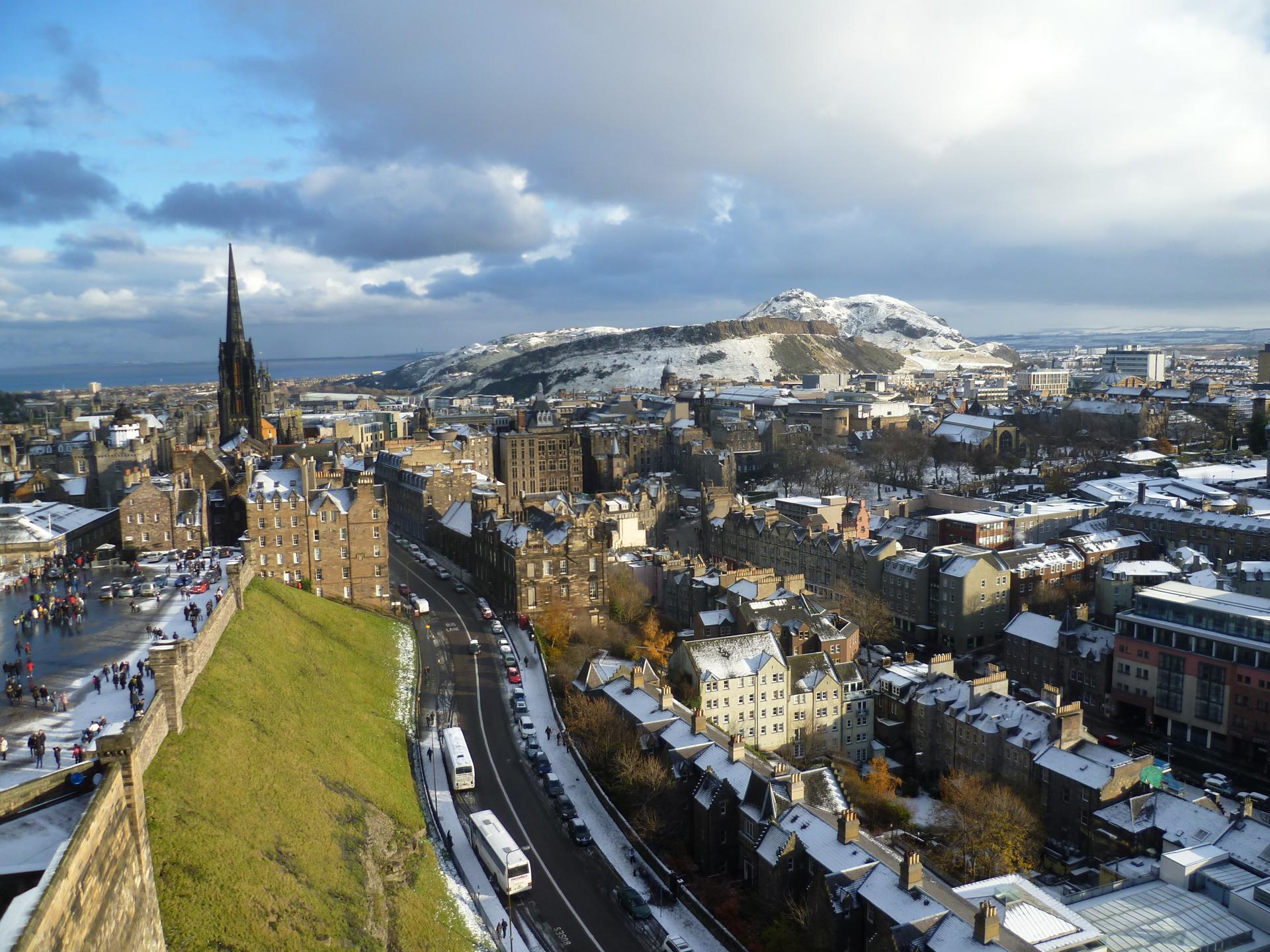
    File:View of Edinburgh from the Palace block of Edinburgh Castle.jpg -  Wikimedia Commons

    More about Edinburgh

    Discover the enchanting blend of history, culture, and natural beauty in Edinburgh, Scotland's captivating capital city.

    Tell me more about Edinburgh

    Select Currency

    Choose the currency you want prices to display in.