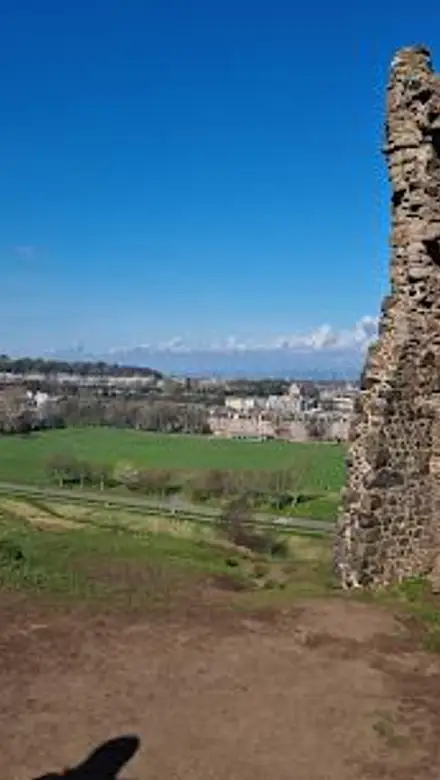
St Anthony's Chapel Ruins, Edinburgh Travel Guide
Explore the mysterious medieval ruins of St Anthony's Chapel, perched high in Holyrood Park with panoramic views over Edinburgh and the Firth of Forth.
St Anthony's Chapel Ruins, perched on a rocky outcrop in Edinburgh's Holyrood Park, are the remains of a medieval chapel dating back to at least the early 15th century. Once a three-storey structure possibly serving pilgrims and sailors, the ruins offer commanding views over St Margaret's Loch and the city beyond. The chapel's origins and purpose remain partly mysterious, intertwined with Holyrood Abbey and local monastic history.
A brief summary to St Anthony's Chapel Ruins
- Holyrood Park, Queen's Dr, Edinburgh, Edinburgh, EH8 8JA, GB
- Click to display
- Duration: 0.5 to 2 hours
- Free
-
 Outdoor
- Mobile reception: 4 out of 5

Know before you go
Hi, I'm Eve. Here are a few practical things to know before exploring St Anthony's Chapel Ruins.
- Wear sturdy footwear as the path to the chapel involves uneven rocky terrain and moderate uphill walking.
- Visit on clear days for the best panoramic views of Edinburgh, Leith, and the River Forth.
- Explore the nearby St Anthony’s Well, a historic holy spring once believed to have healing powers.
- Combine your visit with a walk around Holyrood Park to see other landmarks like Arthur’s Seat and Holyrood Abbey ruins.
Do you manage this location?
Take control to get all the benefits, like improved information, better appearance, and stronger visibility across AI-powered discovery. Learn more about listing your business on Evendo
Activate your presenceOther nearby places you may find interesting
The closest places of the same kind, if this one is not quite what you had in mind.



Explore St Anthony's Chapel Ruins on the Map
A handpicked selection of must-see spots near St Anthony's Chapel Ruins, mapped for you.
Getting There
-
Bus
Take Lothian Buses routes 35 or 36 from Edinburgh city center to Holyrood Park. The journey takes approximately 15-20 minutes. From the nearest stop, expect a 10-15 minute uphill walk on uneven paths to reach the chapel. Buses run frequently but check schedules for evening service.
-
Walking
From the Palace of Holyroodhouse, it is a 20-30 minute walk to St Anthony’s Chapel via Holyrood Park trails. The route includes moderate inclines and rocky terrain, suitable for visitors with reasonable fitness. Wear appropriate footwear for safety.
-
Taxi
A taxi from central Edinburgh to Holyrood Park near the chapel takes about 10 minutes, depending on traffic. This option offers door-to-door convenience but may be limited by park access restrictions and parking availability.
For the on-the-go comforts that matter to you
-
 Restrooms
-
 Drink Options
-
 Food Options
-
 Seating Areas
-
 Information Boards
Discover more about St Anthony's Chapel Ruins
Medieval Origins and Historical Mysteries
St Anthony's Chapel stands as a solitary ruin within Holyrood Park, Edinburgh, its origins shrouded in mystery but dating back to at least the early 1400s. Historical records note a papal grant in 1426 for repairs, indicating the chapel's significance and age. It likely had close ties to Holyrood Abbey, situated just a few hundred meters away, and may have been under the jurisdiction of Kelso Abbey during the 1100s. While exact construction dates remain unclear, the chapel was dedicated to St Anthony of Egypt, the founder of monastic communities, reflecting its religious importance in medieval Scotland.Architectural Features and Layout
Originally, St Anthony's Chapel was a compact yet tall structure, approximately 40 feet high and almost as long as it was tall, with a narrow ground floor space around eight feet wide. The surviving north wall shows signs of vaulting, and the chapel likely featured a three-bay layout with a three-storey tower at its west end. Adjacent to the chapel are remnants of another building, possibly a store room or monastic cell, built into the rocky outcrop. This unusual vertical design suggests the chapel was intended not only for worship but also to be a visible landmark across the landscape.Spiritual and Navigational Significance
The chapel may have served multiple purposes: a place of pilgrimage linked to Holyrood Abbey, a hermitage for monks seeking solitude, and possibly a navigational beacon for sailors approaching the Firth of Forth. It is theorized that fires lit atop the chapel guided ships safely to Leith harbor, reassuring sailors on perilous journeys. Additionally, the chapel's location near St Anthony's Well, a holy spring once believed to have healing properties, enhanced its spiritual draw. Pilgrims visited the site on special days such as St Anthony’s Day, Good Friday, and the Exaltation of the Holy Rood.Decline and Present-Day Ruins
Following the Scottish Reformation in 1560, St Anthony's Chapel fell into disuse and gradually deteriorated. By the 18th century, only parts of the north and west walls remained. The surrounding Holyrood Park, with its rugged terrain and natural beauty, preserves these ruins as a poignant reminder of Edinburgh’s medieval religious heritage. Today, visitors can explore the chapel’s remains perched above St Margaret’s Loch, enjoying panoramic views of the city, the River Forth, and beyond.Holyrood Park’s Natural and Cultural Context
Holyrood Park itself is a royal park featuring diverse landscapes including Arthur’s Seat, an extinct volcano, and several lochs. The park holds traces of prehistoric hill forts and the ruins of Holyrood Abbey, linking St Anthony’s Chapel to a broader historical and natural tapestry. The chapel’s elevated position offers a striking contrast to the lush parkland below, blending cultural heritage with scenic wilderness.Visitor Experience and Accessibility
Accessible to visitors with reasonable fitness, the chapel is reached via historic tracks that once connected it to Holyrood Abbey. The site invites contemplation of Edinburgh’s layered history amid tranquil surroundings. While the ruins are evocative and atmospheric, care should be taken on the rocky terrain. Nearby, remnants of monastic life and the well add depth to the experience, making St Anthony’s Chapel a compelling destination for history enthusiasts and nature lovers alike.More to explore near St Anthony's Chapel Ruins













Your all‑in‑one travel companion app
Explore expert travel guides, compare and book tours, experiences, hotels, and more—all from the palm of your hand. Download now for seamless trip planning wherever your wanderlust takes you.


Explore More of Edinburgh

Looking beyond St Anthony's Chapel Ruins? Discover Edinburgh for broader travel guides, local hot-spots, and regional highlights.
Explore Edinburgh
Explore the Artisan Bar in Edinburgh for a delightful blend of traditional Scottish pub culture and modern bar experiences.

Explore Edinburgh’s historic Holyrood Park through engaging ranger-led education and stunning natural landscapes at the Holyrood Park Education Centre.