
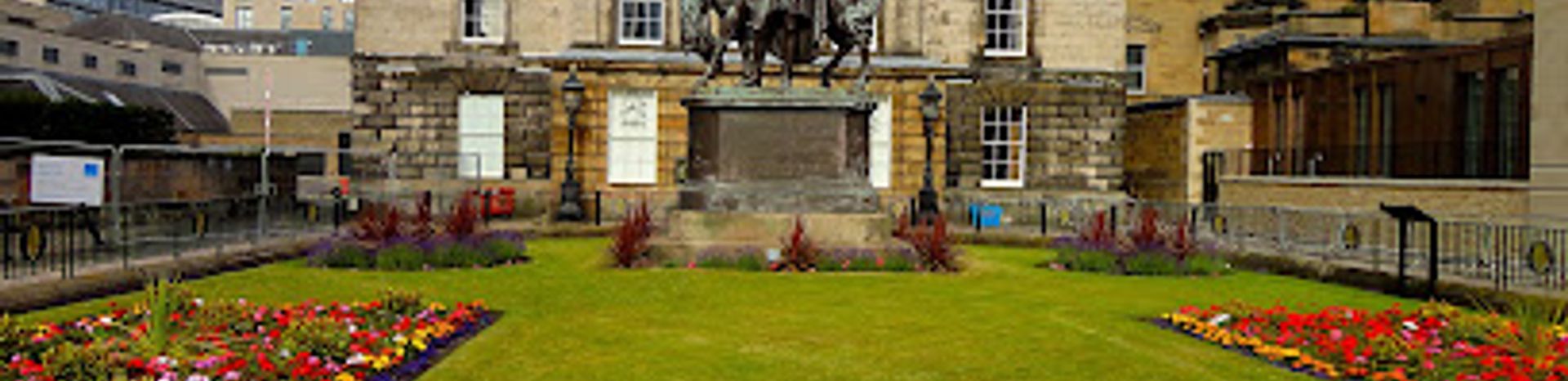
Earl of Hopetoun Statue at St Andrew Square, Edinburgh
A striking bronze tribute to the 4th Earl of Hopetoun, set in the elegant gardens of Edinburgh’s historic St Andrew Square.
The Earl of Hopetoun Statue, located in the gardens of St Andrew Square in Edinburgh, honors John Hope, the 4th Earl of Hopetoun, a distinguished Scottish politician and British Army general. Sculpted in a classical style, the bronze statue depicts him as a Roman consul, symbolizing his military and political stature. Positioned prominently in front of Dundas House, the Royal Bank of Scotland's historic headquarters, the statue has stood here since 1834, reflecting Edinburgh’s rich heritage and neoclassical elegance.
A brief summary to Earl of Hopetoun Statue
- 35 St Andrew Square, Edinburgh, EH2 2AD, GB
- Duration: 0.25 to 1 hours
- Free
-
 Outdoor
- Mobile reception: 5 out of 5
Local tips
- Visit during daylight hours to fully appreciate the statue’s intricate bronze details and the surrounding neoclassical architecture.
- Combine your visit with a stroll around St Andrew Square to experience its gardens and other historic monuments like the Melville Monument.
- Bring a camera for excellent photo opportunities with the statue and the elegant backdrop of Dundas House.
- Check local weather forecasts as the gardens and outdoor setting are best enjoyed in mild or clear conditions.

For the on-the-go comforts that matter to you
- Restrooms
- Drink Options
- Food Options
- Seating Areas
- Information Boards
Getting There
-
Tram
Take the Edinburgh Trams to St Andrew Square stop, located approximately 5 minutes' walk from the statue. Trams run frequently from the city center and airport, with tickets costing around £1.80–£4.50 depending on zones.
-
Bus
Multiple Lothian Bus routes serve St Andrew Square, including routes 3, 25, and 27. Buses run every 10–15 minutes from various parts of Edinburgh. A single fare typically costs £1.80 to £2.00.
-
Walking
If you are in Edinburgh city center, walking to St Andrew Square is easy and takes about 10–15 minutes on mostly flat, paved streets. The route is wheelchair accessible and offers views of Georgian architecture.
-
Taxi
Taxis and ride-hailing services can drop you directly at St Andrew Square. Travel times vary depending on traffic but typically range from 5 to 15 minutes from central Edinburgh. Expect fares around £5–£10.
Earl of Hopetoun Statue location weather suitability
-
 Any Weather
-
 Clear Skies
-
 Mild Temperatures
Discover more about Earl of Hopetoun Statue
A Monument to a Distinguished Scottish Nobleman
The Earl of Hopetoun Statue commemorates John Hope, the 4th Earl of Hopetoun, a significant figure in Scottish history known for his military career and political influence. The statue was commissioned in 1824 and originally intended for Charlotte Square but was placed in St Andrew Square in 1834. It portrays Hope in the guise of a Roman consul, complete with a toga and accompanied by a horse, symbolizing his leadership and valor. This classical representation reflects the neoclassical artistic trends of the period and underscores his esteemed status in society.Setting Within St Andrew Square's Historic Landscape
Situated in the heart of Edinburgh’s New Town, the statue occupies a prominent position in the gardens before Dundas House, the former mansion turned Royal Bank of Scotland headquarters. St Andrew Square itself is a landmark of Georgian urban planning, conceived in the late 18th century by architect James Craig. The square is renowned for its elegant neoclassical architecture, lush gardens, and significant monuments, including the towering Melville Monument. The Earl of Hopetoun Statue complements this historic environment, contributing to the square’s role as a cultural and commercial hub.Artistic and Historical Significance
The statue is a bronze work that captures the grandeur and dignity of its subject through classical symbolism. Its sculptural style aligns with the period’s fascination with Roman antiquity, conveying ideals of leadership and honor. Beyond its artistic merit, the statue also reflects the 4th Earl’s connection to the Royal Bank of Scotland, where he served as vice governor, linking the monument to Edinburgh’s financial history. Over the centuries, it has remained a steadfast symbol of Scottish heritage within a dynamic urban setting.St Andrew Square: A Nexus of History and Modernity
St Andrew Square is more than just a backdrop for the statue; it is a vital part of Edinburgh’s identity. Established in 1772 as the first part of the New Town, the square has evolved from an elite residential area to a bustling commercial and cultural center. Its gardens offer a tranquil oasis amid the city bustle, while its surrounding architecture showcases the grandeur of Georgian design. The square hosts important landmarks and serves as a gathering place for locals and visitors, blending historical significance with contemporary urban life.The Legacy of the Hopetoun Family
The Hopetoun family has deep roots in Scottish nobility, with Hopetoun House serving as their ancestral home for over three centuries. The 4th Earl’s legacy extends beyond this statue; he was a respected military leader and public figure, remembered for his service and contributions to Scotland. The statue in St Andrew Square stands as a testament to the enduring influence of the Hopetoun lineage and their role in Scotland’s history.Preservation and Public Engagement
The statue remains accessible to the public within the well-maintained gardens of St Andrew Square, which were opened to all in 2008. The square and its monuments are managed to preserve their historical and cultural value while providing a peaceful urban retreat. Visitors can appreciate the statue’s artistic detail and historical context as part of a broader exploration of Edinburgh’s New Town heritage and architectural beauty.For the vibe & atmosphere seeker
- Relaxing
- Tranquil
- Scenic
- Unique
- Casual
For the design and aesthetic lover
- Vintage Styles
- Classic Designs
For the architecture buff
- Historic
- Landmarks
- Heritage Neighborhoods
For the view chaser and sunset hunter
- Iconic Views
- Panoramas
For the social media creator & influencer
- Photo Spots
- Selfie Spots
- Architectural Shots
For the eco-conscious traveler
- Public-Transport Accessible
- Locally Managed
For the kind of experience you’re after
- Cultural Heritage
- Photowalk
- Day Trip
- Weekend Getaway
For how adventurous you want the journey to be
- Easy Access
Location Audience
- Family Friendly
- Senior Friendly
- Child Friendly
- Teen Friendly
- Wheelchair Access
- Solo Friendly
- Couple Friendly
- Solo Female Friendly


