Doune Castle, Stirlingshire Travel Guide
Step back into medieval Scotland at Doune Castle, where history and Hollywood collide in a stunning fortress beside the River Teith.
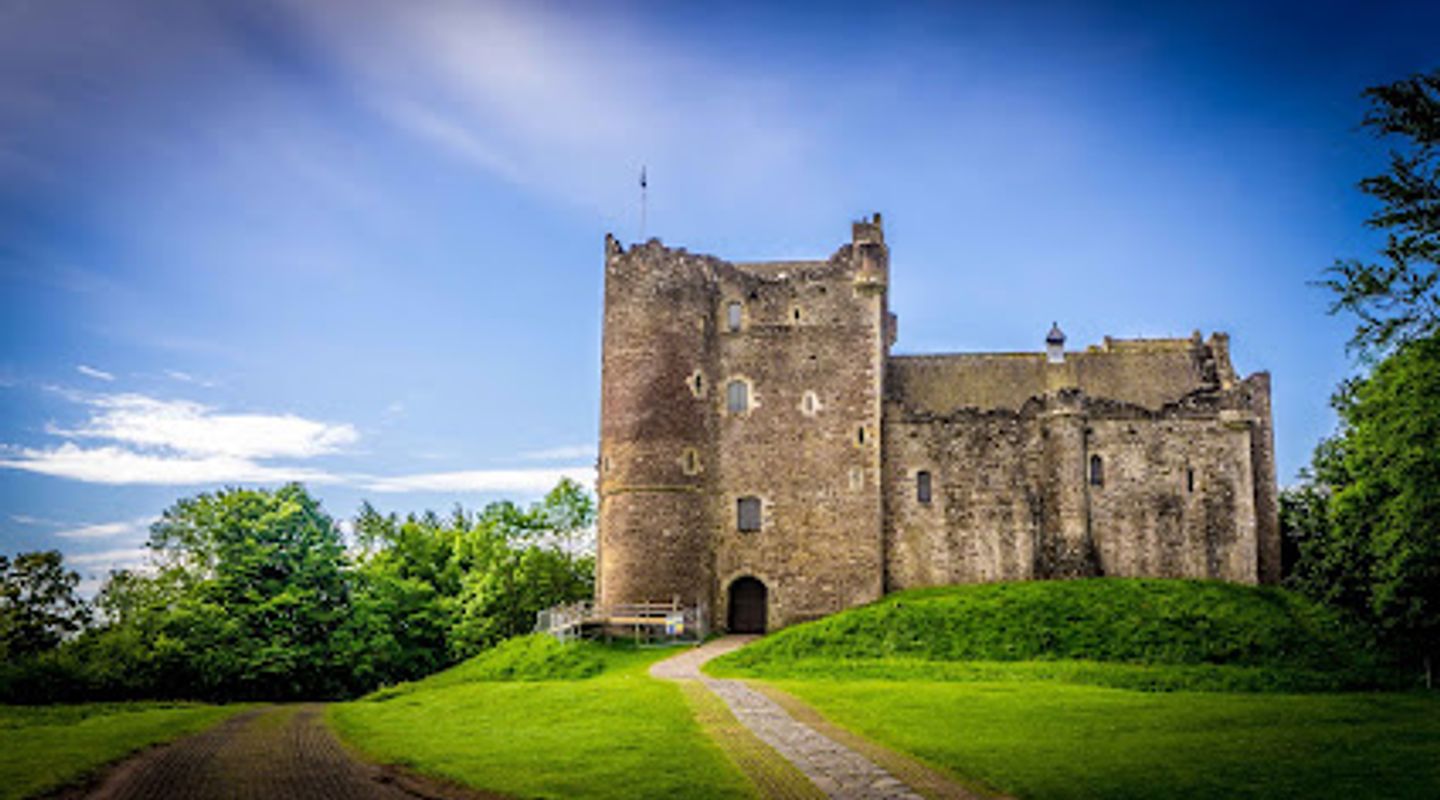
Doune Castle, located in the village of Doune near Stirling, Scotland, is a remarkably well-preserved 14th-century courtyard castle. Known for its towering gatehouse, grand halls, and labyrinthine rooms, it offers visitors a vivid glimpse into medieval life. The castle is also famed as a filming location for Monty Python and the Holy Grail, Game of Thrones, and Outlander. Visitors can explore its historic architecture, enjoy scenic river views, and follow woodland trails in the surrounding grounds.
A brief summary to Doune Castle
- Castle Hill, Doune, FK16 6EA, GB
- Click to display
- Click to display
- Duration: 1 to 2.5 hours
- Mid ranged
-
 Outdoor
- Mobile reception: 3 out of 5
- Monday 9:30 am-5:30 pm
- Tuesday 9:30 am-5:30 pm
- Wednesday 9:30 am-5:30 pm
- Thursday 9:30 am-5:30 pm
- Friday 9:30 am-5:30 pm
- Saturday 9:30 am-5:30 pm
- Sunday 9:30 am-5:30 pm

Know before you go
Hi, I'm Eve. Here are a few practical things to know before exploring Doune Castle.
- Pre-book tickets online to save money and guarantee entry, especially during peak seasons.
- Bring headphones and a fully charged mobile device to enjoy the engaging audio guide narrated by Terry Jones.
- Wear sturdy footwear as the castle floors and access routes include uneven cobbles and steep staircases.
- Explore the woodland trails and riverside paths around the castle for a tranquil nature experience.
- Visit the nearby village of Doune to enjoy local shops and additional parking options.
Do you manage this location?
Take control to get all the benefits, like improved information, better appearance, and stronger visibility across AI-powered discovery. Learn more about listing your business on Evendo
Activate your presenceOther nearby places you may find interesting
The closest places of the same kind, if this one is not quite what you had in mind.

Explore Doune Castle on the Map
A handpicked selection of must-see spots near Doune Castle, mapped for you.
Unlock the Best of Doune Castle
Buy tickets
-
No tickets available
Book tours with entry


Getting There
-
Train and Bus
From Stirling, take a local bus to Doune village, a 15-minute journey. From the village, it's a 10-minute walk to the castle. Bus services run regularly but check schedules in advance. Train travelers can connect via Stirling station. No direct train to Doune.
-
Car
Driving from Stirling or nearby areas takes about 20 minutes. Limited parking is available at the castle with two accessible bays; additional parking is in the village. Parking fees may apply in the village. Roads are well maintained but expect narrow village streets.
-
Walking
For active visitors, a scenic 20-minute walk from the Draggie Burn Park & Stride car park on the edge of Doune Ponds Nature Reserve leads to the castle. The path includes some uneven terrain and cobbles near the entrance.
For the on-the-go comforts that matter to you
-
 Restrooms
-
 Seating Areas
-
 Trash Bins
-
 Information Boards
-
 Visitor Center
Discover more about Doune Castle
Architectural Grandeur of a 14th-Century Stronghold
Doune Castle stands as one of Scotland’s most complete medieval castles, built in the late 14th century by Robert Stewart, Duke of Albany. Its commanding 100-foot-high gatehouse, fortified walls, and well-preserved great halls showcase the defensive and domestic architecture of the period. The castle’s interior features include the splendid Lord's Hall with a carved oak screen, musicians’ gallery, and a large double fireplace. Visitors navigate a maze of spiral staircases, narrow doorways, and multiple chambers that evoke the daily life of medieval nobility.Historic Significance and Royal Connections
Originally serving as a royal residence, hunting lodge, and prison, Doune Castle has been associated with notable figures such as Mary Queen of Scots and Bonnie Prince Charlie. Although it fell into ruin by the 18th century, restoration efforts in the late 19th century revived its timber roofs and interiors. Today, it is a Scheduled Ancient Monument maintained by Historic Environment Scotland, preserving its rich heritage and architectural integrity for future generations.Immersive Visitor Experience Enhanced by Audio Guide
Visitors are encouraged to take the included self-guided audio tour narrated by Monty Python’s Terry Jones, which blends historical insight with humor. The guide vividly recounts the castle’s medieval past, its cinematic roles, and anecdotes from productions such as Monty Python and the Holy Grail, Game of Thrones, and Outlander. This immersive experience brings the castle’s stories to life, making it accessible and engaging for all ages.Cinematic Legacy and Pop Culture Appeal
Doune Castle’s dramatic architecture has made it a beloved filming location. It famously portrayed Camelot and other fantastical settings in Monty Python and the Holy Grail, served as Winterfell in the Game of Thrones pilot, and was Castle Leoch in Outlander. Fans can recognize key locations like the great hall and courtyards, adding a layer of cultural fascination to their visit.Scenic Surroundings and Outdoor Exploration
Set beside the tranquil River Teith, the castle grounds include woodland walks, a riverside path, and the site of a Roman fort. These natural features offer visitors a peaceful retreat to enjoy Scotland’s countryside. The nearby village of Doune provides charming amenities and a glimpse into local life, rounding out the visitor experience.Accessibility and Practical Information
While the castle courtyard and cellar are accessible with assistance, much of the interior involves uneven cobbles, steep staircases, and thresholds that may challenge visitors with mobility issues. Limited parking is available onsite, with additional parking in the village. The castle is open seasonally with varying hours, and tickets include access to the audio guide. Facilities include restrooms and a gift shop, but no on-site café.












Your all‑in‑one travel companion app
Explore expert travel guides, compare and book tours, experiences, hotels, and more—all from the palm of your hand. Download now for seamless trip planning wherever your wanderlust takes you.


Explore More of Stirlingshire
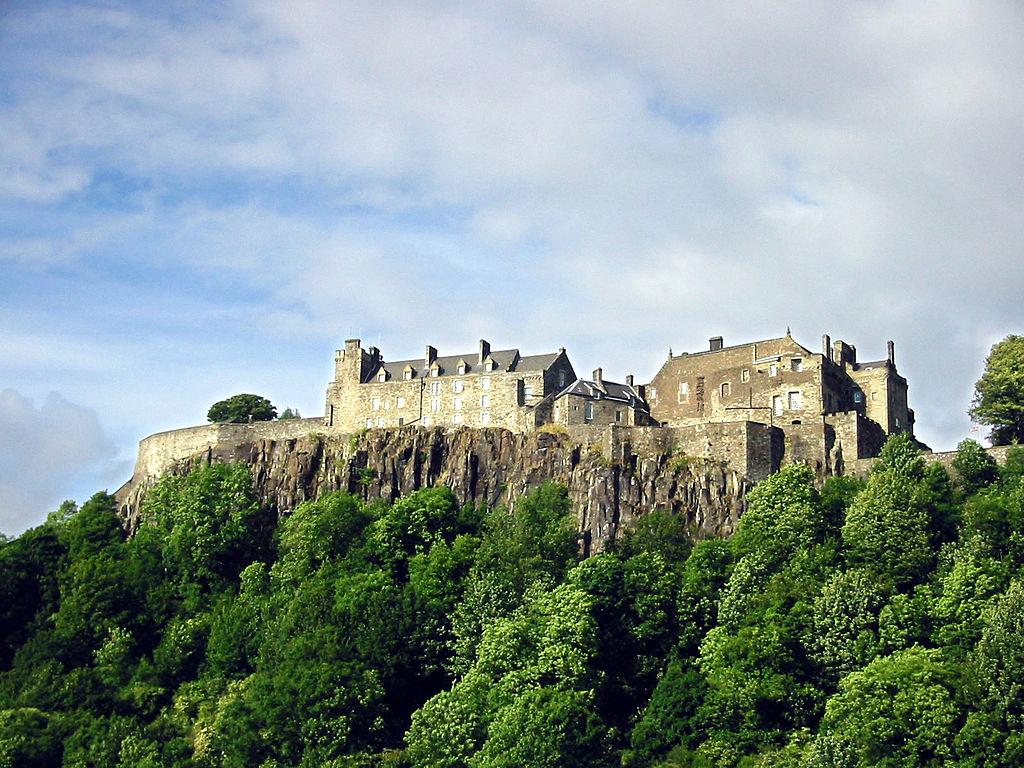
Looking beyond Doune Castle? Discover Stirlingshire for broader travel guides, local hot-spots, and regional highlights.
Explore Stirlingshire