Caernarfon Castle Travel Guide
Free Guide: Explore Caernarfon Castle, a majestic 13th-century fortress with royal heritage, panoramic views, and rich medieval history in the heart of North Wales.


A brief summary of Caernarfon Castle
Explore Caernarfon Castle, a majestic 13th-century fortress with royal heritage, panoramic views, and rich medieval history in the heart of North Wales.
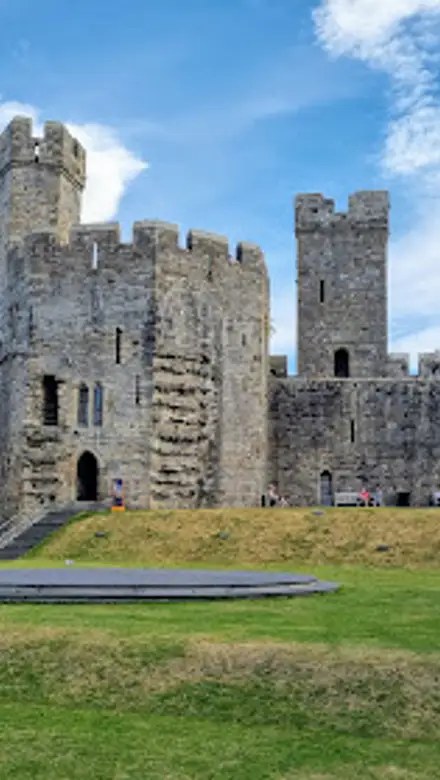
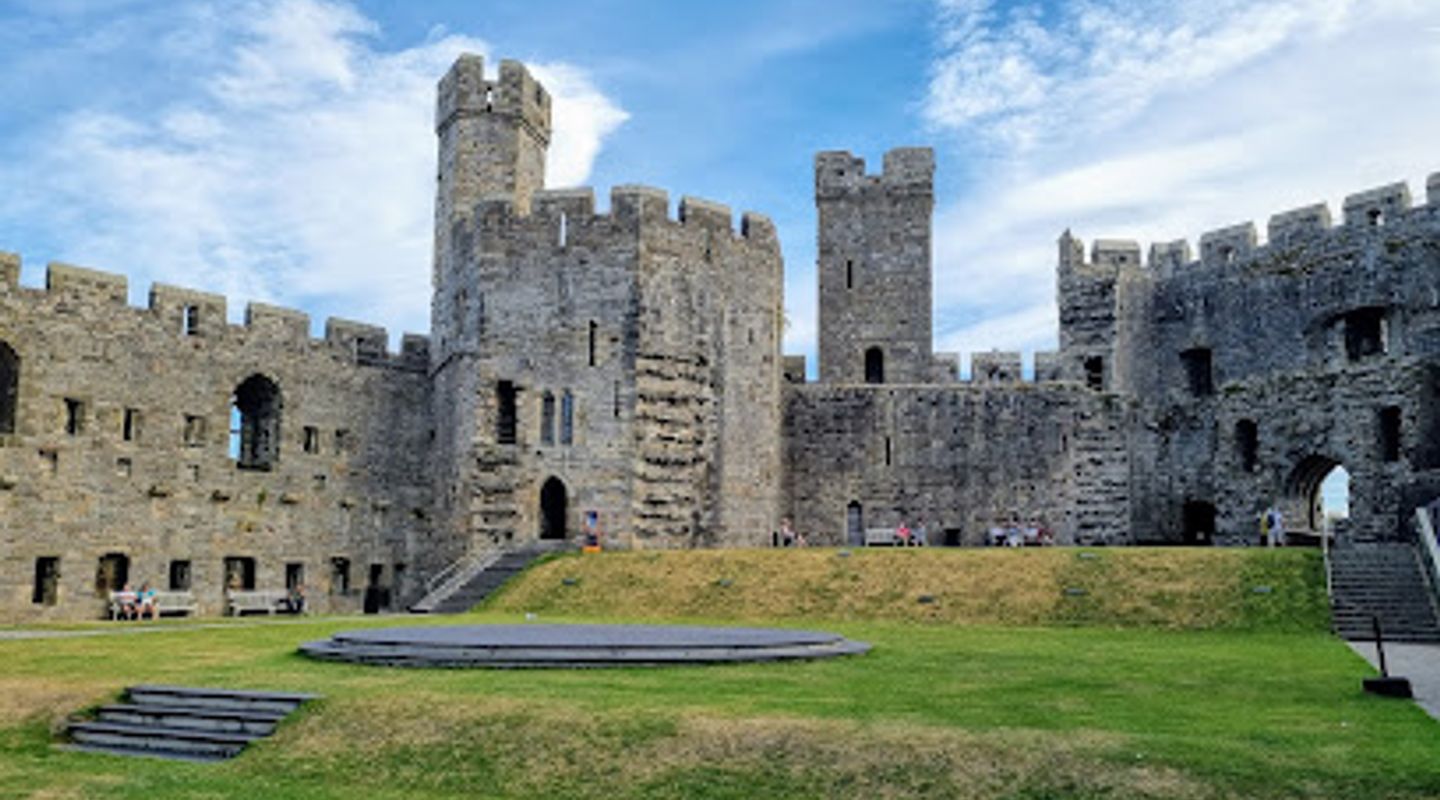
Caernarfon Castle, a UNESCO World Heritage Site in North Wales, is a monumental medieval fortress built by King Edward I in the 13th century. Renowned for its polygonal towers and massive stone walls, it served as a symbol of English authority and royal power. Visitors can explore its extensive ramparts, towers, and the Royal Welch Fusiliers Museum, while enjoying panoramic views of Caernarfon town and the Menai Strait.
On-site amenities
 Restrooms
 Drink options
 Food options
 Seating areas
 Trash bins
 Information boards
 Visitor centre
Opening hours
- Every day9:30 am–6 pm
Opening hours as listed on the venue’s Google Business Profile. Hours can change for services and special events, so check with the venue before you go.
- Address
- Castle Ditch, Caernarfon LL55 2AY
- Phone
- Website
Getting there
Train
Bus
Car
Walking
Discover more about Caernarfon Castle
Architectural Grandeur and Historical Significance
Caernarfon Castle stands as one of the most impressive medieval fortresses in Europe, constructed in the late 1200s by King Edward I during his campaign to assert control over Wales. Its design is unique, featuring polygonal towers inspired by the architecture of the Eastern Roman Empire, rather than the typical circular towers of other castles. The castle’s formidable double-skinned walls, imposing King's Gate, and extensive curtain walls were built to withstand siege and project English dominance. The castle also holds a special place in royal history as the birthplace of the first English Prince of Wales and the site of Prince Charles’s investiture in 1969.
Exploration and Visitor Experience
Visitors to Caernarfon Castle can wander through a complex network of courtyards, halls, and passageways connecting its seven towers. The climb up steep spiral staircases rewards with spectacular views over the town, harbor, and surrounding countryside. The castle grounds include the Royal Welch Fusiliers Museum, showcasing military artifacts, uniforms, and regimental history, included with admission. Exhibitions and multimedia presentations, such as the film "The Eagle & the Dragon," enrich the understanding of the castle’s construction and its role in Welsh history.
Accessibility and Facilities
While much of the castle involves uneven terrain and narrow, steep staircases, accessibility improvements include a lift at the King's Gate and accessible viewing platforms. The visitor centre offers amenities such as restrooms, baby-changing facilities, a café kiosk, and a gift shop. Audio guides are available to enhance the visitor experience. However, some areas remain challenging for those with mobility impairments, and safety precautions are advised on slippery or steep sections.
Seasonal Opening Hours and Admission
The castle is open daily with seasonal variations: from March to June and September to October, it operates 9:30 am to 5:00 pm; during July and August, extended hours until 6:00 pm; and shorter winter hours from November to February, 10:00 am to 4:00 pm. Admission fees vary by age and season, with discounts for families, seniors, students, and free entry for children under five and Cadw members. Guided tours and custodian-led walks are offered on selected days for an additional fee.
Surrounding Environment and Cultural Context
Situated within the walled town of Caernarfon, the castle overlooks the River Seiont and the Menai Strait, providing a scenic backdrop that complements its historical ambiance. The surrounding town offers additional attractions, eateries, and picturesque views, making the castle a central highlight of a visit to North Wales. The site’s status as a UNESCO World Heritage Site underscores its cultural and architectural importance, drawing visitors keen to explore its medieval legacy and royal connections.
Tips for an Enjoyable Visit
Visitors are advised to wear sturdy footwear due to the castle’s uneven and steep terrain. Early morning or late afternoon visits provide better lighting for photography and fewer crowds. While picnics are not permitted within the castle walls, nearby outdoor areas and on-site café facilities offer refreshment options. The castle’s extensive grounds and exhibitions typically require 1.5 to 3 hours to explore fully, with longer visits recommended for history enthusiasts.
Evendo Review Centre
 Google
Guest reviews
Best time to go
Quietest: Jan, Feb & Dec · before 7am or from 8pm
Busy times are Evendo estimates for a typical year, to help you plan. Actual crowds vary with events, school holidays and the weather.
Explore Caernarfon Castle on the map
A handpicked selection of must-see spots near Caernarfon Castle, mapped for you.
Get your free copy of our complete guide to Caernarfon Castle, delivered straight to you.
Everything on this page, from opening hours and how to get there to Eve’s tips and the best time to go, in one PDF you can read offline, print or share.
Already have an account? Sign in
Your Caernarfon Castle guide is ready.
We'll send it to · Not you? Sign out

Getting your guide ready…
We are putting together a fresh copy of the Caernarfon Castle guide. This can take up to a minute.
This can take a few moments. If your browser asks, choose Allow so the download can start. You'll find the guide in your Downloads folder.
Nothing happened? Download it again
Sorry, the guide is taking longer than usual. Please try again in a minute, or get it by email instead.
Unlock the best of Caernarfon Castle
Skip-the-line tickets, guided tours with entry, and walking tours of the area, booked in a few clicks.


 Tour
TourCaernarfon And Its Castle: A Self Guided Walking Tour
from $9.49 Tour
TourLlanberis, Conwy and Caernarfon Castle: A Self-Guided Driving Tour of Snowdonia
from $14.24 Tour
TourSnowdonia Tour App, Hidden Gems Game and Big Britain Quiz (7 Day Pass) UK
from $31.40 Tour
Tour2 Hours Historical Tour of Caernarfon
from $32.66
Other nearby places you may find interesting
The closest places of the same kind, if this one is not quite what you had in mind.
-
Fourteen Locks Canal Centre Industrial heritage meets natural beauty at Wales' most spectacular canal flight.
-
Magor Marsh - Gwent Wildlife Trust Explore Magor Marsh, a serene fenland reserve alive with wildlife, rich history, and vibrant seasonal changes on the Gwent Levels.
-
Tredegar Park Explore a grand 17th-century mansion set within 90 acres of stunning gardens and parkland in Newport’s historic Tredegar Park.
-
Cwmcarn Forest A revitalized South Wales forest offering thrilling mountain biking, scenic walks, and modern visitor facilities for all ages.
-
Winding House Discover New Tredegar’s mining legacy and vibrant culture in the historic Winding House museum and arts centre.
Swipe for more places
More to explore near Caernarfon Castle

 Best experiences near Caernarfon Castle
 Best hotels near Caernarfon Castle
 Best landmarks near Caernarfon Castle
 Best attractions near Caernarfon Castle
 Best shops near Caernarfon Castle
 Best restaurants near Caernarfon Castle
 Best bars near Caernarfon Castle
Do you manage this location?
Take control to get all the benefits, like improved information, better appearance, and stronger visibility across AI-powered discovery.
Explore more
Explore more of Gwent
Explore Gwent, a captivating blend of ancient history, picturesque landscapes, and vibrant culture in the heart of Wales.
Explore Gwent
Explore more of United Kingdom
Discover the United Kingdom: A blend of rich history, stunning landscapes, and vibrant cities, offering a unique travel experience for every visitor.
Explore United Kingdom