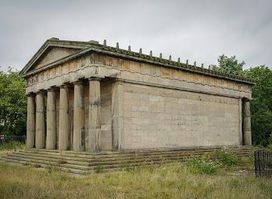
The Oratory, Liverpool Travel Guide
Discover Liverpool’s Greek Revival gem, The Oratory—a solemn former mortuary chapel rich in 19th-century funerary art and classical architecture.
The Oratory in Liverpool, built in 1829 by architect John Foster, is a striking Greek Revival former mortuary chapel for St James's Cemetery. Located near Liverpool Cathedral, it features a classical temple design with a six-column Doric portico and a skylight-lit interior. Once used for funeral services and housing memorial sculptures, it now stands as a preserved historic landmark showcasing 19th-century funerary art and architecture.
A brief summary to The Oratory
- Upper Duke St, Cathedral Gate, Liverpool, L1 7AZ, GB
- Click to display
- Duration: 0.25 to 0.5 hours
- Free
-
 Outdoor
- Mobile reception: 4 out of 5

Know before you go
Hi, I'm Eve. Here are a few practical things to know before exploring The Oratory.
- Book your visit in advance as access to The Oratory is by appointment only to help preserve the site.
- Combine your visit with Liverpool Cathedral nearby to explore two iconic historic landmarks in one trip.
- Photography enthusiasts will appreciate the Oratory’s classical temple facade and interior lighting.
- Allow 15 to 30 minutes to fully appreciate the architecture and sculptural monuments inside.
Do you manage this location?
Take control to get all the benefits, like improved information, better appearance, and stronger visibility across AI-powered discovery. Learn more about listing your business on Evendo
Activate your presenceOther nearby places you may find interesting
The closest places of the same kind, if this one is not quite what you had in mind.

Explore The Oratory on the Map
A handpicked selection of must-see spots near The Oratory, mapped for you.
Getting There
-
Public Transport
Frequent bus services run from Liverpool city center to stops near Liverpool Cathedral and The Oratory, with a journey time of approximately 15-25 minutes. Tickets cost around £2-£4. Public transport is recommended due to limited parking in the area.
-
Walking
From Liverpool Lime Street Station, walking to The Oratory takes about 25-30 minutes on mostly flat urban terrain. The route passes through city streets and is accessible for most visitors.
-
Car
Limited street parking is available near Cathedral Gate, but spaces are scarce and often restricted. Nearby public car parks offer hourly rates from approximately £3-£6. Driving is less convenient than public transport.
For the on-the-go comforts that matter to you
-
 Restrooms
-
 Drink Options
-
 Food Options
-
 Seating Areas
-
 Information Boards
Discover more about The Oratory
A Testament to Greek Revival Architecture in Liverpool
The Oratory was designed by John Foster and completed in 1829 as the mortuary chapel for St James's Cemetery. It embodies the Greek Revival style, inspired by classical antiquity, specifically resembling a Greek Doric temple. The building features a symmetrical six-column portico on both front and rear entrances and is notable for its windowless walls, with natural light entering solely through a glass ceiling. This design choice creates a solemn and serene atmosphere, reminiscent of ancient temples, and highlights the architectural purity Foster sought to achieve.Historical Role as a Funeral Chapel and Memorial Space
Originally, the Oratory served as the venue for funeral services prior to burials in the adjacent cemetery. It also functioned as a cenotaph, housing monuments and memorial sculptures dedicated to the deceased, including works by prominent 19th-century sculptors. The cemetery closed in 1936, after which the Oratory fell into disuse. Later, it was preserved as a historic site, maintaining its role as a repository of Liverpool’s funerary heritage and artistic legacy.Connection to Liverpool’s Urban and Cultural Development
The Oratory is situated near Liverpool Cathedral, within an area that reflects the city’s rapid expansion and prosperity during the 19th century. Its construction coincided with a period of intense building activity in Liverpool, where Greek Revival architecture was widely embraced for public and private buildings alike. The Oratory stands as a rare surviving example of this architectural movement, which once shaped much of Liverpool’s urban identity.Architectural Features and Artistic Highlights
Inside, the Oratory’s austere interior is illuminated by a skylight, allowing visitors to appreciate the simplicity and harmony of its design. The absence of side windows is a deliberate nod to classical Greek temples, emphasizing solemnity appropriate for its funerary function. The building houses a collection of funerary monuments relocated from other sites in Liverpool, including Anglican and Catholic churches, showcasing the city’s rich sculptural traditions.Preservation and Contemporary Significance
After decades of neglect, stewardship of the Oratory passed to local authorities and heritage organizations who have worked to preserve its structure and contents. Today, it is recognized as a Grade I listed building and a significant cultural landmark. Access is by appointment, ensuring its protection while allowing visitors to engage with Liverpool’s historical narrative and architectural heritage.Visitor Experience and Surroundings
The Oratory’s location adjacent to Liverpool Cathedral makes it a compelling addition to any visit to the area. Though small and intimate, the site offers a powerful glimpse into 19th-century funerary customs and architectural ideals. Its classical form and tranquil setting provide a contemplative space amid the bustling city, appealing to those interested in history, architecture, and art.












Your all‑in‑one travel companion app
Explore expert travel guides, compare and book tours, experiences, hotels, and more—all from the palm of your hand. Download now for seamless trip planning wherever your wanderlust takes you.


Explore More of Liverpool
Looking beyond The Oratory? Discover Liverpool for broader travel guides, local hot-spots, and regional highlights.
Explore Liverpool