Barbican Conservatory, London Travel Guide
A ticketed indoor garden inside the Barbican Centre, where tropical planting meets raw concrete and the visit stays short, quiet, and highly visual.
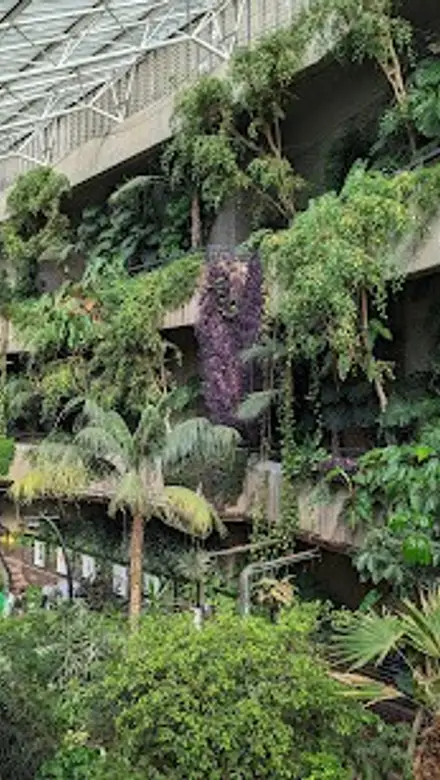
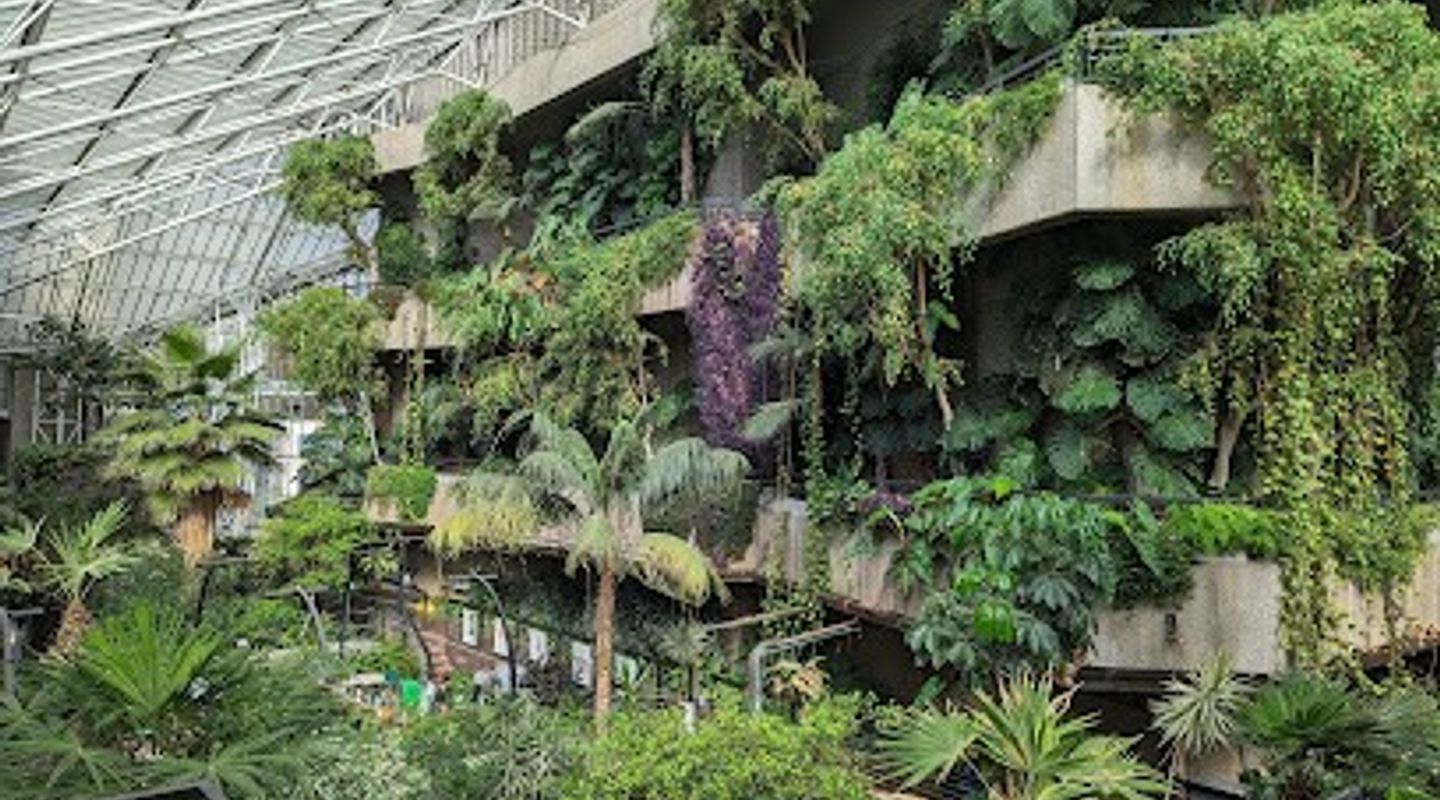
Inside the Barbican Centre, this glass-roofed conservatory packs tropical planting into a concrete modernist setting. It is compact, calm, and highly photogenic, with paths that encourage slow wandering rather than long stays. Visitors come for the contrast: dense foliage, filtered light, and one of London’s most unusual indoor gardens.
A brief summary to Barbican Conservatory
- Silk St, London, EC2Y 8DS, GB
- Click to display
- Click to display
- Duration: 0.5 to 2 hours
- Free
-
 Indoor
- Mobile reception: 4 out of 5
- Friday 6:30 pm-9:30 pm
- Saturday 12 pm-5 pm
- Sunday 12 pm-5 pm

Know before you go
Hi, I'm Eve. Here are a few practical things to know before exploring Barbican Conservatory.
- Check the public opening dates before you go; access is limited and not daily.
- Travel light, as large bags, prams, buggies, and non-assistance dogs are not allowed inside.
- Allow extra time for photos, since the best moments come from plant detail and the contrast with the concrete setting.
Do you manage this location?
Take control to get all the benefits, like improved information, better appearance, and stronger visibility across AI-powered discovery. Learn more about listing your business on Evendo
Activate your presenceOther nearby places you may find interesting
The closest places of the same kind, if this one is not quite what you had in mind.




Explore Barbican Conservatory on the Map
A handpicked selection of must-see spots near Barbican Conservatory, mapped for you.
Getting There
-
Tube and rail
Barbican station is the nearest stop, with several other central London stations within a short walk; expect roughly 5 to 15 minutes on foot.
-
Bus
Several bus routes serve the Barbican area, making it easy to reach without changing onto a long final walk.
-
Cycle
Cycling is practical, with nearby racks and hire docks, though you will still need to finish on foot through the Barbican complex.
-
Car or taxi
Driving is possible but less convenient; parking is limited and best planned in advance rather than assumed on arrival.
For the on-the-go comforts that matter to you
-
 Restrooms
-
 Drink Options
-
 Food Options
-
 Seating Areas
-
 Sheltered Areas
-
 Trash Bins
-
 Information Boards
Discover more about Barbican Conservatory
What it is
Barbican Conservatory is a covered tropical greenhouse and garden inside the Barbican Centre in the City of London. It is one of the city’s most unusual indoor green spaces: part plant collection, part architectural counterpoint to the Barbican’s hard-edged Brutalist concrete. The scale is medium rather than sprawling, so the visit feels contained and deliberate rather than like a long botanical expedition.Admission is free but ticketed, and public access is limited to selected dates. That controlled access shapes the experience. You are not dropping into a daily park; you are entering a scheduled, self-guided space that tends to attract people who want a short, focused visit.Atmosphere and setting
The conservatory is fully indoors, under glass, with dense planting that softens the surrounding architecture. The atmosphere is calm and slightly humid, with layered greenery, broad leaves, and close-up plant textures doing most of the visual work. The strongest impression comes from the contrast between lush vegetation and the Barbican’s concrete geometry.There are no sweeping landscapes or distant views here. Instead, the appeal is in the details: the way light falls across leaves, the tight framing of paths and planters, and the sense of being in a greenhouse suspended inside a major cultural complex. It feels urban, curated, and quietly eccentric.How a visit unfolds
Most visitors spend 30 to 90 minutes here. You enter, move slowly through the planted interior, pause for photographs, and read the labels where they are available. The route is straightforward and self-guided, so the pace is set by your own interest in plants, architecture, or photography. It is a place for looking rather than doing.The conservatory suits solo travellers, couples, architecture fans, and anyone who prefers a low-key indoor stop to a high-energy attraction. It is also a practical choice in bad weather, since the experience is largely weatherproof once you are inside. Large bags, prams, buggies, and dogs other than assistance animals are not permitted, so it works best for light, uncomplicated visits.Getting there and practical expectations
The easiest approach is by public transport. Barbican station is the closest, with Moorgate, Farringdon, St Paul’s, and Liverpool Street all within a reasonable walk. Buses also serve the Barbican area, and cycling is feasible thanks to nearby racks and hire docks. Driving is possible but less convenient, with parking limited and best treated as a planned rather than casual option.Expect a compact indoor attraction with strong architectural character, not a full-day garden. Facilities are available in the wider Barbican complex, including toilets and places to eat, but the conservatory itself remains a focused, self-contained visit. Its appeal lies in the unusual pairing of tropical planting and post-war modernism, which gives the space a look and mood unlike most London gardens.












Your all‑in‑one travel companion app
Explore expert travel guides, compare and book tours, experiences, hotels, and more—all from the palm of your hand. Download now for seamless trip planning wherever your wanderlust takes you.


Explore More of London
Looking beyond Barbican Conservatory? Discover London for broader travel guides, local hot-spots, and regional highlights.
Explore London
A compact City of London garden where Victorian memorial plaques, shaded paths, and a calm churchyard setting create a brief, reflective pause.
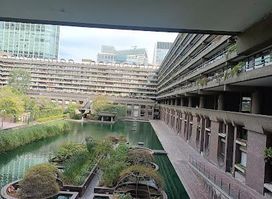
A major Brutalist arts complex in the City of London, where theatres, galleries, terraces, and the conservatory sit inside a layered postwar landmark.