
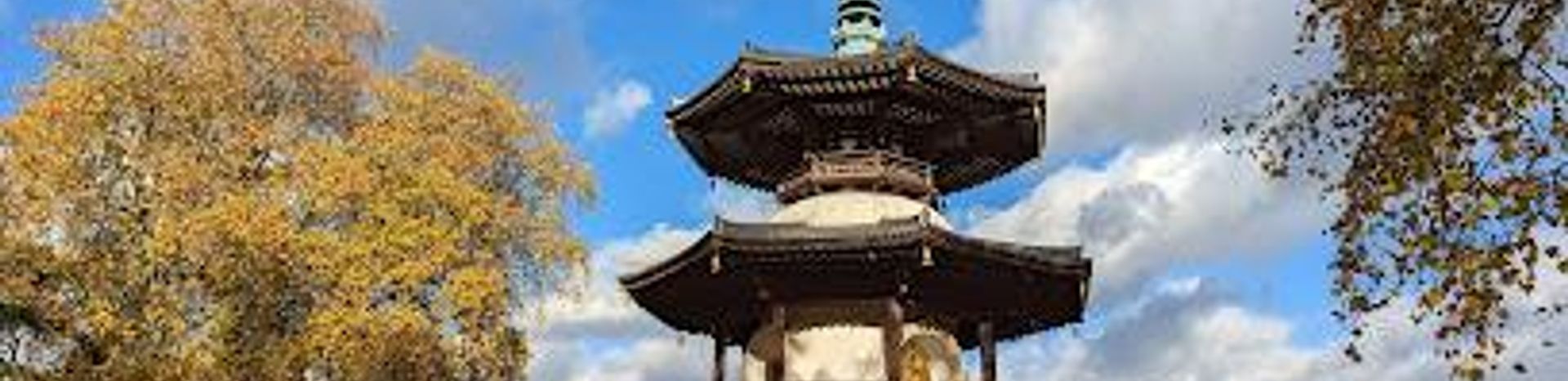
The London Peace Pagoda
A serene Buddhist monument in Battersea Park, symbolizing peace and reflection with panoramic Thames views and annual ceremonies.
Standing serenely beside the River Thames in Battersea Park, the London Peace Pagoda is a striking Buddhist monument built in 1985 as a symbol of world peace. Constructed by Japanese monks and nuns, it features four gilt-bronze statues representing key moments in Buddha’s life and offers panoramic views of the river. The pagoda is maintained by a resident monk and is a place of quiet reflection, spiritual significance, and annual peace ceremonies.
A brief summary to The London Peace Pagoda
- Battersea Park, Carriage Dr N, London, SW11 4NJ, GB
- +442088717530
- Visit website
- Duration: 0.5 to 2 hours
- Free
-
 Outdoor
- Mobile reception: 5 out of 5
- Monday 12 am-12 am
- Tuesday 12 am-12 am
- Wednesday 12 am-12 am
- Thursday 12 am-12 am
- Friday 12 am-12 am
- Saturday 12 am-12 am
- Sunday 12 am-12 am
Local tips
- Visit during the annual Floating Lantern Ceremony on Nagasaki Day (9th August) for a special experience.
- Take time to read the plaques near the pagoda for insights into its history and symbolism.
- The pagoda is best appreciated in the early morning or late afternoon for peaceful views and fewer crowds.
- Combine your visit with a walk around Battersea Park to explore its lakes, gardens, and other attractions.
- Respect the sacred nature of the site; photography is allowed, but avoid climbing on the statues or disturbing the area.

For the on-the-go comforts that matter to you
- Restrooms
- Drinking Water
- Seating Areas
- Information Boards
Getting There
-
Public Transport
Take the Northern Line to Battersea Power Station station, then walk for about 10 minutes through Battersea Park to reach the pagoda. The route is well-signposted and accessible for all visitors.
-
Walking
From Chelsea Bridge, walk south along the Thames Path for approximately 15 minutes to enter Battersea Park and reach the pagoda. The path is flat and scenic, offering views of the river and the park.
-
Bus
Several bus routes, including the 137 and 344, stop near Battersea Park. From the bus stop, it’s a short walk through the park to the pagoda, taking about 5 minutes.
-
Cycling
Battersea Park is accessible by bike via the Thames Path. Cycle racks are available near the park entrance, and the route to the pagoda is flat and well-maintained.
The London Peace Pagoda location weather suitability
-
 Any Weather
-
 Clear Skies
-
 Mild Temperatures
Discover more about The London Peace Pagoda
A Beacon of Peace in the Heart of London
Rising above the lush greenery of Battersea Park, the London Peace Pagoda is a unique and tranquil landmark. Completed in 1985, it was the last major act of the Greater London Council before its dissolution and was built as part of the city’s Peace Year. The pagoda was gifted by the Nipponzan Myohoji Buddhist Order from Japan, inspired by the teachings of Nichidatsu Fujii, a monk who dedicated his life to promoting non-violence after witnessing the devastation of Hiroshima and Nagasaki. The structure stands as a powerful symbol of peace, inviting visitors to pause and reflect amidst the bustle of the city.Architecture and Symbolism
The pagoda is a striking blend of traditional Japanese design and spiritual symbolism. Standing at 35.5 meters tall, it is constructed from wood and concrete, with a double roof that rises gracefully above the park. On each of its four faces is a gilt-bronze statue representing a pivotal moment in Buddha’s life: birth, contemplation leading to enlightenment, teaching, and death. These statues are not only visually stunning but also serve as reminders of the Buddha’s journey and the universal quest for peace. The pagoda is open to all, regardless of faith, and is a place where people come to find solace and inspiration.History and Community
The story of the London Peace Pagoda is deeply intertwined with the history of Battersea Park and the broader context of post-war peace movements. The site was chosen as a gesture of goodwill during a period of Cold War tensions, and the pagoda was built by a team of 50 volunteers, monks, and nuns who lived and worked in the park. The resident monk, Reverend Gyoro Nagase, continues to care for the pagoda and leads annual ceremonies, including the Floating Lantern Ceremony on Nagasaki Day. The pagoda has become a spiritual center for Buddhists from around the world and a place of comfort for Londoners seeking peace and reflection.Visitor Experience
Visitors to the London Peace Pagoda are greeted by a serene atmosphere and stunning views of the River Thames. The pagoda is surrounded by the natural beauty of Battersea Park, with its winding paths, lakes, and gardens. The site is popular for quiet contemplation, photography, and attending the annual peace events. The pagoda is accessible to all, with no entry fee, and is a highlight for those exploring the park’s diverse attractions. Whether you come for the history, the architecture, or the sense of tranquility, the London Peace Pagoda offers a unique and memorable experience.For the vibe & atmosphere seeker
- Relaxing
- Tranquil
- Zen
- Scenic
- Unique
For the design and aesthetic lover
- Colorful Aesthetics
- Rustic Designs
For the architecture buff
- Historic
- Landmarks
- Sacred Sites
For the view chaser and sunset hunter
- Iconic Views
- Panoramas
- Waterfront
For the social media creator & influencer
- Instagrammable
- Photo Spots
- Selfie Spots
- Aesthetic Corners
For the eco-conscious traveler
- Sustainable
- Eco-Friendly
- Public-Transport Accessible
For the kind of experience you’re after
- Mindfulness
- Meditation Spot
- Spiritual / Energy Spot
- Cultural Heritage
- Photowalk
For how adventurous you want the journey to be
- Easy Access
Location Audience
- Family Friendly
- LGBT Friendly
- Senior Friendly
- Child Friendly
- Teen Friendly
- Wheelchair Access
- Pet Friendly
- Solo Friendly
- Couple Friendly
- Solo Female Friendly
- Vegetarian Friendly
- Vegan Friendly
- Business Friendly


