
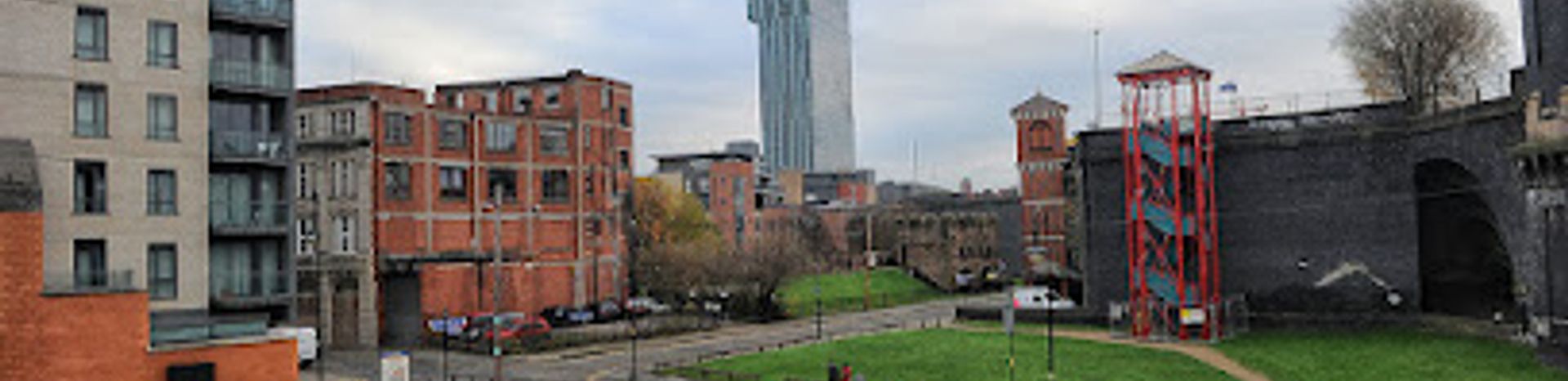
Reconstruction of Mamucium Roman Fort Wall, Manchester
Explore Manchester’s ancient Roman fortress Mamucium with reconstructed walls, original foundations, and a glimpse into Britain’s northern frontier history.
Mamucium Roman Fort, established around AD 79 in present-day Manchester, was a strategic military outpost guarding Roman Britain’s northern frontier. The site features reconstructed stone walls, original foundations, and granaries, revealing its evolution from a timber fort housing auxiliary troops to a stone fortress under Emperor Severus. The surrounding vicus settlement flourished as a hub of commerce and industry until its decline in the 3rd century. Today, the fort’s remains lie within Castlefield, the UK’s first Urban Heritage Park, showcasing Roman military engineering and urban legacy.
A brief summary to Reconstruction of Mamucium Roman Fort Wall
- Beaufort St, Manchester, GB
- Visit website
- Duration: 0.5 to 2 hours
- Free
-
 Outdoor
- Mobile reception: 4 out of 5
Local tips
- Visit during daylight hours to fully appreciate the reconstructed walls and detailed archaeological displays.
- Take time to walk along the ramparts for panoramic views of Castlefield’s canal basin and surrounding heritage sites.
- Read the informational murals and placards onsite to understand the fort’s construction phases and historical context.
- Combine your visit with a stroll through Castlefield Urban Heritage Park to experience Manchester’s layered history.

For the on-the-go comforts that matter to you
- Information Boards
- Seating Areas
- Trash Bins
Getting There
-
Tram
Take the Manchester Metrolink tram to Deansgate-Castlefield stop, which is a 5-minute walk to the fort. Trams run frequently with a journey time of 10-20 minutes from central Manchester. Tickets cost around £2-£4.
-
Train
Arrive at Deansgate train station, located about 600 meters from the site. The walk takes approximately 7-10 minutes on mostly flat urban terrain. Train fares vary depending on origin but typically start at £3 for local trips.
-
Bus
Bus service 33 stops on Liverpool Road near Castlefield. Buses run every 15-30 minutes with a travel time of 15-25 minutes from Manchester city center. Single fares are approximately £2-£3.
-
Walking
From Manchester city center, a 20-30 minute walk along mostly paved streets leads to Castlefield Roman Fort. The route is accessible and suitable for most visitors, with some street crossings.
Reconstruction of Mamucium Roman Fort Wall location weather suitability
-
 Any Weather
-
 Clear Skies
-
 Mild Temperatures
-
 Rain / Wet Weather
Discover more about Reconstruction of Mamucium Roman Fort Wall
Origins and Strategic Importance of Mamucium
Mamucium Roman Fort was founded around AD 79 during the campaigns of Governor Julius Agricola against the Brigantes tribe. Situated on a sandstone outcrop near the confluence of the Rivers Medlock and Irwell, the fort occupied a commanding position overseeing key Roman roads connecting Chester (Deva Victrix) and York (Eboracum). This location was vital for controlling the northern frontier of Roman Britain and facilitating military and trade movements. The name Mamucium likely derives from a Celtic term meaning "breast-shaped hill," reflecting the terrain’s distinctive shape.Architectural Evolution and Military Role
Originally constructed as a timber and turf fort to house approximately 500 auxiliary soldiers—non-citizen troops recruited from across the Empire—Mamucium underwent several major rebuilds. Around AD 90, its defenses were reinforced with ramparts and ditches. By AD 160, granaries and other military buildings were expanded, suggesting its role as a supply depot. The most significant transformation occurred circa AD 200 under Emperor Septimius Severus, who rebuilt the fort’s gatehouses and walls in stone, enhancing its durability and defensive capabilities. The fort remained active with a reduced garrison into the 4th century before eventual abandonment around AD 410.The Vicus: A Bustling Civilian Settlement
Outside the fort’s northern and eastern sides, a civilian settlement or vicus developed, covering approximately 26 hectares. This settlement included timber-framed houses, a Roman temple, a mansio (inn), and workshops, including an early industrial estate with metalworking furnaces supplying the military. The vicus was a cosmopolitan hub, hosting merchants and soldiers from across the Roman Empire. However, by the mid-3rd century, the vicus declined sharply, with many structures dismantled and the temple destroyed, although a small military presence lingered for some time.Modern Preservation and Visitor Experience
Today, the remains of Mamucium are preserved within Castlefield, Manchester’s Urban Heritage Park. Visitors can explore reconstructed sections of the fort’s western defensive wall, the north gate rebuilt in the 1980s incorporating original Roman stones, and excavated granaries with raised floors designed to keep grain dry. Walkways along the ramparts offer views of the double ditch defenses and the surrounding canal basin. Informative murals and placards illustrate the fort’s construction phases and historical context, providing insight into Roman military life and urban planning.Legacy and Archaeological Significance
Mamucium stands as one of the earliest known settlements in Manchester, marking the city’s roots in Roman Britain. Archaeological finds, including inscriptions and coins spanning from the 1st to early 4th centuries, attest to its long-term occupation and strategic importance. The site’s layered history—from military fortress to civilian settlement and eventual decline—reflects broader patterns of Roman imperial expansion and withdrawal. Its preservation within a modern urban setting highlights the integration of ancient heritage into contemporary city life.Engagement with Roman History in Manchester
The fort’s remains are freely accessible and form a focal point for understanding Manchester’s Roman past. The juxtaposition of ancient stonework with industrial-era canals and railway viaducts nearby illustrates the city’s evolving landscape. Educational signage and guided tours enrich the visitor experience, connecting the physical site to wider narratives of Roman military engineering, settlement patterns, and cultural exchange. Mamucium’s story continues to inspire interest in the endurance of historical legacy amid urban transformation.For the vibe & atmosphere seeker
- Historic
- Scenic
- Tranquil
- Educational
For the design and aesthetic lover
- Rustic Designs
For the architecture buff
- Historic
- Landmarks
- Parks & Gardens
For the view chaser and sunset hunter
- Iconic Views
- Panoramas
- Waterfront
For the social media creator & influencer
- Instagrammable
- Photo Spots
- Architectural Shots
For the eco-conscious traveler
- Protected Area
- Public-Transport Accessible
- Locally Managed
For the kind of experience you’re after
- Cultural Heritage
- Photowalk
- Day Trip
- Weekend Getaway
For how adventurous you want the journey to be
- Easy Access
Location Audience
- Family Friendly
- Senior Friendly
- Child Friendly
- Teen Friendly
- Wheelchair Access
- Solo Friendly
- Couple Friendly
- Vegetarian Friendly
- Vegan Friendly


