
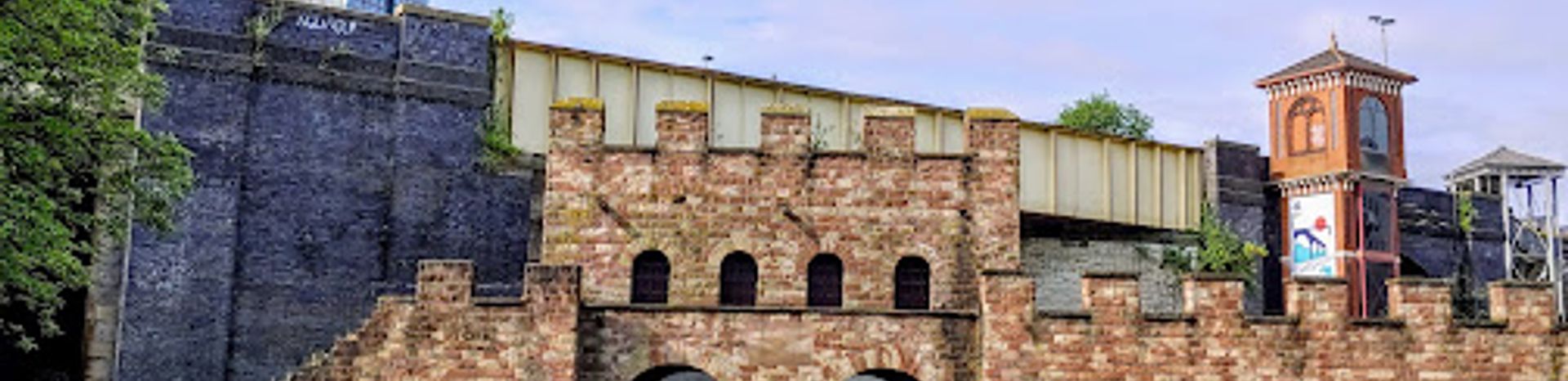
Remains of the Eastern Wall of the Roman Fort Mamucium, Manchester
Explore the ancient eastern wall remains of Mamucium, Manchester’s Roman fort that shaped the city’s earliest history and strategic defense.
Discover the ancient remains of the eastern wall of Mamucium, a Roman fort established around AD 79 in Manchester’s Castlefield. This historic site preserves part of the stone fortification built during the Roman occupation of Britain, offering a glimpse into the city’s earliest military heritage. The site includes reconstructed sections and foundations amid the modern urban landscape, reflecting over three centuries of Roman presence and strategic defense.
A brief summary to Remains of eastern wall of the Roman fort
- 28 Bridgewater St, Manchester, M3 4NH, GB
- Visit website
- Duration: 0.5 to 1.5 hours
- Free
-
 Outdoor
- Mobile reception: 4 out of 5
Local tips
- Visit during daylight hours for the best visibility of the stone remains and reconstructed walls.
- Combine your visit with a walk around Castlefield Urban Heritage Park to experience Manchester’s industrial and Roman history together.
- Wear comfortable shoes as the site includes uneven surfaces and raised walkways.
- Look for interpretive boards that explain the fort’s construction phases and the vicus settlement.

For the on-the-go comforts that matter to you
- Information Boards
- Seating Areas
- Trash Bins
Getting There
-
Tram
Take the Manchester Metrolink tram to Deansgate-Castlefield station, located about 10 minutes from the site. Trams run frequently with tickets costing approximately £2-£4. The station is well signposted for Castlefield and the Roman fort remains.
-
Bus
Several bus routes serve the Castlefield area from Manchester city centre, including routes 1, 2, and 3. Travel time is around 15 minutes. Buses run regularly with single fares around £2.50. Note that some stops require a short walk on cobbled streets.
-
Walking
From Manchester city centre, the Roman fort site is approximately a 15-minute walk over mostly flat urban terrain. The route passes through Castlefield Urban Heritage Park, offering scenic views of canals and historic buildings. Suitable for most visitors, but wear comfortable footwear.
Remains of eastern wall of the Roman fort location weather suitability
-
 Any Weather
-
 Clear Skies
-
 Mild Temperatures
Discover more about Remains of eastern wall of the Roman fort
Origins and Strategic Importance of Mamucium
The Roman fort known as Mamucium was founded circa AD 79 during the campaigns of General Julius Agricola against the Brigantes tribe. Located on a naturally defensible sandstone bluff overlooking the confluence of the Rivers Medlock and Irwell, the fort was strategically positioned to control key Roman roads running east-west between Chester and York, and north to Ribchester. This placement allowed the Romans to secure vital military and trade routes in northern Britain. Originally constructed from timber and turf, the fort was home to roughly 500 auxiliary soldiers who were recruited from across the Roman Empire, including cohorts from Spain and central Europe.Architectural Evolution and Defensive Features
Mamucium underwent at least three major construction phases. The initial timber fort was rebuilt around AD 160 with expanded granaries and defensive ditches. By AD 200, under Emperor Septimius Severus, the fort was reconstructed in stone, including a fortified north gate and strengthened walls, reflecting its continued military significance. The eastern wall remains, part of which is preserved and visible today, showcase the Roman engineering prowess. Archaeological excavations have revealed double ditch defenses, ramparts, and palisades that once surrounded the fort, enhancing its protection. The site also included a vicus — a civilian settlement with houses, shops, and industrial activity such as metalworking to support the garrison.Life Around the Fort and Decline
The vicus adjacent to Mamucium was a bustling community of soldiers’ families, merchants, and craftsmen. It functioned as an early industrial estate with furnaces and workshops supplying weapons and armor. Over time, particularly from the mid-3rd century, the fort and settlement experienced decline. The temple was demolished, and many buildings fell into disrepair. Despite this, a small military presence remained until the Roman withdrawal from Britain around AD 410. After abandonment, the site was largely forgotten and later obscured by industrial development.Impact of Industrial Revolution and Modern Preservation
The Industrial Revolution heavily impacted the Roman remains. Construction of the Bridgewater and Rochdale Canals, along with railway viaducts, destroyed much of the original fort. However, archaeological excavations in the late 19th and 20th centuries uncovered foundations, walls, and artifacts. In 1984, the north gate was reconstructed incorporating original Roman stones, and parts of the eastern wall were preserved and made accessible. Today, the site forms part of Manchester’s Castlefield Urban Heritage Park, blending ancient history with urban regeneration.Visiting the Site Today
Visitors can explore the reconstructed sections of the fort’s walls and gatehouse, walk along raised ramparts, and view the double ditch defenses. Nearby, foundations of granaries and vicus buildings provide insight into Roman military and civilian life. The setting near the River Medlock and the Rochdale Canal adds to the atmosphere, connecting visitors to both the ancient and industrial eras of Manchester’s history. Interpretive signage and preserved stonework allow a tangible connection to the city’s Roman origins.Legacy of Mamucium in Manchester’s Identity
Mamucium’s legacy endures in the very name of Manchester, derived from the Latinized form of the Celtic term for the 'breast-shaped hill' on which the fort was built. This site marks the earliest known settlement in the area, laying the foundations for the city’s development over two millennia. The fort’s remains stand as a testament to Manchester’s rich historical layers, from Roman military outpost to modern metropolis.For the vibe & atmosphere seeker
- Historic
- Scenic
- Tranquil
- Unique
For the design and aesthetic lover
- Rustic Designs
- Vintage Styles
For the architecture buff
- Historic
- Landmarks
- Parks & Gardens
For the view chaser and sunset hunter
- Iconic Views
- Waterfront
For the social media creator & influencer
- Instagrammable
- Photo Spots
- Architectural Shots
For the eco-conscious traveler
- Protected Area
- Public-Transport Accessible
- Locally Managed
For the kind of experience you’re after
- Cultural Heritage
- Photowalk
- Day Trip
- Weekend Getaway
For how adventurous you want the journey to be
- Easy Access
Location Audience
- Family Friendly
- Senior Friendly
- Child Friendly
- Teen Friendly
- Wheelchair Access
- Solo Friendly
- Couple Friendly


