Prime Meridian Travel Guide
Free Guide: Stand on the historic Prime Meridian line where east meets west, at the heart of global time and navigation in Greenwich.


A brief summary of Prime Meridian
Stand on the historic Prime Meridian line where east meets west, at the heart of global time and navigation in Greenwich.
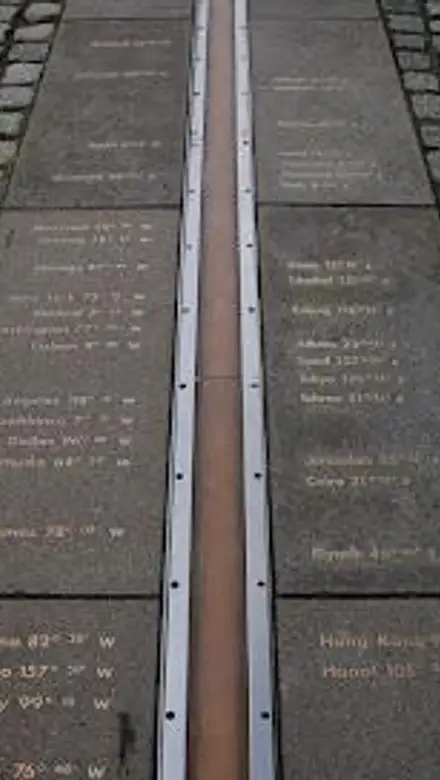
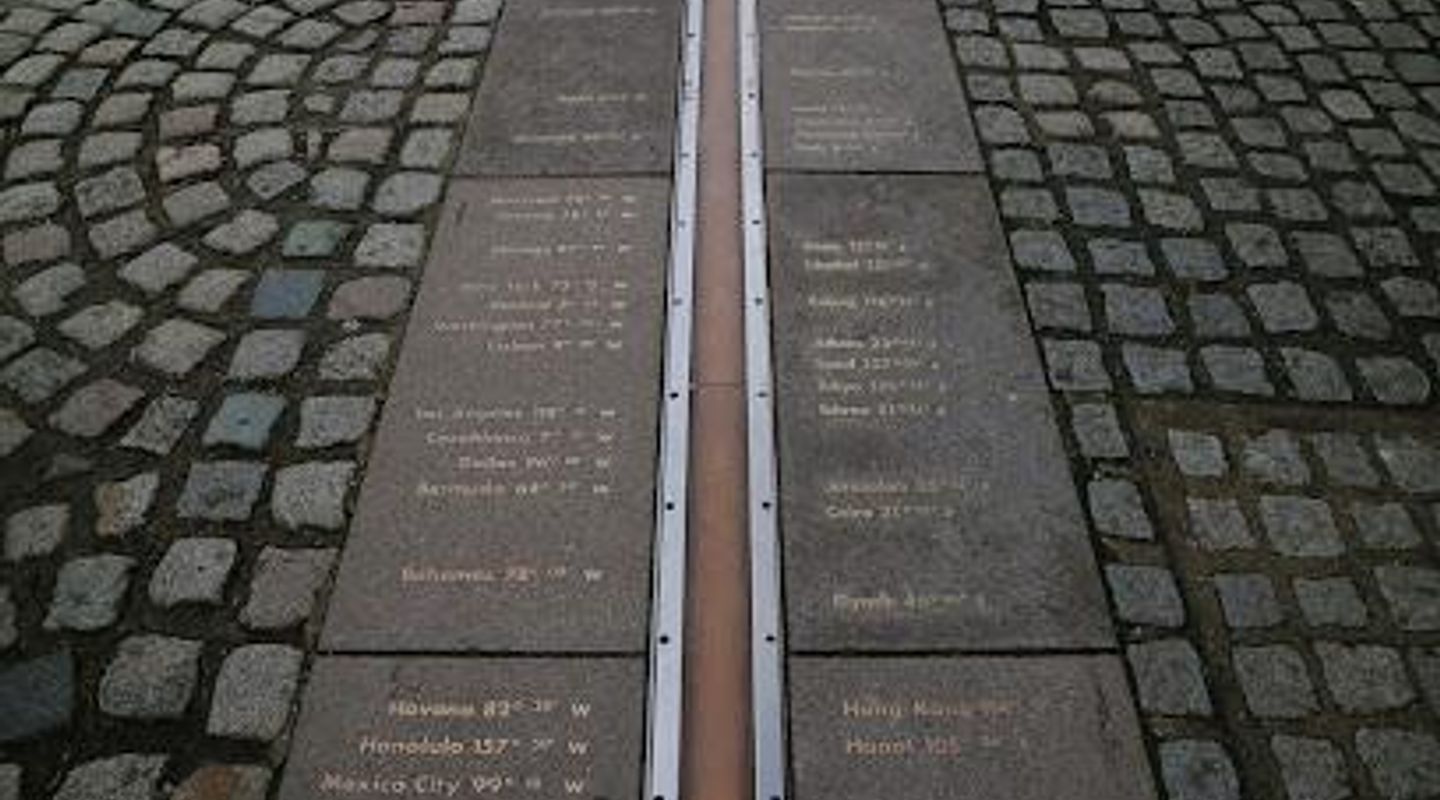
The Prime Meridian at the Royal Observatory Greenwich in London marks the historic zero degrees longitude line that divides the eastern and western hemispheres. Established in 1851 by the Airy Transit Circle telescope, this line became the global standard at the 1884 International Meridian Conference. Visitors can stand astride the line in the Observatory’s courtyard, explore the history of timekeeping and navigation, and enjoy panoramic views over Greenwich Park.
On-site amenities
 Restrooms
 Drink options
 Food options
 Seating areas
 Information boards
 Visitor centre
Opening hours
- Every day10 am–5 pm
Opening hours as listed on the venue’s Google Business Profile. Hours can change for services and special events, so check with the venue before you go.
- Address
- Royal Observatory, Blackheath Ave, London SE10 8XJ
- Phone
- Website
Getting there
Public Transport
Train
Bus
Walking
Discover more about Prime Meridian
Origins and Scientific Importance of the Royal Observatory
Founded in 1675 by King Charles II, the Royal Observatory Greenwich was established to improve navigation by accurately measuring longitude at sea. The Observatory became a center for astronomical research and timekeeping, producing essential star charts and the Nautical Almanac that helped sailors determine their position. Designed by Christopher Wren, the site was chosen for its clear sightlines and proximity to London’s scientific community.
The Birth of the Prime Meridian
In 1851, the Airy Transit Circle telescope, designed by Astronomer Royal George Biddell Airy, defined the Greenwich Meridian with unprecedented precision. This meridian line was used for over a century as the reference for zero degrees longitude. In 1884, an international conference in Washington D.C. selected the Greenwich Meridian as the world's Prime Meridian, standardizing global navigation and timekeeping. The line physically marked on the Observatory grounds symbolizes this pivotal role.
Features and Visitor Experience
The Prime Meridian is marked by a metal line in the Observatory’s Meridian Courtyard, where visitors can stand with one foot in each hemisphere. At night, a green laser beam projects northward from the Airy Transit Circle, visible up to 20 kilometers in clear conditions. The site also houses historic instruments such as John Harrison’s marine chronometers and the Great Equatorial Telescope, alongside modern astronomy galleries and a planetarium.
Legacy in Time and Navigation
Greenwich Mean Time (GMT) originated here, becoming the world’s time standard by the late 19th century. The Observatory’s time ball, installed in 1833, still drops daily to signal 1 pm, a tradition aiding ships in synchronizing clocks. Though astronomical work moved away in the mid-20th century, the Royal Observatory remains a symbol of humanity’s quest to measure and understand time and space.
Cultural and Global Significance
The Prime Meridian at Greenwich represents more than a geographical line; it embodies centuries of scientific endeavor and international cooperation. It divides the world’s hemispheres and underpins the global time zone system. The site is part of the Maritime Greenwich World Heritage Site, reflecting its artistic, scientific, and historical value.
Modern Engagement and Preservation
Today, the Royal Observatory is a museum and educational center managed by Royal Museums Greenwich. It offers exhibitions on the history of astronomy, navigation, and timekeeping, alongside interactive experiences. Preservation efforts maintain the historic buildings and instruments, ensuring the site remains a vital link between past achievements and contemporary science.
Evendo Review Centre
 Google
Guest reviews
Best time to go
Quietest: Jan, Feb & Dec · before 7am or at 10pm
Busy times are Evendo estimates for a typical year, to help you plan. Actual crowds vary with events, school holidays and the weather.
Explore Prime Meridian on the map
A handpicked selection of must-see spots near Prime Meridian, mapped for you.
Get your free copy of our complete guide to Prime Meridian, delivered straight to you.
Everything on this page, from opening hours and how to get there to Eve’s tips and the best time to go, in one PDF you can read offline, print or share.
Already have an account? Sign in
Your Prime Meridian guide is ready.
We'll send it to · Not you? Sign out

Getting your guide ready…
We are putting together a fresh copy of the Prime Meridian guide. This can take up to a minute.
This can take a few moments. If your browser asks, choose Allow so the download can start. You'll find the guide in your Downloads folder.
Nothing happened? Download it again
Sorry, the guide is taking longer than usual. Please try again in a minute, or get it by email instead.
Unlock the best of Prime Meridian
Skip-the-line tickets, guided tours with entry, and walking tours of the area, booked in a few clicks.

Other nearby places you may find interesting
The closest places of the same kind, if this one is not quite what you had in mind.
-
-
-
-
-


Swipe for more places
More to explore near Prime Meridian

 Best experiences near Prime Meridian
 Best hotels near Prime Meridian
 Best landmarks near Prime Meridian
 Best attractions near Prime Meridian
 Best shops near Prime Meridian
 Best restaurants near Prime Meridian
 Best bars near Prime Meridian
Do you manage this location?
Take control to get all the benefits, like improved information, better appearance, and stronger visibility across AI-powered discovery.
Explore more
Explore more of Middlesex
Discover Middlesex: A blend of historic charm and modern excitement, offering scenic beauty, cultural events, and easy access to London.
Explore Middlesex
Explore more of United Kingdom
Discover the United Kingdom: A blend of rich history, stunning landscapes, and vibrant cities, offering a unique travel experience for every visitor.
Explore United Kingdom