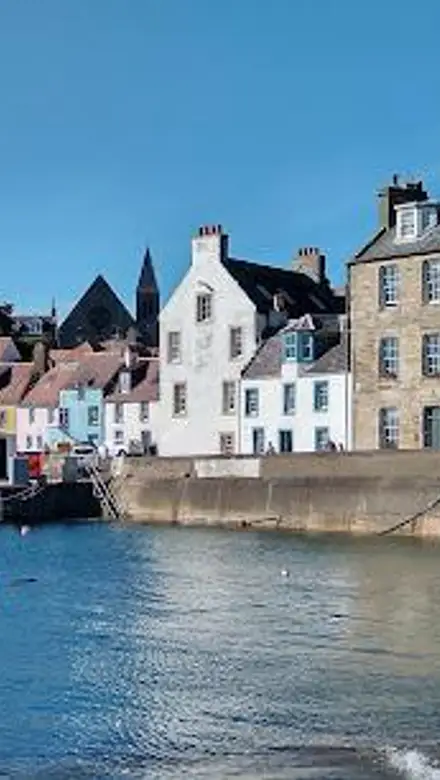
St. Monans Harbour Travel Guide
Free Guide: Picturesque working harbour with zigzag stone walls, whitewashed cottages, and views across the Firth of Forth.


A brief summary of St. Monans Harbour
Picturesque working harbour with zigzag stone walls, whitewashed cottages, and views across the Firth of Forth.
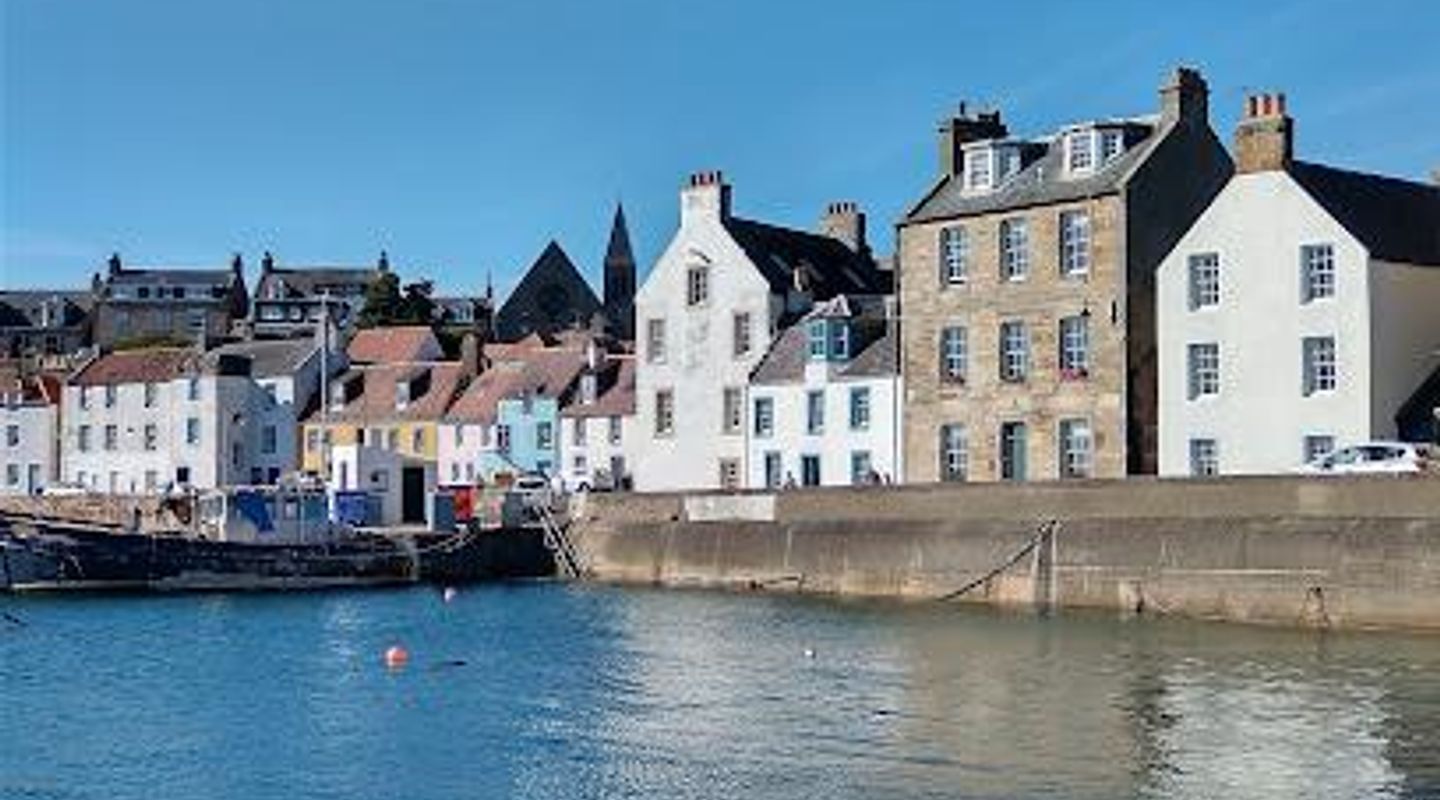
St Monans Harbour is a picturesque working harbour in the heart of Scotland's East Neuk of Fife, featuring distinctive zigzagging stone pier walls and panoramic views across the Firth of Forth. This charming coastal village, built around a natural inlet, showcases whitewashed cottages with characteristic red pantile roofs and serves as a gateway to the Fife Coastal Path. The harbour remains an active fishing port while offering waterfront dining, scenic walks, and access to nearby medieval ruins and historic landmarks.
On-site amenities
 Restrooms
 Food options
 Drink options
 Seating areas
 Information boards
- Address
- St Monans, Anstruther
Getting there
Bus from Anstruther
Walking via Fife Coastal Path
Car from Anstruther
Taxi or ride-share from Anstruther
Discover more about St. Monans Harbour
A Living Harbour Shaped by Centuries
St Monans Harbour sits at the heart of one of Scotland's most distinctive fishing villages, where centuries of maritime tradition continue to pulse through its stone walls and working boats. The harbour itself evolved from a simple natural inlet protected by rocky outcrops into a carefully engineered structure. The first formal harbour structures—slipways for launching small boats—date back centuries, with the first documented manmade harbour mentioned in 1649. The east pier, completed in 1865, was designed by the renowned Stevenson engineering family, whose lighthouse designs shaped Scotland's coastline. The west pier followed in 1902, deepened to accommodate larger vessels, reflecting the harbour's ongoing importance to local fishing communities.
Architecture and Visual Character
The harbour is instantly recognisable by its intricate zigzagging stone walls, which create a distinctive breakwater pattern that has become iconic to the East Neuk. These weathered walls frame views back toward the village, where whitewashed cottages with red pantile roofs cluster around the waterfront. The buildings themselves represent vernacular fisher and merchant architecture from the 17th to early 19th centuries, featuring characteristic Scottish details: forestairs, crow-stepped gables, datestones, and pantiled roofs that have survived centuries of North Sea winds. Walking the pier walls at golden hour transforms the harbour into a photographer's paradise, with the stone catching warm light and the water reflecting the village's historic silhouette.
The Fife Coastal Path and Surrounding Landscape
St Monans Harbour serves as a vital waypoint on the Fife Coastal Path, connecting walkers to a landscape rich with industrial heritage and medieval history. Just a short walk east along the coastal path stands Newark Castle, a 13th-century ruin perched dramatically on clifftops overlooking the constantly crashing sea. The castle's walls, fortified and extended through centuries of ownership by landed gentry and the Leslie family, now stand as haunting reminders of Scotland's feudal past. Westward, the 18th-century St Monans Windmill dominates the horizon—a remnant of Fife's once-thriving salt industry. The windmill pumped seawater into salt pans that were boiled using local coal, a trade that sustained the region for generations. Indentations in the grass and foundation ruins of workhouses still mark where this industrial activity once flourished.
Medieval Spirituality and Sacred Heritage
Perched on rocks just west of the village, St Monans Church stands as one of Scotland's finest surviving medieval structures, built in 1369 by King David II Bruce for a small house of Dominican friars. The church is often claimed to be the closest to the sea of any church in Scotland, standing merely 20 metres from the water's edge with the sea as its dramatic backdrop. The isolated position, surrounded by its original graveyard and a modern cemetery further up the slope, creates a contemplative atmosphere where centuries of local history rest beneath the turf. The church remains open daily from Easter through October, welcoming visitors to experience its atmospheric setting and historical significance.
Contemporary Life and Visitor Experience
Today, St Monans Harbour balances its working fishing heritage with tourism and leisure. The waterfront hosts several restaurants and cafés where visitors can enjoy fresh seafood while watching boats come and go. A fish merchant and traditional fish-smokehouse continue local food traditions, while privately owned holiday homes and a caravan park accommodate visitors exploring the East Neuk. The harbour remains genuinely active—not a museum piece but a living community where fishing boats still shelter behind those distinctive stone walls and locals maintain traditions stretching back centuries. Whether visiting for a leisurely afternoon stroll, a waterfront meal, or as part of a longer coastal walk, the harbour offers an authentic glimpse into Scotland's fishing heritage without the commercialisation of larger ports.
Evendo Review Centre
 Google
Guest reviews
Best time to go
Quietest: Jan, Feb & Nov · before 6am or from 11pm
Busy times are Evendo estimates for a typical year, to help you plan. Actual crowds vary with events, school holidays and the weather.
Explore St. Monans Harbour on the map
A handpicked selection of must-see spots near St. Monans Harbour, mapped for you.
Get your free copy of our complete guide to St. Monans Harbour, delivered straight to you.
Everything on this page, from opening hours and how to get there to Eve’s tips and the best time to go, in one PDF you can read offline, print or share.
Already have an account? Sign in
Your St. Monans Harbour guide is ready.
We'll send it to · Not you? Sign out

Getting your guide ready…
We are putting together a fresh copy of the St. Monans Harbour guide. This can take up to a minute.
This can take a few moments. If your browser asks, choose Allow so the download can start. You'll find the guide in your Downloads folder.
Nothing happened? Download it again
Sorry, the guide is taking longer than usual. Please try again in a minute, or get it by email instead.
Unlock the best of St. Monans Harbour
Skip-the-line tickets, guided tours with entry, and walking tours of the area, booked in a few clicks.

Other nearby places you may find interesting
The closest places of the same kind, if this one is not quite what you had in mind.
-
Newton Tower Explore the evocative 17th-century Newton Tower in Dalkeith, a preserved church relic steeped in Scottish history and tranquil charm.
-
Maiden Castle Explore the subtle earthworks and ancient mysteries of Maiden Castle, a prehistoric fortification nestled in the scenic Midlothian landscape.
-
Scott Monument Edinburgh’s towering Gothic monument honoring Sir Walter Scott, offering historic insights and panoramic city views atop 287 spiral steps.
-
Edinburgh Castle Historic fortress atop Castle Rock offering royal treasures, panoramic views, and centuries of Scottish heritage in the heart of Edinburgh.
-
Hirendean Castle A haunting 16th-century tower house ruin on the Moorfoot Hills, steeped in the tragic legend of the Earl of Lothian and surrounded by open Scottish countryside.
Swipe for more places
More to explore near St. Monans Harbour

 Best experiences near St. Monans Harbour
 Best hotels near St. Monans Harbour
 Best landmarks near St. Monans Harbour
 Best attractions near St. Monans Harbour
 Best shops near St. Monans Harbour
 Best restaurants near St. Monans Harbour
 Best bars near St. Monans Harbour
Do you manage this location?
Take control to get all the benefits, like improved information, better appearance, and stronger visibility across AI-powered discovery.
Explore more
Explore more of Midlothian
Discover Midlothian, Scotland's hidden gem, where history, nature, and culture blend seamlessly to offer a unique travel experience.
Explore Midlothian
Explore more of United Kingdom
Discover the United Kingdom: A blend of rich history, stunning landscapes, and vibrant cities, offering a unique travel experience for every visitor.
Explore United Kingdom