Norwich Guildhall, Norwich Travel Guide
Free Guide: Discover Norwich's medieval civic soul in this chequerboard flint icon—England's grandest provincial city hall, whispering tales of governance, justice, and craftsmanship since 1407.


A brief summary of Norwich Guildhall
Discover Norwich's medieval civic soul in this chequerboard flint icon—England's grandest provincial city hall, whispering tales of governance, justice, and craftsmanship since 1407.
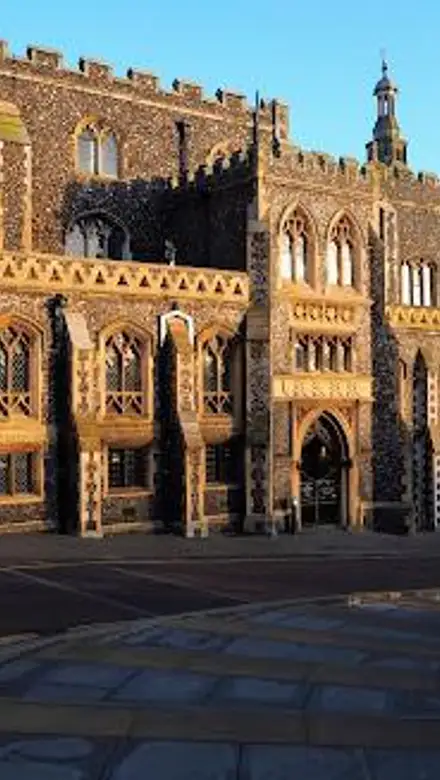
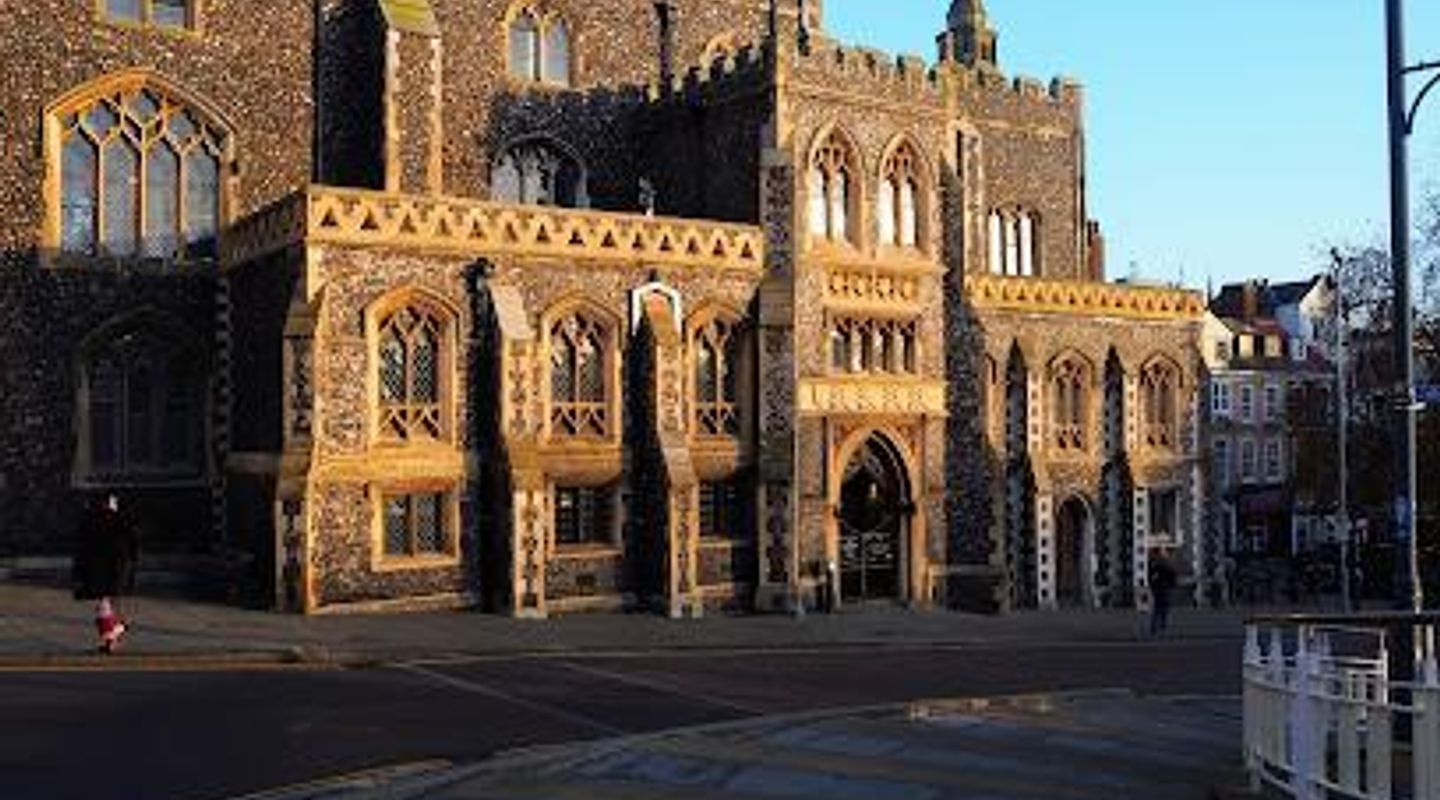
England's largest and most elaborate provincial medieval city hall, the Norwich Guildhall stands as a Grade I listed chequerboard flint masterpiece on Guildhall Hill. Built between 1407-1413, it served as Norwich's civic heart until 1938, housing government offices, courts, a gaol, and chapel. Admire its striking flint-and-ashlar facade beside the bustling marketplace. Though generally closed to the public, occasional guided tours reveal atmospheric wooden interiors and rich history. A must-see landmark for architecture lovers in Norwich's vibrant center.
On-site amenities
 Restrooms
 Food options
 Drink options
- Address
- Guildhall Hill, Norwich NR2 1JS
Getting there
Walking
Bus
Car
Discover more about Norwich Guildhall
History & Architecture
Constructed between 1407 and 1413, Norwich Guildhall exemplifies medieval flint knapping with its iconic chequerboard pattern of knapped flint and limestone ashlar, especially on the 16th-century east facade. As England's largest provincial medieval city hall, it anchored civic governance from the early 15th century until 1938, when City Hall took over. The building once included a gaol, courts, a chapel, the mayor's parlor, and aldermen's chambers, embodying Norwich's prosperous medieval trade era.
Exterior Highlights
Positioned on Guildhall Hill overlooking Norwich Market, the Guildhall's exterior demands attention. Its flintwork showcases local craftsmanship, with undercrofts and towering presence amid the city's medieval core. The structure's durability through centuries highlights East Anglian building traditions, blending functionality with ornate detailing.
Interior Legacy
Inside, ancient wooden beams, hammerbeam roofs, and atmospheric upper chambers evoke Norwich's governance past. Cells and courtrooms tell tales of justice and imprisonment. Though lower levels host modern offices, tours unveil these preserved spaces, offering glimpses into medieval administration and punishment.
Visiting Today
Primarily viewable from outside, the Guildhall integrates into Norwich's market scene. Organized tours, like Heritage Open Days or Norfolk & Norwich Festival events, provide rare access. Ground floor offers limited wheelchair entry; upper levels require stairs. It's a quick, evocative stop amid city explorations.
Significance in Norwich
As a Grade I listed gem, it complements Norwich's 36 medieval churches and castle, underscoring the city's UNESCO-protected heritage. Photogenic and historically potent, it bridges medieval might with contemporary life, inviting reflection on 600 years of local power.
Evendo Review Centre
 Google
Guest reviews
Best time to go
Quietest: Jan, Feb & Mar · before 8am or from 10pm
Busy times are Evendo estimates for a typical year, to help you plan. Actual crowds vary with events, school holidays and the weather.
Explore Norwich Guildhall on the map
A handpicked selection of must-see spots near Norwich Guildhall, mapped for you.
Get your free copy of our complete guide to Norwich Guildhall, delivered straight to you.
Everything on this page, from opening hours and how to get there to Eve’s tips and the best time to go, in one PDF you can read offline, print or share.
Already have an account? Sign in
Your Norwich Guildhall guide is ready.
We'll send it to · Not you? Sign out

Getting your guide ready…
We are putting together a fresh copy of the Norwich Guildhall guide. This can take up to a minute.
This can take a few moments. If your browser asks, choose Allow so the download can start. You'll find the guide in your Downloads folder.
Nothing happened? Download it again
Sorry, the guide is taking longer than usual. Please try again in a minute, or get it by email instead.
Unlock the best of Norwich Guildhall
Skip-the-line tickets, guided tours with entry, and walking tours of the area, booked in a few clicks.


Other nearby places you may find interesting
The closest places of the same kind, if this one is not quite what you had in mind.
-
-
-
-
-


Swipe for more places
More to explore near Norwich Guildhall

 Best experiences near Norwich Guildhall
 Best hotels near Norwich Guildhall
 Best landmarks near Norwich Guildhall
 Best attractions near Norwich Guildhall
 Best shops near Norwich Guildhall
 Best restaurants near Norwich Guildhall
 Best bars near Norwich Guildhall
Do you manage this location?
Take control to get all the benefits, like improved information, better appearance, and stronger visibility across AI-powered discovery.
Explore more

Explore more of Norwich
Norwich travel guide: explore medieval lanes, Norwich Castle, two cathedrals, independent culture, Norfolk food, riverside walks and the Broads nearby.
Explore Norwich
Explore more of United Kingdom
Discover the United Kingdom: A blend of rich history, stunning landscapes, and vibrant cities, offering a unique travel experience for every visitor.
Explore United Kingdom