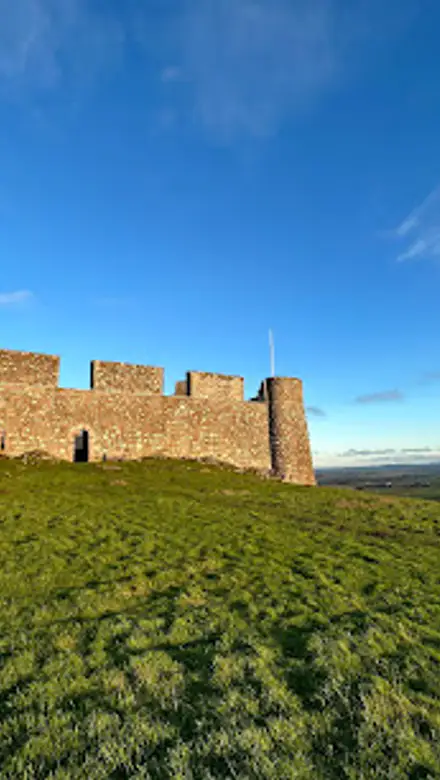
Hume Castle Travel Guide
Free Guide: Historic hilltop fortress near Kelso with panoramic views and a rich legacy of Scottish border warfare and royal intrigue.


A brief summary of Hume Castle
Historic hilltop fortress near Kelso with panoramic views and a rich legacy of Scottish border warfare and royal intrigue.
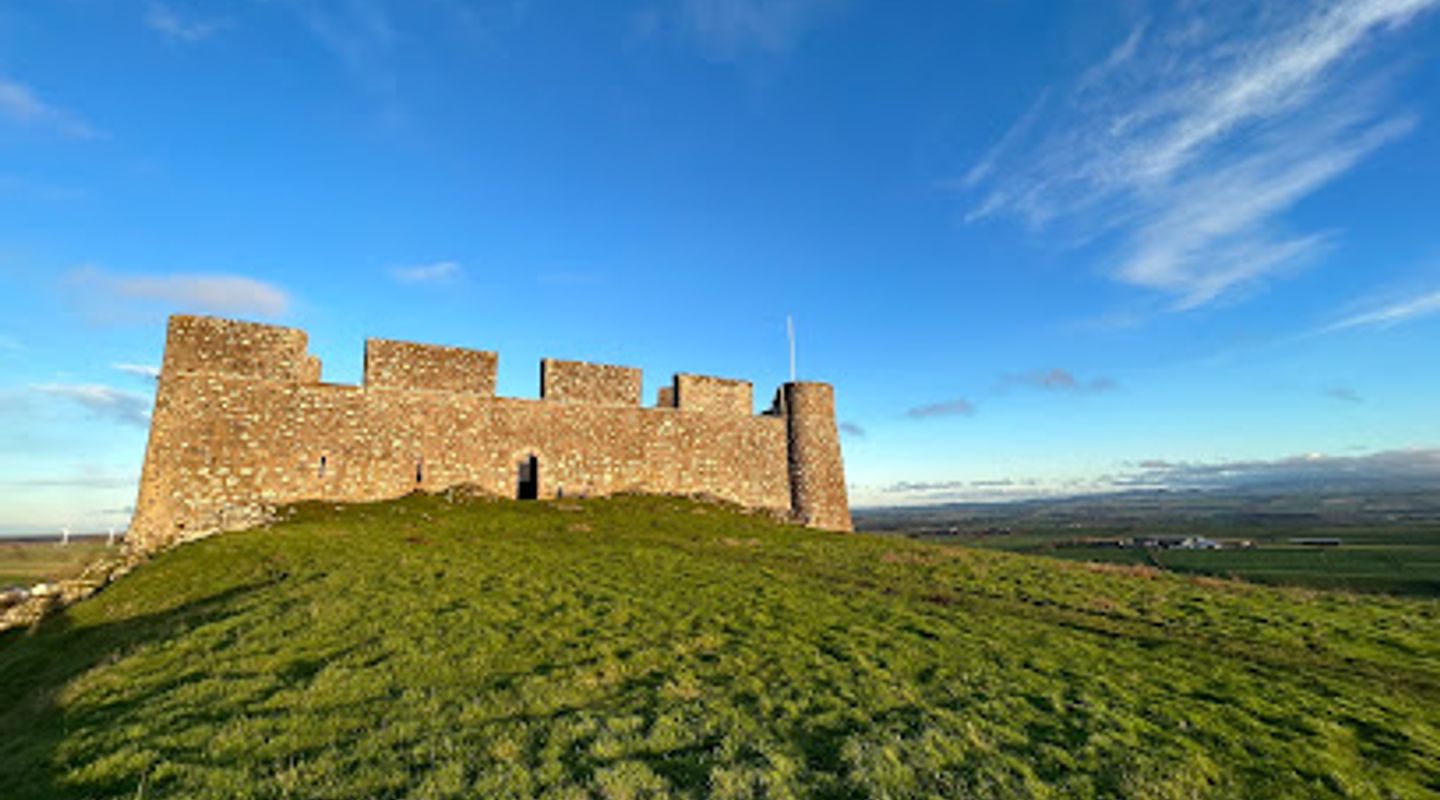
Perched on a commanding hilltop near Kelso, Hume Castle is the heavily modified ruin of a 12th- or 13th-century fortress once held by the influential Home family. This historic site, with its dramatic crenellated walls rebuilt in the 18th century, offers sweeping views across the Tweed valley and a rich history of border warfare, royal visits, and strategic beacon use spanning centuries.
On-site amenities
 Seating areas
 Information boards
 Trash bins
- Address
- Kelso TD5 7TR
- Website
Getting there
Bus
Car
Walking
Discover more about Hume Castle
Origins and Strategic Importance
Hume Castle was originally constructed in the late 12th or early 13th century by William de Home, who took his surname from the lands he acquired. The castle’s location on a natural rocky outcrop provided a commanding vantage point over the Scottish Borders, less than five miles from the English border. Its rectangular courtyard design was typical of Highland castles but unusual for southern Scotland. For centuries, it served as a vital defensive stronghold and seat of the powerful Home family, who were Wardens of the Eastern Marches tasked with guarding the border.
Medieval Conflicts and Royal Connections
Throughout the Anglo-Scottish wars, Hume Castle changed hands multiple times, enduring sieges, burnings, and recaptures. It was a base for King James II during his campaign to retake Roxburgh Castle, where he tragically died due to a cannon explosion. Mary, Queen of Scots, stayed here during her journey to exile in England. The castle was also involved in the Marian Civil War and the Rough Wooing, reflecting its central role in border conflicts.
Destruction and Romantic Revival
In 1651, Oliver Cromwell’s forces bombarded and reduced Hume Castle to ruins as part of their campaign to control Scottish border fortifications. The castle remained a ruin for over a century until Sir Hugh Hume, 3rd Earl of Marchmont, rebuilt the current crenellated walls in 1789 as a romantic folly. This reconstruction enclosed a much smaller area than the original castle, with some medieval walls still visible within.
Beacon and Military Use in Later Centuries
Hume Castle served as a beacon site during the Napoleonic Wars, part of a medieval early warning system to alert of invasion threats. A famous incident in 1804, known as "The Great Alarm," was triggered here by a mistaken beacon fire, mobilizing thousands of volunteers. The castle was also used as a lookout and resistance base during World War II, reinforcing its longstanding military significance.
Present-Day Significance and Views
Today, Hume Castle is managed by the Clan Home Association and stands as a Scheduled Ancient Monument. Visitors are drawn by its unique silhouette and panoramic views across the Tweed valley and surrounding Borders countryside. The site offers a tangible connection to Scotland’s turbulent history and the enduring legacy of the Home family.
Architectural Features and Atmosphere
The castle’s large 18th-century crenellated walls, built atop the original curtain wall foundations, give it a picturesque, almost theatrical appearance. Remnants of the original 13th-century inner walls remain, hinting at the castle’s medieval origins. Its elevated position and rugged setting create an evocative atmosphere, blending romantic ruin with historical gravitas.
Evendo Review Centre
 Google
Guest reviews
Best time to go
Quietest: Jan, Feb & Dec · before 6am or at 8pm
Busy times are Evendo estimates for a typical year, to help you plan. Actual crowds vary with events, school holidays and the weather.
Explore Hume Castle on the map
A handpicked selection of must-see spots near Hume Castle, mapped for you.
Get your free copy of our complete guide to Hume Castle, delivered straight to you.
Everything on this page, from opening hours and how to get there to Eve’s tips and the best time to go, in one PDF you can read offline, print or share.
Already have an account? Sign in
Your Hume Castle guide is ready.
We'll send it to · Not you? Sign out

Getting your guide ready…
We are putting together a fresh copy of the Hume Castle guide. This can take up to a minute.
This can take a few moments. If your browser asks, choose Allow so the download can start. You'll find the guide in your Downloads folder.
Nothing happened? Download it again
Sorry, the guide is taking longer than usual. Please try again in a minute, or get it by email instead.
Other nearby places you may find interesting
The closest places of the same kind, if this one is not quite what you had in mind.
-
-
-
-
-


Swipe for more places
More to explore near Hume Castle

 Best experiences near Hume Castle
 Best hotels near Hume Castle
 Best landmarks near Hume Castle
 Best attractions near Hume Castle
 Best shops near Hume Castle
 Best restaurants near Hume Castle
 Best bars near Hume Castle
Do you manage this location?
Take control to get all the benefits, like improved information, better appearance, and stronger visibility across AI-powered discovery.
Explore more

Explore more of Peeblesshire
Discover the serene beauty of Peeblesshire in the Scottish Borders, where history, nature, and local charm come together for an unforgettable experience.
Explore Peeblesshire
Explore more of United Kingdom
Discover the United Kingdom: A blend of rich history, stunning landscapes, and vibrant cities, offering a unique travel experience for every visitor.
Explore United Kingdom