

Jedburgh Abbey Travel Guide
Free Guide: Discover the majestic ruins of Jedburgh Abbey, a stunning 12th-century Border Abbey blending Romanesque and Gothic styles amid tranquil Scottish landscapes.


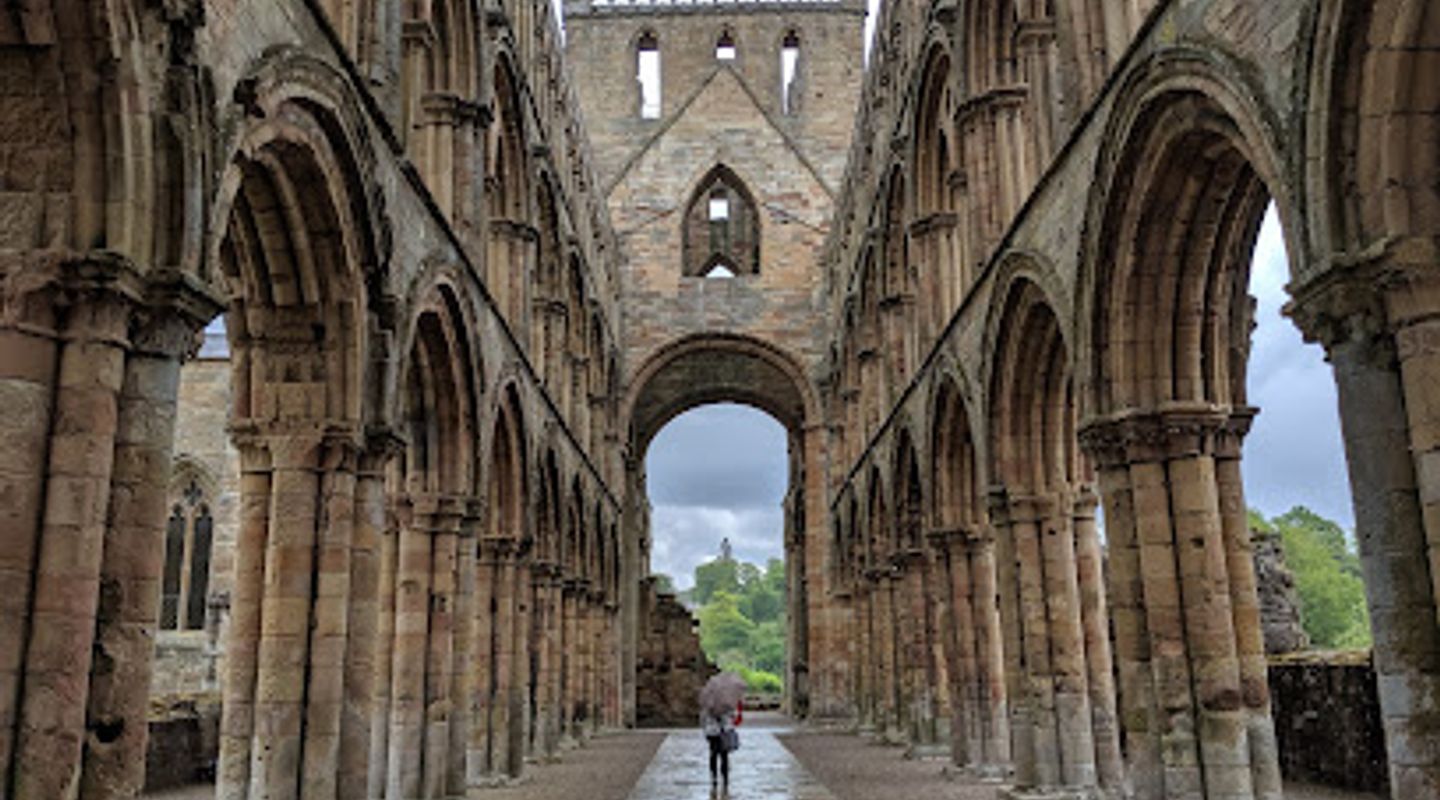
A brief summary of Jedburgh Abbey
Discover the majestic ruins of Jedburgh Abbey, a stunning 12th-century Border Abbey blending Romanesque and Gothic styles amid tranquil Scottish landscapes.
Jedburgh Abbey, founded in 1138 by King David I, is one of Scotland’s four great Border Abbeys. This striking ruin showcases a unique blend of Romanesque and early Gothic architecture, reflecting centuries of construction and turbulent history near the English border. Visitors can explore the vast remains of the abbey church, cloisters, and ancillary buildings, alongside a visitor centre displaying medieval artefacts and a recreated herb garden.
On-site amenities
 Restrooms
 Drink options
 Food options
 Seating areas
 Trash bins
 Information boards
 Visitor centre
Opening hours
- Every day9:30 am–5 pm
Opening hours as listed on the venue’s Google Business Profile. Hours can change for services and special events, so check with the venue before you go.
- Address
- Abbey Bridge End, Jedburgh TD8 6JQ
- Phone
- Website
Getting there
Bus
Car
Train and Taxi
Discover more about Jedburgh Abbey
A Monument of Medieval Ambition and Border History
Jedburgh Abbey was established in the 12th century by King David I as a symbol of Scottish power and religious devotion close to the often-contested English border. Built over more than 70 years, it stands as a testament to medieval craftsmanship, blending Romanesque solidity with the emerging elegance of early Gothic design. Despite repeated damage during border conflicts and the Wars of Independence, the abbey’s ruins still evoke the grandeur it once held, with soaring arches and intricate stone carvings that dominate the town skyline.
Exploring the Abbey’s Architectural Splendour
The abbey’s remains include the nave, transepts, presbytery, and cloister buildings, which reveal the scale and complexity of monastic life. Visitors can climb a narrow spiral staircase to a balcony overlooking the interior, gaining panoramic views of the stonework and the surrounding landscape. The ruins’ open windows frame views of the rolling Scottish Borders hills, enhancing the atmospheric experience. The site also features a burial aisle for the Earls of Lothian and a stone display with artefacts recovered from the abbey grounds.
Visitor Centre and Artefacts Bringing History to Life
Adjacent to the ruins, the visitor centre houses a rich collection of artefacts, including the famed 12th-century ivory "Jedburgh comb" and an 8th-century shrine predating the abbey. Exhibits provide insights into the daily routines of the Augustinian canons and the abbey’s role in medieval society. Interactive displays, informative boards in multiple languages, and a digital audio guide deepen understanding of the abbey’s construction, its turbulent past, and the lives of those who lived and worked there.
The Cloister Garden and Reflective Spaces
A recreated cloister garden offers a sensory connection to the past, filled with herbs and plants once used by the monks for medicinal and culinary purposes. Benches and picnic tables scattered around the grounds invite quiet reflection amid the ruins. The peaceful setting contrasts with the abbey’s violent history, providing a tranquil space to contemplate the passage of time and the endurance of heritage.
Accessibility and Visitor Experience
Most of the abbey and visitor centre are accessible to wheelchair users, though some parts involve steps and uneven terrain. The site includes seating areas, picnic tables, and information boards at accessible heights. Audio guides are available on personal devices or loaned equipment, enhancing the visit with historical narration and occasional monastic music. The abbey’s central location in Jedburgh makes it easy to explore alongside other local attractions and charming town amenities.
Jedburgh Abbey’s Place in Scottish Heritage
As possibly the best-preserved Augustinian abbey in Scotland, Jedburgh Abbey stands as a jewel of the Borders region. Its architecture and artefacts tell stories of faith, conflict, and resilience. The abbey remains a powerful symbol of Scotland’s medieval past, inviting visitors to step into a world where history, art, and nature intertwine in a breathtaking setting.
Evendo Review Centre
 Google
Guest reviews
Best time to go
Quietest: Jan, Feb & Dec · at 1am or at 2am or at 3am
Busy times are Evendo estimates for a typical year, to help you plan. Actual crowds vary with events, school holidays and the weather.
Explore Jedburgh Abbey on the map
A handpicked selection of must-see spots near Jedburgh Abbey, mapped for you.
Get your free copy of our complete guide to Jedburgh Abbey, delivered straight to you.
Everything on this page, from opening hours and how to get there to Eve’s tips and the best time to go, in one PDF you can read offline, print or share.
Already have an account? Sign in
Your Jedburgh Abbey guide is ready.
We'll send it to · Not you? Sign out

Getting your guide ready…
We are putting together a fresh copy of the Jedburgh Abbey guide. This can take up to a minute.
This can take a few moments. If your browser asks, choose Allow so the download can start. You'll find the guide in your Downloads folder.
Nothing happened? Download it again
Sorry, the guide is taking longer than usual. Please try again in a minute, or get it by email instead.
Unlock the best of Jedburgh Abbey
Skip-the-line tickets, guided tours with entry, and walking tours of the area, booked in a few clicks.
 Tour with entry
Rosslyn Chapel and Hadrian's Wall Tour
from $65.57 Tour with entry
Scottish Castles: Glamis and Dunnottar
from $69.35 Tour with entry
Full Day Trip Hadrian's Wall and The Borders from Edinburgh
from $100.61 Tour with entry
Rosslyn Chapel and Hadrian's Wall Small Group Tour from Edinburgh
from $112.22
 Tour
TourScottish Borders Road Trip Guidebook-Edinburgh, Melrose & Rosslyn
from $13.86 Tour
TourHadrian's Wall, Roman Britain and the Borders small group day tour
from $112.86 Tour
TourHadrian's Wall and The Borders Tour from Edinburgh with Admission
from $117.46 Tour
TourHadrian's Wall Luxury Private Day Tour from Edinburgh
from $1,781.57
Other nearby places you may find interesting
The closest places of the same kind, if this one is not quite what you had in mind.
-
-
-
-
-


Swipe for more places
More to explore near Jedburgh Abbey

 Best experiences near Jedburgh Abbey
 Best hotels near Jedburgh Abbey
 Best landmarks near Jedburgh Abbey
 Best attractions near Jedburgh Abbey
 Best shops near Jedburgh Abbey
 Best restaurants near Jedburgh Abbey
 Best bars near Jedburgh Abbey
Do you manage this location?
Take control to get all the benefits, like improved information, better appearance, and stronger visibility across AI-powered discovery.
Explore more
Explore more of Roxburghshire
Discover the enchanting landscapes and rich history of Roxburghshire, a picturesque region in the Scottish Borders known for its ancient castles, scenic hills, and vibrant market towns.
Explore Roxburghshire
Explore more of United Kingdom
Discover the United Kingdom: A blend of rich history, stunning landscapes, and vibrant cities, offering a unique travel experience for every visitor.
Explore United Kingdom
