

Best Landmarks in Stirlingshire
Planning a trip to Stirlingshire? Discover the best landmarks in Stirlingshire with history, expert tips, and routes. Free on web or the Evendo app.


The best landmarks in Stirlingshire
- Top rated
- Closest to the centre
- Price level: low to high
- Time to spend: shortest first
- A–Z
17 landmarks
-
Castle4.6★28,269 reviews
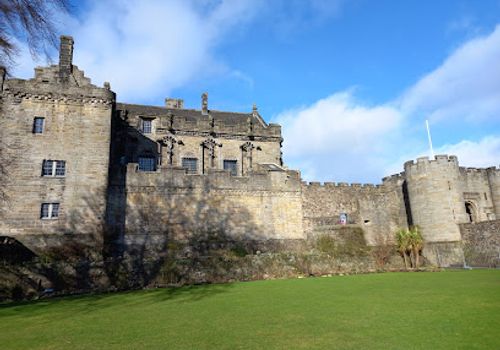
Stirling Castle
Stirling Castle, perched atop a volcanic crag in central Scotland, is a historic fortress that has witnessed centuries of royal drama and national events. Renowned for its Renaissance Royal Palace, Great Hall, and Chapel Royal, the castle offers immersive exhibitions, costumed interpreters, and stunning gardens. Visitors can explore Scotland’s rich history through interactive displays and guided tours, all set against panoramic views of the surrounding Highlands and Ochil Hills.
Daily 9:30–18:00Price level $$Time to spend 2–4 hrs
-
Historical landmark4.7★11,472 reviews
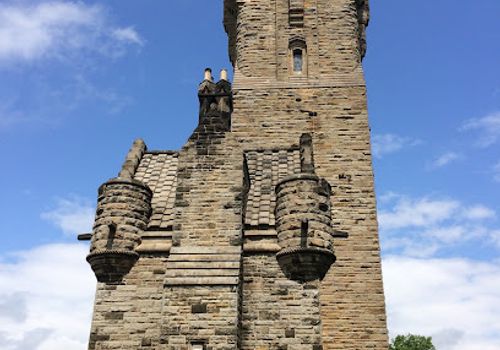
The National Wallace Monument
Perched dramatically on Abbey Craig overlooking Stirling, this iconic 220-foot tower commemorates Sir William Wallace, Scotland's legendary patriot and guardian. Visitors ascend 246 spiral steps through exhibition galleries housed within the monument to reach The Crown, rewarded with panoramic 360-degree views across Scotland's historic heartland. The Hall of Arms displays Wallace's famous battle-sword, while immersive displays transport you to the 13th century and the pivotal Battle of Stirling Bridge. Free parking, a courtesy shuttle bus, and woodland walking trails enhance the experience.
Daily 9:30–18:00Price level $$Time to spend 1.5–3 hrs
-
Monument4.6★494 reviews
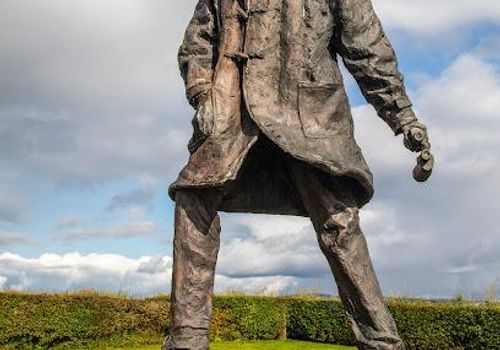
David Stirling Memorial
The David Stirling Memorial, located on the Hill of Row near Dunblane, honors Colonel Sir David Stirling, founder of the Special Air Service (SAS). Erected in 2002, the monument features a bronze statue of Stirling standing on rugged rocks, overlooking the southern Highlands. It commemorates Stirling’s pioneering military leadership and the SAS members who sacrificed their lives, set against a backdrop of scenic Scottish countryside.
Open 24 hoursTime to spend 0.5–1.5 hrs
-
Tourist attraction4.7★200 reviews
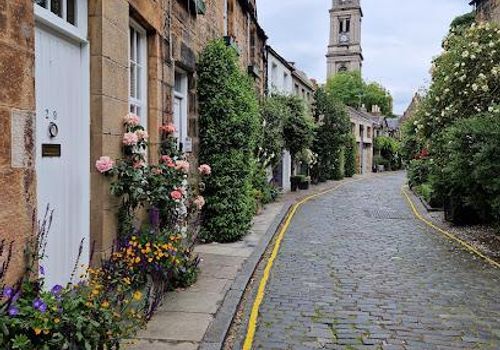
Circus Lane
Circus Lane is a picturesque cobbled mews street in Edinburgh's Stockbridge neighbourhood, famous for its colourful flower-adorned terraced houses and Instagram-worthy charm. Originally built in the early 1800s as stables and service quarters for wealthy New Town residents, the lane has been transformed into a beloved residential street lined with vibrant hanging baskets and planters. The lane's distinctive character, combined with views of the imposing St Stephen's Church tower at its end, makes it one of Edinburgh's most photographed locations.
Time to spend 0.2–1 hr
-
Historical landmark4.4★223 reviews
Beheading Stone.
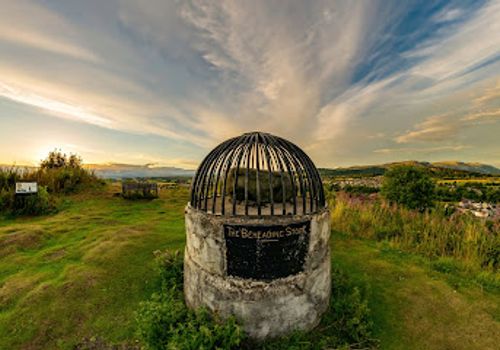
Perched atop Mote Hill in Stirling, the Beheading Stone is a historic execution block dating back to the 15th century. Known for its dark past as the site where Murdoch, Duke of Albany, and other nobles were beheaded for treason, the stone is now protected under an iron cage. Visitors can view the axe marks on the stone and enjoy panoramic views of Stirling Castle and the surrounding landscape, connecting with a pivotal chapter of Scotland’s medieval history.
Open 24 hoursTime to spend 0.5–1.5 hrs
-
Historical landmark4.5★115 reviews
James Clerk Maxwell Statue
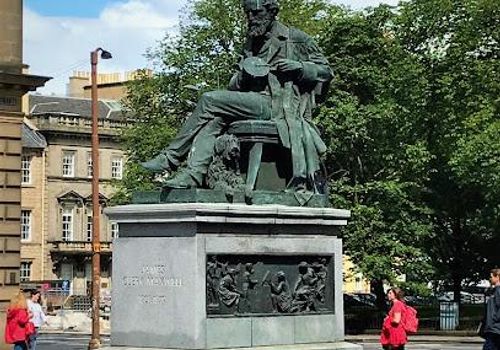
The James Clerk Maxwell Statue, located at 22-26 George Street in Edinburgh’s New Town, honors one of the greatest physicists in history. Created by Alexander Stoddart and unveiled in 2008, the bronze statue depicts Maxwell seated with his dog Toby at his feet and holding a spinning colour top, symbolizing his pioneering work in colour photography and electromagnetism. Set amidst the elegant Georgian architecture of George Street, the statue celebrates Maxwell’s profound scientific legacy that underpins modern technology.
Open 24 hoursTime to spend 0.2–1 hr
-
Museum4.5★72 reviews
Argyll and Sutherland Highlanders Regimental Museum
Located within the historic Stirling Castle, the Argyll and Sutherland Highlanders Regimental Museum showcases the rich military heritage of one of Scotland’s most renowned Highland regiments. The museum features a nationally significant collection of uniforms, medals, paintings, and personal stories spanning from the regiment’s 18th-century origins to the present day. Recently modernised, it offers an engaging and insightful experience into Scottish military history and culture.
Daily 9:30–17:30Price level $$Time to spend 1–2 hrs
-
Historical landmark4.5★54 reviews
The Star Pyramid
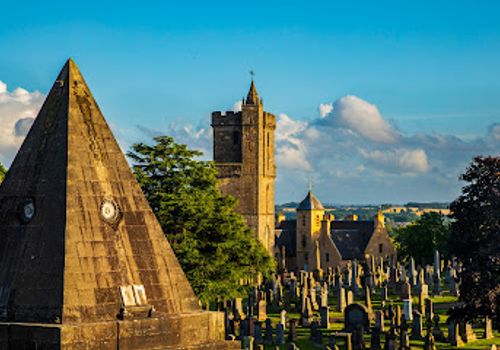
The Star Pyramid, also known as Salem Rock, is a striking sandstone monument built in 1863 by William Drummond in Stirling’s Old Town Cemetery. Dedicated to those who suffered for civil and religious liberty in Scotland, its pyramid form symbolizes stability and endurance. Surrounded by wrought iron railings and marble Bibles, it stands near Stirling Castle, offering a unique historical landmark blending religious symbolism and Victorian garden design.
Open 24 hoursTime to spend 0.5–1.5 hrs
-
Historical landmark4.5★24 reviews
Duke of Wellington Equestrian statue
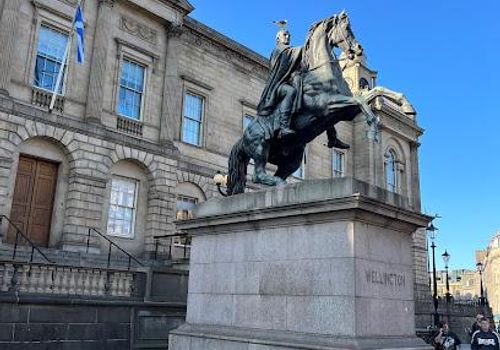
Located at 9 Waterloo Place, Edinburgh, the Duke of Wellington equestrian statue is a striking bronze monument unveiled in 1852. Sculpted by Sir John Steell, it depicts the Duke mounted on his horse Copenhagen, commemorating his victory at Waterloo. This iconic historical landmark stands outside Register House at the east end of Princes Street, symbolizing British military prowess and leadership during the Napoleonic Wars.
Time to spend 0.5–1.5 hrs
-
Historical landmark4.2★28 reviews
Kinnell Stone Circle
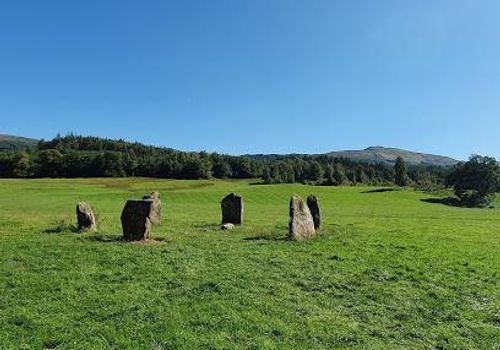
The Killin Stone Circle, also known as Kinnell Stone Circle, is a prehistoric Bronze Age stone circle near Killin village at the western end of Loch Tay, Scotland. Comprising six upright dark grey schist stones arranged in a flattened circle about 10 meters across, it features distinctive cupmarks on the northernmost stone. Its excellent preservation owes much to its location within the grounds of historic Kinnell House, with possible restoration in the 18th or 19th century. It stands as a significant cultural landmark reflecting ancient ritual or governance practices.
Time to spend 0.5–2 hrs
-
Memorial4.3★24 reviews
Rob Roy McGregor Statue
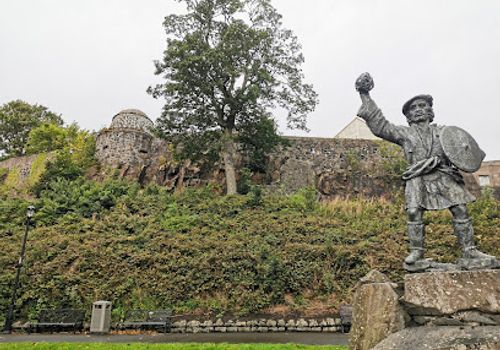
The Rob Roy McGregor Statue in Stirling commemorates the legendary Scottish outlaw and folk hero Rob Roy MacGregor (1671–1734). Crafted in bronze and set on a pink granite pedestal, the statue honors his turbulent life as a Jacobite rebel, cattleman, and symbol of Highland resistance. Located on Corn Exchange Road, this memorial captures the spirit of a man immortalized by Sir Walter Scott’s novel and celebrated for his defiance against oppressive landlords.
Open 24 hoursTime to spend 0.2–1 hr
-
Church4.3★23 reviews
Callander Kirk
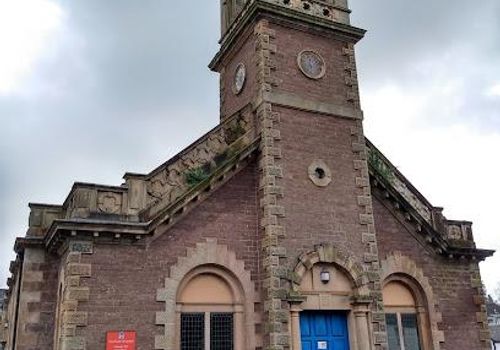
Callander Kirk, located on South Church Street in Callander, Scotland, is a striking 19th-century Gothic church originally built in the 1840s for the Free Church following the Disruption from the Church of Scotland. Known previously as St Bride’s and later St Kessog’s, it features distinctive Gothic architecture with Italianate influences, including a belvedere bell tower. Though it ceased worship services in 1985, the building remains a significant cultural and historical landmark in the town centre.
Time to spend 0.5–1.5 hrs
-
Historical landmark4.8★17 reviews
Martyrs' Memorial
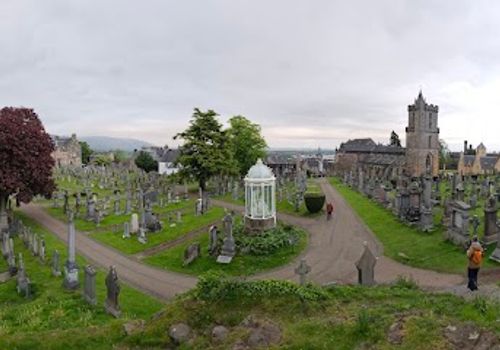
The Martyrs' Memorial in Stirling commemorates two young sisters, Margaret and Agnes Wilson, who were drowned in 1685 for their Presbyterian Covenanter faith. This striking marble monument, sheltered beneath an ornate iron and glass canopy, was commissioned in 1859 by William Drummond, a zealous Presbyterian, and sculpted by Handyside Ritchie. Located in the historic Old Town Cemetery, it stands as a solemn tribute to faith, sacrifice, and Scotland’s turbulent religious history.
Open 24 hoursTime to spend 0.5–1.5 hrs
-
Historical landmark4.6★14 reviews
Tomb Of Sir John De Graeme
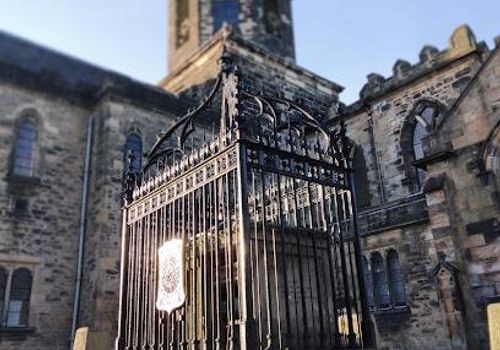
Located in the historic graveyard of Falkirk Old Parish Church, the Tomb of Sir John de Graeme stands as a striking memorial to one of Scotland's greatest medieval warriors. Sir John de Graeme, William Wallace's most trusted lieutenant, fell during the Battle of Falkirk in 1298 and was carried to this sacred ground by Wallace himself. The tomb is instantly recognizable by its ornate cast-iron railings, gilded coronet, and a bronze replica of the two-handed sword de Graeme wielded in battle. This distinctive monument represents both medieval Scottish valor and Victorian-era craftsmanship, making it one of the most significant historical landmarks in Falkirk's graveyard.
Open 24 hoursTime to spend 0.5–2 hrs
-
Historical landmark4.7★7 reviews
Black Boy
The Black Boy Fountain is a striking Victorian-era cast iron fountain located in Allan Park, Stirling, Scotland. Erected in the mid-19th century, this ornamental landmark features a black-painted putto figure holding a floral trumpet, set atop a tiered base. Originally commissioned to commemorate those who died during the Black Plague, the fountain stands on ground that once served as the 'Gallous Mailing'—a place of public execution and burial outside the medieval city walls. Manufactured by the renowned Neilson Foundry of Glasgow, the fountain was restored in 1997 and remains a well-known symbol of Stirling's layered history.
Time to spend 0.2–1 hr
-
Historical landmark
The Statues
The Statues in Stirling, located at 43C3+GM, are a captivating historical landmark featuring prominent sculptures that celebrate Scotland’s rich cultural heritage. Among them are statues of iconic figures such as William Wallace, Rob Roy MacGregor, and Robert Burns, each commemorating their significant roles in Scottish history. These statues are set within the vibrant cityscape of Stirling, offering visitors a profound connection to Scotland’s past and its enduring legends.
Time to spend 0.5–1.5 hrs
-
Historical landmark
Stirling War Memorial
The Stirling War Memorial, erected in 1922 on Corn Exchange Road, is a solemn sandstone obelisk commemorating the 692 Stirling men who died in World War I. Designed by local architect George R Davidson, it features bronze plaques and two bronze lions atop the obelisk. Later additions honor those fallen in subsequent conflicts. The monument is a Category B Listed structure within Stirling Town Conservation Area and underwent significant restoration in 2015 to preserve its dignity and detail.
Time to spend 0.2–1 hr




Explore Stirlingshire on the map
A handpicked selection of must-see spots in Stirlingshire, mapped for you.
More about Stirlingshire

More to explore in Stirlingshire

 Best attractions in Stirlingshire
 Best shops in Stirlingshire
 Best bars in Stirlingshire
 Best restaurants in Stirlingshire
 Best nightclubs in Stirlingshire
 Best experiences in Stirlingshire
 Best hotels in Stirlingshire
Explore more


Getting your guide ready…
We are putting together a fresh copy of the Stirlingshire guide. This can take up to a minute.
This can take a few moments. If your browser asks, choose Allow so the download can start. You'll find the guide in your Downloads folder.
Nothing happened? Download it again
Sorry, the guide is taking longer than usual. Please try again in a minute, or get it by email instead.

